
BuddhistCatholicContemplativeEvangelicalGeneral ChristianHinduJewishLatter-day SaintMuslimNew VisionsProgressive Christian
Beliefs
- Buddhist
- Catholic
- Contemplative
- Evangelical
- General Christian
- Hindu
- Jewish
- Latter-day Saint
- More Voices
- Muslim
- New Visions
- Pagan
- Progressive Christian
Topics
- Religion News
- Food and Religion
- Sports and Religion
- Religious Art
- Religious Music and Entertainment
- Religious Events
- History and Religion
- Style and Religion
- Politics and Religion
- Women in Religion
- Recreation Outdoors and Religion
- Business Finance and Religion
- Careers Workplace and Religion
- Education and Religion
- Family Parenting and Religion
- Health Fitness and Religion
- Home and Religion
- Relationships and Religion
- Technology and Religion
- Travel and Religion
Columnists
- Buddhist Columnists
- Business Finance and Religion Columnists
- Careers Workplace and Religion Columnists
- Catholic Columnists
- Contemplative Columnists
- Education and Religion Columnists
- Evangelists Columnists
- Family Parenting and Religion Columnists
- General Christian Columnists
- Health Fitness and Religion Columnists
- Hindu Columnists
- History and Religion Columnists
- Home and Religion Columnists
- Jewish Columnists
- More Voices Columnists
- Latter Day Columnists
- Muslim Columnists
- New Visions Columnists
- Nonreligious Columnists
- Pagan Columnists
- Politics and Religion Columnists
- Progressive Columnists
- Recreation Outdoors and Religion Columnists
- Relationships and Religion Columnists
- Religion News Columnists
- Religious Art Columnists
- Religious Events Columnists
- Religious Music and Entertainment Columnists
- Sports and Religion Columnists
- Style and Religion Columnists
- Technology and Religion Columnists
- Travel and Religion Columnists
- Women in Religion Columnists
Resource Library
- 2026 Calendar
- Library of World Religions
- The 100 Most Holy Places on Earth
- Patheos Answers
- Podcasts
- Videos
- Faith Leaders Database
- Anglican Episcopalian
- Bahai
- Baptist
- Buddhism
- Christianity
- Confucianism
- Eastern Orthodoxy
- Hinduism
- Holiness and Pentecostal
- ISKCON
- Islam
- Judaism
- Lutheran
- Methodist
- The Church of Jesus Christ of Latter-day Saints
- New Age
- Paganism
- Presbytarian and Reformed
- Protestantism
- Religion Behind the Scenes
- Roman Catholic
- Scientology
- Shia Islam
- Sikhism
- Sufism
- Sunni Islam
- Taoism
- Zen
- See all religions
Research Tools
 Ad-Free & Subscriber Log-In Subscription Support
Ad-Free & Subscriber Log-In Subscription Support
Follow Patheos 

- Trending:
- Forgiveness
- |
- Marriage
- |
- Consciousness
- |
- Death Penalty
- |
- Election
- |
- Halloween

- Home
- Evangelical
- Confess to God and Fellow Humans—But Plants?
Confess to God and Fellow Humans—But Plants?
Last updated on: September 22, 2019 at 2:18 pm by Paul Louis Metzger
Confess to God and Fellow Humans—But Plants? 2019-09-22T14:18:56-07:00 Paul Louis Metzger
Patheos Explore the world's faith through different perspectives on religion and spirituality! Patheos has the views of the prevalent religions and spiritualities of the world.
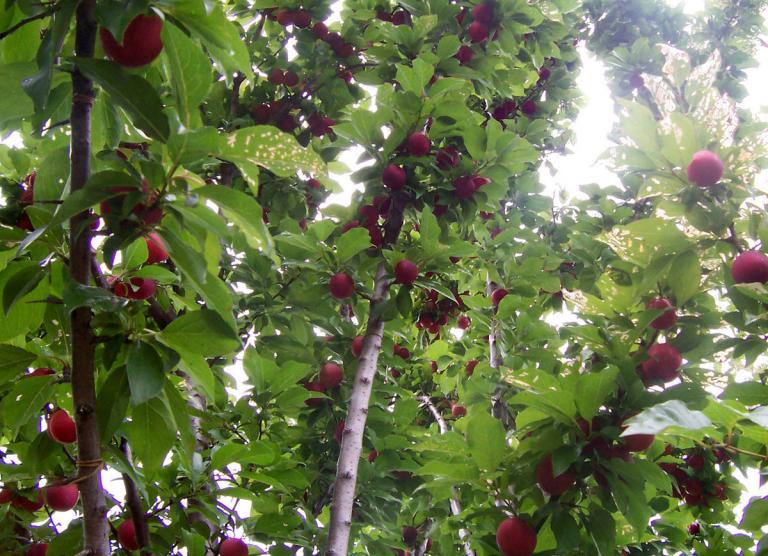
Plum Tree with Fruit; Fir0002; Creative Commons
This past week, Union Theological Seminary students made public confession to plants during a chapel service. A Union Seminary tweet reads:
Today in chapel, we confessed to plants. Together, we held our grief, joy, regret, hope, guilt and sorrow in prayer; offering them to the beings who sustain us but whose gift we too often fail to honor.
What do you confess to the plants in your life?
The tweet about confession drew strong reactions on Twitter, including the charge of “absolute theological bankruptcy.” For many conservative Christians, such symbolic actions signify New Age ways of thinking. The Twitter storm should cause us to seek shelter in Christian Scripture in search of nuanced understanding of our proper relation to the creation, including plants.
What does Christian Scripture have to say about creation? Scripture speaks of creation revealing and declaring God’s glory (See for example Psalm 19:1 and Revelation 1:19-20). Scripture records Jesus’ striking claim that the stones would cry out if people did not praise God in view of Jesus’ miracles (Luke 19:40). The Law warns that the land will spit God’s people out of the land if they defile it (Leviticus 18:28). The Bible also includes Paul’s words that the whole creation groans waiting for humanity’s redemption (Romans 8:22).
While the Bible says a great deal about creation, we should ask whether it includes mention of confession to plants. Certainly, Scripture exhorts us to make confession to God. Confession in public or in private should include confession of our sins to God (1 John 1:9). We are also to confess our sins to one another (James 5:16). But what about plants? As best as I can recall, no mention is made in the Bible of public or private confession of various kinds to plants, or other parts of the non-human creation.
Now, regardless of the theological rationale for the Union Seminary students or others making confession to plants, Scripture is quite clear that we have a responsibility as humans to care for the creation and not to sin against God by mistreating the creation. Such care includes the humane treatment of animals in the Hebrew Scriptures. One Jewish source reads:
Several commandments demonstrate concern for the physical or psychological suffering of animals. We may not plow a field using animals of different species (Deut. 22:10), because this would be a hardship to the animals. We are required to relieve an animal of its burden, even if we do not like its owner, do not know its owner, or even if it is ownerless (Ex. 23:5; Deut. 22:4). We are not permitted to kill an animal in the same day as its young (Lev. 22:28), and are specifically commanded to send away a mother bird when taking the eggs (Deut 22:6-7), because of the psychological distress this would cause the animal. In fact, the Torah specifically says that a person who sends away the mother bird will be rewarded with long life, precisely the same reward that is given for honoring mother and father (Ex. 20:12; Deut. 5:16), and indeed for observing the whole Torah (Deut. 4:40). This should give some indication of the importance of this law.
Care for the creation extends to the land itself. God commanded Moses that Israel was to provide a Sabbath rest for the entire land. There was to be no sowing fields, pruning vineyards, harvesting or gathering in that seventh year (Leviticus 25:1-5).
The preceding remarks signify that Scripture is quite clear on humans having a responsibility to care for the creation, signifying that our dominion (See Genesis 1:26, 28-29) does not permit us to treat creation in any way that we please. And yet, as those who alone are created in God’s image according to the Genesis account (Genesis 1:26-27), humanity is the pinnacle and center of creation. Moreover, the Genesis account makes quite clear that the creation is not divine, and that the God of Israel is the one who makes and orders all the creation. We find such divine singularity in forming/ordering the creation in day three when God brings order to the creation through plant life:
And God said, “Let the earth sprout vegetation, plants yielding seed, and fruit trees bearing fruit in which is their seed, each according to its kind, on the earth.” And it was so. The earth brought forth vegetation, plants yielding seed according to their own kinds, and trees bearing fruit in which is their seed, each according to its kind. And God saw that it was good (Genesis 1:11-12; ESV).
Unlike other ancient creation stories that involved creating out of deities or that acknowledged celestial powers as deities, the Genesis narrative proclaims that the God of lowly and little ancient Israel, not the gods of the superpowers, was responsible for creating and ordering the whole universe.
John Walton, who claims that the first three days of the Genesis 1 narrative are about functions (day one—time; day two—weather; day three—food) and the last three days are about functionaries, claims that the world functions for humankind’s benefit and as a place for God to dwell with the divine image-bearers. Regarding the functional role of creation, Walton writes,
As we actually read the text’s account of each day, finding the focus on organization and ordering rather than the manufacture of material objects, we should be letting it shape our ideas about the narrator’s intentions. God is articulating his vision for a world that will function for the benefit of humankind and as sacred space where God will dwell in relationship with them.
Speaking of benefit for humankind, the Genesis 1 account makes clear that plant life was given to us and the animal creation for food (Genesis 1:29-30).
The preceding reflections give us much food for thought. Whatever you think about the Union Seminary students’ public confession to plants, we should all acknowledge that plants are very beneficial, indeed essential to our sustenance as God’s image bearers and that we often fail to value them (please note that the Union Seminary students sought to highlight the significance of valuing plants’ providing sustenance for us and how we often fall short of proper regard for plant life; for a good, balanced article on the Union Seminary students’ confession, refer here). In the midst of the Twitter storm, we could learn a great deal not only from Scripture but also from St. Francis of Assisi (to whom we will return on the entry for October 4th to close out the liturgical Season of Creation), whom Pope John Paul II hailed as “heavenly patron of those who promote ecology.” While I do not know if St. Francis ever spoke to plants, he did preach to animals and extolled the creation’s worth to God. In his “Canticle of Creation,” Francis praises God for creation, including plants, which, as noted above, the Genesis 1 account makes clear were given to us and the animal creation for food (Genesis 1:29-30):
Be praised, my Lord,
for Sister Earth, our Mother,
who nourishes us and sustains us,
bringing forth
fruits and vegetables of many kinds
and flowers of many colours.
No good person harms their mother, but cherishes her. Similarly, we should cherish the earth from which we come and to which we return (Genesis 3:19). We should cherish fruit and vegetables of many kinds that sustain us, and flowers of many colors, that give us joy to strengthen us in the midst of life’s struggles and sorrows. With these points in mind, it is worth tweeting Francis’ Canticle of Creation during the Season of Creation. Why not make public confession and offer up praise to God by praying St. Francis’ canticle today?
Next Post

September 30, 2019 How Godlike Are We Functioning as Humans Here on Earth?
Browse Our Archives
Select a Category Uncategorized
Select a Month June 2025 April 2025 March 2025 January 2025 December 2024 November 2024 October 2024 September 2024 August 2024 July 2024 June 2024 May 2024 April 2024 March 2024 February 2024 January 2024 December 2023 November 2023 October 2023 September 2023 August 2023 July 2023 June 2023 May 2023 April 2023 March 2023 February 2023 January 2023 December 2022 November 2022 October 2022 September 2022 August 2022 July 2022 June 2022 May 2022 April 2022 March 2022 February 2022 January 2022 December 2021 November 2021 October 2021 September 2021 August 2021 July 2021 June 2021 May 2021 April 2021 March 2021 February 2021 January 2021 December 2020 November 2020 October 2020 September 2020 August 2020 July 2020 June 2020 May 2020 April 2020 March 2020 February 2020 January 2020 December 2019 November 2019 October 2019 September 2019 August 2019 July 2019 June 2019 May 2019 April 2019 March 2019 February 2019 January 2019 December 2018 November 2018 October 2018 September 2018 August 2018 July 2018 June 2018 May 2018 April 2018 March 2018 February 2018 January 2018 December 2017 November 2017 October 2017 September 2017 August 2017 July 2017 June 2017 May 2017 April 2017 March 2017 February 2017 January 2017 December 2016 November 2016 October 2016 September 2016 August 2016 July 2016 June 2016 May 2016 April 2016 March 2016 February 2016 January 2016 December 2015 November 2015 October 2015 September 2015 August 2015 July 2015 June 2015 May 2015 April 2015 March 2015 February 2015 January 2015 December 2014 November 2014 October 2014 September 2014 August 2014 July 2014 June 2014 May 2014 April 2014 March 2014 February 2014 January 2014 December 2013 November 2013 October 2013 September 2013 August 2013 July 2013 June 2013 May 2013 April 2013 March 2013 February 2013 January 2013 December 2012 November 2012 October 2012 September 2012 August 2012 July 2012 June 2012 May 2012 April 2012 March 2012 February 2012
Follow Us!
TAKE THE
Religious Wisdom Quiz
True or False: The first plague in Egypt turned the Nile River into blood.
Select your answer to see how you score.
TRUE FALSE
Books by This Author Books by Paul Louis Metzger
Related posts from Uncommon God, Common Good

Heavenly Father’s Day on Trinity Sunday

Easter Triduum: Obey Your Thirst—for God

Holy Week Is Humble Week: "Beware of Becoming...

Excavating the Person in a Throwaway Culture
TRENDING AT PATHEOS Evangelical

The REST of Your Life: A Creative Wrestles...
This week I had a conversation with a good friend from church....

How the author of the world's best hymn...
I've been working with John Newton for a while now. This makes...

Long before this Lectio Divina, Psalm 130 - the song - started...

What About the Trees? Another Living Parable
After I finished writing the last article about falling leaves as a...

Why Classical Education Is a Conversation, Not a...
Come and Read: Joy in Classical Education When I was a little...

Cornell University has received a great deal of negative publicity and intense...
view all Evangelical blogs
Ad-Free & Subscriber Log-In Subscription Support
- About Us
- 2026 Calendar
- Videos
- Podcasts
- Library of World Religions
- Faith In Media Tracker
- Advertise With Us
- Write for Us
- Privacy Policy
- Terms of Service
- Do Not Sell My Data
- Contact Us
- Radiant Digital
- Manage Newsletter Subscriptions
- Unsubscribe From Notifications
- Sitemap
Copyright 2008-2026, Patheos. All rights reserved.
Subscription Support Ad-Free & Subscriber Log-In
Follow Patheos