
BuddhistCatholicContemplativeEvangelicalGeneral ChristianHinduJewishLatter-day SaintMuslimNew VisionsProgressive Christian
Beliefs
- Buddhist
- Catholic
- Contemplative
- Evangelical
- General Christian
- Hindu
- Jewish
- Latter-day Saint
- More Voices
- Muslim
- New Visions
- Pagan
- Progressive Christian
Topics
- Religion News
- Food and Religion
- Sports and Religion
- Religious Art
- Religious Music and Entertainment
- Religious Events
- History and Religion
- Style and Religion
- Politics and Religion
- Women in Religion
- Recreation Outdoors and Religion
- Business Finance and Religion
- Careers Workplace and Religion
- Education and Religion
- Family Parenting and Religion
- Health Fitness and Religion
- Home and Religion
- Relationships and Religion
- Technology and Religion
- Travel and Religion
Columnists
- Buddhist Columnists
- Business Finance and Religion Columnists
- Careers Workplace and Religion Columnists
- Catholic Columnists
- Contemplative Columnists
- Education and Religion Columnists
- Evangelists Columnists
- Family Parenting and Religion Columnists
- General Christian Columnists
- Health Fitness and Religion Columnists
- Hindu Columnists
- History and Religion Columnists
- Home and Religion Columnists
- Jewish Columnists
- More Voices Columnists
- Latter Day Columnists
- Muslim Columnists
- New Visions Columnists
- Nonreligious Columnists
- Pagan Columnists
- Politics and Religion Columnists
- Progressive Columnists
- Recreation Outdoors and Religion Columnists
- Relationships and Religion Columnists
- Religion News Columnists
- Religious Art Columnists
- Religious Events Columnists
- Religious Music and Entertainment Columnists
- Sports and Religion Columnists
- Style and Religion Columnists
- Technology and Religion Columnists
- Travel and Religion Columnists
- Women in Religion Columnists
Resource Library
- 2026 Calendar
- Library of World Religions
- The 100 Most Holy Places on Earth
- Patheos Answers
- Podcasts
- Videos
- Faith Leaders Database
- Anglican Episcopalian
- Bahai
- Baptist
- Buddhism
- Christianity
- Confucianism
- Eastern Orthodoxy
- Hinduism
- Holiness and Pentecostal
- ISKCON
- Islam
- Judaism
- Lutheran
- Methodist
- The Church of Jesus Christ of Latter-day Saints
- New Age
- Paganism
- Presbytarian and Reformed
- Protestantism
- Religion Behind the Scenes
- Roman Catholic
- Scientology
- Shia Islam
- Sikhism
- Sufism
- Sunni Islam
- Taoism
- Zen
- See all religions
Research Tools
 Ad-Free & Subscriber Log-In Subscription Support
Ad-Free & Subscriber Log-In Subscription Support
Follow Patheos 

- Trending:
- Forgiveness
- |
- Marriage
- |
- Consciousness
- |
- Death Penalty
- |
- Election
- |
- Halloween

- Home
- Evangelical
- Can Churches Change Neighborhoods? An Interview with Urbanologist Dave Kresta
Can Churches Change Neighborhoods? An Interview with Urbanologist Dave Kresta
Last updated on: September 19, 2019 at 11:26 am by Paul Louis Metzger
Can Churches Change Neighborhoods? An Interview with Urbanologist Dave Kresta 2019-09-19T11:26:42-07:00 Paul Louis Metzger
Patheos Explore the world's faith through different perspectives on religion and spirituality! Patheos has the views of the prevalent religions and spiritualities of the world.
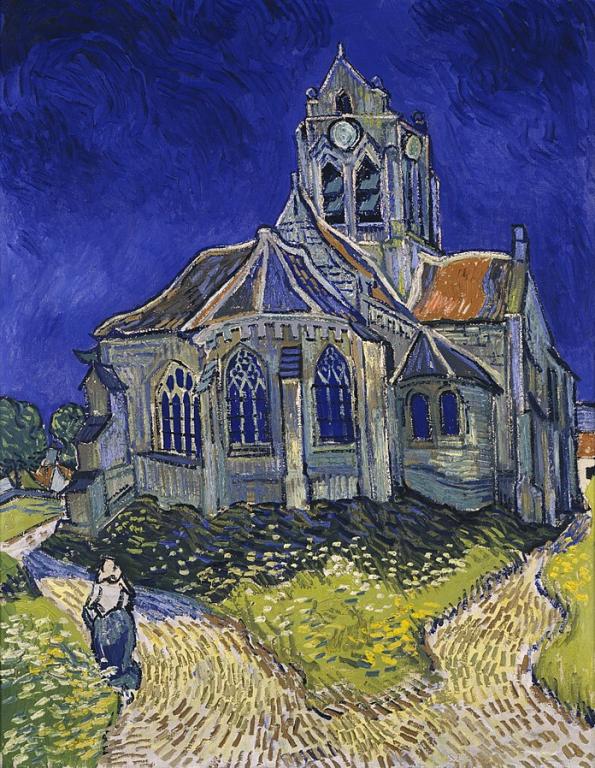
Vincent Van Gogh, The Church in Auvers-sur-Oise, view from the Chevet, 1890; {{PD-US-expired-abroad}}

Dr. Dave Kresta is a Christian, an engineer, and an urbanologist. You will see in this latest post dedicated to cultivating vibrant neighborhoods and communities for human flourishing how Dave weaves together his areas of passion and expertise to address the subject of gentrification and how churches often play a part.
Paul Louis Metzger (PLM): Dave, please define for us urbanology and gentrification.
Dave Kresta (DK): Urban Studies applies a variety of social science disciplines to understand and analyze neighborhoods, cities, and regions. My focus is community development and economic development, but my fellow urbanologists also specialize in areas such as planning, transportation, and sustainability. “Gentrification” is a term used to describe a particular type of neighborhood change in which low-income neighborhoods become attractive to highly educated, higher-income people. In the process, low-income residents are displaced, racial demographics transition from non-white to white, home prices and rents increase dramatically, and existing businesses are replaced by new businesses that cater to new residents. Street crime may drop and amenities such as bike lanes and improved parks suddenly appear in these traditionally under-resourced communities, with long-time residents left to wonder why these improvements didn’t occur 20 or 30 years ago. Sadly, even existing residents who have the economic means to stay in their homes report that they no longer feel at home in their gentrified neighborhoods.
PLM: You recently received your PhD in Urban Studies at Portland State University. It was my privilege to serve on your doctoral committee as a theologian of culture concerned for how faith communities often play a key role in the evolution and devolution of neighborhoods. Please set forth the thesis of your stellar dissertation in succinct terms for our readership.
DK: My study’s title was “Can Churches Change a Neighborhood?” I found that churches do, in fact, impact their neighborhoods’ socioeconomic trajectories, sometimes positively, and at other times negatively. Using a nationally representative sample of over 2000 churches, key church characteristics such as social service involvement, social capital generation, residential patterns of attendees, and demographic composition were analyzed to determine if there was a statistical link between churches and how neighborhoods change. My study also examined changing patterns of church location and trends in church and neighborhood segregation. Some of the research findings include:
- White churches in non-white neighborhoods are associated with more gentrification.
- Church social services do not reverse neighborhood decline, but they do help slow down gentrification by stemming displacement.
- More geographically dispersed congregations result in less white influx and less gentrification, but these churches are also less helpful in declining neighborhoods.
- Churches in the USA are 1.6 times more segregated than our neighborhoods.
- Church planting practices have changed dramatically from the 1980s to the 2000s. In a “back to the city” movement, new church locations have shifted from predominantly up-and-coming higher income neighborhoods in the 1980s, to “grittier” and perhaps “cooler” lower-income neighborhoods in the 2000s, some of which were already gentrifying or on the cusp of gentrifying, while others remained in the throes of decline.
PLM: What led you to write on this subject, and why do you think other Christians should share this passion?
DK: I believe that the gospel is holistic, offering healing for every aspect of a person’s life, including the communities and institutions around them. In various leadership positions in churches and non-profits, I’ve seen the tremendous energy and potential of the faith community, but I’ve also seen much of this energy squandered, leaving the work of neighborhood restoration and healing to others. Fortunately, Jesus’ followers in cities and suburbs are experiencing a reawakening to our holistic mission. Early in my studies, I identified a need for more research that looks critically at the actual impact of churches on communities. I’m inviting church leaders to consider how churches relate to individuals as well as how they interact with social processes in their communities. My hope is that this research will help connect local faith communities with the worlds of community and economic development, leading church leaders and participants to ask hard questions about the role of churches in their communities, realizing that the impact goes far beyond the spiritual and the intentional.
PLM: What are a few key things churches can do to safeguard against the negative forces of gentrification in vulnerable communities?
DK: First, a church must understand how its neighborhood (or the neighborhood the church desires to serve in) got to where it is today, how the surrounding city has changed over time, and how its particular neighborhood has adapted. This story can explain not only current hopes and concerns of existing residents, but it can also point to where things may be going. Fortunately, there is a lot of freely available data that can help piece this story together. See my article here for more on this. Second, those starting new churches or programs must realize that their choices can either resist or reinforce general trends such as gentrification. For example, my study’s finding that white churches in predominantly non-white neighborhoods can contribute to gentrification by acting as a beacon or an amenity for incoming gentrifiers is troubling news, but it shines a necessary light on an understudied and little-understood phenomenon. Similarly, the choice to commute or relocate into a neighborhood to attend church needs careful deliberation given my finding that white churches with more geographically dispersed attendees can lessen white influx, especially in low-income neighborhoods. Given these varied impacts, church leaders should consider doing a “community impact study” prior to making major decisions on church location or church program offerings. Such a study could result in a decision to change planting locations or pursue partnering with existing churches and institutions in a given community rather than starting a new church or a new program there. Periodic community impact studies can help existing churches track neighborhood changes and risk factors, informing needed course corrections as the church seeks to contribute to the welfare of the neighborhood and city. Finally, on a very practical level, although my study found that church social service offerings don’t necessarily lift people (and therefore the neighborhood) out of poverty, there is evidence for a stabilizing, anti-displacement effect of these services. In other words, church social services appear to be enabling low-income residents to stay in their neighborhoods, thereby slowing gentrification-induced displacement. These services could be tailored to focus more directly on helping low-income residents stay in their homes and benefit from some of the improvements in their changing neighborhoods.
PLM: What are a few key things churches can do to help foster greater resilience and growth of vulnerable communities?
DK: First, church leaders must seek out and partner with others who care about the neighborhood. Here, I’m speaking primarily of developing relationships outside of the church, with existing residents, business associations, local government, community development groups, and activists. It’s important to enter these relationships with the posture of a learner and a servant. These forms of interaction will likely lead churches into exciting, unforeseen partnerships. One example is to connect church members with specific business skills with a business incubator to provide mentoring to local entrepreneurs. Second, church leaders must seek to understand the processes governing neighborhood change if they hope to have a positive impact on those processes. For example, they must seek to engage and address these questions: what are the primary drivers of poverty and inequality, how is neighborhood change related to community development and economic development processes, what is driving the affordable housing crisis? While not everyone needs to go out and get another graduate degree, partnering with organizations that have this expertise, and seeking out some education and training for themselves in these areas, will help church leaders discern the right direction for their church to contribute to the welfare of their community. Third, churches generate a lot of what social scientists call “social capital”. This refers to relational connections, information flow, and trust-building that occurs both within the church and with those outside the church. My study found that bridging activities that link congregations to the larger political and economic systems in and around their communities have a beneficial impact on their neighborhoods. The challenge is to leverage the strong connections within a church to drive more civic engagement and ultimately greater community resilience and growth.
PLM: What are the next steps for your research? Also, how can people interested in your work connect with you to address these themes further and affect constructive social change together with faith communities pertaining to healthy neighborhood transformation?
DK: I hope to update my study with new data from the soon-to-be-released 2018 National Congregation Study to see how church/neighborhood impacts may have changed since the 1990-2010 study period. I am also actively working on adapting my research into more accessible forms such as webinars and seminars where churches and students can learn more about these topics. I can be contacted at [email protected]. I would be happy to share an executive summary of my research, as well as the full study manuscript, for those who are interested in digging into the details.
Previous Post

September 15, 2019
Honor God’s Temple — The Creation
Next Post
September 22, 2019 Confess to God and Fellow Humans—But Plants?
Browse Our Archives
Select a Category Uncategorized
Select a Month June 2025 April 2025 March 2025 January 2025 December 2024 November 2024 October 2024 September 2024 August 2024 July 2024 June 2024 May 2024 April 2024 March 2024 February 2024 January 2024 December 2023 November 2023 October 2023 September 2023 August 2023 July 2023 June 2023 May 2023 April 2023 March 2023 February 2023 January 2023 December 2022 November 2022 October 2022 September 2022 August 2022 July 2022 June 2022 May 2022 April 2022 March 2022 February 2022 January 2022 December 2021 November 2021 October 2021 September 2021 August 2021 July 2021 June 2021 May 2021 April 2021 March 2021 February 2021 January 2021 December 2020 November 2020 October 2020 September 2020 August 2020 July 2020 June 2020 May 2020 April 2020 March 2020 February 2020 January 2020 December 2019 November 2019 October 2019 September 2019 August 2019 July 2019 June 2019 May 2019 April 2019 March 2019 February 2019 January 2019 December 2018 November 2018 October 2018 September 2018 August 2018 July 2018 June 2018 May 2018 April 2018 March 2018 February 2018 January 2018 December 2017 November 2017 October 2017 September 2017 August 2017 July 2017 June 2017 May 2017 April 2017 March 2017 February 2017 January 2017 December 2016 November 2016 October 2016 September 2016 August 2016 July 2016 June 2016 May 2016 April 2016 March 2016 February 2016 January 2016 December 2015 November 2015 October 2015 September 2015 August 2015 July 2015 June 2015 May 2015 April 2015 March 2015 February 2015 January 2015 December 2014 November 2014 October 2014 September 2014 August 2014 July 2014 June 2014 May 2014 April 2014 March 2014 February 2014 January 2014 December 2013 November 2013 October 2013 September 2013 August 2013 July 2013 June 2013 May 2013 April 2013 March 2013 February 2013 January 2013 December 2012 November 2012 October 2012 September 2012 August 2012 July 2012 June 2012 May 2012 April 2012 March 2012 February 2012
Follow Us!
TAKE THE
Religious Wisdom Quiz
What was the first miracle Jesus performed according to John's Gospel?
Select your answer to see how you score.
Feeding the 5000 Raising Lazarus Walking on water Turning water into wine
Books by This Author Books by Paul Louis Metzger
Related posts from Uncommon God, Common Good

Heavenly Father’s Day on Trinity Sunday

Easter Triduum: Obey Your Thirst—for God

Holy Week Is Humble Week: "Beware of Becoming...

Excavating the Person in a Throwaway Culture
TRENDING AT PATHEOS Evangelical

The REST of Your Life: A Creative Wrestles...
This week I had a conversation with a good friend from church....

How the author of the world's best hymn...
I've been working with John Newton for a while now. This makes...

Long before this Lectio Divina, Psalm 130 - the song - started...

What About the Trees? Another Living Parable
After I finished writing the last article about falling leaves as a...

Why Classical Education Is a Conversation, Not a...
Come and Read: Joy in Classical Education When I was a little...

Cornell University has received a great deal of negative publicity and intense...
view all Evangelical blogs
Ad-Free & Subscriber Log-In Subscription Support
- About Us
- 2026 Calendar
- Videos
- Podcasts
- Library of World Religions
- Faith In Media Tracker
- Advertise With Us
- Write for Us
- Privacy Policy
- Terms of Service
- Do Not Sell My Data
- Contact Us
- Radiant Digital
- Manage Newsletter Subscriptions
- Unsubscribe From Notifications
- Sitemap
Copyright 2008-2026, Patheos. All rights reserved.
Subscription Support Ad-Free & Subscriber Log-In
Follow Patheos