
BuddhistCatholicContemplativeEvangelicalGeneral ChristianHinduJewishLatter-day SaintMuslimNew VisionsProgressive Christian
Beliefs
- Buddhist
- Catholic
- Contemplative
- Evangelical
- General Christian
- Hindu
- Jewish
- Latter-day Saint
- More Voices
- Muslim
- New Visions
- Pagan
- Progressive Christian
Topics
- Religion News
- Food and Religion
- Sports and Religion
- Religious Art
- Religious Music and Entertainment
- Religious Events
- History and Religion
- Style and Religion
- Politics and Religion
- Women in Religion
- Recreation Outdoors and Religion
- Business Finance and Religion
- Careers Workplace and Religion
- Education and Religion
- Family Parenting and Religion
- Health Fitness and Religion
- Home and Religion
- Relationships and Religion
- Technology and Religion
- Travel and Religion
Columnists
- Buddhist Columnists
- Business Finance and Religion Columnists
- Careers Workplace and Religion Columnists
- Catholic Columnists
- Contemplative Columnists
- Education and Religion Columnists
- Evangelists Columnists
- Family Parenting and Religion Columnists
- General Christian Columnists
- Health Fitness and Religion Columnists
- Hindu Columnists
- History and Religion Columnists
- Home and Religion Columnists
- Jewish Columnists
- More Voices Columnists
- Latter Day Columnists
- Muslim Columnists
- New Visions Columnists
- Nonreligious Columnists
- Pagan Columnists
- Politics and Religion Columnists
- Progressive Columnists
- Recreation Outdoors and Religion Columnists
- Relationships and Religion Columnists
- Religion News Columnists
- Religious Art Columnists
- Religious Events Columnists
- Religious Music and Entertainment Columnists
- Sports and Religion Columnists
- Style and Religion Columnists
- Technology and Religion Columnists
- Travel and Religion Columnists
- Women in Religion Columnists
Resource Library
- 2026 Calendar
- Library of World Religions
- The 100 Most Holy Places on Earth
- Patheos Answers
- Podcasts
- Videos
- Faith Leaders Database
- Anglican Episcopalian
- Bahai
- Baptist
- Buddhism
- Christianity
- Confucianism
- Eastern Orthodoxy
- Hinduism
- Holiness and Pentecostal
- ISKCON
- Islam
- Judaism
- Lutheran
- Methodist
- The Church of Jesus Christ of Latter-day Saints
- New Age
- Paganism
- Presbytarian and Reformed
- Protestantism
- Religion Behind the Scenes
- Roman Catholic
- Scientology
- Shia Islam
- Sikhism
- Sufism
- Sunni Islam
- Taoism
- Zen
- See all religions
Research Tools
 Ad-Free & Subscriber Log-In Subscription Support
Ad-Free & Subscriber Log-In Subscription Support
Follow Patheos 

- Trending:
- Forgiveness
- |
- Marriage
- |
- Consciousness
- |
- Death Penalty
- |
- Election
- |
- Halloween

- Home
- Evangelical
- Jesus’ Resurrection Does Not Depend on Faith, But Should Deepen It.
Jesus’ Resurrection Does Not Depend on Faith, But Should Deepen It.
Last updated on: May 12, 2019 at 12:41 pm by Paul Louis Metzger
Jesus’ Resurrection Does Not Depend on Faith, But Should Deepen It. 2019-05-12T12:41:12-07:00 Paul Louis Metzger
Patheos Explore the world's faith through different perspectives on religion and spirituality! Patheos has the views of the prevalent religions and spiritualities of the world.
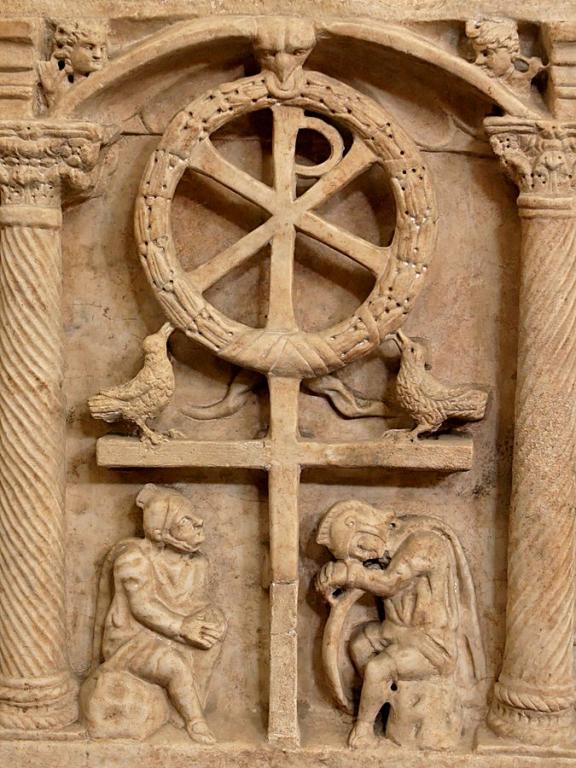

Jesus’ resurrection does not depend on his disciples’ faith. However, it should deepen our faith and our engagement in this world whereby we descend into greatness by caring for those often despised and marginalized.
Again, Jesus’ resurrection does not depend on his followers’ faith, but it should deepen it. Now if Jesus’ resurrection depended on his first followers’ faith, he wouldn’t have risen. They were bewildered and unbelieving. It is worth noting that his first disciples, whose reports serve as the basis for the canonical gospels, had no idea that he was going to rise bodily, even though he had told them on several occasions that he would rise from the dead. The teaching of the resurrection wasn’t on their radar.
Those first disciples and their contemporaries were not gullible people who believed everything they saw and heard. In fact, the vast majority of the disciples simply did not believe the reports and sightings at first, or were too afraid to share the news with anyone. Take for example the following accounts in Mark 16 (ESV; italics added):
But go, tell his disciples and Peter that he is going before you to Galilee. There you will see him, just as he told you.” And they went out and fled from the tomb, for trembling and astonishment had seized them, and they said nothing to anyone, for they were afraid (Mark 16:7-8).
She went and told those who had been with him, as they mourned and wept. But when they heard that he was alive and had been seen by her, they would not believe it (Mark 16:10-11).
After these things he appeared in another form to two of them, as they were walking into the country. And they went back and told the rest, but they did not believe them (Mark 16:12-13).
No wonder these first disciples doubted. Reports of bodily resurrections were hardly daily occurrences. It wasn’t like, “Did you hear about Bob down the street? He died a week ago and rose again yesterday.” “Really?! So, too, did my cousin Ernie. It was just this morning. There have been a lot more resurrections of late.” Not even close. In fact, the bodily resurrection of an individual from the dead ahead of the general resurrection, never to die again, and whose resurrection has a bearing on all resurrections that follow, wasn’t on their Jewish map (For a fuller account of this subject, see the recent blog post titled “Jesus’ Resurrection: Wishful Thinking or Death Wish?”). Even so, that first report on a Sunday morning over two thousand years ago that Jesus rose from the dead has certainly changed history and the world map.
Even Nietzsche—no friend to Christianity—believed the movement Jesus started brought about the Roman Empire’s demise, not when it was in decline, but when it was at its height. In Nietzsche’s estimation, a nobler outlook on humanity perished with Christianity’s rise, and had only just been reborn with Nietzsche’s teaching of the wise, strong and solitary Übermensch, who elevates only himself. Here’s Nietzsche on the fall of the nobler Roman outlook with the rise of decadent Christianity:
The Christian movement, as a European movement, has been from the start a collective movement of the dross and refuse elements of every kind (these want to get power through Christianity). It does not express the decline of a race, it is an aggregate of forms of decadence of locking together and seeking each other out from everywhere. It is not, as is supposed, the corruption of antiquity itself, of noble antiquity, that made Christianity possible. The scholarly idiocy which upholds such ideas even today cannot be contradicted harshly enough. At the very time when the sick, corrupt chandala strata in the whole imperium adopted Christianity, the opposite type, nobility, was present in its most beautiful and most mature form. The great number became master; the democratism of the Christian instinct triumphed. Christianity was not “national,” not a function of a race—it turned to every kind of man who was disinherited by life, it had its allies everywhere. At the bottom of Christianity is the rancor of the sick, instinct directed against the healthy, against health itself. Everything that has turned out well, everything that is proud and prankish, beauty above all, hurts its ears and eyes. Once more I recall the inestimable words of Paul: “The weak things of the world, the foolish things of the world, the base and despised things of the world hath God chosen.” This was the formula: in hoc signo decadence triumphed.
God on the cross—are the horrible secret thoughts behind this symbol not understood yet? All that suffers, all that is nailed to the cross, is divine. All of us are nailed to the cross, consequently we are divine. We alone are divine. Christianity was a victory, a nobler outlook perished of it—Christianity has been the greatest misfortune of mankind so far (Friedrich Nietzsche, The Antichrist, in The Portable Nietzsche, ed. Walter Kaufmann {New York: The Viking Press, 1968}, pages 633-644).
While Jesus’ resurrection does not depend on his disciples’ faith, it should deepen our faith and our engagement in this world, and in a manner that Nietzsche would have found repugnant. After all, Jesus’ resurrection has a bearing on all people everywhere, if we take Jesus recorded in Scripture at his word. Now then, what difference does Jesus’ resurrection make, not simply for the church calendar, but for every day of our lives?
Let’s take what happened to the first disciples to see how Jesus’ resurrection should deepen our faith. Those earliest disciples went from being self-concerned cowards after Jesus’ death to people of great courage and compassion after Jesus’ resurrection. Take for example the healing of the nameless beggar in Jesus’ name, as recorded in Acts 3. When called to account for the disturbance of the peace, and told to quit speaking in Jesus’ name, consider how they responded, as recorded in Acts 4. Consider also how their inquisitors reacted, taking note that the disciples were simple folk, unschooled and ordinary. Their adversaries came to the realization that what differentiated the disciples, namely Peter and John, was that they had been with Jesus. Here is a significant portion of the exchange:
Then Peter, filled with the Holy Spirit, said to them, “Rulers of the people and elders, if we are being examined today concerning a good deed done to a crippled man, by what means this man has been healed, let it be known to all of you and to all the people of Israel that by the name of Jesus Christ of Nazareth, whom you crucified, whom God raised from the dead—by him this man is standing before you well. This Jesus is the stone that was rejected by you, the builders, which has become the cornerstone. And there is salvation in no one else, for there is no other name under heaven given among men by which we must be saved.”
Now when they saw the boldness of Peter and John, and perceived that they were uneducated, common men, they were astonished. And they recognized that they had been with Jesus. But seeing the man who was healed standing beside them, they had nothing to say in opposition. But when they had commanded them to leave the council, they conferred with one another, saying, “What shall we do with these men? For that a notable sign has been performed through them is evident to all the inhabitants of Jerusalem, and we cannot deny it. But in order that it may spread no further among the people, let us warn them to speak no more to anyone in this name.” So they called them and charged them not to speak or teach at all in the name of Jesus. But Peter and John answered them, “Whether it is right in the sight of God to listen to you rather than to God, you must judge, for we cannot but speak of what we have seen and heard.” And when they had further threatened them, they let them go, finding no way to punish them, because of the people, for all were praising God for what had happened. For the man on whom this sign of healing was performed was more than forty years old (Acts 4:8-22; ESV).
It is worth pondering what difference Jesus’ life, death and resurrection make for history, and for our own lives. Does it deepen our faith on a daily basis whereby we descend to the depths to care for nameless beggars rather than ascend to avoid the world’s suffering and pain? And if Jesus had never lived, died or risen, what would the world be like? So, too, if Jesus had lived and died, but had not risen victoriously, I doubt we would be celebrating him as Lord or use such terms as B.C. (Before Christ) and A.D. (After Christ—referring to Jesus’ birth—“in the year of the Lord”). After all, Jesus died a criminal’s shameful death under Rome’s mighty rule.
The resurrection event surely made an impact on Jesus’ first disciples, who as noted above went from self-concerned cowards to men and women of great courage and compassion. Has our faith in Jesus’ resurrection deepened to the point where we give ourselves to doing whatever possible to make nameless beggars and those like them whole? Do people see that what differentiates us is Jesus, no matter how ordinary or extraordinary, no matter how unschooled or educated, we are?
For all his mockery and rhetorical distortion of Christianity and Paul’s teaching, Nietzsche gave us a clue as to how to proceed throughout the church calendar and in our daily lives. He points us to Paul’s reminder and exhortation in 1st Corinthians 1, where Paul writes,
For consider your calling, brothers: not many of you were wise according to worldly standards, not many were powerful, not many were of noble birth. But God chose what is foolish in the world to shame the wise; God chose what is weak in the world to shame the strong; God chose what is low and despised in the world, even things that are not, to bring to nothing things that are, so that no human being might boast in the presence of God. And because of him you are in Christ Jesus, who became to us wisdom from God, righteousness and sanctification and redemption, so that, as it is written, “Let the one who boasts, boast in the Lord” (1:26-31; ESV).
The New Testament encourages and exhorts us to descend into greatness by celebrating and proclaiming Jesus whose crucified weakness and foolishness is God’s power and wisdom (See 1 Corinthians 1:21-25). As Paul and the New Testament exhort us, may we give ourselves to the weak and unwise, just as Jesus and his first disciples did, and just as many of us were, when Jesus found us. Jesus’ resurrection does not depend on our faith. However, Jesus’ bodily resurrection should deepen our faith and move us beyond self-centered cowardice to courageous compassion, where we descend to the depths and care for nameless beggars in body and soul, and the weak and unwise, like ourselves. Then people will take note that we have been with the resurrected Jesus, and not Nietzsche’s Übermensch.
Previous Post

May 11, 2019
"Tolkien": On the Ring of Fellowship
Next Post
May 18, 2019 Evangelism and Religious Diplomacy Complement One Another
Browse Our Archives
Select a Category Uncategorized
Select a Month June 2025 April 2025 March 2025 January 2025 December 2024 November 2024 October 2024 September 2024 August 2024 July 2024 June 2024 May 2024 April 2024 March 2024 February 2024 January 2024 December 2023 November 2023 October 2023 September 2023 August 2023 July 2023 June 2023 May 2023 April 2023 March 2023 February 2023 January 2023 December 2022 November 2022 October 2022 September 2022 August 2022 July 2022 June 2022 May 2022 April 2022 March 2022 February 2022 January 2022 December 2021 November 2021 October 2021 September 2021 August 2021 July 2021 June 2021 May 2021 April 2021 March 2021 February 2021 January 2021 December 2020 November 2020 October 2020 September 2020 August 2020 July 2020 June 2020 May 2020 April 2020 March 2020 February 2020 January 2020 December 2019 November 2019 October 2019 September 2019 August 2019 July 2019 June 2019 May 2019 April 2019 March 2019 February 2019 January 2019 December 2018 November 2018 October 2018 September 2018 August 2018 July 2018 June 2018 May 2018 April 2018 March 2018 February 2018 January 2018 December 2017 November 2017 October 2017 September 2017 August 2017 July 2017 June 2017 May 2017 April 2017 March 2017 February 2017 January 2017 December 2016 November 2016 October 2016 September 2016 August 2016 July 2016 June 2016 May 2016 April 2016 March 2016 February 2016 January 2016 December 2015 November 2015 October 2015 September 2015 August 2015 July 2015 June 2015 May 2015 April 2015 March 2015 February 2015 January 2015 December 2014 November 2014 October 2014 September 2014 August 2014 July 2014 June 2014 May 2014 April 2014 March 2014 February 2014 January 2014 December 2013 November 2013 October 2013 September 2013 August 2013 July 2013 June 2013 May 2013 April 2013 March 2013 February 2013 January 2013 December 2012 November 2012 October 2012 September 2012 August 2012 July 2012 June 2012 May 2012 April 2012 March 2012 February 2012
Follow Us!
TAKE THE
Religious Wisdom Quiz
Which Christian group is known for monasticism?
Select your answer to see how you score.
Methodist Orthodox Evangelical Baptist
Books by This Author Books by Paul Louis Metzger
Related posts from Uncommon God, Common Good

Heavenly Father’s Day on Trinity Sunday

Easter Triduum: Obey Your Thirst—for God

Holy Week Is Humble Week: "Beware of Becoming...

Excavating the Person in a Throwaway Culture
TRENDING AT PATHEOS Evangelical

The REST of Your Life: A Creative Wrestles...
This week I had a conversation with a good friend from church....

How the author of the world's best hymn...
I've been working with John Newton for a while now. This makes...

Long before this Lectio Divina, Psalm 130 - the song - started...

What About the Trees? Another Living Parable
After I finished writing the last article about falling leaves as a...

Why Classical Education Is a Conversation, Not a...
Come and Read: Joy in Classical Education When I was a little...

Cornell University has received a great deal of negative publicity and intense...
view all Evangelical blogs
Ad-Free & Subscriber Log-In Subscription Support
- About Us
- 2026 Calendar
- Videos
- Podcasts
- Library of World Religions
- Faith In Media Tracker
- Advertise With Us
- Write for Us
- Privacy Policy
- Terms of Service
- Do Not Sell My Data
- Contact Us
- Radiant Digital
- Manage Newsletter Subscriptions
- Unsubscribe From Notifications
- Sitemap
Copyright 2008-2026, Patheos. All rights reserved.
Subscription Support Ad-Free & Subscriber Log-In
Follow Patheos