
BuddhistCatholicContemplativeEvangelicalGeneral ChristianHinduJewishLatter-day SaintMuslimNew VisionsProgressive Christian
Beliefs
- Buddhist
- Catholic
- Contemplative
- Evangelical
- General Christian
- Hindu
- Jewish
- Latter-day Saint
- More Voices
- Muslim
- New Visions
- Pagan
- Progressive Christian
Topics
- Religion News
- Food and Religion
- Sports and Religion
- Religious Art
- Religious Music and Entertainment
- Religious Events
- History and Religion
- Style and Religion
- Politics and Religion
- Women in Religion
- Recreation Outdoors and Religion
- Business Finance and Religion
- Careers Workplace and Religion
- Education and Religion
- Family Parenting and Religion
- Health Fitness and Religion
- Home and Religion
- Relationships and Religion
- Technology and Religion
- Travel and Religion
Columnists
- Buddhist Columnists
- Business Finance and Religion Columnists
- Careers Workplace and Religion Columnists
- Catholic Columnists
- Contemplative Columnists
- Education and Religion Columnists
- Evangelists Columnists
- Family Parenting and Religion Columnists
- General Christian Columnists
- Health Fitness and Religion Columnists
- Hindu Columnists
- History and Religion Columnists
- Home and Religion Columnists
- Jewish Columnists
- More Voices Columnists
- Latter Day Columnists
- Muslim Columnists
- New Visions Columnists
- Nonreligious Columnists
- Pagan Columnists
- Politics and Religion Columnists
- Progressive Columnists
- Recreation Outdoors and Religion Columnists
- Relationships and Religion Columnists
- Religion News Columnists
- Religious Art Columnists
- Religious Events Columnists
- Religious Music and Entertainment Columnists
- Sports and Religion Columnists
- Style and Religion Columnists
- Technology and Religion Columnists
- Travel and Religion Columnists
- Women in Religion Columnists
Resource Library
- 2026 Calendar
- Library of World Religions
- The 100 Most Holy Places on Earth
- Patheos Answers
- Podcasts
- Videos
- Faith Leaders Database
- Anglican Episcopalian
- Bahai
- Baptist
- Buddhism
- Christianity
- Confucianism
- Eastern Orthodoxy
- Hinduism
- Holiness and Pentecostal
- ISKCON
- Islam
- Judaism
- Lutheran
- Methodist
- The Church of Jesus Christ of Latter-day Saints
- New Age
- Paganism
- Presbytarian and Reformed
- Protestantism
- Religion Behind the Scenes
- Roman Catholic
- Scientology
- Shia Islam
- Sikhism
- Sufism
- Sunni Islam
- Taoism
- Zen
- See all religions
Research Tools
 Ad-Free & Subscriber Log-In Subscription Support
Ad-Free & Subscriber Log-In Subscription Support
Follow Patheos 

- Trending:
- Forgiveness
- |
- Marriage
- |
- Consciousness
- |
- Death Penalty
- |
- Election
- |
- Halloween

- Home
- Evangelical
- Lent: Giving Up Vice to Gain the Savior
Lent: Giving Up Vice to Gain the Savior
Last updated on: April 17, 2019 at 6:50 pm by Paul Louis Metzger
Lent: Giving Up Vice to Gain the Savior 2019-04-17T18:50:38-07:00 Paul Louis Metzger
Patheos Explore the world's faith through different perspectives on religion and spirituality! Patheos has the views of the prevalent religions and spiritualities of the world.
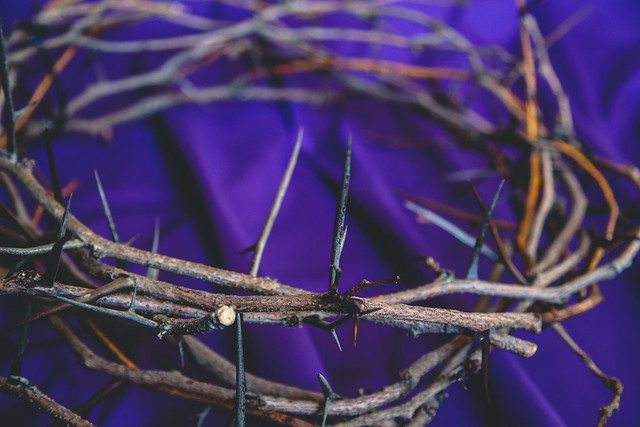
People often associate Lent with giving up some vice for God. It might be cigars or alcohol or sweets, or something a bit more devious. Now if spinach or prunes counted, I think you would find a lot more people claiming to keep the fast.
But Lent is not only about giving up vice. It is also about gaining. What do we gain? The virtuous Savior. Just as Jesus went into the wilderness and suffered hunger and thirst for forty days to encounter and experience God in a more intense manner while being tempted by the Devil (See Matthew 4:1-11), so we give up something during Lent to gain more of Jesus. We give up vice to gain and savor the Savior.
The Apostle Paul wrote during his first Roman imprisonment (he was imprisoned on account of his bold Christian witness) that for him “to live is Christ, and to die is gain” (Philippians 1:21; ESV). While he did not likely pen those words during the Lenten season, nonetheless, his words bear on the subject of Lent.
Paul was pondering what stood before him—possible death, or release from imprisonment. Regardless of the possibility of death, he did not fear. Why? Death simply entailed his departure to be with Christ, which is “better by far” (Philippians 1:23; NIV). After all, Paul’s whole existence was Christ. Even so, Paul determined for the sake of his brothers and sisters in Christ here on earth that it was best for him to remain on earth for a time to support and build up the Christian community (Philippians 1:24-26).
Later, in Philippians 3, Paul returned to the Christocentric thrust of his life, and how suffering loss was central to his spiritual participation in Jesus’ life. Consider the following:
“But whatever gain I had, I counted as loss for the sake of Christ. Indeed, I count everything as loss because of the surpassing worth of knowing Christ Jesus my Lord. For his sake I have suffered the loss of all things and count them as rubbish, in order that I may gain Christ and be found in him, not having a righteousness of my own that comes from the law, but that which comes through faith in Christ, the righteousness from God that depends on faith—that I may know him and the power of his resurrection, and may share his sufferings, becoming like him in his death, that by any means possible I may attain the resurrection from the dead. Not that I have already obtained this or am already perfect, but I press on to make it my own, because Christ Jesus has made me his own. Brothers, I do not consider that I have made it my own. But one thing I do: forgetting what lies behind and straining forward to what lies ahead, I press on toward the goal for the prize of the upward call of God in Christ Jesus. Let those of us who are mature think this way, and if in anything you think otherwise, God will reveal that also to you. Only let us hold true to what we have attained” (See Philippians 3:7-16; ESV).
The fellowship of sharing in Jesus’ sufferings was not an ellipsis for Paul. It was essential (See Philippians 3:10). Part of suffering loss involved dying to the egoistic drive of pursuing perfection by way of self-righteousness (Philippians 3:7-8), something in which Paul had excelled (Philippians 3:1-6). Paul’s rejection of self-righteousness and challenge to others who still embraced it did not go over well in many circles. Much of the suffering Paul experienced was at the hands of those who did not give up their egos ‘during Lent’ and throughout the year to embrace a righteousness by faith in Christ Jesus for a lifetime.
It is important to note here that there is nothing inherently good or virtuous about giving up something like a vice as a Christian if it is not ultimately tied to gaining Jesus by faith. They belong together. For Paul, you could not have one without the other: suffering and savoring intimacy with the Savior went together.
Like any intimate relationship, it is not only the good times that cultivate intimacy. Suffering together also builds the relationship. So it is for the believer with Jesus. Here I call to mind my mother and father. My parents were married for over sixty years. When they took their wedding vows, they did not only take seriously the parts about “better” and “richer” and “health.” There was no ellipsis, that is, no omission of words that involved suffering, pain, and difficulty. They embraced their entire wedding vows throughout their marriage, which lasted until my father died of cancer several years ago: “to have and to hold, from this day forward, for better, for worse, for richer, for poorer, in sickness and in health, to love and to cherish, till death do us part.”
My mother cherishes my father now as much as she ever did, and longs to see him. So it was for Paul in his walk with Christ. He longed to see Jesus, and he viewed participation in the bad times as well as the good times, that is participation in Jesus’ sufferings as well as resurrection glory, to be essential to his faith. One of the fundamental differences between a healthy marriage in the here and now and what Scripture refers to as the church’s marriage to Christ Jesus is that the latter lasts forever. Thus, what we give up now to gain greater intimacy with Jesus has far greater significance. After all, the bond is eternal.
Paul’s passion in his Christian life was to connect with the whole Christ, and nothing but the whole Christ. For him, loss and suffering were not the end goal. They were simply the vehicle on the path for gaining Christ Jesus. How about us during Lent and beyond? Do we look at suffering and loss as an obstacle, or as an opportunity to gain Christ Jesus? What are you giving up during Lent? And what—or better whom—do you hope to gain by faith through it?
Previous Post

April 12, 2019
Forty Days of Lenten Purpose
Next Post
April 21, 2019 Jesus' Resurrection: Wishful Thinking or Death Wish?
Browse Our Archives
Select a Category Uncategorized
Select a Month June 2025 April 2025 March 2025 January 2025 December 2024 November 2024 October 2024 September 2024 August 2024 July 2024 June 2024 May 2024 April 2024 March 2024 February 2024 January 2024 December 2023 November 2023 October 2023 September 2023 August 2023 July 2023 June 2023 May 2023 April 2023 March 2023 February 2023 January 2023 December 2022 November 2022 October 2022 September 2022 August 2022 July 2022 June 2022 May 2022 April 2022 March 2022 February 2022 January 2022 December 2021 November 2021 October 2021 September 2021 August 2021 July 2021 June 2021 May 2021 April 2021 March 2021 February 2021 January 2021 December 2020 November 2020 October 2020 September 2020 August 2020 July 2020 June 2020 May 2020 April 2020 March 2020 February 2020 January 2020 December 2019 November 2019 October 2019 September 2019 August 2019 July 2019 June 2019 May 2019 April 2019 March 2019 February 2019 January 2019 December 2018 November 2018 October 2018 September 2018 August 2018 July 2018 June 2018 May 2018 April 2018 March 2018 February 2018 January 2018 December 2017 November 2017 October 2017 September 2017 August 2017 July 2017 June 2017 May 2017 April 2017 March 2017 February 2017 January 2017 December 2016 November 2016 October 2016 September 2016 August 2016 July 2016 June 2016 May 2016 April 2016 March 2016 February 2016 January 2016 December 2015 November 2015 October 2015 September 2015 August 2015 July 2015 June 2015 May 2015 April 2015 March 2015 February 2015 January 2015 December 2014 November 2014 October 2014 September 2014 August 2014 July 2014 June 2014 May 2014 April 2014 March 2014 February 2014 January 2014 December 2013 November 2013 October 2013 September 2013 August 2013 July 2013 June 2013 May 2013 April 2013 March 2013 February 2013 January 2013 December 2012 November 2012 October 2012 September 2012 August 2012 July 2012 June 2012 May 2012 April 2012 March 2012 February 2012
Follow Us!
TAKE THE
Religious Wisdom Quiz
Which book is written almost completely as poetry?
Select your answer to see how you score.
Ezra Jeremiah Isaiah Lamentations
Books by This Author Books by Paul Louis Metzger
Related posts from Uncommon God, Common Good

Heavenly Father’s Day on Trinity Sunday

Easter Triduum: Obey Your Thirst—for God

Holy Week Is Humble Week: "Beware of Becoming...

Excavating the Person in a Throwaway Culture
TRENDING AT PATHEOS Evangelical

The REST of Your Life: A Creative Wrestles...
This week I had a conversation with a good friend from church....

How the author of the world's best hymn...
I've been working with John Newton for a while now. This makes...

Long before this Lectio Divina, Psalm 130 - the song - started...

What About the Trees? Another Living Parable
After I finished writing the last article about falling leaves as a...

Why Classical Education Is a Conversation, Not a...
Come and Read: Joy in Classical Education When I was a little...

Cornell University has received a great deal of negative publicity and intense...
view all Evangelical blogs
Ad-Free & Subscriber Log-In Subscription Support
- About Us
- 2026 Calendar
- Videos
- Podcasts
- Library of World Religions
- Faith In Media Tracker
- Advertise With Us
- Write for Us
- Privacy Policy
- Terms of Service
- Do Not Sell My Data
- Contact Us
- Radiant Digital
- Manage Newsletter Subscriptions
- Unsubscribe From Notifications
- Sitemap
Copyright 2008-2026, Patheos. All rights reserved.
Subscription Support Ad-Free & Subscriber Log-In
Follow Patheos