
BuddhistCatholicContemplativeEvangelicalGeneral ChristianHinduJewishLatter-day SaintMuslimNew VisionsProgressive Christian
Beliefs
- Buddhist
- Catholic
- Contemplative
- Evangelical
- General Christian
- Hindu
- Jewish
- Latter-day Saint
- More Voices
- Muslim
- New Visions
- Pagan
- Progressive Christian
Topics
- Religion News
- Food and Religion
- Sports and Religion
- Religious Art
- Religious Music and Entertainment
- Religious Events
- History and Religion
- Style and Religion
- Politics and Religion
- Women in Religion
- Recreation Outdoors and Religion
- Business Finance and Religion
- Careers Workplace and Religion
- Education and Religion
- Family Parenting and Religion
- Health Fitness and Religion
- Home and Religion
- Relationships and Religion
- Technology and Religion
- Travel and Religion
Columnists
- Buddhist Columnists
- Business Finance and Religion Columnists
- Careers Workplace and Religion Columnists
- Catholic Columnists
- Contemplative Columnists
- Education and Religion Columnists
- Evangelists Columnists
- Family Parenting and Religion Columnists
- General Christian Columnists
- Health Fitness and Religion Columnists
- Hindu Columnists
- History and Religion Columnists
- Home and Religion Columnists
- Jewish Columnists
- More Voices Columnists
- Latter Day Columnists
- Muslim Columnists
- New Visions Columnists
- Nonreligious Columnists
- Pagan Columnists
- Politics and Religion Columnists
- Progressive Columnists
- Recreation Outdoors and Religion Columnists
- Relationships and Religion Columnists
- Religion News Columnists
- Religious Art Columnists
- Religious Events Columnists
- Religious Music and Entertainment Columnists
- Sports and Religion Columnists
- Style and Religion Columnists
- Technology and Religion Columnists
- Travel and Religion Columnists
- Women in Religion Columnists
Resource Library
- 2026 Calendar
- Library of World Religions
- The 100 Most Holy Places on Earth
- Patheos Answers
- Podcasts
- Videos
- Faith Leaders Database
- Anglican Episcopalian
- Bahai
- Baptist
- Buddhism
- Christianity
- Confucianism
- Eastern Orthodoxy
- Hinduism
- Holiness and Pentecostal
- ISKCON
- Islam
- Judaism
- Lutheran
- Methodist
- The Church of Jesus Christ of Latter-day Saints
- New Age
- Paganism
- Presbytarian and Reformed
- Protestantism
- Religion Behind the Scenes
- Roman Catholic
- Scientology
- Shia Islam
- Sikhism
- Sufism
- Sunni Islam
- Taoism
- Zen
- See all religions
Research Tools
 Ad-Free & Subscriber Log-In Subscription Support
Ad-Free & Subscriber Log-In Subscription Support
Follow Patheos 

- Trending:
- Forgiveness
- |
- Marriage
- |
- Consciousness
- |
- Death Penalty
- |
- Election
- |
- Halloween

- Home
- Evangelical
- Don’t Minimize or Mock: #MeToo May Become You, Too.
Don’t Minimize or Mock: #MeToo May Become You, Too.
Last updated on: April 10, 2019 at 8:20 am by Paul Louis Metzger
Don’t Minimize or Mock: #MeToo May Become You, Too. 2019-04-10T08:20:07-07:00 Paul Louis Metzger
Patheos Explore the world's faith through different perspectives on religion and spirituality! Patheos has the views of the prevalent religions and spiritualities of the world.
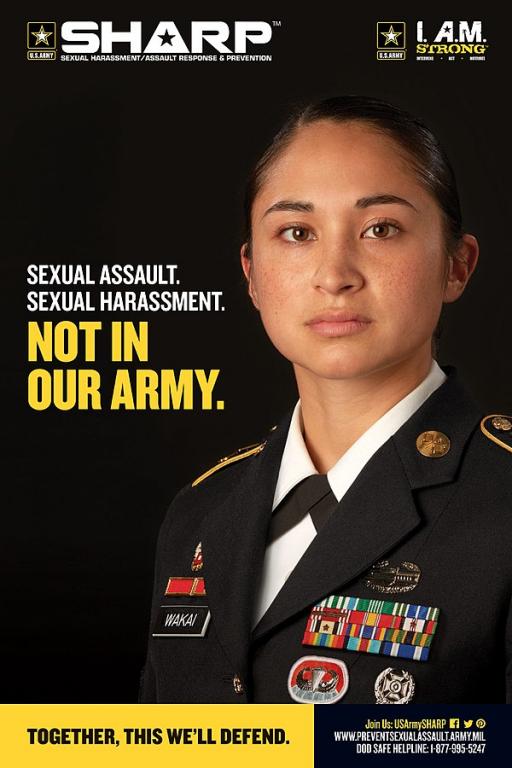
Poster created by Sexual Harassment/Assault Response & Prevention (SHARP) in the US Army. Wikimedia Commons

President Clinton has been known to minimize his sexual misconduct, as shown in an interview regarding the Monica Lewinsky case. Refer here for Clinton’s remarks (0:56-5:58). President Trump has been known to mock women for coming out and making allegations of sexual misconduct by him and others. Refer here for Trump’s remarks against Dr. Christine Ford in making allegations of sexual misconduct against Judge Brett Kavanaugh.
In our democracy, people are considered innocent until proven guilty. However, while that is certainly true and just, such presumed innocence does not negate people’s freedom in our democracy to make allegations and file charges. Both are appropriate and must be weighed ultimately in the court of law, which must never be equated with the court of public opinion.
For what it’s worth, though President Trump claimed Judge Kavanaugh’s life is “in tatters…shattered” based on the allegations, that is simply not true. Judge Kavanaugh now serves on the highest court in the land. And for those who think Dr. Ford was out to gain something from this ordeal, it is important to recognize she risked everything in terms of her professional and public life.
In addition, while certainly politics played a part in the Kavanaugh proceedings, as it always does in Washington, the same was true in the case involving President Clinton. Here it is worth pointing out that Judge Kavanaugh took a swipe at Trump’s opponents and the Clintons and their supporters in his testimony, scoring points with conservatives. It appeared to be a classic case of projection-deflection, a strategy that Trump and Clinton have employed to perfection.
Regardless of our views on Kavanaugh’s and Ford’s innocence or guilt, of which we ourselves really know nothing (perhaps only God knows), we must not minimize or mock cases and allegations of sexual misconduct. Minimization and mockery detract from the weightiness of misconduct and pursuit of truth in cases alleging misconduct. Moreover, those who minimize and mock only make it more difficult for women and men, including our loved ones, to come forward to the authorities with allegations of sexual misconduct.
Certainly, like “Peter Cried Wolf,” those who lie that they were sexually abused hurt those who tell the truth—people are less willing to believe them as a result. Some have gone so far as to discredit Ford because of other women’s allegations that were deemed false. Ford’s testimony was never discredited by the FBI, nor in a court of law. She was deemed credible, even if, in the end, Kavanaugh was confirmed to serve on the Supreme Court. We must take each case on its own merits.
It is worth noting here that the statistics specify that women who have been abused do not come forward often, or often enough. According to one site, “Only 230 out of every 1,000 sexual assaults are reported to police. That means about 3 out of 4 go unreported” (The report references the findings of the Department of Justice, Office of Justice Programs, Bureau of Justice Statistics, National Crime Victimization Survey, 2010-2016 [2017]). Moreover, the same site claims that “perpetrators of sexual violence are less likely to go to jail or prison than other criminals.”
Going deeper, it is important to ask why most women don’t come forward to make allegations of sexual misconduct. According to a Psychology Today article, reasons why many women do not come forward (many of these reasons also relate to men not coming forward) include: a sense of “shame,” “denial/minimization,” “fear of the consequences,” “low self-esteem,” “feelings of hopelessness and helplessness,” “a history of being sexually violated,” “lack of information,” “disbelief, disassociated, or drugged.”
It is also important to point out that not only do women rarely come forward to make allegations, but also according to various studies, false reporting very rarely occurs:
Multiple studies show that false reporting is very uncommon, and some demonstrate it may be even less common than older research suggests. The following information is compiled in an article by Kim Lonsway (2010). The Home Office in the United Kingdom found that only 4% of sexual assaults reported to law enforcement are suspected or found to be false. Research conducted in the United States and Europe show similar rates, between 2% and 6%. Recent U.S. studies by Dr. David Lisak support a false reporting rate of 2%, similar to findings by the Uniform Crime Report (UCR) done by the Federal Bureau of Investigation.
A Brown University source similarly claims: “False reports of sexual assault are dramatically overestimated. Poorly constructed studies and a lack of understanding of the dynamics of sexual assault contribute to this problem. In rigorous research, rates of false reports are consistently very low, ranging from 2% to 10%. This is similar to rates of false reports for other crimes.”
In addition to the importance of addressing myths surrounding false reporting, it is key to get clear on definitions. The terminology “unfounded,” as in “unfounded” sexual assault cases, is not necessarily the same as “false” allegations:
“Unfounded” sexual assault cases are not always the same as false reports. An “unfounded” case can be one of two things: a false report, or a baseless report. A “baseless” report is presumed truthful, but does not have all of the factors to charge as a crime. A “false” report is one that should be proved to be untrue through concrete evidence, not simply because of doubt, suspicion, or uncertainty from law enforcement or anyone else (Refer here for the source of the quotation. Refer here as well for more information).
Given these various factors, we should not minimize cases of sexual misconduct. Nor should we mock women, or men for that matter, who come forward with allegations of sexual misconduct. Of course, we should be concerned that everyone receives a fair and just hearing and trial. As already noted, people are innocent until proven guilty. That proves true for both sides, those accused and those who accuse. But minimizing and mocking do not have a place in a society that affirms the inherent dignity of all people. Besides, who knows? The day may come when your own loved ones may be victims of sexual misconduct and abuse. Who will listen to you then, if you minimize and mock others now?
Previous Post

April 7, 2019
Lenten Extravagance
Next Post
April 12, 2019 Forty Days of Lenten Purpose
Browse Our Archives
Select a Category Uncategorized
Select a Month June 2025 April 2025 March 2025 January 2025 December 2024 November 2024 October 2024 September 2024 August 2024 July 2024 June 2024 May 2024 April 2024 March 2024 February 2024 January 2024 December 2023 November 2023 October 2023 September 2023 August 2023 July 2023 June 2023 May 2023 April 2023 March 2023 February 2023 January 2023 December 2022 November 2022 October 2022 September 2022 August 2022 July 2022 June 2022 May 2022 April 2022 March 2022 February 2022 January 2022 December 2021 November 2021 October 2021 September 2021 August 2021 July 2021 June 2021 May 2021 April 2021 March 2021 February 2021 January 2021 December 2020 November 2020 October 2020 September 2020 August 2020 July 2020 June 2020 May 2020 April 2020 March 2020 February 2020 January 2020 December 2019 November 2019 October 2019 September 2019 August 2019 July 2019 June 2019 May 2019 April 2019 March 2019 February 2019 January 2019 December 2018 November 2018 October 2018 September 2018 August 2018 July 2018 June 2018 May 2018 April 2018 March 2018 February 2018 January 2018 December 2017 November 2017 October 2017 September 2017 August 2017 July 2017 June 2017 May 2017 April 2017 March 2017 February 2017 January 2017 December 2016 November 2016 October 2016 September 2016 August 2016 July 2016 June 2016 May 2016 April 2016 March 2016 February 2016 January 2016 December 2015 November 2015 October 2015 September 2015 August 2015 July 2015 June 2015 May 2015 April 2015 March 2015 February 2015 January 2015 December 2014 November 2014 October 2014 September 2014 August 2014 July 2014 June 2014 May 2014 April 2014 March 2014 February 2014 January 2014 December 2013 November 2013 October 2013 September 2013 August 2013 July 2013 June 2013 May 2013 April 2013 March 2013 February 2013 January 2013 December 2012 November 2012 October 2012 September 2012 August 2012 July 2012 June 2012 May 2012 April 2012 March 2012 February 2012
Follow Us!
TAKE THE
Religious Wisdom Quiz
I stood on a wooden platform and read the Law from daybreak till noon, and the people wept. Who am I?
Select your answer to see how you score.
Ezra Joshua Nehemiah Moses
Books by This Author Books by Paul Louis Metzger
Related posts from Uncommon God, Common Good

Heavenly Father’s Day on Trinity Sunday

Easter Triduum: Obey Your Thirst—for God

Holy Week Is Humble Week: "Beware of Becoming...

Excavating the Person in a Throwaway Culture
TRENDING AT PATHEOS Evangelical

The REST of Your Life: A Creative Wrestles...
This week I had a conversation with a good friend from church....

How the author of the world's best hymn...
I've been working with John Newton for a while now. This makes...

Long before this Lectio Divina, Psalm 130 - the song - started...

What About the Trees? Another Living Parable
After I finished writing the last article about falling leaves as a...

Why Classical Education Is a Conversation, Not a...
Come and Read: Joy in Classical Education When I was a little...

Cornell University has received a great deal of negative publicity and intense...
view all Evangelical blogs
Ad-Free & Subscriber Log-In Subscription Support
- About Us
- 2026 Calendar
- Videos
- Podcasts
- Library of World Religions
- Faith In Media Tracker
- Advertise With Us
- Write for Us
- Privacy Policy
- Terms of Service
- Do Not Sell My Data
- Contact Us
- Radiant Digital
- Manage Newsletter Subscriptions
- Unsubscribe From Notifications
- Sitemap
Copyright 2008-2026, Patheos. All rights reserved.
Subscription Support Ad-Free & Subscriber Log-In
Follow Patheos