
BuddhistCatholicContemplativeEvangelicalGeneral ChristianHinduJewishLatter-day SaintMuslimNew VisionsProgressive Christian
Beliefs
- Buddhist
- Catholic
- Contemplative
- Evangelical
- General Christian
- Hindu
- Jewish
- Latter-day Saint
- More Voices
- Muslim
- New Visions
- Pagan
- Progressive Christian
Topics
- Religion News
- Food and Religion
- Sports and Religion
- Religious Art
- Religious Music and Entertainment
- Religious Events
- History and Religion
- Style and Religion
- Politics and Religion
- Women in Religion
- Recreation Outdoors and Religion
- Business Finance and Religion
- Careers Workplace and Religion
- Education and Religion
- Family Parenting and Religion
- Health Fitness and Religion
- Home and Religion
- Relationships and Religion
- Technology and Religion
- Travel and Religion
Columnists
- Buddhist Columnists
- Business Finance and Religion Columnists
- Careers Workplace and Religion Columnists
- Catholic Columnists
- Contemplative Columnists
- Education and Religion Columnists
- Evangelists Columnists
- Family Parenting and Religion Columnists
- General Christian Columnists
- Health Fitness and Religion Columnists
- Hindu Columnists
- History and Religion Columnists
- Home and Religion Columnists
- Jewish Columnists
- More Voices Columnists
- Latter Day Columnists
- Muslim Columnists
- New Visions Columnists
- Nonreligious Columnists
- Pagan Columnists
- Politics and Religion Columnists
- Progressive Columnists
- Recreation Outdoors and Religion Columnists
- Relationships and Religion Columnists
- Religion News Columnists
- Religious Art Columnists
- Religious Events Columnists
- Religious Music and Entertainment Columnists
- Sports and Religion Columnists
- Style and Religion Columnists
- Technology and Religion Columnists
- Travel and Religion Columnists
- Women in Religion Columnists
Resource Library
- 2026 Calendar
- Library of World Religions
- The 100 Most Holy Places on Earth
- Patheos Answers
- Podcasts
- Videos
- Faith Leaders Database
- Anglican Episcopalian
- Bahai
- Baptist
- Buddhism
- Christianity
- Confucianism
- Eastern Orthodoxy
- Hinduism
- Holiness and Pentecostal
- ISKCON
- Islam
- Judaism
- Lutheran
- Methodist
- The Church of Jesus Christ of Latter-day Saints
- New Age
- Paganism
- Presbytarian and Reformed
- Protestantism
- Religion Behind the Scenes
- Roman Catholic
- Scientology
- Shia Islam
- Sikhism
- Sufism
- Sunni Islam
- Taoism
- Zen
- See all religions
Research Tools
 Ad-Free & Subscriber Log-In Subscription Support
Ad-Free & Subscriber Log-In Subscription Support
Follow Patheos 

- Trending:
- Forgiveness
- |
- Marriage
- |
- Consciousness
- |
- Death Penalty
- |
- Election
- |
- Halloween

- Home
- Evangelical
- On Evangelical Theological Method(s): Beyond ‘Nike’ and ‘Mordor’
On Evangelical Theological Method(s): Beyond ‘Nike’ and ‘Mordor’
Last updated on: August 10, 2018 at 11:28 am by Paul Louis Metzger
On Evangelical Theological Method(s): Beyond ‘Nike’ and ‘Mordor’ 2018-08-10T11:28:25-07:00 Paul Louis Metzger
Patheos Explore the world's faith through different perspectives on religion and spirituality! Patheos has the views of the prevalent religions and spiritualities of the world.
Pick up your copy from IVP here!
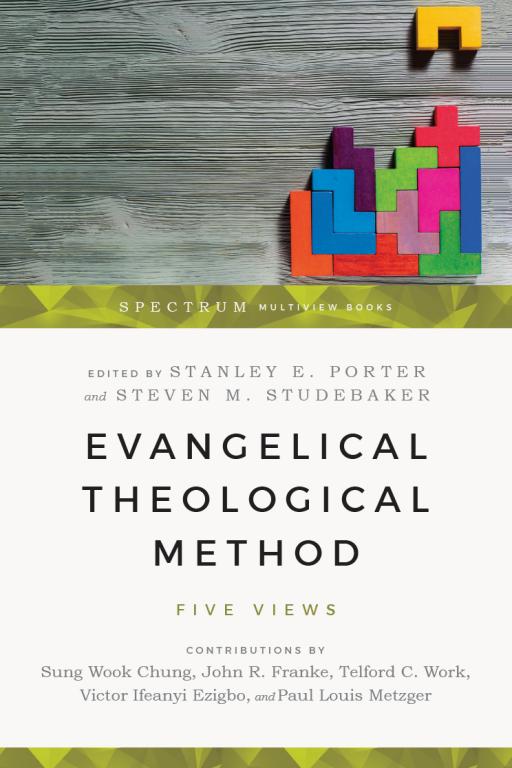
The following is an interview with the editors of a timely, new volume published by InterVarsity Academic on the subject of theological method. The interview on “Evangelical Theological Method: Five Views” with editors Stanley E. Porter and Steven M. Studebaker addresses pressing challenges theologians face today in accounting for and developing theological method. One such challenge is that many scholars and students often function as “Nike theologians,” that is, “they just do theology.” Another challenge is that many approach theological method with a “‘Mordor’ attitude,” just like in Tolkien’s celebrated trilogy where Sauron binds all the rings forged in the fires of Mount Doom to one master ring. Whereas some theologians will argue there is a master method that overshadows and even discounts other theological methods, the editors maintain there is no one theological method “to rule them all.” Born out of the necessity of addressing these and other challenges, this book highlights the vital importance of making clear one’s theological method while accounting for the rich diversity of methodologies in the theological enterprise.
Paul Louis Metzger (PLM): What led the two of you to edit a book on theological method?
Steven M. Studebaker (SMS): First and primarily, we wanted to help students in theological studies. Faculty review of doctoral dissertation proposals revealed that theological studies students have fewer resources, relative to their colleagues in biblical studies, for thinking through how to approach and research their theses and dissertation topics. Second, we wanted to provide a resource that illustrates the “how” and not only the “what” of theological method. A lot of books on theological method are strong on defining what theology is or the “what.” For example, we found some books that define theology in particular ways. We may agree with how they do this. But, how does a student write a paper, thesis, or dissertation that reflects this orientation? Where do they start? What comes next? We wanted to give them something that outlines the theoretical and theological vision for approaching theology as well as how to implement it in practical terms. Third, we hoped to produce a resource that would help faculty at other institutions mentor students.
Stanley E. Porter (SEP): Let me just add that this is a book that was born out of necessity, as Steve has intimated. We mention this in our opening chapter, but we came up with the idea immediately after a faculty meeting—one among many recurring debates—when we had debated why a student had presented a dissertation proposal that did or did not have a particular method and why some methods were well articulated and others were not. We became very concerned that students in theology simply were not aware of and did not have access to discussions of theological method. We were not convinced from what we were seeing that such knowledge was implicit or assumed—we were seeing that it simply was not there and needed to be. We also realized that questions of theological method are not easily resolved simply by invoking a single method, so we thought that a multiple views approach, in which advocates for the various positions presented and defended their positions, would make the best means of presenting the range of views.
PLM: What went into the decision-making process for selecting these five approaches to theological method? What are some other approaches to theological method that you could have chosen for consideration?
SEP: At first we thought very broadly about various approaches to theological method and were not constrained by any particular theological stance. As you can imagine, this led to a fairly lengthy list of various ways in which theology has been methodologically done during the recent modern period. We soon realized that we could not go so broadly, especially because many of these ways of doing theology were either out of date or were not being used by Evangelicals. Correlational theology, for example, is mentioned in the book, and it has had a huge impact on theology as a whole, but it has not played an important role in evangelical theology. So we needed to narrow our focus and concentrate upon evangelical theology.
SMS: We had several conversations about ways that Evangelicals approach the doing of theology. The evangelical focus of the volume became the deciding factor in selecting the methods. The Bible doctrines or propositional approach was the first and most obvious way of doing theology among Evangelicals. Even if it has come under criticism in the last few years, it remains historically and probably even today the most popular way of doing evangelical theology. Beyond that, we tried to place different ways Evangelicals do theology in categories. That led to Missional Theology, which includes what some call post-conservative theology. We liked Missional because it puts the emphasis on what theology is rather than what it rejects. The Dogmatic approach recognizes the ongoing popularity and influence of Karl Barth for evangelical theology. The interdisciplinary and contextual methods provided categories for the current diversification of approaches in evangelical theology. The selection of five methods was due to the parameters of the Spectrum Multiview Books series with InterVarsity Academic Press. Approaches that we considered but left out were various advocacy methods, postmodern (although some would say the missional, interdisciplinary, and contextual approaches fall in this category), and Pentecostal theology. Passing on these other approaches is not a negative judgment on them. But with needing to select five ways, we tried to select methods that were representative of what’s going on in evangelical theology. Indeed, we have talked about doing another volume on theological method that would surely include them!
PLM: What were some of the pleasant surprises and painstaking struggles you experienced over the course of the editing?
SMS: The Bible Doctrines approach was the most straightforward chapter both for the author to write and for us to edit. Conversations with the authors of the other four chapters revealed that theological method often functions implicitly, perhaps even subconsciously. They intuitively use their method, but detailing the steps for doing so was a challenge. I think many scholars and students are Nike theologians–they just do theology.
SEP: I think that Steve captures it well, when he singles out the Bible Doctrines approach from the others. I suspect there are those who think that that is “the” approach to evangelical theology and that the others are either dependent upon it or in some way compromised in relationship to it. However, I think that in the end the essays were sufficiently well nuanced from each other that we can see genuine and substantive differences among the approaches—differences that make a difference in theology. This often comes through in the responses. I hope that readers of the volume will also have benefited from the work that the authors and we as editors did to ensure that the essays were focused and specific in what they conveyed so that these differences emerged.
PLM: How would you encourage theologians in training to use the book for their own disciplinary work?
SEP: This is definitely a student-oriented book in that it is designed to lay out in a relatively short amount of space the five different theological methods. There may be fledgling theologians who have no real understanding of their theological method, and for them this could be a great introduction that will help them to determine their method and distinguish it from others, as a means of getting them to explore further. However, I would also like to think that this book could be used by those with some previous and even advanced knowledge to gain a clearer idea in their own minds of how their position relates to others, or to reinforce or even challenge some of their own methodological presuppositions. Just because someone holds to a particular position does not mean that they have to continue to hold to that method.
SMS: I hope the book serves as a resource in three ways—research and writing, lecturing, and mentoring. First, the five methods can provide a guide for scholars and students for how they can approach their research and writing—the common application of each method to the topic of Christology will particularly be helpful on this score. Second, the methods detailed in the volume will serve as a basis for professors developing lectures, especially for teaching in the area of theology and in particular theological method. Third, I hope that professors will draw on this book to support their advising students on ways to approach writing papers, theses, and dissertations.
PLM: What is your hope for evangelical theology as it relates to theological method, and how does the volume help toward that hope’s fulfillment?
SEP: Evangelical theology has probably been too univocal in the past—or at least ostensibly so—without recognition of underlying diversity, much of which diversity probably originates methodologically. I would be content if this volume helps us gain methodological rigor and insight. My contention has long been that method is crucial to any academic enterprise, as it serves a fundamental role in determining what counts for evidence and how that evidence is evaluated. I also believe that we need to start with method if we are going to finish well. Without a clear method in any research, we have no real idea of where we are or what we are doing or whether we are even accomplishing anything at all.
SMS: I want to see a wider recognition among evangelical theologians that multiple ways of doing theology can enrich evangelical theology. We should get away from a ‘Mordor’ attitude: One method to rule them all . . . . One method can neither say everything that needs to be said nor address every question that needs answering. The authors in this volume capture that spirit. They put forward their views with enthusiasm and conviction, but at the same time recognize the value of the work of their colleagues in the volume. The respectful dialogue that takes place in the book is itself a model of a theological method—perhaps an intra-evangelical ecumenical style.
Previous Post

August 8, 2018
Don't Throw Out the Missional Baby with the Dirty Bathwater
Next Post
August 16, 2018 Mick Jagger, Sainthood and the Affections
Browse Our Archives
Select a Category Uncategorized
Select a Month June 2025 April 2025 March 2025 January 2025 December 2024 November 2024 October 2024 September 2024 August 2024 July 2024 June 2024 May 2024 April 2024 March 2024 February 2024 January 2024 December 2023 November 2023 October 2023 September 2023 August 2023 July 2023 June 2023 May 2023 April 2023 March 2023 February 2023 January 2023 December 2022 November 2022 October 2022 September 2022 August 2022 July 2022 June 2022 May 2022 April 2022 March 2022 February 2022 January 2022 December 2021 November 2021 October 2021 September 2021 August 2021 July 2021 June 2021 May 2021 April 2021 March 2021 February 2021 January 2021 December 2020 November 2020 October 2020 September 2020 August 2020 July 2020 June 2020 May 2020 April 2020 March 2020 February 2020 January 2020 December 2019 November 2019 October 2019 September 2019 August 2019 July 2019 June 2019 May 2019 April 2019 March 2019 February 2019 January 2019 December 2018 November 2018 October 2018 September 2018 August 2018 July 2018 June 2018 May 2018 April 2018 March 2018 February 2018 January 2018 December 2017 November 2017 October 2017 September 2017 August 2017 July 2017 June 2017 May 2017 April 2017 March 2017 February 2017 January 2017 December 2016 November 2016 October 2016 September 2016 August 2016 July 2016 June 2016 May 2016 April 2016 March 2016 February 2016 January 2016 December 2015 November 2015 October 2015 September 2015 August 2015 July 2015 June 2015 May 2015 April 2015 March 2015 February 2015 January 2015 December 2014 November 2014 October 2014 September 2014 August 2014 July 2014 June 2014 May 2014 April 2014 March 2014 February 2014 January 2014 December 2013 November 2013 October 2013 September 2013 August 2013 July 2013 June 2013 May 2013 April 2013 March 2013 February 2013 January 2013 December 2012 November 2012 October 2012 September 2012 August 2012 July 2012 June 2012 May 2012 April 2012 March 2012 February 2012
Follow Us!
TAKE THE
Religious Wisdom Quiz
A hand wrote on the palace wall during a feast, and I interpreted the message: numbered, weighed, divided. What were these three Aramaic words?
Select your answer to see how you score.
Mene, Mene, Tekel, Parsin Babylon, Media, Persia Ichabod, Ebenezer, Beulah Holy, Holy, Holy
Books by This Author Books by Paul Louis Metzger
Related posts from Uncommon God, Common Good

Heavenly Father’s Day on Trinity Sunday

Easter Triduum: Obey Your Thirst—for God

Holy Week Is Humble Week: "Beware of Becoming...

Excavating the Person in a Throwaway Culture
TRENDING AT PATHEOS Evangelical

The REST of Your Life: A Creative Wrestles...
This week I had a conversation with a good friend from church....

How the author of the world's best hymn...
I've been working with John Newton for a while now. This makes...

Long before this Lectio Divina, Psalm 130 - the song - started...

What About the Trees? Another Living Parable
After I finished writing the last article about falling leaves as a...

Why Classical Education Is a Conversation, Not a...
Come and Read: Joy in Classical Education When I was a little...

Cornell University has received a great deal of negative publicity and intense...
view all Evangelical blogs
Ad-Free & Subscriber Log-In Subscription Support
- About Us
- 2026 Calendar
- Videos
- Podcasts
- Library of World Religions
- Faith In Media Tracker
- Advertise With Us
- Write for Us
- Privacy Policy
- Terms of Service
- Do Not Sell My Data
- Contact Us
- Radiant Digital
- Manage Newsletter Subscriptions
- Unsubscribe From Notifications
- Sitemap
Copyright 2008-2026, Patheos. All rights reserved.
Subscription Support Ad-Free & Subscriber Log-In
Follow Patheos