
BuddhistCatholicContemplativeEvangelicalGeneral ChristianHinduJewishLatter-day SaintMuslimNew VisionsProgressive Christian
Beliefs
- Buddhist
- Catholic
- Contemplative
- Evangelical
- General Christian
- Hindu
- Jewish
- Latter-day Saint
- More Voices
- Muslim
- New Visions
- Pagan
- Progressive Christian
Topics
- Religion News
- Food and Religion
- Sports and Religion
- Religious Art
- Religious Music and Entertainment
- Religious Events
- History and Religion
- Style and Religion
- Politics and Religion
- Women in Religion
- Recreation Outdoors and Religion
- Business Finance and Religion
- Careers Workplace and Religion
- Education and Religion
- Family Parenting and Religion
- Health Fitness and Religion
- Home and Religion
- Relationships and Religion
- Technology and Religion
- Travel and Religion
Columnists
- Buddhist Columnists
- Business Finance and Religion Columnists
- Careers Workplace and Religion Columnists
- Catholic Columnists
- Contemplative Columnists
- Education and Religion Columnists
- Evangelists Columnists
- Family Parenting and Religion Columnists
- General Christian Columnists
- Health Fitness and Religion Columnists
- Hindu Columnists
- History and Religion Columnists
- Home and Religion Columnists
- Jewish Columnists
- More Voices Columnists
- Latter Day Columnists
- Muslim Columnists
- New Visions Columnists
- Nonreligious Columnists
- Pagan Columnists
- Politics and Religion Columnists
- Progressive Columnists
- Recreation Outdoors and Religion Columnists
- Relationships and Religion Columnists
- Religion News Columnists
- Religious Art Columnists
- Religious Events Columnists
- Religious Music and Entertainment Columnists
- Sports and Religion Columnists
- Style and Religion Columnists
- Technology and Religion Columnists
- Travel and Religion Columnists
- Women in Religion Columnists
Resource Library
- 2026 Calendar
- Library of World Religions
- The 100 Most Holy Places on Earth
- Patheos Answers
- Podcasts
- Videos
- Faith Leaders Database
- Anglican Episcopalian
- Bahai
- Baptist
- Buddhism
- Christianity
- Confucianism
- Eastern Orthodoxy
- Hinduism
- Holiness and Pentecostal
- ISKCON
- Islam
- Judaism
- Lutheran
- Methodist
- The Church of Jesus Christ of Latter-day Saints
- New Age
- Paganism
- Presbytarian and Reformed
- Protestantism
- Religion Behind the Scenes
- Roman Catholic
- Scientology
- Shia Islam
- Sikhism
- Sufism
- Sunni Islam
- Taoism
- Zen
- See all religions
Research Tools
 Ad-Free & Subscriber Log-In Subscription Support
Follow Patheos 

- Trending:
- Advent
- |
- Forgiveness
- |
- Thanksgiving
- |
- Election
- |
- Seasonal Holidays
- |
- Marriage

- Home
- Evangelical
- Jesus and Jerusalem: A Complex and Troubling Relationship
Jesus and Jerusalem: A Complex and Troubling Relationship
Last updated on: June 16, 2018 at 1:45 pm by Paul Louis Metzger
Jesus and Jerusalem: A Complex and Troubling Relationship 2018-06-16T13:45:34-07:00 Paul Louis Metzger
Patheos Explore the world's faith through different perspectives on religion and spirituality! Patheos has the views of the prevalent religions and spiritualities of the world.
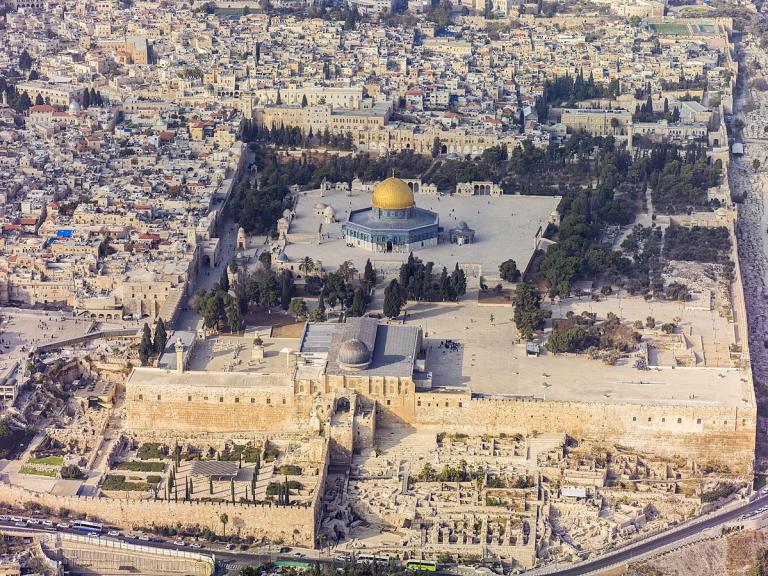

The canonical gospels present Jesus’ complex and troubling relationship with Jerusalem. Take for example Matthew 23. Matthew 23 presents Jesus longing to gather its people to himself: “O Jerusalem, Jerusalem, the city that kills the prophets and stones those who are sent to it! How often would I have gathered your children together as a hen gathers her brood under her wings, and you were not willing!” (Matthew 23:37; ESV). It should be noted that Jesus’ cry of longing follows his outcry against the religious hierarchy for their hypocrisy and injustice (See Matthew 23:1-36). Within a few chapters, we find Jesus dead on a cross outside Jerusalem’s city gates (See Matthew 27).
John’s Gospel also takes issue with key elements of the religious and political hierarchy, not the Jewish people themselves. We find in John 10:31-42 that members of the Jewish establishment seek his death whereas the people flock to him in the wilderness (John 10:31-42). This contrast serves as a strong condemnation of the power structure in place during Jesus’ day.
John’s Gospel presents those who broker power doing anything to preserve their position and the nation as a whole (See Jn 11:48). By the way, the same is true of Pilate who is willing to hand over Jesus unjustly once his own position of power is under threat in the face of the claim that Pilate opposes Caesar if he takes Jesus’ side against his accusers (John 19:12-16). The tragic irony is that, from Jesus’ perspective, the Jewish authorities’ attempt to bring about their preservation and salvation will actually bring about Jerusalem’s ruin.
N.T. Wright claims that Jesus’ unique interpretation of the tradition gives rise to the religious establishment’s rejection of him. The Pharisees maintain that Jesus’ take on the tradition will bring about their and the nation’s demise at the hands of Rome. To the contrary, it is Jesus’ framework that alone would preserve and secure their destiny.[1] For example, the Galilean Jesus’ cleansing of the temple in Jerusalem and offering of forgiveness of sins apart from worship and performance of sacrifices at the temple de-center the power structures and reframe opposition to the political establishment.[2] Jesus becomes the point of reference, not a building or city. Jesus’ body is the ultimate temple, as we find Jesus suggesting in John 2. Jesus makes this claim in the context of cleansing the temple and the authorities’ demand for an authoritative basis for his actions:
So the Jews said to him, “What sign do you show us for doing these things?” Jesus answered them, “Destroy this temple, and in three days I will raise it up.” The Jews then said, “It has taken forty-six years to build this temple, and will you raise it up in three days?” But he was speaking about the temple of his body. When therefore he was raised from the dead, his disciples remembered that he had said this, and they believed the Scripture and the word that Jesus had spoken (John 2:18-22; ESV).
Like John the Baptist, Jesus’ ministry is populist in nature. Like John, Jesus operates largely outside the centers of power. Whereas the Hebrew Scriptures locate so much of the prophetic activity inside Jerusalem, as with Nathan, Ezra and Nehemiah, for example, we find the religious establishment sending representatives to John the Baptist out in the countryside to discern whether he is the Christ, Elijah, or the prophet (John 1:19-28). Moreover, such populism is not limited to Jewish people. Followers or believers in Jesus include Samaritans (See John 4), Greeks (See John 12:20-23), and other Gentiles (See for example Matthew 27:54). Jesus is the lamb who takes away the sin of the whole world (John 1:29).
In John 10, we find opposition to Jesus taking place around the Feast of Dedication in Jerusalem (John 10:22-24). This particular feast honors the second temple’s re-dedication at the time of the Maccabean Revolt in the face of pagan rule in the second century B.C. So much of the tension and opposition recorded in John’s Gospel takes place in Jerusalem around feasts such as this one, including the Passover and Feast of Tabernacles. The confrontation centers on Jesus’ identity.
In light of the preceding discussion, it leaves one to ponder the biblical basis for many Evangelical Zionists’ fixation with Jerusalem. Might not their unflinching support for the opening of the U.S. embassy in Jerusalem with its supposed apocalyptic import actually bring about Jerusalem’s demise, or at least unfathomable distress, like a self-fulfilling prophecy based on their interpretation of Scripture that the nations will rise up against Jerusalem and Israel in the end times? For all their talk of Jesus, would it not make more sense biblically and prudently to focus on Jesus, not Jerusalem? After all, Jesus centered the discussion on himself, not Jerusalem. It is worth pointing out that the Israel government does not embrace Jesus but tolerates Evangelical Zionism for political and nationalistic purposes (to many American Jews’ chagrin). Ironically, in Jesus’ day, such nationalism paved the way along with the Pax Romana to Jesus’ crucifixion. Moreover, one can hardly imagine Jesus going in with the political and religious establishment today in paving the way for his own kingdom, when the Sanhedrin, Pilate and Herod all opposed him. Lastly, Jesus, the ultimate populist, always identifies with those outside the centers of power, Jews and non-Jews alike, including Palestinians, many of whom have embraced him as their Savior and Lord throughout the centuries to the present day. Those Evangelical Zionists who fixate on Jerusalem threaten not only the ultimate peace process, but also witness to Jesus among the very diverse peoples he came to save.
_______________
[1]See N.T. Wright, The Challenge of Jesus: Rediscovering Who Jesus Was and Is (Downers Grove, Ill.: InterVarsity Press, 1999), pages 57-58.
[2]See also Wright’s entire chapter “The Challenge of the Symbols,” in The Challenge of Jesus, pages 54-73.
Previous Post

June 10, 2018
How to Build a Global Missional Movement: Be Open-Handed
Next Post
June 18, 2018 Casual Sex and Casual Faith: A Fatal Fixation
Browse Our Archives
Select a Category Uncategorized
Select a Month June 2025 April 2025 March 2025 January 2025 December 2024 November 2024 October 2024 September 2024 August 2024 July 2024 June 2024 May 2024 April 2024 March 2024 February 2024 January 2024 December 2023 November 2023 October 2023 September 2023 August 2023 July 2023 June 2023 May 2023 April 2023 March 2023 February 2023 January 2023 December 2022 November 2022 October 2022 September 2022 August 2022 July 2022 June 2022 May 2022 April 2022 March 2022 February 2022 January 2022 December 2021 November 2021 October 2021 September 2021 August 2021 July 2021 June 2021 May 2021 April 2021 March 2021 February 2021 January 2021 December 2020 November 2020 October 2020 September 2020 August 2020 July 2020 June 2020 May 2020 April 2020 March 2020 February 2020 January 2020 December 2019 November 2019 October 2019 September 2019 August 2019 July 2019 June 2019 May 2019 April 2019 March 2019 February 2019 January 2019 December 2018 November 2018 October 2018 September 2018 August 2018 July 2018 June 2018 May 2018 April 2018 March 2018 February 2018 January 2018 December 2017 November 2017 October 2017 September 2017 August 2017 July 2017 June 2017 May 2017 April 2017 March 2017 February 2017 January 2017 December 2016 November 2016 October 2016 September 2016 August 2016 July 2016 June 2016 May 2016 April 2016 March 2016 February 2016 January 2016 December 2015 November 2015 October 2015 September 2015 August 2015 July 2015 June 2015 May 2015 April 2015 March 2015 February 2015 January 2015 December 2014 November 2014 October 2014 September 2014 August 2014 July 2014 June 2014 May 2014 April 2014 March 2014 February 2014 January 2014 December 2013 November 2013 October 2013 September 2013 August 2013 July 2013 June 2013 May 2013 April 2013 March 2013 February 2013 January 2013 December 2012 November 2012 October 2012 September 2012 August 2012 July 2012 June 2012 May 2012 April 2012 March 2012 February 2012
Follow Us!
TAKE THE
Religious Wisdom Quiz
What does "Bartholomew" mean in Aramaic?
Select your answer to see how you score.
The Lord is my Shepherd Son of Talmai Servant of God Fisher of Men
Books by This Author Books by Paul Louis Metzger
Related posts from Uncommon God, Common Good

Heavenly Father’s Day on Trinity Sunday

Easter Triduum: Obey Your Thirst—for God

Holy Week Is Humble Week: "Beware of Becoming...

Excavating the Person in a Throwaway Culture
TRENDING AT PATHEOS Evangelical

Making Stones Into Bread: Choosing the “Right” Work
I was on my online arts ministry Zoom meeting with the International...

Ukraine’s exhausted Christians face fifth winter of war
By Julian Lukins The full-scale war in Ukraine is taking “a serious...

Russell Brand's Conviction is not anti-Christian Persecution
How do we shed the reputation that the Church is OK with...

Have you ever caught yourself saying, “I’ll do it tomorrow,” or “Now...

Write Your Story: A Great Way to Find...
A few month’s back, my son was scrolling around Facebook and saw...

Throughout history, people have pursued pleasure, possessions, relationships, and success in an...
view all Evangelical blogs
Ad-Free & Subscriber Log-In Subscription Support
- About Us
- 2026 Calendar
- Videos
- Podcasts
- Library of World Religions
- Faith In Media Tracker
- Advertise With Us
- Write for Us
- Privacy Policy
- Terms of Service
- Do Not Sell My Data
- Contact Us
- Radiant Digital
- Manage Newsletter Subscriptions
- Unsubscribe From Notifications
- Sitemap
Copyright 2008-2026, Patheos. All rights reserved.
Subscription Support Ad-Free & Subscriber Log-In
Follow Patheos