
BuddhistCatholicContemplativeEvangelicalGeneral ChristianHinduJewishLatter-day SaintMuslimNew VisionsProgressive Christian
Beliefs
- Buddhist
- Catholic
- Contemplative
- Evangelical
- General Christian
- Hindu
- Jewish
- Latter-day Saint
- More Voices
- Muslim
- New Visions
- Pagan
- Progressive Christian
Topics
- Religion News
- Food and Religion
- Sports and Religion
- Religious Art
- Religious Music and Entertainment
- Religious Events
- History and Religion
- Style and Religion
- Politics and Religion
- Women in Religion
- Recreation Outdoors and Religion
- Business Finance and Religion
- Careers Workplace and Religion
- Education and Religion
- Family Parenting and Religion
- Health Fitness and Religion
- Home and Religion
- Relationships and Religion
- Technology and Religion
- Travel and Religion
Columnists
- Buddhist Columnists
- Business Finance and Religion Columnists
- Careers Workplace and Religion Columnists
- Catholic Columnists
- Contemplative Columnists
- Education and Religion Columnists
- Evangelists Columnists
- Family Parenting and Religion Columnists
- General Christian Columnists
- Health Fitness and Religion Columnists
- Hindu Columnists
- History and Religion Columnists
- Home and Religion Columnists
- Jewish Columnists
- More Voices Columnists
- Latter Day Columnists
- Muslim Columnists
- New Visions Columnists
- Nonreligious Columnists
- Pagan Columnists
- Politics and Religion Columnists
- Progressive Columnists
- Recreation Outdoors and Religion Columnists
- Relationships and Religion Columnists
- Religion News Columnists
- Religious Art Columnists
- Religious Events Columnists
- Religious Music and Entertainment Columnists
- Sports and Religion Columnists
- Style and Religion Columnists
- Technology and Religion Columnists
- Travel and Religion Columnists
- Women in Religion Columnists
Resource Library
- 2026 Calendar
- Library of World Religions
- The 100 Most Holy Places on Earth
- Patheos Answers
- Podcasts
- Videos
- Faith Leaders Database
- Anglican Episcopalian
- Bahai
- Baptist
- Buddhism
- Christianity
- Confucianism
- Eastern Orthodoxy
- Hinduism
- Holiness and Pentecostal
- ISKCON
- Islam
- Judaism
- Lutheran
- Methodist
- The Church of Jesus Christ of Latter-day Saints
- New Age
- Paganism
- Presbytarian and Reformed
- Protestantism
- Religion Behind the Scenes
- Roman Catholic
- Scientology
- Shia Islam
- Sikhism
- Sufism
- Sunni Islam
- Taoism
- Zen
- See all religions
Research Tools
 Ad-Free & Subscriber Log-In Subscription Support
Ad-Free & Subscriber Log-In Subscription Support
Follow Patheos 

- Trending:
- Forgiveness
- |
- Marriage
- |
- Consciousness
- |
- Death Penalty
- |
- Election
- |
- Halloween

- Home
- Evangelical
- “Have Dominion”: Colonialism and Urban Renewal
“Have Dominion”: Colonialism and Urban Renewal
Last updated on: June 9, 2018 at 6:10 pm by Paul Louis Metzger
“Have Dominion”: Colonialism and Urban Renewal 2018-06-09T18:10:06-07:00 Paul Louis Metzger
Patheos Explore the world's faith through different perspectives on religion and spirituality! Patheos has the views of the prevalent religions and spiritualities of the world.
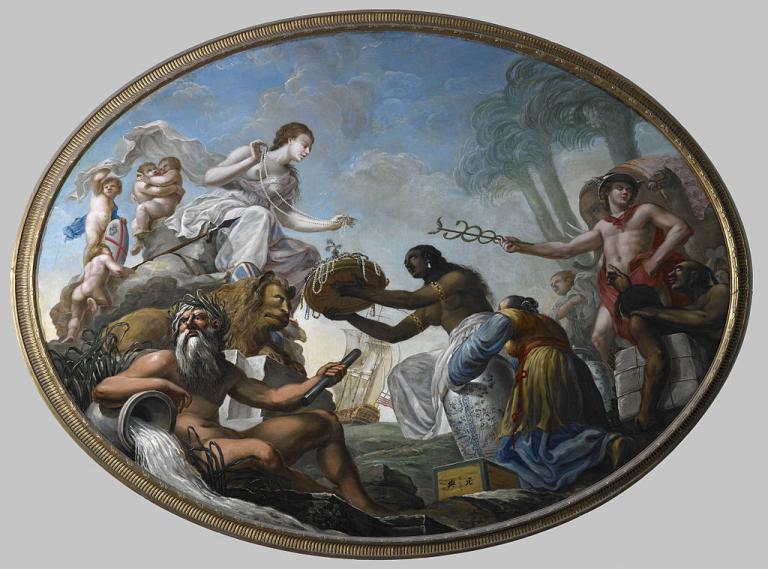

Colonialism is not a thing of the past. It takes place today in urban contexts across the United States in certain forms of urban renewal. In what follows, I will first consider the dominion thesis that was applied to colonialist ambitions in the early modern period and then turn to our present-day context in urban America, specifically North Portland, Oregon.
In his critique of Lynn White’s thesis on the historical roots of the ecological crisis,[1] Peter Harrison argues that the meaning of dominion in creation shifted from control in the mind to “control in the natural world.” This shift was the result of numerous factors. They include: “the ‘death of nature,’ which saw the replacement of Aristotelian vitalism with a mechanical world view; the collapse of the “symbolist mentality” of the Middle Ages and the radical contraction of sacramentalism, which resulted in a denial of the transcendental significance of the things of nature.”[2] It would appear that the shift away from sacramentalism that led to the domination of the planet also resulted in the domination and displacement of people groups who failed to dominate the earth. Harrison writes:
A final incentive for this energetic engagement with the material world came with the linkage of the imperative ‘have dominion’ to justifications of property ownership and colonization. In his Second Treatise of Government (1689), John Locke set out the view that in the state of nature, all land had been common. Land became private property when it was improved by clearing, planting, cultivation, or stocking with animals. The justification for this influential understanding of the basis of property ownership came from the biblical story of creation: for inasmuch as “God and his reason commanded him to subdue the earth, i.e. improve it for . . . the benefit of life . . . he that in obedience to this command of God, subdued, tilled, and sowed any part of, thereby annexed to it something that was his property.” Logically, it followed that those who occupied lands, yet had done nothing to bring them under control, could legitimately be dispossessed of them. Such notions were to play an important role in the justification of overseas plantations and colonies.[3]
Harrison adds, “Developing conceptions of private property, along with commercial incentives for colonization, thus played their role in the modern conquest of nature, and these factors, too, found their ideological justification in seventeenth- and eighteenth-century readings of Genesis.”[4]
In reading Harrison’s article, my mind shot forward from the seventeenth and eighteenth centuries to the twentieth and twenty-first centuries, from colonized Africa to colonized African American communities in gentrified cities across the United States. Apparently to blue eyes, African Americans (like Native Americans before them) did nothing to bring the land they “occupied…under control.” Thus, it was deemed fitting to dispossess them of the land. Whether one tips the hat to the Genesis creation account for this dominion thesis, as many Europeans did in the seventeenth century and beyond, or to secular sources, the result is the same—displacement.
Such displacement is on full display in North Portland in Oregon (Refer here, for example). This week, my doctor of ministry cohort in Cross-Cultural Engagement at Multnomah University and Seminary had the opportunity to tour one of the neighborhoods in North Portland with Pastor Mark Strong of Life Change Church. Pastor Strong is African American and grew up in the neighborhood where his church is located. Life Change has been a vital presence there for decades. While it was easy to spot the church in the early 2000’s, now it is quite easy to drive right past it, as it is surrounded by tall buildings and ongoing developments.
It is also quite easy for contemporary white urban ‘pioneers’ such as developers and church planters to set up shop in North Portland without acknowledging the communities that already exist there. It is one thing to move into a community and become an integral part of it. It is quite another to move in and operate in isolation, often overshadowing and displacing one’s host community.
The latter approach often betrays the colonialist mindset that the indigenous populations have not done anything to bring the land they occupy under their control. As a result, the colonialist mentality deems it morally appropriate (explicitly or implicitly) to dispossess them of the land. What this perspective fails to realize is that efforts have often been made by African American communities to build their neighborhoods, but they have suffered from redlining and other forms of structural racism. Present-day urban ‘pioneers’ who witness urban decay when they arrive need to account for the historic problem of redlining, which signifies that people living in an area were not able to attain loans to develop their neighborhoods because these locations were deemed financially risky. While redlining is now illegal, one often wonders if such practices continue in more subtle forms, at least when those seeking the loans do not belong to the dominant culture. What is obvious in places like North Portland is that developers and hipster pioneers are getting loans to remake the community in their own likeness and image.
Greater sensitivity is required. White, urban pioneers, including church planters, who develop space and/or who move into North Portland and other African American communities in Portland and across the country need to partner with the African Americans already residing there. They need to learn their history, honor their culture and become vital members of the communities that already exist there rather than operate in isolation.
One of the many tragic ironies in places like liberal Portland is that for all its wonderful environmentally sound practices and rightful concerns over social inequities, the dominant culture so often operates in a colonialist fashion when it comes to property ownership. Urban renewal is often shorthand for what one urban studies professor in Portland critically termed “Negro removal.”
_______________
[1]See Lynn White, Jr., “The Historical Roots of Our Ecological Crisis,” Science 155 (1967): 1203-7. See Peter Harrison, “Subduing the Earth: Genesis 1, Early Modern Science, and the Exploitation of Nature,” The Journal of Religion (January 1999): 86-109. Here is a significant example of the critique: “In the rhetoric of seventeenth-century scientists and exegetes, then, we encounter new and momentous applications of the biblical imperatives ‘subdue’ and ‘have dominion.’ It is difficult to escape the conclusion that the Genesis creation narratives provided the program for not only the investigation of nature but its exploitation as well. Stripped of their allegorical and moral connotations, these passages were taken to refer unambiguously to the physical world and its living occupants. Whatever the ecological practices of medieval societies had been, at no time in the West prior to this do we encounter so explicit an ideology of the subordination of nature. White was correct to assign an important role to the creation story in the development of modern science and technology but mistaken in locating that effect earlier than the seventeenth century.” Harrison, “Subduing the Earth,” pages 101-102.
[2]Harrison, “Subduing the Earth,” page 96.
[3]Harrison, “Subduing the Earth,” pages 100-101.
[4]Harrison, “Subduing the Earth,” page 101.
Next Post

June 10, 2018 How to Build a Global Missional Movement: Be Open-Handed
Browse Our Archives
Select a Category Uncategorized
Select a Month June 2025 April 2025 March 2025 January 2025 December 2024 November 2024 October 2024 September 2024 August 2024 July 2024 June 2024 May 2024 April 2024 March 2024 February 2024 January 2024 December 2023 November 2023 October 2023 September 2023 August 2023 July 2023 June 2023 May 2023 April 2023 March 2023 February 2023 January 2023 December 2022 November 2022 October 2022 September 2022 August 2022 July 2022 June 2022 May 2022 April 2022 March 2022 February 2022 January 2022 December 2021 November 2021 October 2021 September 2021 August 2021 July 2021 June 2021 May 2021 April 2021 March 2021 February 2021 January 2021 December 2020 November 2020 October 2020 September 2020 August 2020 July 2020 June 2020 May 2020 April 2020 March 2020 February 2020 January 2020 December 2019 November 2019 October 2019 September 2019 August 2019 July 2019 June 2019 May 2019 April 2019 March 2019 February 2019 January 2019 December 2018 November 2018 October 2018 September 2018 August 2018 July 2018 June 2018 May 2018 April 2018 March 2018 February 2018 January 2018 December 2017 November 2017 October 2017 September 2017 August 2017 July 2017 June 2017 May 2017 April 2017 March 2017 February 2017 January 2017 December 2016 November 2016 October 2016 September 2016 August 2016 July 2016 June 2016 May 2016 April 2016 March 2016 February 2016 January 2016 December 2015 November 2015 October 2015 September 2015 August 2015 July 2015 June 2015 May 2015 April 2015 March 2015 February 2015 January 2015 December 2014 November 2014 October 2014 September 2014 August 2014 July 2014 June 2014 May 2014 April 2014 March 2014 February 2014 January 2014 December 2013 November 2013 October 2013 September 2013 August 2013 July 2013 June 2013 May 2013 April 2013 March 2013 February 2013 January 2013 December 2012 November 2012 October 2012 September 2012 August 2012 July 2012 June 2012 May 2012 April 2012 March 2012 February 2012
Follow Us!
TAKE THE
Religious Wisdom Quiz
In Colossians, Paul says that Christ is the head of what?
Select your answer to see how you score.
All creation The believers The apostles The body, the church
Books by This Author Books by Paul Louis Metzger
Related posts from Uncommon God, Common Good

Heavenly Father’s Day on Trinity Sunday

Easter Triduum: Obey Your Thirst—for God

Holy Week Is Humble Week: "Beware of Becoming...

Excavating the Person in a Throwaway Culture
TRENDING AT PATHEOS Evangelical

The REST of Your Life: A Creative Wrestles...
This week I had a conversation with a good friend from church....

How the author of the world's best hymn...
I've been working with John Newton for a while now. This makes...

Long before this Lectio Divina, Psalm 130 - the song - started...

What About the Trees? Another Living Parable
After I finished writing the last article about falling leaves as a...

Why Classical Education Is a Conversation, Not a...
Come and Read: Joy in Classical Education When I was a little...

Cornell University has received a great deal of negative publicity and intense...
view all Evangelical blogs
Ad-Free & Subscriber Log-In Subscription Support
- About Us
- 2026 Calendar
- Videos
- Podcasts
- Library of World Religions
- Faith In Media Tracker
- Advertise With Us
- Write for Us
- Privacy Policy
- Terms of Service
- Do Not Sell My Data
- Contact Us
- Radiant Digital
- Manage Newsletter Subscriptions
- Unsubscribe From Notifications
- Sitemap
Copyright 2008-2026, Patheos. All rights reserved.
Subscription Support Ad-Free & Subscriber Log-In
Follow Patheos