
BuddhistCatholicContemplativeEvangelicalGeneral ChristianHinduJewishLatter-day SaintMuslimNew VisionsProgressive Christian
Beliefs
- Buddhist
- Catholic
- Contemplative
- Evangelical
- General Christian
- Hindu
- Jewish
- Latter-day Saint
- More Voices
- Muslim
- New Visions
- Pagan
- Progressive Christian
Topics
- Religion News
- Food and Religion
- Sports and Religion
- Religious Art
- Religious Music and Entertainment
- Religious Events
- History and Religion
- Style and Religion
- Politics and Religion
- Women in Religion
- Recreation Outdoors and Religion
- Business Finance and Religion
- Careers Workplace and Religion
- Education and Religion
- Family Parenting and Religion
- Health Fitness and Religion
- Home and Religion
- Relationships and Religion
- Technology and Religion
- Travel and Religion
Columnists
- Buddhist Columnists
- Business Finance and Religion Columnists
- Careers Workplace and Religion Columnists
- Catholic Columnists
- Contemplative Columnists
- Education and Religion Columnists
- Evangelists Columnists
- Family Parenting and Religion Columnists
- General Christian Columnists
- Health Fitness and Religion Columnists
- Hindu Columnists
- History and Religion Columnists
- Home and Religion Columnists
- Jewish Columnists
- More Voices Columnists
- Latter Day Columnists
- Muslim Columnists
- New Visions Columnists
- Nonreligious Columnists
- Pagan Columnists
- Politics and Religion Columnists
- Progressive Columnists
- Recreation Outdoors and Religion Columnists
- Relationships and Religion Columnists
- Religion News Columnists
- Religious Art Columnists
- Religious Events Columnists
- Religious Music and Entertainment Columnists
- Sports and Religion Columnists
- Style and Religion Columnists
- Technology and Religion Columnists
- Travel and Religion Columnists
- Women in Religion Columnists
Resource Library
- 2026 Calendar
- Library of World Religions
- The 100 Most Holy Places on Earth
- Patheos Answers
- Podcasts
- Videos
- Faith Leaders Database
- Anglican Episcopalian
- Bahai
- Baptist
- Buddhism
- Christianity
- Confucianism
- Eastern Orthodoxy
- Hinduism
- Holiness and Pentecostal
- ISKCON
- Islam
- Judaism
- Lutheran
- Methodist
- The Church of Jesus Christ of Latter-day Saints
- New Age
- Paganism
- Presbytarian and Reformed
- Protestantism
- Religion Behind the Scenes
- Roman Catholic
- Scientology
- Shia Islam
- Sikhism
- Sufism
- Sunni Islam
- Taoism
- Zen
- See all religions
Research Tools
 Ad-Free & Subscriber Log-In Subscription Support
Ad-Free & Subscriber Log-In Subscription Support
Follow Patheos 

- Trending:
- Forgiveness
- |
- Marriage
- |
- Consciousness
- |
- Death Penalty
- |
- Election
- |
- Halloween

- Home
- Evangelical
- How to Build a Global Missional Movement: Be Open to Change
How to Build a Global Missional Movement: Be Open to Change
Last updated on: June 10, 2018 at 10:12 am by Paul Louis Metzger
How to Build a Global Missional Movement: Be Open to Change 2018-06-10T10:12:40-07:00 Paul Louis Metzger
Patheos Explore the world's faith through different perspectives on religion and spirituality! Patheos has the views of the prevalent religions and spiritualities of the world.

How do you build a global missional movement rather than a monument? More precisely, how do you become a vehicle through whom God builds Jesus’ missional movement? Here is the first of three not-so-easy, but all-important steps:
First, be open to change. This principle stands in contrast to those monumental last words that destroy missional movements: “We’ve never done it that way before.” While it is not the case that every form of change is a good thing, a lack of openness to change kills momentum.
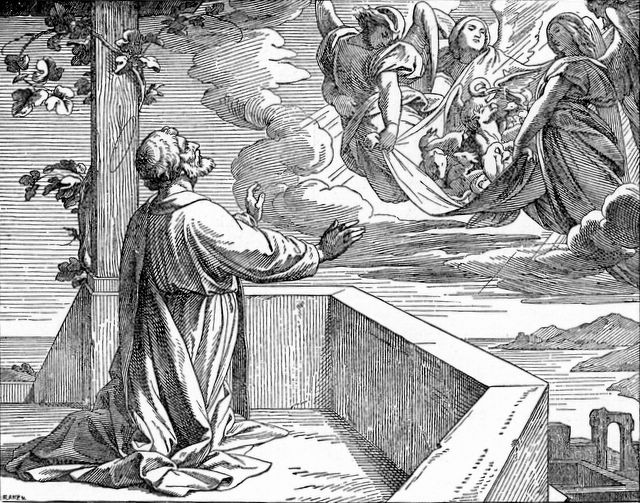
In reflecting upon this theme, I am drawn to Acts 10, where Peter experiences a spiritual crisis. There we find God speaking to Peter in a vision to eat what was considered an assortment of unclean food. In his dream state, Peter refuses to take up and eat the food put before him. Here’s the account:
He saw heaven opened and something like a large sheet being let down to earth by its four corners. It contained all kinds of four-footed animals, as well as reptiles and birds. Then a voice told him, “Get up, Peter. Kill and eat.” “Surely not, Lord!” Peter replied. “I have never eaten anything impure or unclean” (Acts 10:11-14; NIV).
This happens three times (Acts 10:16). On the second occasion, a voice from heaven exhorts Peter: “Do not call anything impure that God has made clean” (Acts 10:15; NIV).
After the vision, Peter is left to ponder the meaning of it all. As he is reflecting upon the vision, men representing a God-fearing Roman Centurion named Cornelius come to the house where Peter is staying. The Spirit of God instructs Peter to go with them to Cornelius who was told by a holy angel to call for Peter to instruct Cornelius (See Acts 10:17-22). Peter welcomes them in and then goes with them to Cornelius’ house (Acts 10: 23-24).
I love Peter’s response to Cornelius upon entering the Centurion’s home:
While talking with him, Peter went inside and found a large gathering of people. He said to them: “You are well aware that it is against our law for a Jew to associate with or visit a Gentile. But God has shown me that I should not call anyone impure or unclean. So when I was sent for, I came without raising any objection” (Acts 10:27-29; NIV).
Like most of us, Peter is a creature of habit. Moreover, he seeks to honor God. So, when he is told to eat animals that are considered impure, he objects. Moreover, he would object if given the opportunity to resist stepping inside a Gentile’s home. How would we respond to God in such situations?
Now I do not think the point of the vision is for Peter to start eating food Jewish tradition considers unclean. The vision is really about engaging outsiders who would be considered unclean. The ultimate aim of Peter’s encounter with Cornelius and his household is for them to experience salvation through faith in Jesus Christ in fulfillment of Acts 1:8. Indeed, the apostolic community of which Peter is a central figure is to be Jesus’ witnesses in Jerusalem, Judea and Samaria, and to the ends of the earth.
Now what would happen to the missional movement of the early church if Peter refuses to go with Cornelius’ servants and share with Cornelius and his community? The missional movement would become a monument. But thankfully, Peter is growing. He is not becoming hard-hearted or closed-minded. Rather, he responds in obedience to the Lord.
How about us? How do we respond? What stands between God and us in being Jesus’ witnesses wherever God’s Spirit desires to send us? And what stands between us and those to whom we are called? Could it be a sense of our superior moral purity, and that we do not wish to be made unclean?
Just think: left to himself, Peter may find Cornelius unclean and unworthy of his consideration for several reasons. For one, Cornelius is a Gentile, not a Jew. Moreover, Cornelius is only a God-fearer, not a believer in Jesus. Furthermore, Cornelius is a Centurion, whose purpose is to rule on behalf of Rome over the nations, including Israel. So, there are many reasons why Peter might find Cornelius impure and refuse to engage him. I am grateful that Peter does not refuse God’s prompting and is open to change.
Given that Peter does engage Cornelius in response to God’s leading, he becomes a wonderful catalyst for Jesus’ missional kingdom. Peter also challenges us today not to write people off. Peter speaks prophetically into our culture of disgust. As Jonathan Haidt has argued in a TED Talk, we live in a society where we deem those who disagree with us as disgusting. In our culture of disgust, if you want to stay pure, you should discount and disregard those who disagree with you. While Cornelius is certainly on his way to becoming a follower of Jesus, he is not quite there yet. However, that does not stop Peter from getting our of his comfort zone, responding, and reaching out. Peter shows how open he is to God’s prompting to change by being open to this God-fearing, Roman centurion.
Who are we willing to engage for the sake of the gospel of Jesus’ kingdom? Who are we writing off as not worthy of our time or consideration? Let’s take our cue from Peter’s example. Let’s not write anyone off based on where they stand presently with Jesus. Let’s not allow one’s cultural or political background to stand in the way either. Like Peter, let’s be open to change for the sake of the gospel of Jesus’ kingdom, thereby ensuring we belong to Jesus’ missional movement, not a monument.
Previous Post

May 4, 2018
Jonathan Edwards, Spider Webs and You, Part II
Next Post
May 8, 2018 Jonathan Edwards, Spider Webs and You, Part III
Browse Our Archives
Select a Category Uncategorized
Select a Month June 2025 April 2025 March 2025 January 2025 December 2024 November 2024 October 2024 September 2024 August 2024 July 2024 June 2024 May 2024 April 2024 March 2024 February 2024 January 2024 December 2023 November 2023 October 2023 September 2023 August 2023 July 2023 June 2023 May 2023 April 2023 March 2023 February 2023 January 2023 December 2022 November 2022 October 2022 September 2022 August 2022 July 2022 June 2022 May 2022 April 2022 March 2022 February 2022 January 2022 December 2021 November 2021 October 2021 September 2021 August 2021 July 2021 June 2021 May 2021 April 2021 March 2021 February 2021 January 2021 December 2020 November 2020 October 2020 September 2020 August 2020 July 2020 June 2020 May 2020 April 2020 March 2020 February 2020 January 2020 December 2019 November 2019 October 2019 September 2019 August 2019 July 2019 June 2019 May 2019 April 2019 March 2019 February 2019 January 2019 December 2018 November 2018 October 2018 September 2018 August 2018 July 2018 June 2018 May 2018 April 2018 March 2018 February 2018 January 2018 December 2017 November 2017 October 2017 September 2017 August 2017 July 2017 June 2017 May 2017 April 2017 March 2017 February 2017 January 2017 December 2016 November 2016 October 2016 September 2016 August 2016 July 2016 June 2016 May 2016 April 2016 March 2016 February 2016 January 2016 December 2015 November 2015 October 2015 September 2015 August 2015 July 2015 June 2015 May 2015 April 2015 March 2015 February 2015 January 2015 December 2014 November 2014 October 2014 September 2014 August 2014 July 2014 June 2014 May 2014 April 2014 March 2014 February 2014 January 2014 December 2013 November 2013 October 2013 September 2013 August 2013 July 2013 June 2013 May 2013 April 2013 March 2013 February 2013 January 2013 December 2012 November 2012 October 2012 September 2012 August 2012 July 2012 June 2012 May 2012 April 2012 March 2012 February 2012
Follow Us!
TAKE THE
Religious Wisdom Quiz
Who was the wife of Isaac?
Select your answer to see how you score.
Sarah Rachel Rebekah Leah
Books by This Author Books by Paul Louis Metzger
Related posts from Uncommon God, Common Good

Heavenly Father’s Day on Trinity Sunday

Easter Triduum: Obey Your Thirst—for God

Holy Week Is Humble Week: "Beware of Becoming...

Excavating the Person in a Throwaway Culture
TRENDING AT PATHEOS Evangelical

The REST of Your Life: A Creative Wrestles...
This week I had a conversation with a good friend from church....

How the author of the world's best hymn...
I've been working with John Newton for a while now. This makes...

Long before this Lectio Divina, Psalm 130 - the song - started...

What About the Trees? Another Living Parable
After I finished writing the last article about falling leaves as a...

Why Classical Education Is a Conversation, Not a...
Come and Read: Joy in Classical Education When I was a little...

Cornell University has received a great deal of negative publicity and intense...
view all Evangelical blogs
Ad-Free & Subscriber Log-In Subscription Support
- About Us
- 2026 Calendar
- Videos
- Podcasts
- Library of World Religions
- Faith In Media Tracker
- Advertise With Us
- Write for Us
- Privacy Policy
- Terms of Service
- Do Not Sell My Data
- Contact Us
- Radiant Digital
- Manage Newsletter Subscriptions
- Unsubscribe From Notifications
- Sitemap
Copyright 2008-2026, Patheos. All rights reserved.
Subscription Support Ad-Free & Subscriber Log-In
Follow Patheos