
BuddhistCatholicContemplativeEvangelicalGeneral ChristianHinduJewishLatter-day SaintMuslimNew VisionsProgressive Christian
Beliefs
- Buddhist
- Catholic
- Contemplative
- Evangelical
- General Christian
- Hindu
- Jewish
- Latter-day Saint
- More Voices
- Muslim
- New Visions
- Pagan
- Progressive Christian
Topics
- Religion News
- Food and Religion
- Sports and Religion
- Religious Art
- Religious Music and Entertainment
- Religious Events
- History and Religion
- Style and Religion
- Politics and Religion
- Women in Religion
- Recreation Outdoors and Religion
- Business Finance and Religion
- Careers Workplace and Religion
- Education and Religion
- Family Parenting and Religion
- Health Fitness and Religion
- Home and Religion
- Relationships and Religion
- Technology and Religion
- Travel and Religion
Columnists
- Buddhist Columnists
- Business Finance and Religion Columnists
- Careers Workplace and Religion Columnists
- Catholic Columnists
- Contemplative Columnists
- Education and Religion Columnists
- Evangelists Columnists
- Family Parenting and Religion Columnists
- General Christian Columnists
- Health Fitness and Religion Columnists
- Hindu Columnists
- History and Religion Columnists
- Home and Religion Columnists
- Jewish Columnists
- More Voices Columnists
- Latter Day Columnists
- Muslim Columnists
- New Visions Columnists
- Nonreligious Columnists
- Pagan Columnists
- Politics and Religion Columnists
- Progressive Columnists
- Recreation Outdoors and Religion Columnists
- Relationships and Religion Columnists
- Religion News Columnists
- Religious Art Columnists
- Religious Events Columnists
- Religious Music and Entertainment Columnists
- Sports and Religion Columnists
- Style and Religion Columnists
- Technology and Religion Columnists
- Travel and Religion Columnists
- Women in Religion Columnists
Resource Library
- 2026 Calendar
- Library of World Religions
- The 100 Most Holy Places on Earth
- Patheos Answers
- Podcasts
- Videos
- Faith Leaders Database
- Anglican Episcopalian
- Bahai
- Baptist
- Buddhism
- Christianity
- Confucianism
- Eastern Orthodoxy
- Hinduism
- Holiness and Pentecostal
- ISKCON
- Islam
- Judaism
- Lutheran
- Methodist
- The Church of Jesus Christ of Latter-day Saints
- New Age
- Paganism
- Presbytarian and Reformed
- Protestantism
- Religion Behind the Scenes
- Roman Catholic
- Scientology
- Shia Islam
- Sikhism
- Sufism
- Sunni Islam
- Taoism
- Zen
- See all religions
Research Tools
 Ad-Free & Subscriber Log-In Subscription Support
Ad-Free & Subscriber Log-In Subscription Support
Follow Patheos 

- Trending:
- Forgiveness
- |
- Marriage
- |
- Consciousness
- |
- Death Penalty
- |
- Election
- |
- Halloween

- Home
- Evangelical
- Jonathan Edwards, Spider Webs and You, Part I
Jonathan Edwards, Spider Webs and You, Part I
Last updated on: April 28, 2018 at 8:07 am by Paul Louis Metzger
Jonathan Edwards, Spider Webs and You, Part I 2018-04-28T08:07:20-07:00 Paul Louis Metzger
Patheos Explore the world's faith through different perspectives on religion and spirituality! Patheos has the views of the prevalent religions and spiritualities of the world.

On most accounts, Jonathan Edwards is considered one of America’s greatest intellectuals and spiritual influences. Here I am reminded of historian George Marsden’s claim that American history “recounted without its religious history of Edwards is like Moby Dick without the whale.”[1]
I have been residing in one of Edwards’ stomping grounds this spring, New Haven, Connecticut. Edwards graduated from Yale University and served as a tutor here. The divinity school at Yale houses a center in his honor and a college at the university bears his name. I have been working on a book project that has provided occasion to study Edwards. So, when I heard that the Overseas Ministries Study Center, where I serve as Senior Mission Scholar in Residence, was offering a Jonathan Edwards tour, I jumped at the opportunity. I will highlight key impressions the Edwards tour made on me in three posts, beginning with this one.
Edwards has always been a mysterious and extremely complex figure, who is sometimes shrouded in misrepresentations. The only work I recall reading of Edwards in my youth was his sermon “Sinners in the Hands of an Angry God.” It was a selection in my American Literature course. Regardless of what one makes of this sermon, and no matter how powerful the imagery, in no way does it sum up the rich variety of writings in Edwards’ corpus. Still, for the purposes of this brief series of posts, which will focus on the Jonathan Edwards tour, one image from that sermon will serve as a unifying thread: the spider.
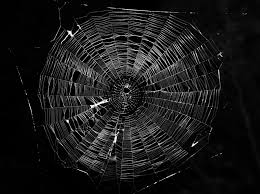
I will return to the image of the spider found in “Sinners in the Hands of an Angry God” in my second of three posts. For now, however, I wish to draw your attention to Edwards’ “Spider Letter,” which was written in 1723 (when he was 20). Our tour guide took us to what he called the “Spider Field(s),” where Edwards would go as a boy. Edwards was fascinated with spiders, as many children are. But few children grow up reflecting on spiders at great length, though Edwards did.
According to our guide, even as a child, one could find traits in Edwards’ precocious mind that would remain throughout his life, and not simply his fascination with spiders. Two qualities manifest themselves in this letter: first, Edwards exemplified the keen observational and analytical skill of a natural scientist; second, Edwards modeled at the same time the towering reach of a metaphysician. While gifted in the former discipline, Edwards’ passion was directed toward the latter vocation. As the editors of A Jonathan Edwards Reader note, “The young Edwards’ explorations of the natural, material world were, from the start, merely entry points to a larger, invisible world.”[2]
While many would find Edwards’ metaphysical and theological drive problematic and anachronistic (a throwback to the Medievals), I relish his fascination with exploring connections between various domains, including the natural and supernatural realms. Chief among Edwards’ interests was his regard for aesthetics and search for symmetry and harmony. For Edwards, no doubt such consideration bore witness to his ultimate passion—the triune God, who is “the supreme harmony of all.”[3]
There is certainly a need for rigorous consideration of the natural realm as a distinctive enterprise unsoiled by metaphysical intrusions that discredit objective inquiry. However, there is also a need to search for threads that connect the natural and moral domains without collapsing them, and to pursue existential questions pertaining to why we exist that cannot be analyzed like an insect trapped under glass. Edwards’ quest might seem misguided to some, but at least one advantage he has over us today is that his world was not ripped apart, but whole, like an intricate and dazzling spider web. What kind of web would you construct between the natural, moral and existential spheres, and how aesthetically pleasing do you find it?
_____________________________
[1]George Marsden, quoted in Jay Tolson, “The New Old-Time Religion,” in U.S. News and World Report, Dec. 8, 2003, page 38.
[2]Editor’s Introduction,” in A Jonathan Edwards Reader, ed. John E. Smith, Harry S. Stout, and Kenneth P. Minkema (New Haven: Yale University Press, 1995), page xi.
[3]Jonathan Edwards, “Heaven,” in The “Miscellanies,” The “Miscellanies,” ed. Thomas A. Schafer, vol. 13, The Works of Jonathan Edwards (New Haven: Yale University Press, 1994), no. 182, page 329.
Previous Post

April 21, 2018
Don’t Despair on Heartbreak Hill. Run with Endurance.
Next Post
April 28, 2018 Hebrews' Closing Announcements: Missional Action Steps
Browse Our Archives
Select a Category Uncategorized
Select a Month June 2025 April 2025 March 2025 January 2025 December 2024 November 2024 October 2024 September 2024 August 2024 July 2024 June 2024 May 2024 April 2024 March 2024 February 2024 January 2024 December 2023 November 2023 October 2023 September 2023 August 2023 July 2023 June 2023 May 2023 April 2023 March 2023 February 2023 January 2023 December 2022 November 2022 October 2022 September 2022 August 2022 July 2022 June 2022 May 2022 April 2022 March 2022 February 2022 January 2022 December 2021 November 2021 October 2021 September 2021 August 2021 July 2021 June 2021 May 2021 April 2021 March 2021 February 2021 January 2021 December 2020 November 2020 October 2020 September 2020 August 2020 July 2020 June 2020 May 2020 April 2020 March 2020 February 2020 January 2020 December 2019 November 2019 October 2019 September 2019 August 2019 July 2019 June 2019 May 2019 April 2019 March 2019 February 2019 January 2019 December 2018 November 2018 October 2018 September 2018 August 2018 July 2018 June 2018 May 2018 April 2018 March 2018 February 2018 January 2018 December 2017 November 2017 October 2017 September 2017 August 2017 July 2017 June 2017 May 2017 April 2017 March 2017 February 2017 January 2017 December 2016 November 2016 October 2016 September 2016 August 2016 July 2016 June 2016 May 2016 April 2016 March 2016 February 2016 January 2016 December 2015 November 2015 October 2015 September 2015 August 2015 July 2015 June 2015 May 2015 April 2015 March 2015 February 2015 January 2015 December 2014 November 2014 October 2014 September 2014 August 2014 July 2014 June 2014 May 2014 April 2014 March 2014 February 2014 January 2014 December 2013 November 2013 October 2013 September 2013 August 2013 July 2013 June 2013 May 2013 April 2013 March 2013 February 2013 January 2013 December 2012 November 2012 October 2012 September 2012 August 2012 July 2012 June 2012 May 2012 April 2012 March 2012 February 2012
Follow Us!
TAKE THE
Religious Wisdom Quiz
Who interpreted Nebuchadnezzar's dream of a statue?
Select your answer to see how you score.
Joseph Daniel Abraham Ezekiel
Books by This Author Books by Paul Louis Metzger
Related posts from Uncommon God, Common Good

Heavenly Father’s Day on Trinity Sunday

Easter Triduum: Obey Your Thirst—for God

Holy Week Is Humble Week: "Beware of Becoming...

Excavating the Person in a Throwaway Culture
TRENDING AT PATHEOS Evangelical

The REST of Your Life: A Creative Wrestles...
This week I had a conversation with a good friend from church....

How the author of the world's best hymn...
I've been working with John Newton for a while now. This makes...

Long before this Lectio Divina, Psalm 130 - the song - started...

What About the Trees? Another Living Parable
After I finished writing the last article about falling leaves as a...

Why Classical Education Is a Conversation, Not a...
Come and Read: Joy in Classical Education When I was a little...

Cornell University has received a great deal of negative publicity and intense...
view all Evangelical blogs
Ad-Free & Subscriber Log-In Subscription Support
- About Us
- 2026 Calendar
- Videos
- Podcasts
- Library of World Religions
- Faith In Media Tracker
- Advertise With Us
- Write for Us
- Privacy Policy
- Terms of Service
- Do Not Sell My Data
- Contact Us
- Radiant Digital
- Manage Newsletter Subscriptions
- Unsubscribe From Notifications
- Sitemap
Copyright 2008-2026, Patheos. All rights reserved.
Subscription Support Ad-Free & Subscriber Log-In
Follow Patheos