
BuddhistCatholicContemplativeEvangelicalGeneral ChristianHinduJewishLatter-day SaintMuslimNew VisionsProgressive Christian
Beliefs
- Buddhist
- Catholic
- Contemplative
- Evangelical
- General Christian
- Hindu
- Jewish
- Latter-day Saint
- More Voices
- Muslim
- New Visions
- Pagan
- Progressive Christian
Topics
- Religion News
- Food and Religion
- Sports and Religion
- Religious Art
- Religious Music and Entertainment
- Religious Events
- History and Religion
- Style and Religion
- Politics and Religion
- Women in Religion
- Recreation Outdoors and Religion
- Business Finance and Religion
- Careers Workplace and Religion
- Education and Religion
- Family Parenting and Religion
- Health Fitness and Religion
- Home and Religion
- Relationships and Religion
- Technology and Religion
- Travel and Religion
Columnists
- Buddhist Columnists
- Business Finance and Religion Columnists
- Careers Workplace and Religion Columnists
- Catholic Columnists
- Contemplative Columnists
- Education and Religion Columnists
- Evangelists Columnists
- Family Parenting and Religion Columnists
- General Christian Columnists
- Health Fitness and Religion Columnists
- Hindu Columnists
- History and Religion Columnists
- Home and Religion Columnists
- Jewish Columnists
- More Voices Columnists
- Latter Day Columnists
- Muslim Columnists
- New Visions Columnists
- Nonreligious Columnists
- Pagan Columnists
- Politics and Religion Columnists
- Progressive Columnists
- Recreation Outdoors and Religion Columnists
- Relationships and Religion Columnists
- Religion News Columnists
- Religious Art Columnists
- Religious Events Columnists
- Religious Music and Entertainment Columnists
- Sports and Religion Columnists
- Style and Religion Columnists
- Technology and Religion Columnists
- Travel and Religion Columnists
- Women in Religion Columnists
Resource Library
- 2026 Calendar
- Library of World Religions
- The 100 Most Holy Places on Earth
- Patheos Answers
- Podcasts
- Videos
- Faith Leaders Database
- Anglican Episcopalian
- Bahai
- Baptist
- Buddhism
- Christianity
- Confucianism
- Eastern Orthodoxy
- Hinduism
- Holiness and Pentecostal
- ISKCON
- Islam
- Judaism
- Lutheran
- Methodist
- The Church of Jesus Christ of Latter-day Saints
- New Age
- Paganism
- Presbytarian and Reformed
- Protestantism
- Religion Behind the Scenes
- Roman Catholic
- Scientology
- Shia Islam
- Sikhism
- Sufism
- Sunni Islam
- Taoism
- Zen
- See all religions
Research Tools
 Ad-Free & Subscriber Log-In Subscription Support
Ad-Free & Subscriber Log-In Subscription Support
Follow Patheos 

- Trending:
- Forgiveness
- |
- Marriage
- |
- Consciousness
- |
- Death Penalty
- |
- Election
- |
- Halloween

- Home
- Evangelical
- At Epiphany and Beyond: What and Why You Worship ‘Manifests’ a Great Deal About You
At Epiphany and Beyond: What and Why You Worship ‘Manifests’ a Great Deal About You
Last updated on: January 5, 2020 at 9:01 am by Paul Louis Metzger
At Epiphany and Beyond: What and Why You Worship ‘Manifests’ a Great Deal About You 2020-01-05T09:01:50-08:00 Paul Louis Metzger
Patheos Explore the world's faith through different perspectives on religion and spirituality! Patheos has the views of the prevalent religions and spiritualities of the world.
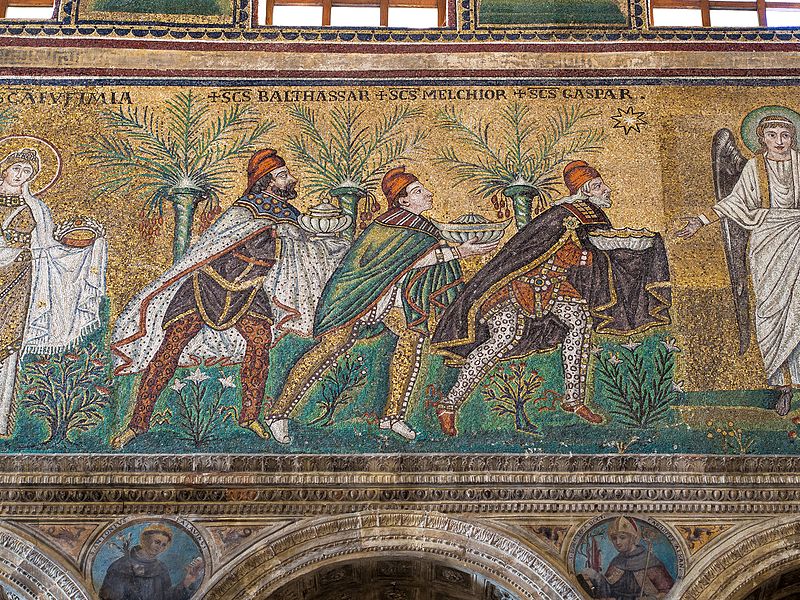
Ravenna Basilica of the Three Wise Men. Creative Commons.

We celebrate Epiphany this weekend. Epiphany is often taken to signify the first manifestation of Jesus to the Gentiles with the visit of the Magi (See Matthew 2). As the story in Matthew’s Gospel discloses, the Magi from the East pursued a star that led them to where the young child Jesus and his parents lived. When they found him, the Magi presented gifts of frankincense, gold, and myrrh. We can learn a great deal about what and why we worship based on this account.
We will not discuss the possible symbolism of the gifts in this post. Rather, we will focus only on the giving of gifts. Why did the Magi present the child with gifts? Was it based on what he had accomplished as “King of the Jews”? Was it because King Herod, and the peoples in the region celebrated him as “King of the Jews”? (See Matthew 2:2). No, if anything, when Herod and the people of Jerusalem heard their announcement, they were “troubled”. In other words, Jesus was not welcome. Here’s the full context:
Now after Jesus was born in Bethlehem of Judea in the days of Herod the king, behold, wise men from the east came to Jerusalem, saying, “Where is he who has been born king of the Jews? For we saw his star when it rose and have come to worship him.” When Herod the king heard this, he was troubled, and all Jerusalem with him.
It does not appear that Herod expressed even the slightest sense to the Magi of his emotional disturbance over the news that the king of the Jews had been born. It was only after the Magi had been warned in a dream not to return to Herod that they realized that Herod was not pleased with their report.
As the rest of Matthew 2 reveals, Herod intended to have the child killed (Matthew 2:13-18). Herod was given to fits of jealousy and deception, and would do anything to secure and strengthen his hold on power. The massacre of the children two years of age and younger in Bethlehem and its vicinity was consistent with his character and intrigues in his later years (Refer here).
Why, you ask, would Herod care about some small child? What threat could a boy from Bethlehem pose to a mighty king in Jerusalem? It is because Herod now had competition as king. Perhaps Herod’s own lack of rightful claim to the throne made things worse for him. After all, his appointment came from Rome, unlike Jesus, whose recognition came from the God of Israel. Further to this point, Jesus was no mere child. Herod feared that this child was the Messiah based on the Magi’s report. And so, he inquired of his own religious authorities where the Messiah was to be born. Their response only confirmed his suspicions: the Messiah would be born in Bethlehem. The religious leaders informed Herod of Micah’s prophecy:
And you, O Bethlehem, in the land of Judah,
are by no means least among the rulers of Judah;
for from you shall come a ruler
who will shepherd my people Israel (See Matthew 2:6; ESV).
If they had known about it, I doubt Herod’s hostility would have kept the Magi from coming to worship Jesus. They had probably endured many obstacles and challenges along the way in their spiritual pilgrimage. What drove them forward was the star and their awareness that the child who was born king of the Jews was worthy of worship.
How can a child be worthy of worship? It was not based on Jesus’ performance given how young he was at the time. Nor was his worthiness based on star power and fame. His parents, the shepherds and a few others like Mary’s cousin Elizabeth may have been Jesus’ only real admirers up to this time. Moreover, his worthiness was not based on being born into nobility nor affluence. In contrast to all these motivations, the Magi found Jesus worthy of worship because of the claims associated with him. Jesus was born a king, the Messiah, a being worthy of worship independent of performance, fame, and social status and wealth.
We learn a lot about the Magi’s character based on who they worshiped and why. Just like Epiphany, which means manifestation, their supreme regard for Jesus manifests not only Jesus but also themselves. They worshiped Jesus based on their understanding of his identity and inherent worth. They listened to God rather than people, just as they obeyed the warning in the vision not to return to Herod rather than follow Herod’s instruction to come back and tell him where they child was (Matthew 2:8, 12).
In our day, we often worship based on performance, celebrity, or status and riches. These various rationales for worship manifest or say as much about us as they do about the objects of our worship. Like King Herod, or much later in Matthew’s Gospel, the rich young ruler (See Matthew 19), we miss out on the manifestation of Jesus in our midst. At best, we settle for moralistic therapeutic deities whose daily performance are subject to our review: “What have you done for me lately, God?”
When such motives shape and drive our worship, we often sell our souls to the highest bidder. This value system fails to account for the Bible’s teaching on what is valuable, and falls far short of the Magi—Gentile outsiders from the East who came to worship the one born King of the Jews. If these Gentile outsiders from afar got the point, shouldn’t we who know the Bible better be even more discerning?
Based on Scripture and the Magi, it is important that we value the Creator and creation based on inherent value rather than external considerations and what we attribute to them. Otherwise, not only do we cheapen the Creator and creation, but also cheapen and shortchange ourselves. With this in mind, I close with a striking statement by Rabbi Jonathan Sacks who takes us back to the high value the Jewish faith places on the Creator and creation, which are never subject to market preference and supply and demand:
The concept of the holy is precisely the domain in which the worth of things is not judged by their market price or economic value. And this fundamental insight of Judaism is all the more striking given its respect for the market within the marketplace. The fatal conceit for Judaism is to believe that the market governs the totality of our lives, when it in fact governs only a limited part of it, that which concerns the goods we think of as being subject to production and exchange. There are things fundamental to being human that we do not produce; instead we receive from those who came before us and from God Himself. And there are things that we may not exchange, however high the price. Jonathan Sacks, “Markets and Morals,” in First Things, August 2000.
To build on Sachs’ concern, it is not only Judaism’s “fatal conceit,” but Christianity’s, too. Thank God that the Magi or Jesus’ parents did not offer up Jesus in exchange for their own safety or status in Herod’s court.
Previous Post

January 2, 2018
You Learn a Lot about Someone by Checking Their Calendar
Next Post
January 9, 2018 The Christian Life Is Best Done on the Back Foot.
Browse Our Archives
Select a Category Uncategorized
Select a Month June 2025 April 2025 March 2025 January 2025 December 2024 November 2024 October 2024 September 2024 August 2024 July 2024 June 2024 May 2024 April 2024 March 2024 February 2024 January 2024 December 2023 November 2023 October 2023 September 2023 August 2023 July 2023 June 2023 May 2023 April 2023 March 2023 February 2023 January 2023 December 2022 November 2022 October 2022 September 2022 August 2022 July 2022 June 2022 May 2022 April 2022 March 2022 February 2022 January 2022 December 2021 November 2021 October 2021 September 2021 August 2021 July 2021 June 2021 May 2021 April 2021 March 2021 February 2021 January 2021 December 2020 November 2020 October 2020 September 2020 August 2020 July 2020 June 2020 May 2020 April 2020 March 2020 February 2020 January 2020 December 2019 November 2019 October 2019 September 2019 August 2019 July 2019 June 2019 May 2019 April 2019 March 2019 February 2019 January 2019 December 2018 November 2018 October 2018 September 2018 August 2018 July 2018 June 2018 May 2018 April 2018 March 2018 February 2018 January 2018 December 2017 November 2017 October 2017 September 2017 August 2017 July 2017 June 2017 May 2017 April 2017 March 2017 February 2017 January 2017 December 2016 November 2016 October 2016 September 2016 August 2016 July 2016 June 2016 May 2016 April 2016 March 2016 February 2016 January 2016 December 2015 November 2015 October 2015 September 2015 August 2015 July 2015 June 2015 May 2015 April 2015 March 2015 February 2015 January 2015 December 2014 November 2014 October 2014 September 2014 August 2014 July 2014 June 2014 May 2014 April 2014 March 2014 February 2014 January 2014 December 2013 November 2013 October 2013 September 2013 August 2013 July 2013 June 2013 May 2013 April 2013 March 2013 February 2013 January 2013 December 2012 November 2012 October 2012 September 2012 August 2012 July 2012 June 2012 May 2012 April 2012 March 2012 February 2012
Follow Us!
TAKE THE
Religious Wisdom Quiz
What year did Martin Luther post his 95 Theses?
Select your answer to see how you score.
1600 1401 1517 1492
Books by This Author Books by Paul Louis Metzger
Related posts from Uncommon God, Common Good

Heavenly Father’s Day on Trinity Sunday

Easter Triduum: Obey Your Thirst—for God

Holy Week Is Humble Week: "Beware of Becoming...

Excavating the Person in a Throwaway Culture
TRENDING AT PATHEOS Evangelical

The REST of Your Life: A Creative Wrestles...
This week I had a conversation with a good friend from church....

How the author of the world's best hymn...
I've been working with John Newton for a while now. This makes...

Long before this Lectio Divina, Psalm 130 - the song - started...

What About the Trees? Another Living Parable
After I finished writing the last article about falling leaves as a...

Why Classical Education Is a Conversation, Not a...
Come and Read: Joy in Classical Education When I was a little...

Cornell University has received a great deal of negative publicity and intense...
view all Evangelical blogs
Ad-Free & Subscriber Log-In Subscription Support
- About Us
- 2026 Calendar
- Videos
- Podcasts
- Library of World Religions
- Faith In Media Tracker
- Advertise With Us
- Write for Us
- Privacy Policy
- Terms of Service
- Do Not Sell My Data
- Contact Us
- Radiant Digital
- Manage Newsletter Subscriptions
- Unsubscribe From Notifications
- Sitemap
Copyright 2008-2026, Patheos. All rights reserved.
Subscription Support Ad-Free & Subscriber Log-In
Follow Patheos