
BuddhistCatholicContemplativeEvangelicalGeneral ChristianHinduJewishLatter-day SaintMuslimNew VisionsProgressive Christian
Beliefs
- Buddhist
- Catholic
- Contemplative
- Evangelical
- General Christian
- Hindu
- Jewish
- Latter-day Saint
- More Voices
- Muslim
- New Visions
- Pagan
- Progressive Christian
Topics
- Religion News
- Food and Religion
- Sports and Religion
- Religious Art
- Religious Music and Entertainment
- Religious Events
- History and Religion
- Style and Religion
- Politics and Religion
- Women in Religion
- Recreation Outdoors and Religion
- Business Finance and Religion
- Careers Workplace and Religion
- Education and Religion
- Family Parenting and Religion
- Health Fitness and Religion
- Home and Religion
- Relationships and Religion
- Technology and Religion
- Travel and Religion
Columnists
- Buddhist Columnists
- Business Finance and Religion Columnists
- Careers Workplace and Religion Columnists
- Catholic Columnists
- Contemplative Columnists
- Education and Religion Columnists
- Evangelists Columnists
- Family Parenting and Religion Columnists
- General Christian Columnists
- Health Fitness and Religion Columnists
- Hindu Columnists
- History and Religion Columnists
- Home and Religion Columnists
- Jewish Columnists
- More Voices Columnists
- Latter Day Columnists
- Muslim Columnists
- New Visions Columnists
- Nonreligious Columnists
- Pagan Columnists
- Politics and Religion Columnists
- Progressive Columnists
- Recreation Outdoors and Religion Columnists
- Relationships and Religion Columnists
- Religion News Columnists
- Religious Art Columnists
- Religious Events Columnists
- Religious Music and Entertainment Columnists
- Sports and Religion Columnists
- Style and Religion Columnists
- Technology and Religion Columnists
- Travel and Religion Columnists
- Women in Religion Columnists
Resource Library
- 2026 Calendar
- Library of World Religions
- The 100 Most Holy Places on Earth
- Patheos Answers
- Podcasts
- Videos
- Faith Leaders Database
- Anglican Episcopalian
- Bahai
- Baptist
- Buddhism
- Christianity
- Confucianism
- Eastern Orthodoxy
- Hinduism
- Holiness and Pentecostal
- ISKCON
- Islam
- Judaism
- Lutheran
- Methodist
- The Church of Jesus Christ of Latter-day Saints
- New Age
- Paganism
- Presbytarian and Reformed
- Protestantism
- Religion Behind the Scenes
- Roman Catholic
- Scientology
- Shia Islam
- Sikhism
- Sufism
- Sunni Islam
- Taoism
- Zen
- See all religions
Research Tools
 Ad-Free & Subscriber Log-In Subscription Support
Ad-Free & Subscriber Log-In Subscription Support
Follow Patheos 

- Trending:
- Forgiveness
- |
- Marriage
- |
- Consciousness
- |
- Death Penalty
- |
- Election
- |
- Halloween

- Home
- Evangelical
- What Stories Illumine Our Imaginations at Christmastide and Beyond?
What Stories Illumine Our Imaginations at Christmastide and Beyond?
Last updated on: December 30, 2017 at 10:11 am by Paul Louis Metzger
What Stories Illumine Our Imaginations at Christmastide and Beyond? 2017-12-30T10:11:09-08:00 Paul Louis Metzger
Patheos Explore the world's faith through different perspectives on religion and spirituality! Patheos has the views of the prevalent religions and spiritualities of the world.
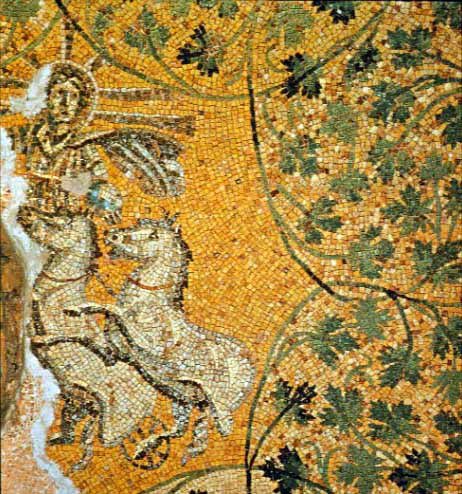

What stories illumine our imaginations and shape our lives during Christmastide, the New Year, and beyond? Is it the story of the Sun God? Is it the biblical story of creation and the Son of God? Is it the story of Evolution? Is it the story of the Market? Something else, something more?
Why the Sun God, you might ask? It was at this time of year that many ancient peoples celebrated the god Saturn as well as the Sun. According to Andrew McGowan of Yale Divinity School,
“The Romans had their mid-winter Saturnalia festival in late December; barbarian peoples of northern and western Europe kept holidays at similar times. To top it off, in 274 C.E., the Roman emperor Aurelian established a feast of the birth of Sol Invictus (the Unconquered Sun), on December 25.”
As to a possible connection between these celebrations and the Christian celebration of Jesus’ birth, McGowan notes,
“Christmas, the argument goes, is really a spin-off from these pagan solar festivals. According to this theory, early Christians deliberately chose these dates to encourage the spread of Christmas and Christianity throughout the Roman world: If Christmas looked like a pagan holiday, more pagans would be open to both the holiday and the God whose birth it celebrated.”
McGowan goes on to address the problems with this theory. I encourage the reader to engage his full article, “How December 25 Became Christmas” (See also the following article: “Why December 25?”). Regardless of your conclusion on the subject, December 25 and the surrounding season are important to Pagans (Refer here, here, and here) and Christians, both old and new.
For faithful Christians, the birth and life of Jesus signify the God of creation breaking in to redeem and transform the world, removing sin and bringing new life. In contrast, for many financially framed people where free market economics dominates their imaginations, Christmas highlights the busiest shopping season of the year. And then there are those captured by certain evolutionary models that reduce everything to materialistic phenomena. What might the notions of natural selection and survival of the fittest entail for the long-held Christian belief in an omnipotent, omniscient, and ever-present, compassionate God? What happens to Christian charity at Christmas time? Coupled with free market ideology, does homo sapiens give way to homo economicus (the economic creature) and homo consumens (the consuming creature) who is homo dominans (the dominant or dominating/ruling creature)? (Refer here and here for related discussions).
I am most concerned for how I as a Christian, and fellow Christians, frame life during Christmastide, the New Year, and beyond: what story captivates our imaginations? In his discussion of creation, evolution and free markets, and how Evangelicals see the world, Gordon Bigelow writes,
“Economics, as channeled by its popular avatars in media and politics, is the cosmology and the theodicy of our contemporary culture. More than religion itself, more than literature, more than cable television, it is economics that offers the dominant creation narrative of our society, depicting the relation of each of us to the universe we inhabit, the relation of human beings to God. And the story it tells is a marvelous one. In it an enormous multitude of strangers, all individuals, all striving alone, are nevertheless all bound together in a beautiful and natural pattern of existence: the market. This understanding of markets—not as artifacts of human civilization but as phenomena of nature—now serves as the unquestioned foundation of nearly all political and social debate” (Gordon Bigelow, “Let There Be Markets: The Evangelical Roots of Economics,” Harper’s 310, no. 1860 (May 2005): 33).
If Bigelow is correct, what does that mean for how Christians in North America like myself view the story of redemption? What really ‘illumines’ our imaginations and shapes our lives? Maybe we are not so unlike the rich young ruler who wanted to work or possibly even buy his way to salvation rather than to look to Jesus as his salvation: “Teacher, what good deed must I do to have eternal life?” (See Matthew 19:16; ESV). Do we subtly or unsubtly view salvation as doing business in a religious stock exchange or shopping mall? Is our assurance of salvation the accumulation of religious assets and wealth? Or, if we construe the matter more in keeping with Moralistic Therapeutic Deism, perhaps we see God as a divine butler and cosmic therapist who exists to do our bidding and makes us happy as long as we do our fair share of good deeds. And what happens if God does not make us happy, as we define happiness? Head back to the store for a refund or gift exchange?
In closing, I wish to draw our attention to an early Christian figure, Clement of Alexandria, who is considered a church father in various circles. Clement defined happiness and satisfaction quite differently than many of us do today. For him, Jesus truly is the reason for the season, indeed all seasons, as the Sun of Righteousness who illumines open hearts and imaginations, and shapes their lives. Note how Clement commandeers the Pagan emphasis on the Sun in his take on Christian salvation in the Exhortation to the Heathen, chapter 11: “How Great Are the Benefits Conferred on Man through the Advent of Christ”:
“For ‘the Sun of Righteousness,’ who drives His chariot over all, pervades equally all humanity, like ‘His Father, who makes His sun to rise on all men,’ and distils on them the dew of the truth. He has changed sunset into sunrise, and through the cross brought death to life; and having wrenched man from destruction, He has raised him to the skies, transplanting mortality into immortality, and translating earth to heaven — He, the husbandman of God, ‘Pointing out the favourable signs and rousing the nations to good works, putting them in mind of the true sustenance;’ having bestowed on us the truly great, divine, and inalienable inheritance of the Father, deifying man by heavenly teaching, putting His laws into our minds, and writing them on our hearts. What laws does He inscribe? ‘That all shall know God, from small to great;’ and, ‘I will be merciful to them,’ says God, ‘and will not remember their sins’ (Hebrews 8:10-12; Jeremiah 31:33-34). Let us receive the laws of life, let us comply with God’s expostulations; let us become acquainted with Him, that He may be gracious. And though God needs nothing let us render to Him the grateful recompense of a thankful heart and of piety, as a kind of house-rent for our dwelling here below….”
As the Son races across the heavens, will we receive him again and again so that his light breaks in through the windows of our hearts and illumines our imaginations? Or will other stories shape our lives in the coming days and year ahead?
Previous Post

December 25, 2017
Christmas Day Is Finally Here. But What’s the Big Deal?
Next Post
January 2, 2018 You Learn a Lot about Someone by Checking Their Calendar
Browse Our Archives
Select a Category Uncategorized
Select a Month June 2025 April 2025 March 2025 January 2025 December 2024 November 2024 October 2024 September 2024 August 2024 July 2024 June 2024 May 2024 April 2024 March 2024 February 2024 January 2024 December 2023 November 2023 October 2023 September 2023 August 2023 July 2023 June 2023 May 2023 April 2023 March 2023 February 2023 January 2023 December 2022 November 2022 October 2022 September 2022 August 2022 July 2022 June 2022 May 2022 April 2022 March 2022 February 2022 January 2022 December 2021 November 2021 October 2021 September 2021 August 2021 July 2021 June 2021 May 2021 April 2021 March 2021 February 2021 January 2021 December 2020 November 2020 October 2020 September 2020 August 2020 July 2020 June 2020 May 2020 April 2020 March 2020 February 2020 January 2020 December 2019 November 2019 October 2019 September 2019 August 2019 July 2019 June 2019 May 2019 April 2019 March 2019 February 2019 January 2019 December 2018 November 2018 October 2018 September 2018 August 2018 July 2018 June 2018 May 2018 April 2018 March 2018 February 2018 January 2018 December 2017 November 2017 October 2017 September 2017 August 2017 July 2017 June 2017 May 2017 April 2017 March 2017 February 2017 January 2017 December 2016 November 2016 October 2016 September 2016 August 2016 July 2016 June 2016 May 2016 April 2016 March 2016 February 2016 January 2016 December 2015 November 2015 October 2015 September 2015 August 2015 July 2015 June 2015 May 2015 April 2015 March 2015 February 2015 January 2015 December 2014 November 2014 October 2014 September 2014 August 2014 July 2014 June 2014 May 2014 April 2014 March 2014 February 2014 January 2014 December 2013 November 2013 October 2013 September 2013 August 2013 July 2013 June 2013 May 2013 April 2013 March 2013 February 2013 January 2013 December 2012 November 2012 October 2012 September 2012 August 2012 July 2012 June 2012 May 2012 April 2012 March 2012 February 2012
Follow Us!
TAKE THE
Religious Wisdom Quiz
I am a ladder reaching to heaven with angels ascending and descending. What am I?
Select your answer to see how you score.
Jacob's ladder Heaven's gate A vision The way to God
Books by This Author Books by Paul Louis Metzger
Related posts from Uncommon God, Common Good

Heavenly Father’s Day on Trinity Sunday

Easter Triduum: Obey Your Thirst—for God

Holy Week Is Humble Week: "Beware of Becoming...

Excavating the Person in a Throwaway Culture
TRENDING AT PATHEOS Evangelical

The REST of Your Life: A Creative Wrestles...
This week I had a conversation with a good friend from church....

How the author of the world's best hymn...
I've been working with John Newton for a while now. This makes...

Long before this Lectio Divina, Psalm 130 - the song - started...

What About the Trees? Another Living Parable
After I finished writing the last article about falling leaves as a...

Why Classical Education Is a Conversation, Not a...
Come and Read: Joy in Classical Education When I was a little...

Cornell University has received a great deal of negative publicity and intense...
view all Evangelical blogs
Ad-Free & Subscriber Log-In Subscription Support
- About Us
- 2026 Calendar
- Videos
- Podcasts
- Library of World Religions
- Faith In Media Tracker
- Advertise With Us
- Write for Us
- Privacy Policy
- Terms of Service
- Do Not Sell My Data
- Contact Us
- Radiant Digital
- Manage Newsletter Subscriptions
- Unsubscribe From Notifications
- Sitemap
Copyright 2008-2026, Patheos. All rights reserved.
Subscription Support Ad-Free & Subscriber Log-In
Follow Patheos