
BuddhistCatholicContemplativeEvangelicalGeneral ChristianHinduJewishLatter-day SaintMuslimNew VisionsProgressive Christian
Beliefs
- Buddhist
- Catholic
- Contemplative
- Evangelical
- General Christian
- Hindu
- Jewish
- Latter-day Saint
- More Voices
- Muslim
- New Visions
- Pagan
- Progressive Christian
Topics
- Religion News
- Food and Religion
- Sports and Religion
- Religious Art
- Religious Music and Entertainment
- Religious Events
- History and Religion
- Style and Religion
- Politics and Religion
- Women in Religion
- Recreation Outdoors and Religion
- Business Finance and Religion
- Careers Workplace and Religion
- Education and Religion
- Family Parenting and Religion
- Health Fitness and Religion
- Home and Religion
- Relationships and Religion
- Technology and Religion
- Travel and Religion
Columnists
- Buddhist Columnists
- Business Finance and Religion Columnists
- Careers Workplace and Religion Columnists
- Catholic Columnists
- Contemplative Columnists
- Education and Religion Columnists
- Evangelists Columnists
- Family Parenting and Religion Columnists
- General Christian Columnists
- Health Fitness and Religion Columnists
- Hindu Columnists
- History and Religion Columnists
- Home and Religion Columnists
- Jewish Columnists
- More Voices Columnists
- Latter Day Columnists
- Muslim Columnists
- New Visions Columnists
- Nonreligious Columnists
- Pagan Columnists
- Politics and Religion Columnists
- Progressive Columnists
- Recreation Outdoors and Religion Columnists
- Relationships and Religion Columnists
- Religion News Columnists
- Religious Art Columnists
- Religious Events Columnists
- Religious Music and Entertainment Columnists
- Sports and Religion Columnists
- Style and Religion Columnists
- Technology and Religion Columnists
- Travel and Religion Columnists
- Women in Religion Columnists
Resource Library
- 2026 Calendar
- Library of World Religions
- The 100 Most Holy Places on Earth
- Patheos Answers
- Podcasts
- Videos
- Faith Leaders Database
- Anglican Episcopalian
- Bahai
- Baptist
- Buddhism
- Christianity
- Confucianism
- Eastern Orthodoxy
- Hinduism
- Holiness and Pentecostal
- ISKCON
- Islam
- Judaism
- Lutheran
- Methodist
- The Church of Jesus Christ of Latter-day Saints
- New Age
- Paganism
- Presbytarian and Reformed
- Protestantism
- Religion Behind the Scenes
- Roman Catholic
- Scientology
- Shia Islam
- Sikhism
- Sufism
- Sunni Islam
- Taoism
- Zen
- See all religions
Research Tools
 Ad-Free & Subscriber Log-In Subscription Support
Ad-Free & Subscriber Log-In Subscription Support
Follow Patheos 

- Trending:
- Forgiveness
- |
- Marriage
- |
- Consciousness
- |
- Death Penalty
- |
- Election
- |
- Halloween

- Home
- Evangelical
- How Sacred Are Strangers to You? What the Bible Has to Say About the Strangers in Our Midst.
How Sacred Are Strangers to You? What the Bible Has to Say About the Strangers in Our Midst.
Last updated on: December 21, 2017 at 10:19 am by Paul Louis Metzger
How Sacred Are Strangers to You? What the Bible Has to Say About the Strangers in Our Midst. 2017-12-21T10:19:13-08:00 Paul Louis Metzger
Patheos Explore the world's faith through different perspectives on religion and spirituality! Patheos has the views of the prevalent religions and spiritualities of the world.
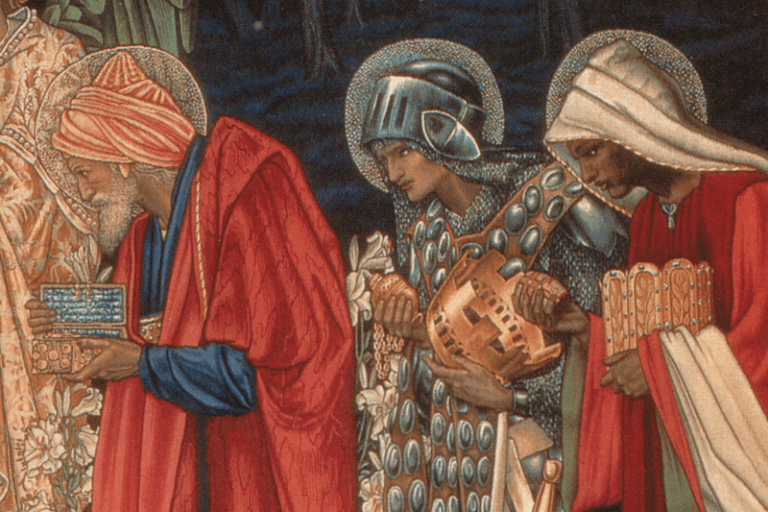
Adoration of the Magi tapestry, woven 1894. Creative Commons

An Interview with Nancy Haught, Author of Sacred Strangers: What the Bible’s Outsiders Can Teach Christians.
One of my favorite writers is Nancy Haught, an award-winning journalist who penned enriching articles on spirituality and religion for The Oregonian until her retirement. Her writing is always fair, decent, and humane. These are rare qualities and virtues in our society today. Never one for partisan polemics that dismisses those of different perspectives, Ms. Haught writes about her subjects respectfully and charitably. There is also a prophetic air in her work. This prophetic quality is present in Nancy’s new book, Sacred Strangers: What the Bible’s Outsiders Can Teach Christians (Liturgical Press, 2017). Just as she did as a newspaper reporter, so now, Nancy continues to reach out to people from various cultural and religious contexts. In Sacred Strangers, she reaches out to “outsiders” from various walks of life in the Bible. In the following interview, I ask my distinguished colleague to share about her volume and its import for today.
Paul Louis Metzger (PLM): Nancy, thank you for your willingness to be interviewed about Sacred Strangers. What inspired you to write this book?
Nancy Haught (NH): Thank you, Paul, for this opportunity. As a religion reporter, the best and the worst part of my job was calling strangers and asking them to share their deepest beliefs and trust me to represent them fairly in the newspaper so that people they didn’t know could read them. But over and over, strangers agree to talk to me. And often someone that I might otherwise dismiss, dislike, disdain or dodge completely became the source or subject of a good story and taught me something about my own faith and understanding of the world. I used to come home and tell my husband these stranger stories, and he often suggested I write a book. At the same time, as I studied scripture, I was intrigued by reading biblical stories from the secondary characters’ points of view. That is a way, I think, of getting at the deeper meaning, especially in familiar texts. And, as it turns out, in many Bible stories, strangers are supporting players.
PLM: What is the aim of the volume, and what do you hope readers will take away with them upon reading your meditations and reflections?
NH: This book is my effort to counteract the “be afraid of strangers” message that we are hearing from so many fronts. I think that narrative is a deliberate attempt to create divisions among all of us. If we are taken in by it, we divide people into those who are like us and those who aren’t and, too often, we don’t want anything to do with them. We see them as less than us; we assume they can’t teach us anything. But in both the Hebrew Bible and Christian Scriptures, strangers emerge as wise, resourceful and compassionate, even when they don’t adopt our religious beliefs.
PLM: Let’s zone in on one of the stories that has special significance for many people during the Christmas season—the Magi. What do you find so compelling about the Magi—often called “wise men,” as Matthew’s Gospel presents their story (Matthew 2)?
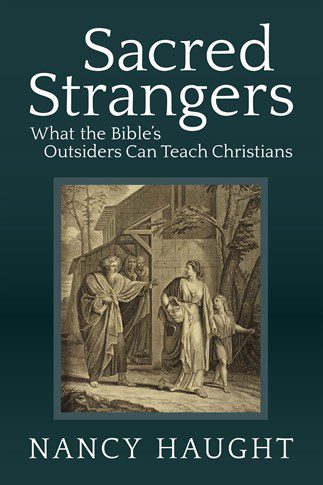
Buy Sacred Strangers on Amazon
NH: I love that the magi — total strangers — are part of Matthew’s Christmas story. When you think about it, they weren’t Jews, probably never became Christians and certainly weren’t Muslims. They come “from the East,” not even a country of their time. We don’t know what they did for a living, or even how many of them there were. But their actions in the story, especially their interactions with Herod and his advisors, show them to be open, honest, humble, determined, courageous men of integrity. And, beyond all that, they were men of vision. If we set aside Mary and Joseph, and maybe the inn keeper, the first people to see Jesus and recognize him as the king of the Jews (long before that designation is hung over his head at the Crucifixion) were strangers, foreigners, unknown, unrecognized, undocumented and unverified outsiders. Herod and his associates, the insiders in this story, are ignorant, petty, selfish, careless and cruel. So, who is it we should emulate as we try to live out our faith?
PLM: What other biblical stories do you cover in this book as an investigative reporter? What were two or three of your biggest “Aha!” moments?
NH: I did approach these stories as a reporter — read them in different English translations, read all the scholars I could find who had commented on them, prayed over them, talked to my teachers and other writers. And, just as it was when I was a reporter, there were a lot of surprises. From the Hebrew Bible, I read about Hagar, who had the courage to call God by the name she gave him, based on her own experience; Rahab, who was truly caught in the middle and found a way to save her family; and Naaman, an enemy general who, the Bible says, was victorious because God was on his side. From Christian Scriptures, I write about the Samaritan woman at the well who more than holds her own in what may be Jesus’ longest dialogue in the Bible; the Syrophoenician woman who pleaded for her daughter; and the Magi. A couple of “Aha!” moments? Realizing that it was a little girl, captured and held as a slave, who set in motion Naaman’s story, which is a study in what it means to be a servant. And reading what happens when that mother catches Jesus with, as one writer said, “his compassion down.”
PLM: I believe it is increasingly difficult today for us to reach out to those we deem outsiders. We have become increasingly tribal in so many contexts—religiously, politically, nationally—across the globe. Why do you think this is the case?
NH: I have heard a lot of different theories. But I suspect it has something to do with our mistaken belief that there is not enough of anything good — water, food, shelter, money, education, health care, jobs, what have you — to go around. If we fall for that lie, we are vulnerable to people who encourage us to hoard what we have and blame others when it seems we don’t have enough. I think the Syrophoenician mother reminds Jesus — and the rest of us — that there is enough to go around.
PLM: One of the most striking features of Jesus’ life and ministry is how he broke out of established structures of association and etiquette. All we need to do is consider how he associated over meals with tax collectors and sinners, and connected in vital ways with Samaritans and Gentiles. Holding firmly to our versions of the truth does not entail having to renounce those outside our sub-cultural comfort zones. What are some concrete steps we can take to hold firmly to our convictions while at the same time reaching out graciously to others? How might your book help us take those constructive steps?
NH: I think it’s an intentional process. We have to look for opportunities to meet people who are strangers. We have to force ourselves to talk to them and listen, not to interrogate them, confront them or try to convert them. This takes practice. But if our beliefs are deeply held, talking to a stranger will not change our convictions. Maybe it will help us see them more clearly or find a way to better describe our experience. It is a matter of trust, I think, being willing to trust God, our own experience, and even a stranger. I liked your blog post titled “Be Aware, Not Wary. Make This Your Dominant Outlook on Life.” There are times to be careful, but probably more times to be open. The poet Kim Stafford tells a story about his father, William Stafford, once Oregon’s poet laureate. Kim says that when he was growing up and leaving the house, his dad would tell him to remember to talk to strangers. Otherwise, he wouldn’t be able to find his way. He wouldn’t learn anything and might not be able to complete his journey.
PLM: In closing, I wish to draw attention to a mind-blowing emphasis among some theologians in your Roman Catholic tradition: Jesus is the supreme host and ultimate guest. We find this teaching on display in Christian Scripture—for example, Matthew 25’s account of the sheep and goats. There we find Jesus judging the nations as Lord who welcomes the welcoming to enter his kingdom. But in this same account in Matthew 25, Jesus also claims to be the stranger who people either welcome or exclude. This haunting passage in Matthew’s Gospel should awaken us to be more attentive to Jesus’ lordship as heavenly host and as hallowed stranger. Based on your book, Sacred Strangers, how would you encourage us to become more attentive to this twofold reality among the strangers in our midst? Thank you.
NH: I realized as I wrote this book that insider and outsider are fluid categories. Within the same story a character can, at times, be either or both. Jesus illustrates that and calls us to it, as well. Scripture often asks us to believe two different things at once. That doesn’t come easily to us sometimes. But it’s a skill we need to practice. If this book encourages us to set aside our stereotypes, ask questions, listen carefully to the answers, watch what strangers do and how they do it, be persistent in our search for common ground — even if it’s only a sliver — simple encounters will become relationships. And we know that relationships can change lives, mine and yours. Thank you, Paul, for your thoughtful questions.
Previous Post

December 17, 2017
“Joy to the World!” But Why?
Next Post
December 23, 2017 Tax Relief or Just Plain Taxing? Go Figure How Empires Run.
Browse Our Archives
Select a Category Uncategorized
Select a Month June 2025 April 2025 March 2025 January 2025 December 2024 November 2024 October 2024 September 2024 August 2024 July 2024 June 2024 May 2024 April 2024 March 2024 February 2024 January 2024 December 2023 November 2023 October 2023 September 2023 August 2023 July 2023 June 2023 May 2023 April 2023 March 2023 February 2023 January 2023 December 2022 November 2022 October 2022 September 2022 August 2022 July 2022 June 2022 May 2022 April 2022 March 2022 February 2022 January 2022 December 2021 November 2021 October 2021 September 2021 August 2021 July 2021 June 2021 May 2021 April 2021 March 2021 February 2021 January 2021 December 2020 November 2020 October 2020 September 2020 August 2020 July 2020 June 2020 May 2020 April 2020 March 2020 February 2020 January 2020 December 2019 November 2019 October 2019 September 2019 August 2019 July 2019 June 2019 May 2019 April 2019 March 2019 February 2019 January 2019 December 2018 November 2018 October 2018 September 2018 August 2018 July 2018 June 2018 May 2018 April 2018 March 2018 February 2018 January 2018 December 2017 November 2017 October 2017 September 2017 August 2017 July 2017 June 2017 May 2017 April 2017 March 2017 February 2017 January 2017 December 2016 November 2016 October 2016 September 2016 August 2016 July 2016 June 2016 May 2016 April 2016 March 2016 February 2016 January 2016 December 2015 November 2015 October 2015 September 2015 August 2015 July 2015 June 2015 May 2015 April 2015 March 2015 February 2015 January 2015 December 2014 November 2014 October 2014 September 2014 August 2014 July 2014 June 2014 May 2014 April 2014 March 2014 February 2014 January 2014 December 2013 November 2013 October 2013 September 2013 August 2013 July 2013 June 2013 May 2013 April 2013 March 2013 February 2013 January 2013 December 2012 November 2012 October 2012 September 2012 August 2012 July 2012 June 2012 May 2012 April 2012 March 2012 February 2012
Follow Us!
TAKE THE
Religious Wisdom Quiz
True or False: David killed Goliath with a sword.
Select your answer to see how you score.
FALSE TRUE
Books by This Author Books by Paul Louis Metzger
Related posts from Uncommon God, Common Good

Heavenly Father’s Day on Trinity Sunday

Easter Triduum: Obey Your Thirst—for God

Holy Week Is Humble Week: "Beware of Becoming...

Excavating the Person in a Throwaway Culture
TRENDING AT PATHEOS Evangelical

The REST of Your Life: A Creative Wrestles...
This week I had a conversation with a good friend from church....

How the author of the world's best hymn...
I've been working with John Newton for a while now. This makes...

Long before this Lectio Divina, Psalm 130 - the song - started...

What About the Trees? Another Living Parable
After I finished writing the last article about falling leaves as a...

Why Classical Education Is a Conversation, Not a...
Come and Read: Joy in Classical Education When I was a little...

Cornell University has received a great deal of negative publicity and intense...
view all Evangelical blogs
Ad-Free & Subscriber Log-In Subscription Support
- About Us
- 2026 Calendar
- Videos
- Podcasts
- Library of World Religions
- Faith In Media Tracker
- Advertise With Us
- Write for Us
- Privacy Policy
- Terms of Service
- Do Not Sell My Data
- Contact Us
- Radiant Digital
- Manage Newsletter Subscriptions
- Unsubscribe From Notifications
- Sitemap
Copyright 2008-2026, Patheos. All rights reserved.
Subscription Support Ad-Free & Subscriber Log-In
Follow Patheos