
BuddhistCatholicContemplativeEvangelicalGeneral ChristianHinduJewishLatter-day SaintMuslimNew VisionsProgressive Christian
Beliefs
- Buddhist
- Catholic
- Contemplative
- Evangelical
- General Christian
- Hindu
- Jewish
- Latter-day Saint
- More Voices
- Muslim
- New Visions
- Pagan
- Progressive Christian
Topics
- Religion News
- Food and Religion
- Sports and Religion
- Religious Art
- Religious Music and Entertainment
- Religious Events
- History and Religion
- Style and Religion
- Politics and Religion
- Women in Religion
- Recreation Outdoors and Religion
- Business Finance and Religion
- Careers Workplace and Religion
- Education and Religion
- Family Parenting and Religion
- Health Fitness and Religion
- Home and Religion
- Relationships and Religion
- Technology and Religion
- Travel and Religion
Columnists
- Buddhist Columnists
- Business Finance and Religion Columnists
- Careers Workplace and Religion Columnists
- Catholic Columnists
- Contemplative Columnists
- Education and Religion Columnists
- Evangelists Columnists
- Family Parenting and Religion Columnists
- General Christian Columnists
- Health Fitness and Religion Columnists
- Hindu Columnists
- History and Religion Columnists
- Home and Religion Columnists
- Jewish Columnists
- More Voices Columnists
- Latter Day Columnists
- Muslim Columnists
- New Visions Columnists
- Nonreligious Columnists
- Pagan Columnists
- Politics and Religion Columnists
- Progressive Columnists
- Recreation Outdoors and Religion Columnists
- Relationships and Religion Columnists
- Religion News Columnists
- Religious Art Columnists
- Religious Events Columnists
- Religious Music and Entertainment Columnists
- Sports and Religion Columnists
- Style and Religion Columnists
- Technology and Religion Columnists
- Travel and Religion Columnists
- Women in Religion Columnists
Resource Library
- 2026 Calendar
- Library of World Religions
- The 100 Most Holy Places on Earth
- Patheos Answers
- Podcasts
- Videos
- Faith Leaders Database
- Anglican Episcopalian
- Bahai
- Baptist
- Buddhism
- Christianity
- Confucianism
- Eastern Orthodoxy
- Hinduism
- Holiness and Pentecostal
- ISKCON
- Islam
- Judaism
- Lutheran
- Methodist
- The Church of Jesus Christ of Latter-day Saints
- New Age
- Paganism
- Presbytarian and Reformed
- Protestantism
- Religion Behind the Scenes
- Roman Catholic
- Scientology
- Shia Islam
- Sikhism
- Sufism
- Sunni Islam
- Taoism
- Zen
- See all religions
Research Tools
 Ad-Free & Subscriber Log-In Subscription Support
Ad-Free & Subscriber Log-In Subscription Support
Follow Patheos 

- Trending:
- Forgiveness
- |
- Marriage
- |
- Consciousness
- |
- Death Penalty
- |
- Election
- |
- Halloween

- Home
- Evangelical
- On Einstein’s “Genius”: How Often Do We Use Science and Religion for Political and Racialized Agendas Rather than Aesthetic Aims?
On Einstein’s “Genius”: How Often Do We Use Science and Religion for Political and Racialized Agendas Rather than Aesthetic Aims?
Last updated on: April 24, 2017 at 10:12 am by Paul Louis Metzger
On Einstein’s “Genius”: How Often Do We Use Science and Religion for Political and Racialized Agendas Rather than Aesthetic Aims? 2017-04-24T10:12:21-07:00 Paul Louis Metzger
Patheos Explore the world's faith through different perspectives on religion and spirituality! Patheos has the views of the prevalent religions and spiritualities of the world.
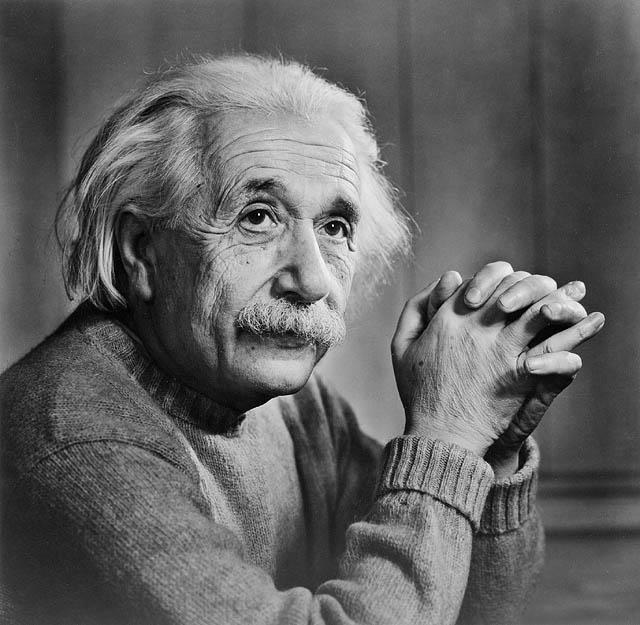
I had the opportunity to see a screening of the soon-to-be-released TV series on Albert Einstein titled Genius. The first episode did not go into great detail about Einstein’s scientific discoveries (I have read that the series as a whole is not a science documentary). However, the episode did seek to shed light on Einstein’s personal and family life, and the cultural and political context in which Einstein lived and engaged in scientific inquiry. One of the questions that I came away asking is: How often do we use science and religion for political and racialized agendas rather than aesthetic aims?
Before addressing this question, it is important to indicate that there have been numerous and disparate attempts at presenting Einstein’s view of religion. Was he an atheist according to whom references to ‘God’ served as a metaphor? Was he a pantheist, a deist, a monotheist? (Here are but a few treatments: refer here, here, here, here, and here; one of Einstein’s own reflections on religion is found here). The debate will likely continue indefinitely. After all, who wouldn’t wish to claim Einstein for one’s own religious or non-religious (political?) agenda given that he is the most famous and distinguished scientist since Newton?
One of the intriguing aspects of the episode I watched, and of the ensuing research I did for this post, was how science was being used for political and racial ends in Einstein’s context. While Einstein did not appear to approach scientific considerations with a political or religious agenda, others approached science in a politically and racially charged way. The National Socialists and their premiere physicist, Philipp Lenard (“Chief of Aryan Physics”), struggled greatly with Einstein’s theories—and his Jewishness. They spoke of “Jewish physics” and “Jewish science”. A New York Times review of Steven Gimbel’s book Einstein’s Jewish Science: Physics at the Intersection of Politics and Religion claims,
It’s no wonder Nazis hated relativity. They lived in a world of absolutes. There was a master race with one true religion and one true language, with a music and literature that celebrated its glory. There was a true German empire, sliced up by the arbitrary boundaries of concoctions called nation-states. With absolute might the Fatherland would regain its proper position in space and time.
Contrary to the Nazis’ accusations, Einstein did not seek to use science to promote a religious, political or racialized outlook (However, it is worth noting that Newton sought to provide a particular religious perspective or apologetic). Still, according to Gimbel, there may have been a Jewish quality to Einstein’s work. As the same review states,
What gives Einstein’s work a Jewish flavor, Gimbel believes, is an approach to the universe that reminds him of the way a Talmudic scholar seeks to understand God’s truth.
“The heart of the Talmudic view is that there is an absolute truth, but this truth is not directly and completely available to us,” Gimbel writes. “It turns out that exactly the same style of thinking occurs in the relativity theory and in some of Einstein’s other research.”
While others who were not Jewish may have been able to discover what Einstein discerned, his heritage “might have given Einstein an edge.”
What gives anyone an “edge” in scientific discovery is a passionate search for truth, a profound sense of wonder. Einstein had what one might call a religious or rigorous devotion to light. One might even refer to his devotion as an attraction to the beauty and mystery of nature. Some have argued that a sense of wonder and quest for beauty bridge science and religion along with theology. In fact, Einstein’s revolution, like Copernicus’ revolution centuries earlier, was itself the result of a quest for beauty and symmetry before it was ever a matter of observation. According to Harvard University’s Owen Gingerich,
The debased positivism that has so thoroughly penetrated our philosophical framework urges us to look to data as the foundation of a scientific theory, but Copernicus’ radical cosmology came forth not from new observations but from insight. It was, like Einstein’s revolution four centuries later, motivated by the passionate search for symmetries and an aesthetic structure of the universe. Only afterward the facts, and even the crisis, are marshalled in support of the new world view (Owen Gingerich, “‘Crisis’ versus Aesthetic in the Copernican Revolution,” in Vistas in Astronomy 17/1 {1975}: 90).
The Nazis used science and the Christian religion for their political and racialized policies (On their abuse of the Christian religion, refer to Karl Barth’s and the Confessing Church’s critique titled the Theological Declaration of Barmen). Science and religion have also been employed elsewhere (beyond Germany) for various political and racist agendas (Regarding science and race, refer here). Moreover, economics has also served as a basis or goal for many scientific pursuits, or the rejection of scientific inquiry, as the case may be. If only science and religion were jointly allowed to pursue and discover wonder and beauty unfettered by political and racialized agendas? Perhaps then we would be able to reduce significantly ugly atomic bombs, warfare, and Aryan supremacy.
This article is featured as part of a symposium inspired by “GENIUS.” Tune into the premiere of “GENIUS” on National Geographic April 25.


Browse Our Archives
Select a Category Uncategorized
Select a Month June 2025 April 2025 March 2025 January 2025 December 2024 November 2024 October 2024 September 2024 August 2024 July 2024 June 2024 May 2024 April 2024 March 2024 February 2024 January 2024 December 2023 November 2023 October 2023 September 2023 August 2023 July 2023 June 2023 May 2023 April 2023 March 2023 February 2023 January 2023 December 2022 November 2022 October 2022 September 2022 August 2022 July 2022 June 2022 May 2022 April 2022 March 2022 February 2022 January 2022 December 2021 November 2021 October 2021 September 2021 August 2021 July 2021 June 2021 May 2021 April 2021 March 2021 February 2021 January 2021 December 2020 November 2020 October 2020 September 2020 August 2020 July 2020 June 2020 May 2020 April 2020 March 2020 February 2020 January 2020 December 2019 November 2019 October 2019 September 2019 August 2019 July 2019 June 2019 May 2019 April 2019 March 2019 February 2019 January 2019 December 2018 November 2018 October 2018 September 2018 August 2018 July 2018 June 2018 May 2018 April 2018 March 2018 February 2018 January 2018 December 2017 November 2017 October 2017 September 2017 August 2017 July 2017 June 2017 May 2017 April 2017 March 2017 February 2017 January 2017 December 2016 November 2016 October 2016 September 2016 August 2016 July 2016 June 2016 May 2016 April 2016 March 2016 February 2016 January 2016 December 2015 November 2015 October 2015 September 2015 August 2015 July 2015 June 2015 May 2015 April 2015 March 2015 February 2015 January 2015 December 2014 November 2014 October 2014 September 2014 August 2014 July 2014 June 2014 May 2014 April 2014 March 2014 February 2014 January 2014 December 2013 November 2013 October 2013 September 2013 August 2013 July 2013 June 2013 May 2013 April 2013 March 2013 February 2013 January 2013 December 2012 November 2012 October 2012 September 2012 August 2012 July 2012 June 2012 May 2012 April 2012 March 2012 February 2012
Follow Us!
TAKE THE
Religious Wisdom Quiz
Who was Jephthah's daughter?
Select your answer to see how you score.
Miriam Unnamed Ruth Deborah
Books by This Author Books by Paul Louis Metzger
Related posts from Uncommon God, Common Good

Heavenly Father’s Day on Trinity Sunday

Easter Triduum: Obey Your Thirst—for God

Holy Week Is Humble Week: "Beware of Becoming...

Excavating the Person in a Throwaway Culture
TRENDING AT PATHEOS Evangelical

How the author of the world's best hymn...
I've been working with John Newton for a while now. This makes...

Long before this Lectio Divina, Psalm 130 - the song - started...

What About the Trees? Another Living Parable
After I finished writing the last article about falling leaves as a...

Why Classical Education Is a Conversation, Not a...
Come and Read: Joy in Classical Education When I was a little...

Falling Leaves: A Living Parable on Letting Go
I’ve spent the vast majority of my life in the southeast corner...

Cornell University has received a great deal of negative publicity and intense...
view all Evangelical blogs
Ad-Free & Subscriber Log-In Subscription Support
- About Us
- 2026 Calendar
- Videos
- Podcasts
- Library of World Religions
- Faith In Media Tracker
- Advertise With Us
- Write for Us
- Privacy Policy
- Terms of Service
- Do Not Sell My Data
- Contact Us
- Radiant Digital
- Manage Newsletter Subscriptions
- Unsubscribe From Notifications
- Sitemap
Copyright 2008-2026, Patheos. All rights reserved.
Subscription Support Ad-Free & Subscriber Log-In
Follow Patheos