
BuddhistCatholicContemplativeEvangelicalGeneral ChristianHinduJewishLatter-day SaintMuslimNew VisionsProgressive Christian
Beliefs
- Buddhist
- Catholic
- Contemplative
- Evangelical
- General Christian
- Hindu
- Jewish
- Latter-day Saint
- More Voices
- Muslim
- New Visions
- Pagan
- Progressive Christian
Topics
- Religion News
- Food and Religion
- Sports and Religion
- Religious Art
- Religious Music and Entertainment
- Religious Events
- History and Religion
- Style and Religion
- Politics and Religion
- Women in Religion
- Recreation Outdoors and Religion
- Business Finance and Religion
- Careers Workplace and Religion
- Education and Religion
- Family Parenting and Religion
- Health Fitness and Religion
- Home and Religion
- Relationships and Religion
- Technology and Religion
- Travel and Religion
Columnists
- Buddhist Columnists
- Business Finance and Religion Columnists
- Careers Workplace and Religion Columnists
- Catholic Columnists
- Contemplative Columnists
- Education and Religion Columnists
- Evangelists Columnists
- Family Parenting and Religion Columnists
- General Christian Columnists
- Health Fitness and Religion Columnists
- Hindu Columnists
- History and Religion Columnists
- Home and Religion Columnists
- Jewish Columnists
- More Voices Columnists
- Latter Day Columnists
- Muslim Columnists
- New Visions Columnists
- Nonreligious Columnists
- Pagan Columnists
- Politics and Religion Columnists
- Progressive Columnists
- Recreation Outdoors and Religion Columnists
- Relationships and Religion Columnists
- Religion News Columnists
- Religious Art Columnists
- Religious Events Columnists
- Religious Music and Entertainment Columnists
- Sports and Religion Columnists
- Style and Religion Columnists
- Technology and Religion Columnists
- Travel and Religion Columnists
- Women in Religion Columnists
Resource Library
- 2026 Calendar
- Library of World Religions
- The 100 Most Holy Places on Earth
- Patheos Answers
- Podcasts
- Videos
- Faith Leaders Database
- Anglican Episcopalian
- Bahai
- Baptist
- Buddhism
- Christianity
- Confucianism
- Eastern Orthodoxy
- Hinduism
- Holiness and Pentecostal
- ISKCON
- Islam
- Judaism
- Lutheran
- Methodist
- The Church of Jesus Christ of Latter-day Saints
- New Age
- Paganism
- Presbytarian and Reformed
- Protestantism
- Religion Behind the Scenes
- Roman Catholic
- Scientology
- Shia Islam
- Sikhism
- Sufism
- Sunni Islam
- Taoism
- Zen
- See all religions
Research Tools
 Ad-Free & Subscriber Log-In Subscription Support
Follow Patheos 

- Trending:
- Advent
- |
- Forgiveness
- |
- Thanksgiving
- |
- Election
- |
- Seasonal Holidays
- |
- Marriage

- Home
- Evangelical
- From Indulgences to Indulgent Love: Beyond Johann Tetzel and Marilyn Manson
From Indulgences to Indulgent Love: Beyond Johann Tetzel and Marilyn Manson
Last updated on: February 27, 2014 at 12:03 pm by Paul Louis Metzger
From Indulgences to Indulgent Love: Beyond Johann Tetzel and Marilyn Manson 2014-02-27T12:03:13-08:00 Paul Louis Metzger
Patheos Explore the world's faith through different perspectives on religion and spirituality! Patheos has the views of the prevalent religions and spiritualities of the world.
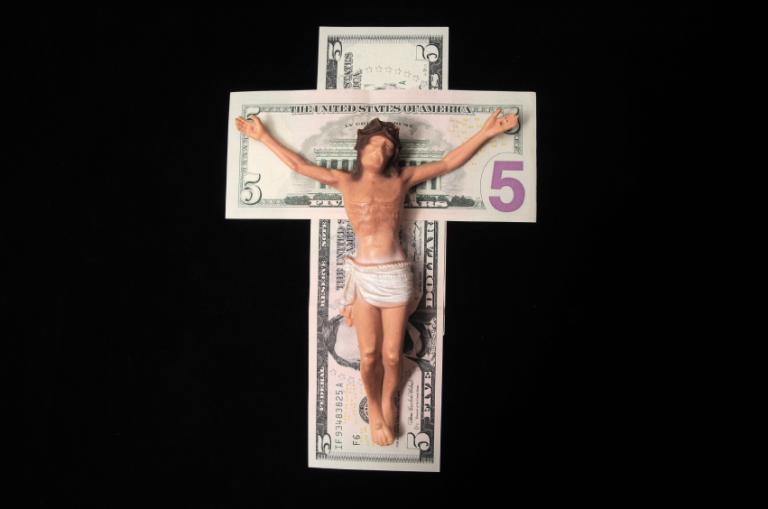 “As soon as the coin in the coffer rings, the soul from purgatory springs.” You may have come across this statement attributed to Johann Tetzel, papal seller of indulgences. Whether or not Tetzel ever uttered these words, Christians have often thought of salvation as a financial transaction. Is salvation a financial transaction? Does the Bible speak in these terms?
Romans 6:23 states, “For the wages of sin is death, but the free gift of God is eternal life in Christ Jesus our Lord.” (Romans 6:23; ESV) Matthew 18:21-35 records Jesus using a story of a servant refusing to forgive his fellow servant’s debt even though their master had forgiven his much larger debt. As a result, the master imprisons him until he pays the full amount. Jesus warns us that his heavenly Father will do the same toward all who do not forgive their brother from their heart for the wrongs committed against them. In each case, the financial terms (“wages”—Romans 6; “forgave him the debt”/”pay the debt”—Matthew 18) are commandeered to convey relational meaning. In Romans 6, Paul contrasts “the wages of sin is death” with “the free gift of God is eternal life in Christ Jesus.” In Matthew 18, the focus in on the need to forgive people—not holding grudges, but forgiving them from the heart.
Even though the Bible commandeers such financial language to convey relational meaning, we often revert back to thinking and acting out about salvation in financial, quantifiable terms. We easily turn salvation into something rather than someone with whom we share life.
How often do you and I approach salvation and relationships in material, quantifiable, terms? In the Matthew 18 text, Peter is recorded as asking Jesus how often he should forgive his brother—seven times? Peter wishes to quantify forgiveness. Jesus perfects the number—seventy-seven times. There is no magic number, just a supernatural gift called costly gracious love and forgiveness that never runs out. You and I cannot put a price tag on relationships. But do we try? Do we try and buy or earn a relationship with God and measure other relationships by way of costs and benefits? If we are honest, I believe we would acknowledge that this is a common practice or inclination.
Why are we tempted to quantify salvation or pay for it? What about our talk of having a personal relationship with Jesus? Do we even try and quantify it or transfer and commodify it, using it for something else? Is it only certain TV preachers who do this? Is it only Depeche Mode and Marilyn Manson who employ references to “Personal Jesus” in quantifiable and financial ways for getting things, whether it be sex or money? (here I am thinking of their videos for the song “Personal Jesus”)
What does God’s non-quantifiable, indulgent, gracious love look like? Here I call to mind Lee Strobel’s reflections on Christmas and God’s generosity. In “Making the Case for Christmas,” Strobel retells the story he wrote as a journalist for The Chicago Tribune. At Christmas time one year, he had been given the task to write about the ordeal of an extremely poor 60 year old woman with debilitating arthritis and her two granddaughters who had been burned out of their roach-infested tenement building.
On Christmas eve, Strobel decided to visit Perfecta Delgado and her two granddaughters, Lydia and Jenny. He was amazed by the outpouring of goodwill he witnessed as the Delgados opened the door to let him in. His readership had been so moved by the newspaper story that they overwhelmed the Delgados’ barren home with a storehouse of gifts of various kinds, including cash, food, and clothing. Even more overwhelming was what the Delgados were doing. They were wrapping up many of the items to give to others in need: Perfecta said, “Our neighbors are still in need. We cannot have plenty while they have nothing. This is what Jesus would want us to do.” Strobel couldn’t believe it. At the time, Strobel was a passionate atheist. “That blew me away! If I had been in their position at that time in my life, I would have been hoarding everything.” Perfecta went on, and again Strobel was amazed by her response:
“This is wonderful; this is very good,” she said, gesturing toward the largess. “We did nothing to deserve this—it’s a gift from God. But,” she added, “it is not his greatest gift. No, we celebrate that tomorrow. That is Jesus.” To her, this child in the manger was the undeserved gift that meant everything—more than material possessions, more than comfort, more than security. And at that moment, something inside of me wanted desperately to know this Jesus—because, in a sense, I saw him in Perfecta and her granddaughters. They had peace despite poverty, while I had anxiety despite plenty; they knew the joy of generosity, while I only knew the loneliness of ambition; they looked heavenward for hope, while I only looked out for myself; they experienced the wonder of the spiritual, while I was shackled to the shallowness of the material—and something made me long for what they had.
Or, more accurately, for the One they knew.[1]
Whether we are trying to earn our salvation with money or see money or other things as salvation, we need to move beyond indulgences and indulging in various surface pleasures to indulgent, gracious and sacrificial love. May we turn over a new leaf and turn from salvation in something to salvation as someone—as Jesus—with whom we share life.
[1]The quotations are taken from Lee Strobel, “Making the Case for Christmas,” found at ChristianPost.com. See http://www.christianpost.com/news/lee-strobel-making-the-case-for-christmas-86965/. The article is based on The Case for Christmas: A Journalist Investigates the Identity of the Child in the Manger (Grand Rapids: Zondervan, 2005).
Previous Post

February 25, 2014
How Hegelian Is Christianity?
Next Post
March 1, 2014 What Is a Person?
Browse Our Archives
Select a Category Uncategorized
Select a Month June 2025 April 2025 March 2025 January 2025 December 2024 November 2024 October 2024 September 2024 August 2024 July 2024 June 2024 May 2024 April 2024 March 2024 February 2024 January 2024 December 2023 November 2023 October 2023 September 2023 August 2023 July 2023 June 2023 May 2023 April 2023 March 2023 February 2023 January 2023 December 2022 November 2022 October 2022 September 2022 August 2022 July 2022 June 2022 May 2022 April 2022 March 2022 February 2022 January 2022 December 2021 November 2021 October 2021 September 2021 August 2021 July 2021 June 2021 May 2021 April 2021 March 2021 February 2021 January 2021 December 2020 November 2020 October 2020 September 2020 August 2020 July 2020 June 2020 May 2020 April 2020 March 2020 February 2020 January 2020 December 2019 November 2019 October 2019 September 2019 August 2019 July 2019 June 2019 May 2019 April 2019 March 2019 February 2019 January 2019 December 2018 November 2018 October 2018 September 2018 August 2018 July 2018 June 2018 May 2018 April 2018 March 2018 February 2018 January 2018 December 2017 November 2017 October 2017 September 2017 August 2017 July 2017 June 2017 May 2017 April 2017 March 2017 February 2017 January 2017 December 2016 November 2016 October 2016 September 2016 August 2016 July 2016 June 2016 May 2016 April 2016 March 2016 February 2016 January 2016 December 2015 November 2015 October 2015 September 2015 August 2015 July 2015 June 2015 May 2015 April 2015 March 2015 February 2015 January 2015 December 2014 November 2014 October 2014 September 2014 August 2014 July 2014 June 2014 May 2014 April 2014 March 2014 February 2014 January 2014 December 2013 November 2013 October 2013 September 2013 August 2013 July 2013 June 2013 May 2013 April 2013 March 2013 February 2013 January 2013 December 2012 November 2012 October 2012 September 2012 August 2012 July 2012 June 2012 May 2012 April 2012 March 2012 February 2012
Follow Us!
TAKE THE
Religious Wisdom Quiz
Who was known as a man after God’s own heart?
Select your answer to see how you score.
David Solomon Samuel Moses
Books by This Author Books by Paul Louis Metzger
Related posts from Uncommon God, Common Good

Heavenly Father’s Day on Trinity Sunday

Easter Triduum: Obey Your Thirst—for God

Holy Week Is Humble Week: "Beware of Becoming...

Excavating the Person in a Throwaway Culture
TRENDING AT PATHEOS Evangelical

Making Stones Into Bread: Choosing the “Right” Work
I was on my online arts ministry Zoom meeting with the International...

Ukraine’s exhausted Christians face fifth winter of war
By Julian Lukins The full-scale war in Ukraine is taking “a serious...

Russell Brand's Conviction is not anti-Christian Persecution
How do we shed the reputation that the Church is OK with...

Have you ever caught yourself saying, “I’ll do it tomorrow,” or “Now...

Write Your Story: A Great Way to Find...
A few month’s back, my son was scrolling around Facebook and saw...

Throughout history, people have pursued pleasure, possessions, relationships, and success in an...
view all Evangelical blogs
Ad-Free & Subscriber Log-In Subscription Support
- About Us
- 2026 Calendar
- Videos
- Podcasts
- Library of World Religions
- Faith In Media Tracker
- Advertise With Us
- Write for Us
- Privacy Policy
- Terms of Service
- Do Not Sell My Data
- Contact Us
- Radiant Digital
- Manage Newsletter Subscriptions
- Unsubscribe From Notifications
- Sitemap
Copyright 2008-2026, Patheos, part of the Radiant Digital network of media brands. All rights reserved.
Subscription Support Ad-Free & Subscriber Log-In
Follow Patheos