
BuddhistCatholicContemplativeEvangelicalGeneral ChristianHinduJewishLatter-day SaintMuslimNew VisionsProgressive Christian
Beliefs
- Buddhist
- Catholic
- Contemplative
- Evangelical
- General Christian
- Hindu
- Jewish
- Latter-day Saint
- More Voices
- Muslim
- New Visions
- Pagan
- Progressive Christian
Topics
- Religion News
- Food and Religion
- Sports and Religion
- Religious Art
- Religious Music and Entertainment
- Religious Events
- History and Religion
- Style and Religion
- Politics and Religion
- Women in Religion
- Recreation Outdoors and Religion
- Business Finance and Religion
- Careers Workplace and Religion
- Education and Religion
- Family Parenting and Religion
- Health Fitness and Religion
- Home and Religion
- Relationships and Religion
- Technology and Religion
- Travel and Religion
Columnists
- Buddhist Columnists
- Business Finance and Religion Columnists
- Careers Workplace and Religion Columnists
- Catholic Columnists
- Contemplative Columnists
- Education and Religion Columnists
- Evangelists Columnists
- Family Parenting and Religion Columnists
- General Christian Columnists
- Health Fitness and Religion Columnists
- Hindu Columnists
- History and Religion Columnists
- Home and Religion Columnists
- Jewish Columnists
- More Voices Columnists
- Latter Day Columnists
- Muslim Columnists
- New Visions Columnists
- Nonreligious Columnists
- Pagan Columnists
- Politics and Religion Columnists
- Progressive Columnists
- Recreation Outdoors and Religion Columnists
- Relationships and Religion Columnists
- Religion News Columnists
- Religious Art Columnists
- Religious Events Columnists
- Religious Music and Entertainment Columnists
- Sports and Religion Columnists
- Style and Religion Columnists
- Technology and Religion Columnists
- Travel and Religion Columnists
- Women in Religion Columnists
Resource Library
- 2026 Calendar
- Library of World Religions
- The 100 Most Holy Places on Earth
- Patheos Answers
- Podcasts
- Videos
- Faith Leaders Database
- Anglican Episcopalian
- Bahai
- Baptist
- Buddhism
- Christianity
- Confucianism
- Eastern Orthodoxy
- Hinduism
- Holiness and Pentecostal
- ISKCON
- Islam
- Judaism
- Lutheran
- Methodist
- The Church of Jesus Christ of Latter-day Saints
- New Age
- Paganism
- Presbytarian and Reformed
- Protestantism
- Religion Behind the Scenes
- Roman Catholic
- Scientology
- Shia Islam
- Sikhism
- Sufism
- Sunni Islam
- Taoism
- Zen
- See all religions
Research Tools
 Ad-Free & Subscriber Log-In Subscription Support
Follow Patheos 

- Trending:
- Advent
- |
- Forgiveness
- |
- Thanksgiving
- |
- Election
- |
- Seasonal Holidays
- |
- Marriage

- Home
- Evangelical
- Was Moses a Feminist?
Was Moses a Feminist?
Last updated on: August 15, 2013 at 3:28 pm by Paul Louis Metzger
Was Moses a Feminist? 2013-08-15T15:28:21-07:00 Paul Louis Metzger
Patheos Explore the world's faith through different perspectives on religion and spirituality! Patheos has the views of the prevalent religions and spiritualities of the world.
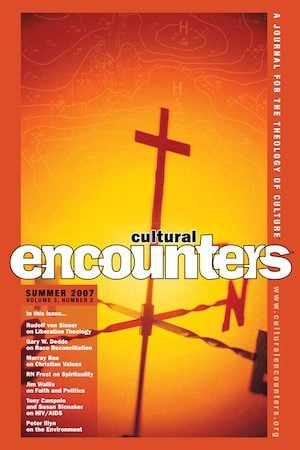 As you may know, I edit a journal for The Institute for the Theology of Culture: New Wine, New Wineskins called Cultural Encounters. We have a new issue out and I’d invite you to take a look. I’ve reprinted the Editor’s Introduction here, giving you a sampling of what is in this issue. If it piques your interest, head on over to the journal, subscribe, and read!
Was Moses a feminist? It all depends on what texts from the Torah one emphasizes and what one means by feminist. If one takes to heart such texts as Genesis 1:26–31 on male and female sharing in the image of God and lordship in the creation, Genesis 2:18, 20 on ezer, meaning “helper” (perhaps even “warrior”; the same word is used for God as a “strong helper”), and Genesis 3:16 on a man ruling over a woman because of the fall, one might think of Moses as a feminist. Of course, there are other texts that are taken by many interpreters to suggest that the society Moses helped form under God’s direction was patriarchal (See, for example, Ex 20:17; Ex 21:2–4, 7; Nm 5:11–31; Nm 18:1–7; cf. Ex 28:1). Still, even if one were to argue for patriarchy, God places limits on it to protect women’s rights in a post-fallen state (Ex 21:7–11). Feminist or non-feminist, Moses was no male supremacist.
The Bible does not have a lot to say about gender, but rather how we are to treat one another as those created in the image of God. There’s no talk about what kinds of toys boys and girls should play with or what colors they should like. Sure, there are those texts that say men should not dress like women or vice versa (Dt 22:5). But what then does one do with Scotsmen who wear kilts? Normally, we don’t think anything of it. We understand that such clothing is associated with masculinity in Scottish culture. Besides, I doubt anyone of us would have dared to mock William Wallace of Brave Heart fame for wearing one.
Was Jacob effeminate? He hung around the tents and did not hunt like his hairy brother, Esau (Gn 25:26–28; Gn 27:11). Yet God made him the Patriarch whose twelve sons became the heads of Israel’s tribes (Gn 49:28). What do we know about Samson’s masculinity? He seemed to be temperamental, moody, irrational, and brash (See Jgs 13–16); depending on one’s cultural norms, this could pass for stereotypes for men or for women. We don’t know much about Samson’s physique, except that he had long hair. He may not have been a big, brawny man, since his strength was associated with his length of hair and God’s presence (Jgs 16:17–20). Would that make Samson feminine? What about Jesus? Was he a real man? Did he hunt and fish? We know he was a carpenter’s son, but not much more. If we are taking Scripture to heart, we will realize that Jesus’ stance on women was radical in his day. Women accompanied Jesus along with the Apostles in Jesus’ ministry (Lk 8:1–3). They were permitted to listen to Jesus teach rather than be locked away in the kitchen (Lk 10:38–41). They also proclaimed the resurrection, as in the case of Mary Magdalene and the other Mary, who were given the task to inform the Apostles that the Lord had been raised from the dead (Mt 28:1–10; Jn 20:10–18). Jesus, who is the ultimate image of God (Col 1:18), is one with his body and bride (Col 1:15, 18; Eph 5:21–33) made up of men and women, to whom he gives himself sacrificially (Eph 5:21–33). His selfless giving stands in stark contrast to all the talk of men needing to be self-made and strong. It took a lot of strength for him to be so weak and give himself so selflessly in life and in death in order to make a new community not shaped by societal norms, but by his example in inaugurating the kingdom of God.
One finds talk in some Christian circles of real men being producers. What does that make of women? Consumers? A Trinitarian model of relationality involving dynamic relationality does not commodify and reduce men and women to quantities of production and consumption. Rather, men and women are communers who mutually produce and consume, but are not defined by such labels. What should define those of us who are Christians is a relational ontology shaped by Jesus’ radical example and union with his church noted above, but rarely noted in our day.
In this issue of the journal, we are not addressing such matters as church leadership, including complementarian and egalitarian themes, or sexuality, as such. There is quite a bit out there already in our circles addressing both subjects. We really wished to focus on gender. Not enough ink has been spilled on this issue, though a lot of blood has flown as a result of massive ignorance. Some of the articles in this issue of the journal set forth how gender and sexuality are distinct subjects, not one and the same. We are more interested in how the framing of gender impacts boys and girls, men and women of diverse ethnicities here and abroad, including on such subjects as sexual abuse, violence against women, and violence to men. One will find in the pages that follow that our views on gender have a significant, potentially painful, and even possibly dangerous bearing on how all of us approach maleness and femaleness.
The Editorial Board of Cultural Encounters maintains that Christian Scripture should always serve as our ultimate written authority as Christians in approaching any subject, including gender. In addition to Scripture, such subjects as sociology, including the comparison of various cultures on their views of gender, the historical development of a society’s and religious movement’s views on gender, along with such genres as film and science fiction, can also help us all think through our dominant cultural frames of reference on gender, provoking thought and constructive conversation. As you proceed in reading this issue of the journal, we do not ask that you agree with everything you read, but that you would be willing to reexamine your existing perspectives on gender in view of Scripture and the various sources studied. Take into account the various arguments involving Scriptural texts, statistics, definitions, and social groupings, along with the cultural reflections of women and men of diverse backgrounds who share their struggles on how views on gender have impacted them and countless others. Healing from trauma and compassionate and just action that flow from the sacrificial love of God can occur if we listen, look, and read well. In this light, consider how both biblically and missionally we can make our homes, churches, and societies more welcoming and inclusive spaces for cultural engagement as we seek to honor Christ, his church, and diverse peoples in our midst and across the globe.
Subscribe to and read this issue of Cultural Encounters.
This piece is cross-posted at The Institute for the Theology of Culture: New Wine, New Wineskins and at The Christian Post.
Next Post

August 14, 2013 Beyond Cultural Monopolies to the Multifaceted Gospel
Browse Our Archives
Select a Category Uncategorized
Select a Month June 2025 April 2025 March 2025 January 2025 December 2024 November 2024 October 2024 September 2024 August 2024 July 2024 June 2024 May 2024 April 2024 March 2024 February 2024 January 2024 December 2023 November 2023 October 2023 September 2023 August 2023 July 2023 June 2023 May 2023 April 2023 March 2023 February 2023 January 2023 December 2022 November 2022 October 2022 September 2022 August 2022 July 2022 June 2022 May 2022 April 2022 March 2022 February 2022 January 2022 December 2021 November 2021 October 2021 September 2021 August 2021 July 2021 June 2021 May 2021 April 2021 March 2021 February 2021 January 2021 December 2020 November 2020 October 2020 September 2020 August 2020 July 2020 June 2020 May 2020 April 2020 March 2020 February 2020 January 2020 December 2019 November 2019 October 2019 September 2019 August 2019 July 2019 June 2019 May 2019 April 2019 March 2019 February 2019 January 2019 December 2018 November 2018 October 2018 September 2018 August 2018 July 2018 June 2018 May 2018 April 2018 March 2018 February 2018 January 2018 December 2017 November 2017 October 2017 September 2017 August 2017 July 2017 June 2017 May 2017 April 2017 March 2017 February 2017 January 2017 December 2016 November 2016 October 2016 September 2016 August 2016 July 2016 June 2016 May 2016 April 2016 March 2016 February 2016 January 2016 December 2015 November 2015 October 2015 September 2015 August 2015 July 2015 June 2015 May 2015 April 2015 March 2015 February 2015 January 2015 December 2014 November 2014 October 2014 September 2014 August 2014 July 2014 June 2014 May 2014 April 2014 March 2014 February 2014 January 2014 December 2013 November 2013 October 2013 September 2013 August 2013 July 2013 June 2013 May 2013 April 2013 March 2013 February 2013 January 2013 December 2012 November 2012 October 2012 September 2012 August 2012 July 2012 June 2012 May 2012 April 2012 March 2012 February 2012
Follow Us!
TAKE THE
Religious Wisdom Quiz
Which prophet spoke of a 'new covenant' in the Old Testament?
Select your answer to see how you score.
Jeremiah Malachi Ezekiel Isaiah
Books by This Author Books by Paul Louis Metzger
Related posts from Uncommon God, Common Good

Heavenly Father’s Day on Trinity Sunday

Easter Triduum: Obey Your Thirst—for God

Holy Week Is Humble Week: "Beware of Becoming...

Excavating the Person in a Throwaway Culture
TRENDING AT PATHEOS Evangelical

Making Stones Into Bread: Choosing the “Right” Work
I was on my online arts ministry Zoom meeting with the International...

Ukraine’s exhausted Christians face fifth winter of war
By Julian Lukins The full-scale war in Ukraine is taking “a serious...

Russell Brand's Conviction is not anti-Christian Persecution
How do we shed the reputation that the Church is OK with...

Have you ever caught yourself saying, “I’ll do it tomorrow,” or “Now...

Write Your Story: A Great Way to Find...
A few month’s back, my son was scrolling around Facebook and saw...

Throughout history, people have pursued pleasure, possessions, relationships, and success in an...
view all Evangelical blogs
Ad-Free & Subscriber Log-In Subscription Support
- About Us
- 2026 Calendar
- Videos
- Podcasts
- Library of World Religions
- Faith In Media Tracker
- Advertise With Us
- Write for Us
- Privacy Policy
- Terms of Service
- Do Not Sell My Data
- Contact Us
- Radiant Digital
- Manage Newsletter Subscriptions
- Unsubscribe From Notifications
- Sitemap
Copyright 2008-2026, Patheos, part of the Radiant Digital network of media brands. All rights reserved.
Subscription Support Ad-Free & Subscriber Log-In
Follow Patheos