
BuddhistCatholicContemplativeEvangelicalGeneral ChristianHinduJewishLatter-day SaintMuslimNew VisionsProgressive Christian
Beliefs
- Buddhist
- Catholic
- Contemplative
- Evangelical
- General Christian
- Hindu
- Jewish
- Latter-day Saint
- More Voices
- Muslim
- New Visions
- Pagan
- Progressive Christian
Topics
- Religion News
- Food and Religion
- Sports and Religion
- Religious Art
- Religious Music and Entertainment
- Religious Events
- History and Religion
- Style and Religion
- Politics and Religion
- Women in Religion
- Recreation Outdoors and Religion
- Business Finance and Religion
- Careers Workplace and Religion
- Education and Religion
- Family Parenting and Religion
- Health Fitness and Religion
- Home and Religion
- Relationships and Religion
- Technology and Religion
- Travel and Religion
Columnists
- Buddhist Columnists
- Business Finance and Religion Columnists
- Careers Workplace and Religion Columnists
- Catholic Columnists
- Contemplative Columnists
- Education and Religion Columnists
- Evangelists Columnists
- Family Parenting and Religion Columnists
- General Christian Columnists
- Health Fitness and Religion Columnists
- Hindu Columnists
- History and Religion Columnists
- Home and Religion Columnists
- Jewish Columnists
- More Voices Columnists
- Latter Day Columnists
- Muslim Columnists
- New Visions Columnists
- Nonreligious Columnists
- Pagan Columnists
- Politics and Religion Columnists
- Progressive Columnists
- Recreation Outdoors and Religion Columnists
- Relationships and Religion Columnists
- Religion News Columnists
- Religious Art Columnists
- Religious Events Columnists
- Religious Music and Entertainment Columnists
- Sports and Religion Columnists
- Style and Religion Columnists
- Technology and Religion Columnists
- Travel and Religion Columnists
- Women in Religion Columnists
Resource Library
- 2026 Calendar
- Library of World Religions
- The 100 Most Holy Places on Earth
- Patheos Answers
- Podcasts
- Videos
- Faith Leaders Database
- Anglican Episcopalian
- Bahai
- Baptist
- Buddhism
- Christianity
- Confucianism
- Eastern Orthodoxy
- Hinduism
- Holiness and Pentecostal
- ISKCON
- Islam
- Judaism
- Lutheran
- Methodist
- The Church of Jesus Christ of Latter-day Saints
- New Age
- Paganism
- Presbytarian and Reformed
- Protestantism
- Religion Behind the Scenes
- Roman Catholic
- Scientology
- Shia Islam
- Sikhism
- Sufism
- Sunni Islam
- Taoism
- Zen
- See all religions
Research Tools
 Ad-Free & Subscriber Log-In Subscription Support
Ad-Free & Subscriber Log-In Subscription Support
Follow Patheos 

- Trending:
- Forgiveness
- |
- Marriage
- |
- Consciousness
- |
- Death Penalty
- |
- Election
- |
- Halloween

- Home
- Evangelical
- White Theology, Part III
White Theology, Part III
Last updated on: July 16, 2013 at 8:07 am by Paul Louis Metzger
White Theology, Part III 2013-07-16T08:07:40-07:00 Paul Louis Metzger
Patheos Explore the world's faith through different perspectives on religion and spirituality! Patheos has the views of the prevalent religions and spiritualities of the world.
This is part of a series of posts on the topic of racialized theology. Start with part 1 and part 2.
Mention was made in my previous post that many people see Black Theology as contextual, but fail to comprehend that all theology is contextual. While I do not share Adolf von Harnack’s view set forth in the History of Dogma that Christian theology or dogma was intellectualized and Hellenized in such a way as to distort or cover the essential gospel, nonetheless, Western theology as historically conceived reflects cultural dimensions and constructs that while critically important for any form of theological reflection do not necessarily have to be embedded verbatim in other cultures’ presentations of the faith. For example, theologians of whatever stripe should account for substantialist categories of the earlier generations of the church (from Patristic times) as essential teachings of the Christian tradition but could and should also make space for other models that complement them, whether they be certain personalist and actualist categories of later Western thought, or communal categories of being from non-Western contexts.
Beyond discussions of Christology and the Trinity, such reflection should extend to such areas as the doctrine of the atonement. For example, the way many conservative theologians approach the doctrine of the atonement, they don’t account for structures of evil as being within the scope of Christ’s atoning work. They so individualize Christ’s atoning work that they fail to show how the atonement addresses structures like racialization (noted in White Theology, Part I). Christ’s atoning work has many facets, and no one doctrine of the atonement such as “penal substitution” or “moral influence” exhausts its import. Christ is changing the world one person at a time, as well as one structure at a time.
While needing to account for various models of the atonement such as penal substitution, moral influence, governmental, satisfaction, among others, Christian theologians must also account for models bearing upon personal and societal suffering, including persecuted minorities and the poor. Jesus was not a middle class white man. He came from peasant stock and cared for the poor (Luke 6:20), and not simply the poor in spirit (Matthew 5:3). As Gordon Fee and Douglas Stuart have argued, we should not take one seriously and ignore the other, but rather account for both of them side by side and in synthetic relation:
In Matthew the poor are “the poor in spirit”; in Luke they are simply “you poor” in contrast to “you that are rich” (6:24). On such points most people tend to have only half a canon. Traditional evangelicals tend to read only “the poor in spirit”; social activists tend to read only “you poor.” We insist that both are canonical. In a truly profound sense the real poor are those who recognize themselves as impoverished before God. But the God of the Bible, who became incarnate in Jesus of Nazareth, is a God who pleads the cause of the oppressed and the disenfranchised. One can scarcely read Luke’s gospel without recognizing his interest in this aspect of the divine revelation (see 14:12–14; cf. 12:33–34 with the Matthean parallel, 6:19–21) (Gordon Fee and Douglas Stuart, How to Read the Bible for All Its Worth, 2nd ed. [Grand Rapids: Zondervan], 125).
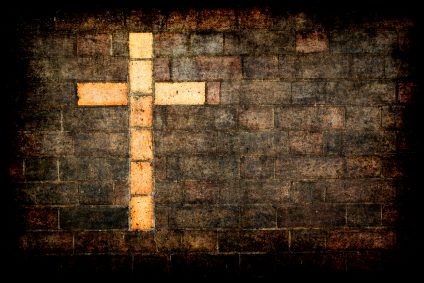
We must account for categories of oppression, and not simply personal guilt and existential alienation, as important as these categories are. Jesus is surely our righteous substitute for the payment of the penalty of personal sin as well as our victor over personal suffering and large scale oppression. No doubt, we need various theological voices from various backgrounds and traditions to bring the multi-faceted mystery of the atonement to bear on the fullness of life. In view of the need to hear from various voices, consider what James Cone, a leading African American theologian, says about the significance of the cross for African Americans. During an interview titled “Theologians and White Supremacy,” Cone says:
The cross stands at the center of the Christian faith of African-Americans because Jesus’ suffering was similar to their American experience. Just as Jesus Christ was crucified, so were blacks lynched. In the American experience, the cross is the lynching tree. The crucifixion of Jesus was a first-century lynching. If American Christians want to understand the meaning of the cross, they have to view it through the image of the lynching tree on which approximately 5,000 mostly (but not exclusively) black people were killed.
My theology is so limited, not because of the Bible, which is so vast in its rich complexity and mystery wedded to the pure simplicity of God’s holy love, but because of my experience and failure to engage people of various backgrounds and stripes in their pain. It is very hard for me to understand what Jesus as the Savior of the world of Luke’s Gospel means to someone living under oppression here in the States in a system that caters to white privilege (theology shaped by white privilege and that does not account for oppression but even promotes it in some manner, whether imposed by whites or people of other hues, is also to be accounted for in speaking of “white theology”). It is also difficult for me to comprehend what Jesus means to hungry children in Latin American ghettos or depressed communities in the States when I have never gone a day without food. In some ways, for the same reasons, it is very hard for me to understand what Jesus in Luke’s Gospel means for me today.
Theology must account not simply for penal substitution or St. Anselm’s satisfaction theory, but also Cone’s emphasis on victimization, among other atonement perspectives, if we are to move beyond singular adherence to “white theology” and cultivate a truly multi-colored theology so as to bring the biblical message home today in a satisfactory manner.
What might a truly multi-colored theology look like TODAY?
As a white theologian concerned for cultivating a truly multi-colored theology, I need to share in the sense of vulnerability many African Americans as well as others feel about three recent events in our nation.
As I said above, I have never gone a day without food. However, many in America today do know what living without food feels like. In view of the reality that race and class often track one another in America, how do we develop a multi-colored theology that addresses the fear of scarcity among the well to do in view of God’s abundance in Christ and make sure that the elimination of food stamps (SNAP) is eliminated? Food stamps should be made available for those who not only fear scarcity but live it.
The reframing of the Voting Rights Act to make the individual states responsible for overseeing voting procedures has led many to fear the return of Jim Crow era policies as it pertains to voting. In view of the God who counts the hairs on everyone’s head and takes everyone seriously no matter their pedigree and delights in the richness of ethnic diversity, how do we ensure that every vote is counted as we pursue equity? The church from the local to national levels must advocate for justice and equity for all. Christians also have a responsibility to hold accountable our leaders in our democratic system: our elected officials must remain diligent so that Jim Crow policies do not return but simply remain a terrible scar from a deep wound from our democracy’s past.
The verdict of the George Zimmerman trial has been echoing through courts of justice and across the land. What is to take away the fears of many in the African American community that there is nothing wrong with shooting and killing an unarmed black youth as long as one can demonstrate that one had reason to fear for one’s life? But what about the young black life that did not simply fear violence but was also extinguished as a result of someone else’s fear? It will not do to try and alter the conversation and speak only about black on black violence. It could very well be the case that black on black violence is itself in part the result of the violence against the African American community since its ancestors’ forced arrival on American shores centuries ago. We need to develop a theology of life that brings to an end a culture of violence and death across the board in view of Jesus who swallowed up death and violence in his once-for-all sacrifice and in his resurrection from the dead.
Instead of pointing the finger at this or that community, we need to hold hands and candles and pens together in an ongoing vigil of prayerful theology that leads to the development of a multi-colored life of just love that extinguishes scarcity, inequity and violence in our day. Will you and I join hands together to this end?
This piece is cross-posted at The Institute for the Theology of Culture: New Wine, New Wineskins and at The Christian Post.
Previous Post

July 11, 2013
White Theology, Part II
Next Post
July 18, 2013 Hawaiian Theology, Part I
Browse Our Archives
Select a Category Uncategorized
Select a Month June 2025 April 2025 March 2025 January 2025 December 2024 November 2024 October 2024 September 2024 August 2024 July 2024 June 2024 May 2024 April 2024 March 2024 February 2024 January 2024 December 2023 November 2023 October 2023 September 2023 August 2023 July 2023 June 2023 May 2023 April 2023 March 2023 February 2023 January 2023 December 2022 November 2022 October 2022 September 2022 August 2022 July 2022 June 2022 May 2022 April 2022 March 2022 February 2022 January 2022 December 2021 November 2021 October 2021 September 2021 August 2021 July 2021 June 2021 May 2021 April 2021 March 2021 February 2021 January 2021 December 2020 November 2020 October 2020 September 2020 August 2020 July 2020 June 2020 May 2020 April 2020 March 2020 February 2020 January 2020 December 2019 November 2019 October 2019 September 2019 August 2019 July 2019 June 2019 May 2019 April 2019 March 2019 February 2019 January 2019 December 2018 November 2018 October 2018 September 2018 August 2018 July 2018 June 2018 May 2018 April 2018 March 2018 February 2018 January 2018 December 2017 November 2017 October 2017 September 2017 August 2017 July 2017 June 2017 May 2017 April 2017 March 2017 February 2017 January 2017 December 2016 November 2016 October 2016 September 2016 August 2016 July 2016 June 2016 May 2016 April 2016 March 2016 February 2016 January 2016 December 2015 November 2015 October 2015 September 2015 August 2015 July 2015 June 2015 May 2015 April 2015 March 2015 February 2015 January 2015 December 2014 November 2014 October 2014 September 2014 August 2014 July 2014 June 2014 May 2014 April 2014 March 2014 February 2014 January 2014 December 2013 November 2013 October 2013 September 2013 August 2013 July 2013 June 2013 May 2013 April 2013 March 2013 February 2013 January 2013 December 2012 November 2012 October 2012 September 2012 August 2012 July 2012 June 2012 May 2012 April 2012 March 2012 February 2012
Follow Us!
TAKE THE
Religious Wisdom Quiz
What is the first piece of the Armor of God mentioned in Ephesians 6?
Select your answer to see how you score.
The Belt of Truth The Helmet of Salvation The Shield of Faith The Sword of the Spirit
Books by This Author Books by Paul Louis Metzger
Related posts from Uncommon God, Common Good

Heavenly Father’s Day on Trinity Sunday

Easter Triduum: Obey Your Thirst—for God

Holy Week Is Humble Week: "Beware of Becoming...

Excavating the Person in a Throwaway Culture
TRENDING AT PATHEOS Evangelical

The REST of Your Life: A Creative Wrestles...
This week I had a conversation with a good friend from church....

How the author of the world's best hymn...
I've been working with John Newton for a while now. This makes...

Long before this Lectio Divina, Psalm 130 - the song - started...

What About the Trees? Another Living Parable
After I finished writing the last article about falling leaves as a...

Why Classical Education Is a Conversation, Not a...
Come and Read: Joy in Classical Education When I was a little...

Cornell University has received a great deal of negative publicity and intense...
view all Evangelical blogs
Ad-Free & Subscriber Log-In Subscription Support
- About Us
- 2026 Calendar
- Videos
- Podcasts
- Library of World Religions
- Faith In Media Tracker
- Advertise With Us
- Write for Us
- Privacy Policy
- Terms of Service
- Do Not Sell My Data
- Contact Us
- Radiant Digital
- Manage Newsletter Subscriptions
- Unsubscribe From Notifications
- Sitemap
Copyright 2008-2026, Patheos. All rights reserved.
Subscription Support Ad-Free & Subscriber Log-In
Follow Patheos