
BuddhistCatholicContemplativeEvangelicalGeneral ChristianHinduJewishLatter-day SaintMuslimNew VisionsProgressive Christian
Beliefs
- Buddhist
- Catholic
- Contemplative
- Evangelical
- General Christian
- Hindu
- Jewish
- Latter-day Saint
- More Voices
- Muslim
- New Visions
- Pagan
- Progressive Christian
Topics
- Religion News
- Food and Religion
- Sports and Religion
- Religious Art
- Religious Music and Entertainment
- Religious Events
- History and Religion
- Style and Religion
- Politics and Religion
- Women in Religion
- Recreation Outdoors and Religion
- Business Finance and Religion
- Careers Workplace and Religion
- Education and Religion
- Family Parenting and Religion
- Health Fitness and Religion
- Home and Religion
- Relationships and Religion
- Technology and Religion
- Travel and Religion
Columnists
- Buddhist Columnists
- Business Finance and Religion Columnists
- Careers Workplace and Religion Columnists
- Catholic Columnists
- Contemplative Columnists
- Education and Religion Columnists
- Evangelists Columnists
- Family Parenting and Religion Columnists
- General Christian Columnists
- Health Fitness and Religion Columnists
- Hindu Columnists
- History and Religion Columnists
- Home and Religion Columnists
- Jewish Columnists
- More Voices Columnists
- Latter Day Columnists
- Muslim Columnists
- New Visions Columnists
- Nonreligious Columnists
- Pagan Columnists
- Politics and Religion Columnists
- Progressive Columnists
- Recreation Outdoors and Religion Columnists
- Relationships and Religion Columnists
- Religion News Columnists
- Religious Art Columnists
- Religious Events Columnists
- Religious Music and Entertainment Columnists
- Sports and Religion Columnists
- Style and Religion Columnists
- Technology and Religion Columnists
- Travel and Religion Columnists
- Women in Religion Columnists
Resource Library
- 2026 Calendar
- Library of World Religions
- The 100 Most Holy Places on Earth
- Patheos Answers
- Podcasts
- Videos
- Faith Leaders Database
- Anglican Episcopalian
- Bahai
- Baptist
- Buddhism
- Christianity
- Confucianism
- Eastern Orthodoxy
- Hinduism
- Holiness and Pentecostal
- ISKCON
- Islam
- Judaism
- Lutheran
- Methodist
- The Church of Jesus Christ of Latter-day Saints
- New Age
- Paganism
- Presbytarian and Reformed
- Protestantism
- Religion Behind the Scenes
- Roman Catholic
- Scientology
- Shia Islam
- Sikhism
- Sufism
- Sunni Islam
- Taoism
- Zen
- See all religions
Research Tools
 Ad-Free & Subscriber Log-In Subscription Support
Follow Patheos 

- Trending:
- Advent
- |
- Forgiveness
- |
- Thanksgiving
- |
- Election
- |
- Seasonal Holidays
- |
- Marriage

- Home
- Evangelical
- WANTED: World Christians on Mars Hill
WANTED: World Christians on Mars Hill
Last updated on: June 10, 2013 at 2:02 pm by Paul Louis Metzger
WANTED: World Christians on Mars Hill 2013-06-10T14:02:45-07:00 Paul Louis Metzger
Patheos Explore the world's faith through different perspectives on religion and spirituality! Patheos has the views of the prevalent religions and spiritualities of the world.
Paul was a world Christian. He not only traveled the known world of his day to places such as Corinth, Athens, and Rome, but also lived in the world, even though he was not of it. As a world Christian Paul did not go around his Christian convictions to engage those outside the church. Nor did he stop short at his convictions. Rather, he went through his convictions to engage those outside the faith.
In contrast to world Christians like Paul, worldly Christians are in the world and of it. As such, they lose sight of their distinctive identity in Christ and their distinctive Christian truth claims. Often their rationale is that they do not want to be a stumbling block to people, but in leaving their truth claims at the door, they keep Jesus from becoming the stumbling block so others can’t repent of their autonomy and respond to his loving call for relationship with them.
There is one other group—otherworldly Christians. These Christians are not really in the world. They stop short at their convictions and fail to connect with the people around them. These Christians will only engage those outside the faith if the latter are willing to change their views and accept Christ.
As a world Christian Paul engaged people where they were, though he did not leave them there. Take for example his interaction with the philosophers on Mars Hill. Paul was critical in mind, though charitable of spirit. We must not get these two mixed up: it is not good to be critical in spirit (where we are judgmental of people and do not hope for the good) and charitable of mind (where we do not critically discern if the perspectives of others resonate with Scripture). As a biblical Jewish monotheist, Paul grieved over the idolatry that surrounded him in Athens (Acts 17:16). But that did not keep him from thoughtful and gracious interaction with the philosophers on Mars Hill. He approached them in a spirit of charity, hoping to find points of contact even while discerning their errors in judgment. Along with his critical reflection and charitable spirit, Paul creatively engaged them. The statue of the unknown God served as a bridge for Paul as he creatively sought to build rapport and connection to Christ (Acts 17:23). There was already a connection from God in Christ, for as creator and redeemer of the world, he is in constant pursuit of us. And so, he had wired the pagan philosophers whom Paul quotes to say: In God, “we live and move and have our being” and, “We are his offspring” (Acts 17:28).
Paul continues to make points of connection when he speaks of God judging the world through Jesus, whom God raised from the dead. While many of those gathered there scoff at Paul’s teaching, some want to hear more (Acts 17:32). even those who do not cannot rightly claim that Paul distances himself from them, for God’s judgment of the world includes all people, including Paul (Acts 17:30–31). As such, Paul was not the stumbling block. He recognized that everyone’s rightful place was on their faces at the foot of the cross of God’s judgment on sin; as such, Paul had already stumbled over Christ and is here inviting others to meet him there.
We should not seek to avoid situations where people might scoff at our Christian truth claims involving Jesus’ death and resurrection. Jesus is the stumbling block, and when people scoff at him, they are only hurting themselves. They can only receive the life that Jesus offers by being humbled and stumbling over him and falling on their faces at the foot of the cross of God’s judgment on sin: Jesus’ foolishness and weakness are the wisdom and power of God, whereas our wisdom and power are foolish and weak in our self isolation bound up with our pride. Like Paul, we all must constantly recognize our need for Christ’s mercy as our judge who has undergone judgment for us. Paul moved through his convictions as a world Christian in charity of spirit, critical in mind, and creative in imagination. Paul made sure that he engaged people and led them to experience Jesus as the stumbling block. Will we do the same?
I preached on themes related to this post last weekend. Please take a listen!
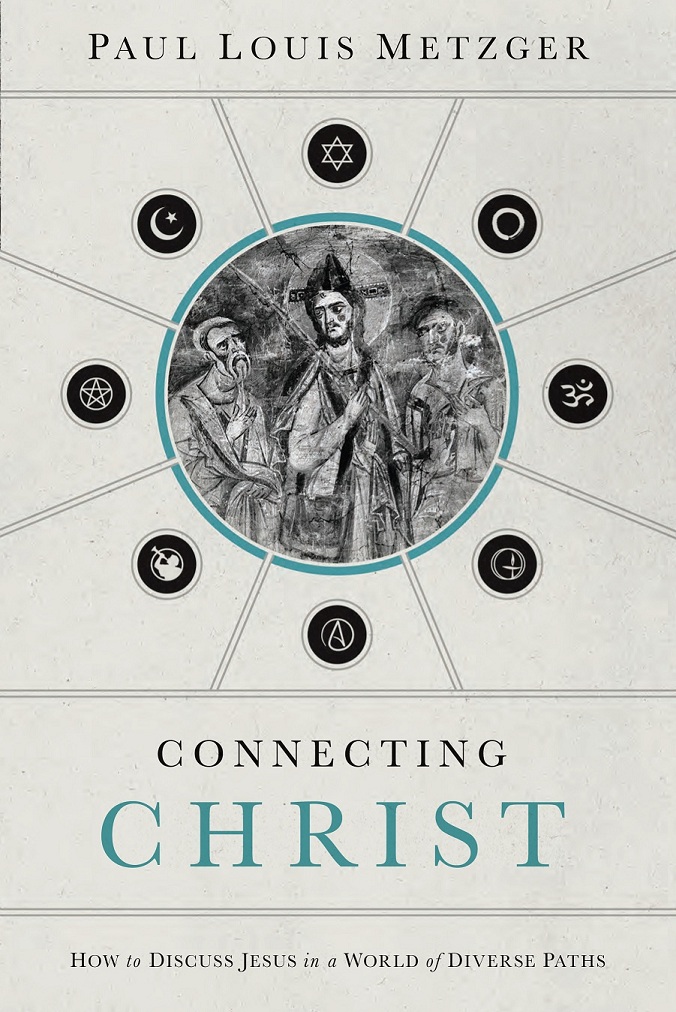
Taken from the chapter, “Who’s the Stumbling Block—You and Me or Jesus?” in Connecting Christ: How to Discuss Jesus in a World of Diverse Paths (Nashville: Thomas Nelson, 2012), pp. 32-34.
Note to the reader: I don’t accept the claim that Paul ended up abandoning the approach he modeled at Mars Hill by the time he wrote his letters to the Corinthians based on what he says about philosophy to the Corinthians. Paul continued to use philosophical and rhetorical forms of robust argumentation, and there is nothing in Acts 17 that suggests that what he did was unfaithful to what he conceives elsewhere to be faithful witness. In fact, Paul’s particular emphasis on Christ in Acts 17 leads to the rejection of his message by many, though not all, of his listeners there in Athens. Paul is passionate in his commitment to the scandal of particularity—Jesus as the crucified and risen Savior of the world.
This piece is cross-posted at The Institute for the Theology of Culture: New Wine, New Wineskins and The Christian Post.
Previous Post

May 16, 2013
"Please Don't Squeeze the Charmin!": On Comparing Religions
Next Post

May 23, 2013 Idol Makers
Browse Our Archives
Select a Category Uncategorized
Select a Month June 2025 April 2025 March 2025 January 2025 December 2024 November 2024 October 2024 September 2024 August 2024 July 2024 June 2024 May 2024 April 2024 March 2024 February 2024 January 2024 December 2023 November 2023 October 2023 September 2023 August 2023 July 2023 June 2023 May 2023 April 2023 March 2023 February 2023 January 2023 December 2022 November 2022 October 2022 September 2022 August 2022 July 2022 June 2022 May 2022 April 2022 March 2022 February 2022 January 2022 December 2021 November 2021 October 2021 September 2021 August 2021 July 2021 June 2021 May 2021 April 2021 March 2021 February 2021 January 2021 December 2020 November 2020 October 2020 September 2020 August 2020 July 2020 June 2020 May 2020 April 2020 March 2020 February 2020 January 2020 December 2019 November 2019 October 2019 September 2019 August 2019 July 2019 June 2019 May 2019 April 2019 March 2019 February 2019 January 2019 December 2018 November 2018 October 2018 September 2018 August 2018 July 2018 June 2018 May 2018 April 2018 March 2018 February 2018 January 2018 December 2017 November 2017 October 2017 September 2017 August 2017 July 2017 June 2017 May 2017 April 2017 March 2017 February 2017 January 2017 December 2016 November 2016 October 2016 September 2016 August 2016 July 2016 June 2016 May 2016 April 2016 March 2016 February 2016 January 2016 December 2015 November 2015 October 2015 September 2015 August 2015 July 2015 June 2015 May 2015 April 2015 March 2015 February 2015 January 2015 December 2014 November 2014 October 2014 September 2014 August 2014 July 2014 June 2014 May 2014 April 2014 March 2014 February 2014 January 2014 December 2013 November 2013 October 2013 September 2013 August 2013 July 2013 June 2013 May 2013 April 2013 March 2013 February 2013 January 2013 December 2012 November 2012 October 2012 September 2012 August 2012 July 2012 June 2012 May 2012 April 2012 March 2012 February 2012
Follow Us!
TAKE THE
Religious Wisdom Quiz
Which prophet spoke of a 'new covenant' in the Old Testament?
Select your answer to see how you score.
Jeremiah Malachi Ezekiel Isaiah
Books by This Author Books by Paul Louis Metzger
Related posts from Uncommon God, Common Good

Heavenly Father’s Day on Trinity Sunday

Easter Triduum: Obey Your Thirst—for God

Holy Week Is Humble Week: "Beware of Becoming...

Excavating the Person in a Throwaway Culture
TRENDING AT PATHEOS Evangelical

Making Stones Into Bread: Choosing the “Right” Work
I was on my online arts ministry Zoom meeting with the International...

Ukraine’s exhausted Christians face fifth winter of war
By Julian Lukins The full-scale war in Ukraine is taking “a serious...

Russell Brand's Conviction is not anti-Christian Persecution
How do we shed the reputation that the Church is OK with...

Have you ever caught yourself saying, “I’ll do it tomorrow,” or “Now...

Write Your Story: A Great Way to Find...
A few month’s back, my son was scrolling around Facebook and saw...

Throughout history, people have pursued pleasure, possessions, relationships, and success in an...
view all Evangelical blogs
Ad-Free & Subscriber Log-In Subscription Support
- About Us
- 2026 Calendar
- Videos
- Podcasts
- Library of World Religions
- Faith In Media Tracker
- Advertise With Us
- Write for Us
- Privacy Policy
- Terms of Service
- Do Not Sell My Data
- Contact Us
- Radiant Digital
- Manage Newsletter Subscriptions
- Unsubscribe From Notifications
- Sitemap
Copyright 2008-2026, Patheos, part of the Radiant Digital network of media brands. All rights reserved.
Subscription Support Ad-Free & Subscriber Log-In
Follow Patheos