
BuddhistCatholicContemplativeEvangelicalGeneral ChristianHinduJewishLatter-day SaintMuslimNew VisionsProgressive Christian
Beliefs
- Buddhist
- Catholic
- Contemplative
- Evangelical
- General Christian
- Hindu
- Jewish
- Latter-day Saint
- More Voices
- Muslim
- New Visions
- Pagan
- Progressive Christian
Topics
- Religion News
- Food and Religion
- Sports and Religion
- Religious Art
- Religious Music and Entertainment
- Religious Events
- History and Religion
- Style and Religion
- Politics and Religion
- Women in Religion
- Recreation Outdoors and Religion
- Business Finance and Religion
- Careers Workplace and Religion
- Education and Religion
- Family Parenting and Religion
- Health Fitness and Religion
- Home and Religion
- Relationships and Religion
- Technology and Religion
- Travel and Religion
Columnists
- Buddhist Columnists
- Business Finance and Religion Columnists
- Careers Workplace and Religion Columnists
- Catholic Columnists
- Contemplative Columnists
- Education and Religion Columnists
- Evangelists Columnists
- Family Parenting and Religion Columnists
- General Christian Columnists
- Health Fitness and Religion Columnists
- Hindu Columnists
- History and Religion Columnists
- Home and Religion Columnists
- Jewish Columnists
- More Voices Columnists
- Latter Day Columnists
- Muslim Columnists
- New Visions Columnists
- Nonreligious Columnists
- Pagan Columnists
- Politics and Religion Columnists
- Progressive Columnists
- Recreation Outdoors and Religion Columnists
- Relationships and Religion Columnists
- Religion News Columnists
- Religious Art Columnists
- Religious Events Columnists
- Religious Music and Entertainment Columnists
- Sports and Religion Columnists
- Style and Religion Columnists
- Technology and Religion Columnists
- Travel and Religion Columnists
- Women in Religion Columnists
Resource Library
- 2026 Calendar
- Library of World Religions
- The 100 Most Holy Places on Earth
- Patheos Answers
- Podcasts
- Videos
- Faith Leaders Database
- Anglican Episcopalian
- Bahai
- Baptist
- Buddhism
- Christianity
- Confucianism
- Eastern Orthodoxy
- Hinduism
- Holiness and Pentecostal
- ISKCON
- Islam
- Judaism
- Lutheran
- Methodist
- The Church of Jesus Christ of Latter-day Saints
- New Age
- Paganism
- Presbytarian and Reformed
- Protestantism
- Religion Behind the Scenes
- Roman Catholic
- Scientology
- Shia Islam
- Sikhism
- Sufism
- Sunni Islam
- Taoism
- Zen
- See all religions
Research Tools
 Ad-Free & Subscriber Log-In Subscription Support
Ad-Free & Subscriber Log-In Subscription Support
Follow Patheos 

- Trending:
- Forgiveness
- |
- Marriage
- |
- Consciousness
- |
- Death Penalty
- |
- Election
- |
- Halloween
 Unbelievable?
- Home
- Evangelical
- Bishop Robert Barron: Should the suffering caused by Covid shake our faith?
Bishop Robert Barron: Should the suffering caused by Covid shake our faith?
Last updated on: April 21, 2021 at 7:59 am by Guest Contributor
Bishop Robert Barron: Should the suffering caused by Covid shake our faith? 2021-04-21T07:59:55-05:00 Guest Contributor
Patheos Explore the world's faith through different perspectives on religion and spirituality! Patheos has the views of the prevalent religions and spiritualities of the world.

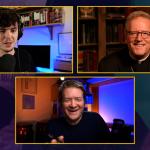
Following a recent survey suggesting that the Coronavirus has caused many people to question their faith, Bishop Robert Barron of Word on Fire shares his thoughts about faith and suffering. You can watch him discussing this topic with atheist YouTuber Cosmic Skeptic on a brand new episode of The Big Conversation here.
Premier Christian Radio recently commissioned a survey, which investigated how the Covid crisis has affected religious beliefs and attitudes. There were three major findings, namely, that 67 per cent of those who characterize themselves as “religious” found their belief in God challenged, that almost a quarter of all those questioned said that the pandemic made them more fearful of death, and that around a third of those surveyed said that their prayer life had been affected by the crisis.
Justin Brierly, who hosts the popular program Unbelievable?, commented that he was especially impressed by the substantial number of those who, due to Covid, have experienced difficulty believing in a loving God. I should like to focus on this finding as well.

Objection to Belief
Of course, in one sense, I understand the problem. An altogether standard objection to belief in God is human suffering, especially when it is visited upon the innocent. The apologist for atheism or naturalism quite readily asks the believer: “How could you possibly assert the existence of a loving God given…the Holocaust, school shootings, tsunamis that kill hundreds of thousands, pandemics, etc, etc?”
But I must confess that, in another sense, I find this argument from evil utterly unconvincing. And I say this precisely as a Catholic bishop, that is, someone who holds and teaches the doctrine of God that comes from the Bible. For I don’t think that anyone who reads the scriptures carefully could ever conclude that belief in a loving God is somehow incompatible with suffering.
Suffering in the Bible
There is no question that God loves Noah and yet he puts Noah through the unspeakably trying ordeal of a flood that wipes out almost all of life on the earth. It is without doubt that God loves Abraham and yet he asks that patriarch to sacrifice, with his own hand, his beloved son Isaac.
More than almost anyone else in the biblical tradition, God loves Moses and yet he prevents the great liberator from entering into the Promised Land. David is a man after the Lord’s own heart, the sweet singer of the house of Israel, and yet God punishes David for his adultery and his conspiracy to murder.
Jeremiah is specially chosen by God to speak the divine word and yet the prophet ends up rejected and sent into exile. The people of Israel are God’s uniquely chosen race, his royal priesthood, and yet God permits Israel to be enslaved, exiled and brutalized by her enemies.
And bringing this dynamic to full expression, God delivers his only-begotten Son to be tortured to death on a cross.
Conclusions in the Bible
Once again, the point, anomalous indeed to both believers and non-believers today, is that the biblical authors saw no contradiction whatsoever between affirming the existence of a loving God and the fact of human suffering, even unmerited human suffering. Rather, they appreciated it as, mysteriously enough, an ingredient in the plan of God, and they proposed various schemata for understanding this.
For instance, sometimes, they speculated, suffering is visited upon us as punishment for sin. Other times, it might be a means by which God effects a spiritual purification in his people. Still other times, it might be the only way that, given the conditions of a finite universe, God could bring about certain goods.
But they also acknowledged that, more often than not, we just don’t know how suffering fits into God’s designs, and this is precisely because our finite and historically conditioned minds could not, even in principle, comprehend the intentions and purposes of an infinite mind, which is concerned with the whole of space and time. Practically the entire burden of the book of Job is to show this. When Job protests against what he takes to be the massive injustice of his sufferings, God responds with a lengthy speech, in fact his longest oration in the Bible, reminding Job of how much of God’s purposes his humble human servant does not know:
“Where were you when I laid the foundations of the world…?”
Whether they half-understood the purpose of human suffering or understood it not at all, no biblical author was tempted to say that said evil is incompatible with the existence of a loving God. To be sure, they lamented and complained, but the recipient of the lamentation and complaint was none other than the God who, they firmly believed, loved them.
The Mystery of God
I don’t for a moment doubt that many feel today that suffering poses an insurmountable obstacle to belief in God, but I remain convinced that this feeling is a function of the fact that religious leaders have been rather inept at teaching the biblical doctrine of God. For if human suffering undermines your belief in God, then, quite simply, you were not believing in the God presented by the Bible.
I want to be clear that none of the above is meant to make light of the awful experience of suffering or cavalierly to dismiss the intellectual tensions that it produces. But it is indeed my intention to invite people into a deeper encounter with the mystery of God.
Like Jacob who wrestled all night with the angel, we must not give up on God but rather struggle with him. Our suffering shouldn’t lead us to dismiss the divine love, but rather to appreciate it as stranger than we ever imagined. It is perfectly understandable that, like Job, we might shout our protest against God, but then, like that great spiritual hero, we must be willing to hear the Voice that answers us from the whirlwind.
Click here to watch Bishop Robert Barron and atheist CosmicSkeptic discuss this topic further on The Big Conversation.
Subscribe to the Unbelievable? podcast
Join NT Wright, Tom Holland, Josh McDowell and others online at the Unbelievable? Conference on 15th May

Next Post
April 21, 2021 Thank God for the atheists who rid us of idols
Browse Our Archives
Select a Category Uncategorized
Select a Month April 2023 August 2022 June 2021 May 2021 April 2021 March 2021 February 2021 January 2021 December 2020 November 2020 October 2020 September 2020
Follow Us!
TAKE THE
Religious Wisdom Quiz
Which city was destroyed by fire and brimstone along with Gomorrah?
Select your answer to see how you score.
Sodom Jericho Babylon Nineveh
Related posts from Unbelievable?

Praying for Unity: A Christian Response to Critical...

3 Tips to Help Find Common Ground

If AI needs an intelligent creator, so do...

Fearfully and wonderfully made: The promise and perils...
TRENDING AT PATHEOS Evangelical

How the author of the world's best hymn...
I've been working with John Newton for a while now. This makes...

Long before this Lectio Divina, Psalm 130 - the song - started...

What About the Trees? Another Living Parable
After I finished writing the last article about falling leaves as a...

Why Classical Education Is a Conversation, Not a...
Come and Read: Joy in Classical Education When I was a little...

Falling Leaves: A Living Parable on Letting Go
I’ve spent the vast majority of my life in the southeast corner...

Cornell University has received a great deal of negative publicity and intense...
view all Evangelical blogs
Ad-Free & Subscriber Log-In Subscription Support
- About Us
- 2026 Calendar
- Videos
- Podcasts
- Library of World Religions
- Faith In Media Tracker
- Advertise With Us
- Write for Us
- Privacy Policy
- Terms of Service
- Do Not Sell My Data
- Contact Us
- Radiant Digital
- Manage Newsletter Subscriptions
- Unsubscribe From Notifications
- Sitemap
Copyright 2008-2026, Patheos. All rights reserved.
Subscription Support Ad-Free & Subscriber Log-In
Follow Patheos