
BuddhistCatholicContemplativeEvangelicalGeneral ChristianHinduJewishLatter-day SaintMuslimNew VisionsProgressive Christian
Beliefs
- Buddhist
- Catholic
- Contemplative
- Evangelical
- General Christian
- Hindu
- Jewish
- Latter-day Saint
- More Voices
- Muslim
- New Visions
- Pagan
- Progressive Christian
Topics
- Religion News
- Food and Religion
- Sports and Religion
- Religious Art
- Religious Music and Entertainment
- Religious Events
- History and Religion
- Style and Religion
- Politics and Religion
- Women in Religion
- Recreation Outdoors and Religion
- Business Finance and Religion
- Careers Workplace and Religion
- Education and Religion
- Family Parenting and Religion
- Health Fitness and Religion
- Home and Religion
- Relationships and Religion
- Technology and Religion
- Travel and Religion
Columnists
- Buddhist Columnists
- Business Finance and Religion Columnists
- Careers Workplace and Religion Columnists
- Catholic Columnists
- Contemplative Columnists
- Education and Religion Columnists
- Evangelists Columnists
- Family Parenting and Religion Columnists
- General Christian Columnists
- Health Fitness and Religion Columnists
- Hindu Columnists
- History and Religion Columnists
- Home and Religion Columnists
- Jewish Columnists
- More Voices Columnists
- Latter Day Columnists
- Muslim Columnists
- New Visions Columnists
- Nonreligious Columnists
- Pagan Columnists
- Politics and Religion Columnists
- Progressive Columnists
- Recreation Outdoors and Religion Columnists
- Relationships and Religion Columnists
- Religion News Columnists
- Religious Art Columnists
- Religious Events Columnists
- Religious Music and Entertainment Columnists
- Sports and Religion Columnists
- Style and Religion Columnists
- Technology and Religion Columnists
- Travel and Religion Columnists
- Women in Religion Columnists
Resource Library
- 2026 Calendar
- Library of World Religions
- The 100 Most Holy Places on Earth
- Patheos Answers
- Podcasts
- Videos
- Faith Leaders Database
- Anglican Episcopalian
- Bahai
- Baptist
- Buddhism
- Christianity
- Confucianism
- Eastern Orthodoxy
- Hinduism
- Holiness and Pentecostal
- ISKCON
- Islam
- Judaism
- Lutheran
- Methodist
- The Church of Jesus Christ of Latter-day Saints
- New Age
- Paganism
- Presbytarian and Reformed
- Protestantism
- Religion Behind the Scenes
- Roman Catholic
- Scientology
- Shia Islam
- Sikhism
- Sufism
- Sunni Islam
- Taoism
- Zen
- See all religions
Research Tools
 Ad-Free & Subscriber Log-In Subscription Support
Follow Patheos 

- Trending:
- Advent
- |
- Forgiveness
- |
- Thanksgiving
- |
- Election
- |
- Seasonal Holidays
- |
- Marriage
 Unbelievable?
- Home
- Evangelical
- The ‘Christian Atheist’. What would it take for Douglas Murray to believe in God?
The ‘Christian Atheist’. What would it take for Douglas Murray to believe in God?
Last updated on: October 28, 2020 at 10:43 am by Erik Strandness
The ‘Christian Atheist’. What would it take for Douglas Murray to believe in God? 2020-10-28T10:43:23-05:00 Erik Strandness
Patheos Explore the world's faith through different perspectives on religion and spirituality! Patheos has the views of the prevalent religions and spiritualities of the world.
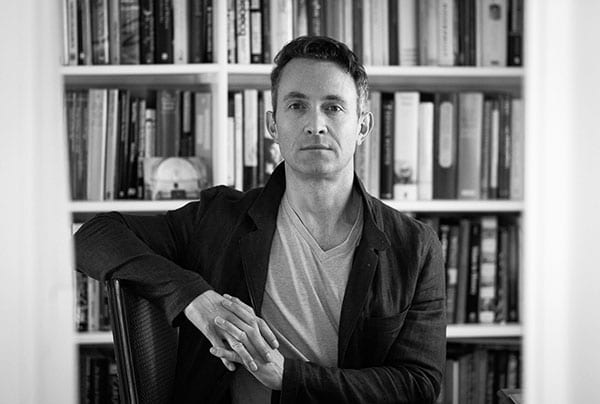
Image: douglasmurray.net
Douglas Murray is a best-selling author and award winning political and social commentator. He was raised in a Christian home but his belief in God waned over time eventually disappearing in his late twenties. He continues to embrace the positive influence that Christianity, specifically the teachings of Jesus, has had on Western culture but does so without all the divine baggage. He finds himself adopting the odd designation of “Christian atheist.”
Lighting Up the Dark Web
Douglas is a fascinating character who frequently brings the light of the world to the intellectual dark web. He shares the ‘anti-woke’ sentiments of many of the public intellectuals who go under that banner, but seems more open than many of them to the Christian worldview being a serious option. At the very least he sees the ebbing away of the Judeo-Christian tradition as potentially deadly for the West.
Douglas sat down with Christian writer and social commentator Esther O’Reilly on Unbelievable? to discuss his book, The Madness of Crowds. It was a fantastic discussion that covered many current hot-button cultural issues. I won’t go into the details of the entire conversation as it has already been well chronicled by George Brahms in a piece he wrote for Premier Christianity magazine’s blog.
Setting the Bar Too High
One of the most interesting moments in the show was when Justin asked Douglas what evidence he would need to once again believe in God. Douglas responded; “I think I need to hear a voice.” Is Douglas being reasonable or has he set the bar for God’s existence too high?
Esther responded by sharing that she hasn’t heard God literally speak either yet remains a convinced believer. She pointed out that she finds so much historical evidence for the life, death, and resurrection of the One who claimed He was equal to God and whose followers worshipped Him as God incarnate that it was quite reasonable to be a follower of Christ without hearing voices.
Selective Hearing?
Douglas’ evidential requirement for a personal audience with the Divine is a common theme for many atheists when asked the same question. I believe Douglas’ request is sincere but for many other atheists it is a bar that they know cannot be reached which allows their beliefs to go unchallenged.

Douglas Murray & Esther O’Reilly
I find it quite ironic that the very atheists who dismiss supernatural experience as inadequate evidence for the existence of God are the very same ones who admit that the only thing that would change their mind would be a supernatural experience. The very type of evidence that they claim would transform their beliefs is conveniently not even allowed into the conversation.
Douglas graciously recognized that confining arguments for God’s existence to the philosophical, theological and historical disciplines severely limits the Christian witness. He acknowledged the powerful religious experiences of his friends and pointed out that in Africa and the Middle East encounters with the divine are not uncommon and considered acceptable evidence for the existence of God.
Galilean Road Experience
Is it possible that Douglas has already heard God speak but having left the flock he no longer recognizes the Shepherd’s voice? Douglas confided to a friend that while on a trip to Galilee he was obsessed by a thought.
“I had a very private thought…on that trip to Galilee in particular. I (had)one sentence in my head that I couldn’t get out, which was – something happened here, something happened here.”
Such a powerful statement! The sentence he heard could have been the inevitable result of all his accumulated Christian baggage lived out in a Western culture built upon a Judeo-Christian foundation, or maybe, just maybe, God was telling him that two thousand years ago heaven and earth touched.
Conversation Partner
While people desire to hear God’s voice, many feel that He just won’t speak to them. I think we need to begin by asking ourselves what it is about our lives that would make for interesting conversation. Are we engaging in dialogue or pleading for stuff? Did we bother to say “good morning” before we gave Him our “to do” list for the day? Have we made ourselves unrecognizable to Him by trying to be someone other than who He created us to be so that when we strike up a conversation He gives us a puzzled look and says, “I never knew you.”
Dallas Willard states it quite eloquently in his classic book, Hearing God.
Are we ready to be in business with God? If you find yourself in a position where you can honestly say, ‘God has never spoken to me,’ then you well might ask, ‘Why should God Speak to me? What am I doing in life that would make speaking to me a reasonable thing for Him to do? Are we in business together in life? Or am I in business for myself, trying to ‘use a little God’ to advance my projects?
Message in the Stars
One of my favourite writers, Frederick Buechner, delivered a sermon entitled, Message in the Stars, that goes right to the heart of this issue. He suggested a scenario where God writes “I Exist” in the sky every night in different colors and languages so that everyone in the world has the opportunity to see the magnificent display. He then describes the dramatic responses of the people who witness the message but then shifts the focus to a young man who turns to his father and says, “What difference does that make?” It is a powerful scene because it exposes the stark difference between settling for God’s existence or establishing a personal relationship with the divine.
The majority of debates between Christians and atheists focus on the proof for God’s existence as if that were enough for faith, but as Buechner points out, we don’t need assurance that He is out there but that He is present with us:
We all want to be certain, we all want proof, but the kind of proof we tend to want – scientifically or philosophically demonstrable proof that would silence all doubts once and for all – would not in the long run, I think, answer the fearful depths of our need at all. For what we need to know, of course, is not just that God exists, not just that beyond the steely brightness of the stars there is a cosmic intelligence of some kind that keeps the whole show going, but that there is a God right here in the thick of our day-today lives who may be writing messages about himself in the stars but who in one way or another is trying to get messages through our blindness as we move around here knee-deep in the fragrant muck and misery and marvel of the world. It is not objective proof of God’s existence that we want but, whether we use religious language for it or not, the experience of God’s presence. That is the miracle we are really after. And that is also, I think, the miracle that we really get.
Sounds of Silence
Monasteries, cathedrals, and churches are quiet. The ocean, forest, and desert are quiet. We flock to them to sit in silence. While it may seem to be physically quiet, we are in fact submersed in a sea of divine discourse. We may think that we can hear a pin drop in our acoustic asceticism, but in reality we are engulfed by the surround sound of God’s rhetorical splendour.
The quiet we encounter is actually the creational words God spoke into being long ago. So whenever we encounter a babbling brook we are actually eavesdropping on a stream of divine thought. Maybe if we listened harder for the whisper in the wind, the soliloquy in the sunset, or the symphony in a cell, we could put aside the silly notion that God is silent.
What Would Cause Me not to Believe?
The question Justin asked Douglas must also be turned on me. What would cause me to stop believing in God? Ironically, in contrast to Douglas, I would abandon my faith if I stopped hearing God speak.
Yet… I hear the heavens declares, I read a DNA code written on the biological wall, I am humbled by the blue print of the human machine, and I hear the spirit groan when my patients suffer. I am unable to formulate an excuse for not hearing His voice because I encounter Him on a daily basis in the things that have been created.
Many people wish that God would speak like He did in the Old Testament so that His desires could be more clearly known. Why did God stop speaking so eloquently and forcefully through the prophets? I would argue that God never stopped speaking at all but actually turned up the volume. In the Old Testament God’s words were spoken and recorded by inspired middlemen, but in the New Testament we encounter God’s Word in the flesh. Jesus is the final Word; need God say more?
Silencing God
Has Douglas Murray set the bar too high by asking God to step up to the mic? I would say “no” because in my experience God has never stopped talking. I would say that Douglas’ real problem isn’t detecting divine speech but being disappointed by God’s elocution. He wants God to raise His voice in a whirlwind of words, an earth-shaking exclamation, or a conflagration of conversation but sadly sets the bar for God’s delivery so high that he misses that still small voice calling him home.
Subscribe to the Unbelievable? podcast
Previous Post

October 14, 2020
Russell Brand’s prayers aren’t that far from Jesus
Next Post
October 22, 2020 Dave Rubin: Why I'm no longer an atheist
Browse Our Archives
Select a Category Uncategorized
Select a Month April 2023 August 2022 June 2021 May 2021 April 2021 March 2021 February 2021 January 2021 December 2020 November 2020 October 2020 September 2020
Follow Us!
TAKE THE
Religious Wisdom Quiz
What does the Bible say about rest?
Select your answer to see how you score.
Rest is evil God rested on the seventh day Only rest when you're old Avoid rest
Related posts from Unbelievable?

Praying for Unity: A Christian Response to Critical...

3 Tips to Help Find Common Ground

If AI needs an intelligent creator, so do...

Fearfully and wonderfully made: The promise and perils...
TRENDING AT PATHEOS Evangelical

Making Stones Into Bread: Choosing the “Right” Work
I was on my online arts ministry Zoom meeting with the International...

Ukraine’s exhausted Christians face fifth winter of war
By Julian Lukins The full-scale war in Ukraine is taking “a serious...

Russell Brand's Conviction is not anti-Christian Persecution
How do we shed the reputation that the Church is OK with...

Have you ever caught yourself saying, “I’ll do it tomorrow,” or “Now...

Write Your Story: A Great Way to Find...
A few month’s back, my son was scrolling around Facebook and saw...

Throughout history, people have pursued pleasure, possessions, relationships, and success in an...
view all Evangelical blogs
Ad-Free & Subscriber Log-In Subscription Support
- About Us
- 2026 Calendar
- Videos
- Podcasts
- Library of World Religions
- Faith In Media Tracker
- Advertise With Us
- Write for Us
- Privacy Policy
- Terms of Service
- Do Not Sell My Data
- Contact Us
- Radiant Digital
- Manage Newsletter Subscriptions
- Unsubscribe From Notifications
- Sitemap
Copyright 2008-2026, Patheos, part of the Radiant Digital network of media brands. All rights reserved.
Subscription Support Ad-Free & Subscriber Log-In
Follow Patheos