
BuddhistCatholicContemplativeEvangelicalGeneral ChristianHinduJewishLatter-day SaintMuslimNew VisionsProgressive Christian
Beliefs
- Buddhist
- Catholic
- Contemplative
- Evangelical
- General Christian
- Hindu
- Jewish
- Latter-day Saint
- More Voices
- Muslim
- New Visions
- Pagan
- Progressive Christian
Topics
- Religion News
- Food and Religion
- Sports and Religion
- Religious Art
- Religious Music and Entertainment
- Religious Events
- History and Religion
- Style and Religion
- Politics and Religion
- Women in Religion
- Recreation Outdoors and Religion
- Business Finance and Religion
- Careers Workplace and Religion
- Education and Religion
- Family Parenting and Religion
- Health Fitness and Religion
- Home and Religion
- Relationships and Religion
- Technology and Religion
- Travel and Religion
Columnists
- Buddhist Columnists
- Business Finance and Religion Columnists
- Careers Workplace and Religion Columnists
- Catholic Columnists
- Contemplative Columnists
- Education and Religion Columnists
- Evangelists Columnists
- Family Parenting and Religion Columnists
- General Christian Columnists
- Health Fitness and Religion Columnists
- Hindu Columnists
- History and Religion Columnists
- Home and Religion Columnists
- Jewish Columnists
- More Voices Columnists
- Latter Day Columnists
- Muslim Columnists
- New Visions Columnists
- Nonreligious Columnists
- Pagan Columnists
- Politics and Religion Columnists
- Progressive Columnists
- Recreation Outdoors and Religion Columnists
- Relationships and Religion Columnists
- Religion News Columnists
- Religious Art Columnists
- Religious Events Columnists
- Religious Music and Entertainment Columnists
- Sports and Religion Columnists
- Style and Religion Columnists
- Technology and Religion Columnists
- Travel and Religion Columnists
- Women in Religion Columnists
Resource Library
- 2026 Calendar
- Library of World Religions
- The 100 Most Holy Places on Earth
- Patheos Answers
- Podcasts
- Videos
- Faith Leaders Database
- Anglican Episcopalian
- Bahai
- Baptist
- Buddhism
- Christianity
- Confucianism
- Eastern Orthodoxy
- Hinduism
- Holiness and Pentecostal
- ISKCON
- Islam
- Judaism
- Lutheran
- Methodist
- The Church of Jesus Christ of Latter-day Saints
- New Age
- Paganism
- Presbytarian and Reformed
- Protestantism
- Religion Behind the Scenes
- Roman Catholic
- Scientology
- Shia Islam
- Sikhism
- Sufism
- Sunni Islam
- Taoism
- Zen
- See all religions
Research Tools
 Ad-Free & Subscriber Log-In Subscription Support
Ad-Free & Subscriber Log-In Subscription Support
Follow Patheos 

- Trending:
- Forgiveness
- |
- Marriage
- |
- Consciousness
- |
- Death Penalty
- |
- Election
- |
- Halloween
 Turn. Love. Repeat.
- Home
- Catholic
- Living Between Ashes and Water
Living Between Ashes and Water
Last updated on: February 25, 2021 at 4:11 pm by Fr. Stephanos Pedrano, O.S.B.
Living Between Ashes and Water 2021-02-25T16:11:06-08:00 Fr. Stephanos Pedrano, O.S.B.
Patheos Explore the world's faith through different perspectives on religion and spirituality! Patheos has the views of the prevalent religions and spiritualities of the world.
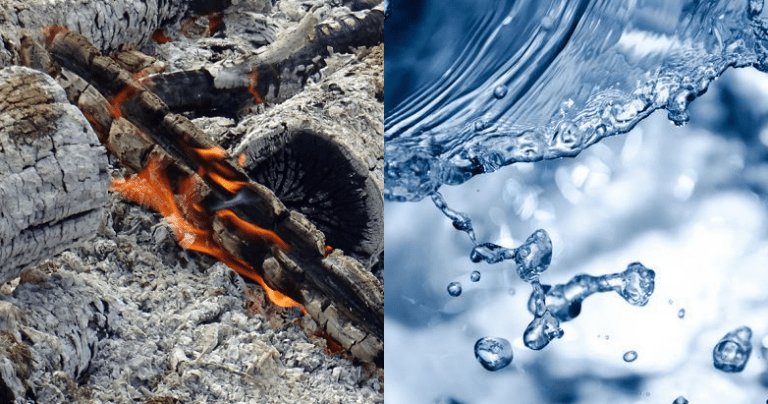
Ashes, Water. Pixabay / Public Domain.
On Ash Wednesday, we took ashes upon us to begin this season that ends when we take water upon us on Easter, either by receiving Baptism or renewing our Baptismal promises.
So, this season of Lent and its sacrifices ready us to make or remake the promises of Baptism.
Christ received a different kind of baptism from John at the Jordan River.
Then he went right into the empty wilderness for forty days.
We hear of that in the Gospel at Mass every year on the first Sunday after Ash Wednesday.
- The Holy Spirit drove Christ into the wilderness.
- Christ spent forty days there.
- The devil, Satan, came to tempt Christ.
- Satan lost.
- Then Christ went to Galilee to begin his public preaching and work.
The Gospels of Matthew and Luke spell out the three temptations Satan tried on Christ.
The temptations were worldly ways for Christ to succeed in his mission.
But such success would have been ungodly.
We follow Christ whose mission we carry on, and so we also must not fall for what the world and Satan reckon as success.
Let’s look first at the one tempting success that we can hide from others.
Satan came to tempt Jesus, and said,
“If you are the Son of God,
command these stones to become bread.”
Jesus answered,
“It is written:
One does not live on bread alone,
but on every word that comes from the mouth of God.”
Whatever abilities, roles or payments we receive in living and working as Christians, we must not use them to meet our bodily needs alone without also feeding more eagerly on all obedience to God.
The two other temptations of success are more dangerous in that they touch directly many other lives on earth.
The devil took Jesus onto the roof of the temple in Jerusalem,
and said, “If you are the Son of God,
throw yourself down from here, for it is written:
He will command his angels for you, to guard you,
and they will hold you up with their hands,
lest you smash onto the stones below.”
Jesus answered,
“Again it is also written,
You shall not put the Lord, your God, to the test.”
This temptation is to act as if God would do our will at our convenience, but it does so to show off that God is on our side and works for us.
Christ worked miracles never to show off, but only to help the suffering.
When he rose from the dead in wondrous might, he did not show off to the high priests, Pharisees, scribes, Herod or Pontius Pilate.
Rather, he let the scoffers and killers see nothing and hear nothing but the word of his disciples.
As his disciples, we also are to testify by word and example, not by clobbering the crowds with triumphal shows of mighty wonder.
The remaining temptation seems the most dangerous.
The devil took Jesus atop a very high mountain,
and showed him in one heartbeat all earth’s kingdoms in their greatness,
and he said to him, “I shall give you all these with their might and glory;
for they are in my hands
to give to whomever I wish.
All this will be yours if you will lie at my feet and worship me.”
But Jesus said to him,
“Get away, Satan!
It is written:
The Lord your God, shall you worship
and him alone shall you serve.”
To have power over kingdoms— political power, social influence, fame— is to risk turning from God to worship Satan.
The famous, the socially influential and the politically powerful can worship themselves, and that is as bad as to worship Satan, because worship belongs to God alone.
Fame, influence and power in the world fall easily into the hands of Satan, because, as Christ has said, Satan is the ruler of this world. [Jn. 12:31, 14:30, 16:11]
We have seen Catholic and Protestant clergy and lay leaders become blind to the seductions of their own vanity and fame.
They end up twisted and fallen like Satan.
Mark well the only time Christ let crowds treat him like a famous, conquering king was when he paraded into Jerusalem so he could receive judgment and death as a criminal.
The temptation of social and political might with fame and popularity got a harsher answer from Christ than did the other temptations.
“Get away, Satan!
It is written:
The Lord your God, shall you worship
and him alone shall you serve.”
Satan had tempted Adam and Eve to grab and swallow being as successful as God and needing God no longer.
What Satan fooled them to grab and swallow was falsehood and death.
So in the fullness of time, God in Christ spurned success as the world weighs success, and instead he took on worldly failure in dying on a cross as a wrongdoer.
Thus did God free and renew the children of Adam and Eve to rise from death in God’s success, not their own.
And so at Mass on Easter the Church calls us to rise from death, whether we are receiving Baptism or renewing our Baptismal promises.
Do you renounce Satan?
And all his works?
And all his empty show?
Satan, his works and empty show are less and worse than ashes.
Cherishing the Holy Water of our Baptism, let us rather believe and obey the Father and the Son and the Holy Spirit.
After defeating Satan’s temptations, Christ began at last his mission of calling out to the children of Adam and Eve: Repent, and believe in the gospel.
Reduced to ashes by our sins, but swimming in the Godliness of the Father and of the Son and of the Holy Spirit in Baptismal Water, let us live, let us repent and let us believe in the Gospel!
Turn. Love. Repeat.
Previous Post

February 16, 2021
Vulnerability and Intimacy in the Ash Wednesday Gospel
Next Post

February 27, 2021 The Beginning and the Destiny of Humankind: Let There Be Light
Browse Our Archives
Select a Category Uncategorized
Select a Month July 2021 June 2021 May 2021 April 2021 March 2021 February 2021 January 2021 December 2020 November 2020 October 2020 September 2020 August 2020 July 2020 June 2020 May 2020 April 2020 March 2020 February 2020 January 2020 December 2019
Follow Us!
TAKE THE
Religious Wisdom Quiz
Which book contains a prophecy about locust swarms devastating the land?
Select your answer to see how you score.
Hosea Micah Joel Obadiah
Related posts from Turn. Love. Repeat.

In the Name of the Father, and of...


The Beginning and the Destiny of Humankind: Let...
Vulnerability and Intimacy in the Ash Wednesday Gospel
TRENDING AT PATHEOS Catholic

Rejecting Doom: Christian Hope And Human Action
Christianity is a religion of hope. We are to have hope and...

It’s What Comes From Within Which Matters
One of the most difficult things for us to understand is why...

Why I Choose the Eucharist Over the Sermon
Choose the Eucharist, Not the Sermon What are we supposed to get...

5 Design Elements Found in Spiritually Rooted Homes
Putting Spirituality Into Home Decor Our homes are more than our living...

Credo: A Story of God Told with the...
About 10 years ago, I began to imagine a personal "Credo" that...

The Anatomy of Divine Revelation in Catholic Thought
The claim that God has made Himself known to human beings is...
view all Catholic blogs
Ad-Free & Subscriber Log-In Subscription Support
- About Us
- 2026 Calendar
- Videos
- Podcasts
- Library of World Religions
- Faith In Media Tracker
- Advertise With Us
- Write for Us
- Privacy Policy
- Terms of Service
- Do Not Sell My Data
- Contact Us
- Radiant Digital
- Manage Newsletter Subscriptions
- Unsubscribe From Notifications
- Sitemap
Copyright 2008-2026, Patheos. All rights reserved.
Subscription Support Ad-Free & Subscriber Log-In
Follow Patheos