
BuddhistCatholicContemplativeEvangelicalGeneral ChristianHinduJewishLatter-day SaintMuslimNew VisionsProgressive Christian
Beliefs
- Buddhist
- Catholic
- Contemplative
- Evangelical
- General Christian
- Hindu
- Jewish
- Latter-day Saint
- More Voices
- Muslim
- New Visions
- Pagan
- Progressive Christian
Topics
- Religion News
- Food and Religion
- Sports and Religion
- Religious Art
- Religious Music and Entertainment
- Religious Events
- History and Religion
- Style and Religion
- Politics and Religion
- Women in Religion
- Recreation Outdoors and Religion
- Business Finance and Religion
- Careers Workplace and Religion
- Education and Religion
- Family Parenting and Religion
- Health Fitness and Religion
- Home and Religion
- Relationships and Religion
- Technology and Religion
- Travel and Religion
Columnists
- Buddhist Columnists
- Business Finance and Religion Columnists
- Careers Workplace and Religion Columnists
- Catholic Columnists
- Contemplative Columnists
- Education and Religion Columnists
- Evangelists Columnists
- Family Parenting and Religion Columnists
- General Christian Columnists
- Health Fitness and Religion Columnists
- Hindu Columnists
- History and Religion Columnists
- Home and Religion Columnists
- Jewish Columnists
- More Voices Columnists
- Latter Day Columnists
- Muslim Columnists
- New Visions Columnists
- Nonreligious Columnists
- Pagan Columnists
- Politics and Religion Columnists
- Progressive Columnists
- Recreation Outdoors and Religion Columnists
- Relationships and Religion Columnists
- Religion News Columnists
- Religious Art Columnists
- Religious Events Columnists
- Religious Music and Entertainment Columnists
- Sports and Religion Columnists
- Style and Religion Columnists
- Technology and Religion Columnists
- Travel and Religion Columnists
- Women in Religion Columnists
Resource Library
- 2026 Calendar
- Library of World Religions
- The 100 Most Holy Places on Earth
- Patheos Answers
- Podcasts
- Videos
- Faith Leaders Database
- Anglican Episcopalian
- Bahai
- Baptist
- Buddhism
- Christianity
- Confucianism
- Eastern Orthodoxy
- Hinduism
- Holiness and Pentecostal
- ISKCON
- Islam
- Judaism
- Lutheran
- Methodist
- The Church of Jesus Christ of Latter-day Saints
- New Age
- Paganism
- Presbytarian and Reformed
- Protestantism
- Religion Behind the Scenes
- Roman Catholic
- Scientology
- Shia Islam
- Sikhism
- Sufism
- Sunni Islam
- Taoism
- Zen
- See all religions
Research Tools
 Ad-Free & Subscriber Log-In Subscription Support
Ad-Free & Subscriber Log-In Subscription Support
Follow Patheos 

- Trending:
- Forgiveness
- |
- Marriage
- |
- Consciousness
- |
- Death Penalty
- |
- Election
- |
- Halloween
 Turn. Love. Repeat.
- Home
- Catholic
- The Puritan Pilgrims Celebrated “Thanksgiving” Only Once
The Puritan Pilgrims Celebrated “Thanksgiving” Only Once
Last updated on: November 26, 2020 at 5:51 pm by Fr. Stephanos Pedrano, O.S.B.
The Puritan Pilgrims Celebrated “Thanksgiving” Only Once 2020-11-26T17:51:29-08:00 Fr. Stephanos Pedrano, O.S.B.
Patheos Explore the world's faith through different perspectives on religion and spirituality! Patheos has the views of the prevalent religions and spiritualities of the world.
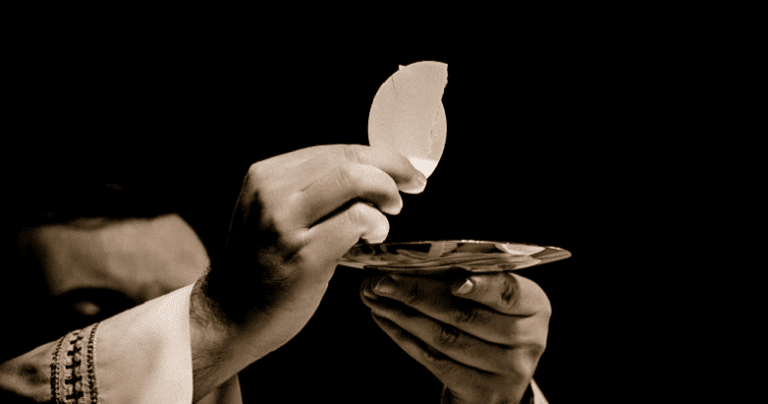
Pixabay / Public Domain.
The Mayflower Pilgrims, as Puritan Calvinists, saw yearly festivals as a corrupt Catholic usage, and so they never kept a yearly “Thanksgiving Day.”
The Pilgrims came to North America on the Mayflower in the year of our Lord 1620, and celebrated their first harvest with a meal in the following year, 1621.
However, in the years that followed, they did not keep a yearly commemoration of that first thankful harvest festival.
They were Puritan Calvinists who rejected the keeping of yearly festivals, because that was a Catholic custom.
In the United States of America, our fixed annual day of national Thanksgiving to God did not begin until President Abraham Lincoln’s proclamation of it on the third of October in the Year of Our Lord 1863, that is, two hundred and forty-two years after the first Puritan harvest in North America.
The Puritans were not even the first Christian colonists in what is now the U.S.A.
Fifty-five years before the Puritans landed in what is now Massachusetts, a fleet of ships carrying more than a thousand Catholic colonists landed in Florida, on the Feast of the Birth of the Blessed Virgin Mary, the eighth day of September in the Year of Our Lord 1565.
Symbolically, they let a priest carrying a cross be the first to set foot on dry land: Father Francisco López de Mendoza Grajales.
The fleet’s captain general, Pedro Menéndez de Aviles, then stepped ashore to kiss the cross in the hands of the priest.
The rest of the colonists did the same.
They sang the ancient Latin hymn Te Deum.
That hymn is known in a German version as Grosser Gott, and, from the German, has been translated into English as “Holy God, We Praise Thy Name”— a hymn we use at Mass sometimes.
After the Florida colonists venerated the cross, they celebrated the Mass.
The Mass is the celebration of the Eucharist— a word from Greek meaning thanksgiving.
The Florida Catholic colonists offered Thanksgiving to God at Mass before they did anything else, and then they celebrated with a meal.
Then followed daily Thanksgiving to God at Mass by Catholics for fifty-five years before the Puritan Pilgrims landed here.
Furthermore, after the arrival of the Puritans, who rejected the notion of yearly feasts, the Catholic colonists continued daily Thanksgiving to God at Mass for the next two hundred and forty-two years, until President Lincoln created our yearly national day of Thanksgiving to God.
For the one hundred and fifty-seven years since 1863, our nation has kept one day a year for national Thanksgiving to God.
However, for nearly three times as long, that is, for the four hundred and fifty-five years since Catholics landed in Florida, we have offered not once-yearly but DAILY Thanksgiving to God at Mass.
When we sing the Gloria (or Glory) at Mass, we say to God: GRATIAS agimus tibi, “We give you THANKS.”
At Mass, when the reader has finished voicing “The Word of the Lord,” we all say, “THANKS be to God.”
Later in the Mass, the priest tells us “Lift up your hearts” and “Let us give THANKS to the Lord our God.”
Then, the priest goes on with the lengthy Thanksgiving prayer that makes known and present the Eucharist, the Thankful Body and Blood of Christ.
Later, as the Mass comes to a close, the priest blesses us, dismisses us, and then, as the People of God, the Church, we will have the last word: “Thanks be to God.”
Four hundred and fifty-five years of Catholic daily Eucharistic THANKSGIVING in this nation!
The Thankful-Eucharistic Flesh and Blood of Christ, through whom all things were made, is at the heart of this mystery.
God the Son received his own self from God the Father in the oneness of God the Spirit.
The everlasting answer of the Son to his Father is “Yes, Father” and “Thank-You, Father.”
The “Yes” and “Thanks” of Jesus save us— the “Yes” and “Thanks” that we take into ourselves in the Body and Blood of Christ.
We must take it in, but we must even more give it back by thought, word and deed— choosing to live out both “Yes” and “Thanks”— as Jesus has told us: “Do this in memory of me.”
Only so will we rise from the dead into the everlasting joy of Thanksgiving in God’s renewal of heaven and earth for us.
Turn. Love. Repeat.
Previous Post

November 24, 2020
Break Down, Build up, Cast Stones Away, Gather Stones Together
Next Post

November 28, 2020 You Better Watch Out. I’m Telling You Why.
Browse Our Archives
Select a Category Uncategorized
Select a Month July 2021 June 2021 May 2021 April 2021 March 2021 February 2021 January 2021 December 2020 November 2020 October 2020 September 2020 August 2020 July 2020 June 2020 May 2020 April 2020 March 2020 February 2020 January 2020 December 2019
Follow Us!
TAKE THE
Religious Wisdom Quiz
What is the name for a church led by a bishop in the Catholic, Anglican, and Orthodox traditions?
Select your answer to see how you score.
Tabernacle Cathedral Synagogue Chapel
Related posts from Turn. Love. Repeat.
God Binding God to Us: The New and...
Pandemic, Social Distancing, Masks, Houses of Worship
My Kingdom Is Not of This World
Slave, Scapegoat, Banquet and Savior of Sinners
TRENDING AT PATHEOS Catholic

Creation, Preservation, and Teleology in Catholic Theology
As I write this, it is very early Monday morning. Like millions...

The Parable Of The Sower And The Word...
One of Christ’s most famous parables is that of the sower who...

Rejecting Doom: Christian Hope And Human Action
Christianity is a religion of hope. We are to have hope and...

Why I Choose the Eucharist Over the Sermon
Choose the Eucharist, Not the Sermon What are we supposed to get...

5 Design Elements Found in Spiritually Rooted Homes
Putting Spirituality Into Home Decor Our homes are more than our living...

Credo: A Story of God Told with the...
About 10 years ago, I began to imagine a personal "Credo" that...
view all Catholic blogs
Ad-Free & Subscriber Log-In Subscription Support
- About Us
- 2026 Calendar
- Videos
- Podcasts
- Library of World Religions
- Faith In Media Tracker
- Advertise With Us
- Write for Us
- Privacy Policy
- Terms of Service
- Do Not Sell My Data
- Contact Us
- Radiant Digital
- Manage Newsletter Subscriptions
- Unsubscribe From Notifications
- Sitemap
Copyright 2008-2026, Patheos. All rights reserved.
Subscription Support Ad-Free & Subscriber Log-In
Follow Patheos