
BuddhistCatholicContemplativeEvangelicalGeneral ChristianHinduJewishLatter-day SaintMuslimNew VisionsProgressive Christian
Beliefs
- Buddhist
- Catholic
- Contemplative
- Evangelical
- General Christian
- Hindu
- Jewish
- Latter-day Saint
- More Voices
- Muslim
- New Visions
- Pagan
- Progressive Christian
Topics
- Religion News
- Food and Religion
- Sports and Religion
- Religious Art
- Religious Music and Entertainment
- Religious Events
- History and Religion
- Style and Religion
- Politics and Religion
- Women in Religion
- Recreation Outdoors and Religion
- Business Finance and Religion
- Careers Workplace and Religion
- Education and Religion
- Family Parenting and Religion
- Health Fitness and Religion
- Home and Religion
- Relationships and Religion
- Technology and Religion
- Travel and Religion
Columnists
- Buddhist Columnists
- Business Finance and Religion Columnists
- Careers Workplace and Religion Columnists
- Catholic Columnists
- Contemplative Columnists
- Education and Religion Columnists
- Evangelists Columnists
- Family Parenting and Religion Columnists
- General Christian Columnists
- Health Fitness and Religion Columnists
- Hindu Columnists
- History and Religion Columnists
- Home and Religion Columnists
- Jewish Columnists
- More Voices Columnists
- Latter Day Columnists
- Muslim Columnists
- New Visions Columnists
- Nonreligious Columnists
- Pagan Columnists
- Politics and Religion Columnists
- Progressive Columnists
- Recreation Outdoors and Religion Columnists
- Relationships and Religion Columnists
- Religion News Columnists
- Religious Art Columnists
- Religious Events Columnists
- Religious Music and Entertainment Columnists
- Sports and Religion Columnists
- Style and Religion Columnists
- Technology and Religion Columnists
- Travel and Religion Columnists
- Women in Religion Columnists
Resource Library
- 2026 Calendar
- Library of World Religions
- The 100 Most Holy Places on Earth
- Patheos Answers
- Podcasts
- Videos
- Faith Leaders Database
- Anglican Episcopalian
- Bahai
- Baptist
- Buddhism
- Christianity
- Confucianism
- Eastern Orthodoxy
- Hinduism
- Holiness and Pentecostal
- ISKCON
- Islam
- Judaism
- Lutheran
- Methodist
- The Church of Jesus Christ of Latter-day Saints
- New Age
- Paganism
- Presbytarian and Reformed
- Protestantism
- Religion Behind the Scenes
- Roman Catholic
- Scientology
- Shia Islam
- Sikhism
- Sufism
- Sunni Islam
- Taoism
- Zen
- See all religions
Research Tools
 Ad-Free & Subscriber Log-In Subscription Support
Ad-Free & Subscriber Log-In Subscription Support
Follow Patheos 

- Trending:
- Forgiveness
- |
- Marriage
- |
- Consciousness
- |
- Death Penalty
- |
- Election
- |
- Halloween
 Turn. Love. Repeat.
- Home
- Catholic
- The Glory in the Ugliness of God Settling Accounts
The Glory in the Ugliness of God Settling Accounts
Last updated on: November 14, 2020 at 3:54 pm by Fr. Stephanos Pedrano, O.S.B.
The Glory in the Ugliness of God Settling Accounts 2020-11-14T15:54:15-08:00 Fr. Stephanos Pedrano, O.S.B.
Patheos Explore the world's faith through different perspectives on religion and spirituality! Patheos has the views of the prevalent religions and spiritualities of the world.
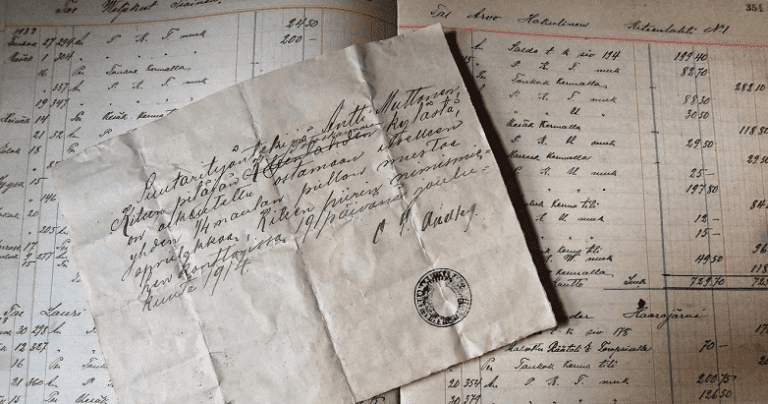
Vintage accounting ledger. Pixabay / Public Domain.
God as an investor settling accounts with this trustees?
Matthew 25:14-30 for the Thirty-Third Sunday in Ordinary Time.
Today in his Gospel, Christ uses a threatening image.
An absent master returns to count up the various investments he has left each of his servants to manage.
One servant has done nothing with the master’s investment, except hide it safely away.
The master throws him out to suffer in the darkness.
Do we like this picture of God?
Today at least, it is the picture Christ wants to use.
It’s not comfortable.
God: an investor settling accounts!
Christ is telling us that being faithful is more than playing it safe, more than toeing the line, more than keeping the rules.
God wants to see profit.
He has entrusted us with investments that he expects us to return to him with profit to show.
What are these investments?
There are two investments that God hands over to us.
The first is ourselves.
What we have and are as human beings is to be used rightly and used well.
Our bodies, our relationships with each other, our feelings, our free choices, our thinking minds— all these are gifts from God who made us.
We are to use, train and cultivate them in such a way that they give honor and thanks to the One who made us.
God freely gave us all that we have and all that we are.
It is right and just to know, love and honor God who made us.
Living for God’s honor is built into us, even though sin hides and contradicts it.
In the end, we cannot and will not be satisfied and completely happy with anything less than God and the honor of God.
But how do we arrive at unlimited heavenly satisfaction for the hopes and dreams of our bodies, our feelings, our freedom and our minds?
The answer is in the second thing that God gives to each of us for investment and profit.
God has entrusted to us HIS OWN SELF.
It is this— his investment of HIMSELF IN US— that we are most responsible for returning to God not only intact, but with profit to show as well.
God has made us so that he can show himself IN us and THROUGH us— to the world, to each other, to our own selves.
He does not do this for his own good.
From beginning to end, the only reason why there is a universe at all is that God is good, God is free and God is love.
He does not need the universe.
Everything— including ourselves— comes out of God’s goodness, freedom and love.
Goodness, freedom and love.
That describes God, but it also describes our human dignity.
WE— our spirits, our minds, our wills, our feelings, our relationships, our bodies, our SELVES— WE are made to reveal God whose love does nothing but give itself away.
When we do nothing but take, take and take, we have no time for goodness, freedom or love.
And then we just get emptier, emptier and emptier.
When we give ourselves away and give ourselves up— especially when we give ourselves up to God— then we really come to know and live goodness, freedom and love.
Goodness, freedom and love: that’s God at work in us.
That is the accountability God demands of us: to transcend, to go beyond ourselves, because we are God’s image.
Freely chosen self-sacrifice for the glory of God and the good of others: that is love.
God does not need us; but he wants us to be like him and take part in his goodness, freedom and love.
He desires and commands the effort and cooperation of our bodies, our feelings, our free choices and our thinking.
If God did not think that our human efforts mattered, then the human suffering of Christ was a mockery of our humanity, and not an act of love.
We know that is not true.
In the suffering of Christ, the love and power of God himself invest our human commitment and human suffering.
He renews his promise and investment of himself IN US through the Eucharist.
In his Eucharist he gives himself to us as food, drink and wealth to invest our bodies, our sentiments, our wills and our minds with his own fullness and divinity.
From this investment, the Lord demands a profit, but not a profit that he will take away for himself.
He doesn’t need it.
As his Gospel teaches us today, the Lord reckons his accounts only so that he can give them back to us with rewards.
When the Lord returns in glory at the end of time, he will give the fullness of his own Resurrection to our bodies, to our entire being forever.
We shall hunger no more, yearn no more and die no more.
For WE shall be like God in all his FULLNESS and GLORY, seeing him as he is face to face.
Turn. Love. Repeat.
Previous Post

November 13, 2020
In Which Year of the Lord Will He Return?
Next Post

November 21, 2020 EX NIHILO: Created Out of Nothing, Receiving God’s All
Browse Our Archives
Select a Category Uncategorized
Select a Month July 2021 June 2021 May 2021 April 2021 March 2021 February 2021 January 2021 December 2020 November 2020 October 2020 September 2020 August 2020 July 2020 June 2020 May 2020 April 2020 March 2020 February 2020 January 2020 December 2019
Follow Us!
TAKE THE
Religious Wisdom Quiz
Rejoice greatly, Daughter Zion! See, your king comes to you, righteous and victorious, yet humble and riding on what?
Select your answer to see how you score.
A donkey A camel A white horse A chariot
Related posts from Turn. Love. Repeat.

We Glorify and Worship Love— God Who Glorified...

The Cross of Serving Cold Water to Little...

Glory to God and for Us: Seventh Day...
"Do Not Be Afraid" Instead of “Merry Christmas”
TRENDING AT PATHEOS Catholic

Creation, Preservation, and Teleology in Catholic Theology
As I write this, it is very early Monday morning. Like millions...

The Parable Of The Sower And The Word...
One of Christ’s most famous parables is that of the sower who...

Rejecting Doom: Christian Hope And Human Action
Christianity is a religion of hope. We are to have hope and...

Why I Choose the Eucharist Over the Sermon
Choose the Eucharist, Not the Sermon What are we supposed to get...

5 Design Elements Found in Spiritually Rooted Homes
Putting Spirituality Into Home Decor Our homes are more than our living...

Credo: A Story of God Told with the...
About 10 years ago, I began to imagine a personal "Credo" that...
view all Catholic blogs
Ad-Free & Subscriber Log-In Subscription Support
- About Us
- 2026 Calendar
- Videos
- Podcasts
- Library of World Religions
- Faith In Media Tracker
- Advertise With Us
- Write for Us
- Privacy Policy
- Terms of Service
- Do Not Sell My Data
- Contact Us
- Radiant Digital
- Manage Newsletter Subscriptions
- Unsubscribe From Notifications
- Sitemap
Copyright 2008-2026, Patheos. All rights reserved.
Subscription Support Ad-Free & Subscriber Log-In
Follow Patheos