
BuddhistCatholicContemplativeEvangelicalGeneral ChristianHinduJewishLatter-day SaintMuslimNew VisionsProgressive Christian
Beliefs
- Buddhist
- Catholic
- Contemplative
- Evangelical
- General Christian
- Hindu
- Jewish
- Latter-day Saint
- More Voices
- Muslim
- New Visions
- Pagan
- Progressive Christian
Topics
- Religion News
- Food and Religion
- Sports and Religion
- Religious Art
- Religious Music and Entertainment
- Religious Events
- History and Religion
- Style and Religion
- Politics and Religion
- Women in Religion
- Recreation Outdoors and Religion
- Business Finance and Religion
- Careers Workplace and Religion
- Education and Religion
- Family Parenting and Religion
- Health Fitness and Religion
- Home and Religion
- Relationships and Religion
- Technology and Religion
- Travel and Religion
Columnists
- Buddhist Columnists
- Business Finance and Religion Columnists
- Careers Workplace and Religion Columnists
- Catholic Columnists
- Contemplative Columnists
- Education and Religion Columnists
- Evangelists Columnists
- Family Parenting and Religion Columnists
- General Christian Columnists
- Health Fitness and Religion Columnists
- Hindu Columnists
- History and Religion Columnists
- Home and Religion Columnists
- Jewish Columnists
- More Voices Columnists
- Latter Day Columnists
- Muslim Columnists
- New Visions Columnists
- Nonreligious Columnists
- Pagan Columnists
- Politics and Religion Columnists
- Progressive Columnists
- Recreation Outdoors and Religion Columnists
- Relationships and Religion Columnists
- Religion News Columnists
- Religious Art Columnists
- Religious Events Columnists
- Religious Music and Entertainment Columnists
- Sports and Religion Columnists
- Style and Religion Columnists
- Technology and Religion Columnists
- Travel and Religion Columnists
- Women in Religion Columnists
Resource Library
- 2026 Calendar
- Library of World Religions
- The 100 Most Holy Places on Earth
- Patheos Answers
- Podcasts
- Videos
- Faith Leaders Database
- Anglican Episcopalian
- Bahai
- Baptist
- Buddhism
- Christianity
- Confucianism
- Eastern Orthodoxy
- Hinduism
- Holiness and Pentecostal
- ISKCON
- Islam
- Judaism
- Lutheran
- Methodist
- The Church of Jesus Christ of Latter-day Saints
- New Age
- Paganism
- Presbytarian and Reformed
- Protestantism
- Religion Behind the Scenes
- Roman Catholic
- Scientology
- Shia Islam
- Sikhism
- Sufism
- Sunni Islam
- Taoism
- Zen
- See all religions
Research Tools
 Ad-Free & Subscriber Log-In Subscription Support
Ad-Free & Subscriber Log-In Subscription Support
Follow Patheos 

- Trending:
- Forgiveness
- |
- Marriage
- |
- Consciousness
- |
- Death Penalty
- |
- Election
- |
- Halloween
 Truth to Power
- Home
- Muslim
- Imam Haron & The Myth of a Post-Apartheid South Africa
Imam Haron & The Myth of a Post-Apartheid South Africa
Last updated on: August 2, 2017 at 12:07 pm by Hakeem Muhammad
Imam Haron & The Myth of a Post-Apartheid South Africa 2017-08-02T12:07:19-05:00 Hakeem Muhammad
Patheos Explore the world's faith through different perspectives on religion and spirituality! Patheos has the views of the prevalent religions and spiritualities of the world.
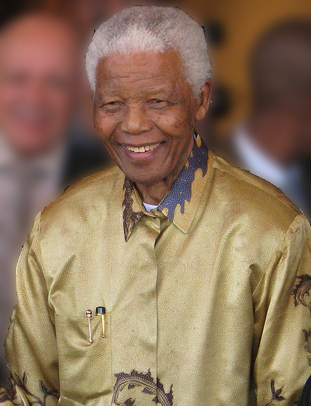
WikiMedia Commons.
On July 18th, Nelson Mandela Day took place as people from all walks of life celebrated the work of the former political prisoner and Black freedom fighter:Nelson Mandela.
Mandela struggled against the apartheid regime, which made life for everyday Black people unbearable. Apartheid South Africa ostracized indigenous populations from power and control of their destinies, confined Blacks to a tiny landmass in desolate homes, barred Blacks from a decent livelihood, established an asymmetrical relationship of exploitation and subservience, and, in turn, produced wretched social conditions for Blacks.
As this oppression and tyranny took place, Islamic scholars of that era and land turned a blind eye, refusing to support resistance to the unjust regime that inflicted heinous atrocities against Blacks. According to Religion and the Political Imagination in a Changing South Africa by Professor Eve Mullen, the Muslim Judicial Council of South Africa declared**:**
The Muslim Judicial System (which represented the opinions of the ulema or Islamic scholars of South Africa) took the cowardly stance that so long as their ability to practice the rituals of Islam were not threatened, resistance was unnecessary and they remained passive as Black people suffered. One notable exception to this was Imam Abdullah Haron. His political awakening came when he was inspired to bring Islam to Black migrant laborers and became appalled by the conditions the apartheid government imposed upon Black people.
Shunning political correctness of the time, he urged resistance against the apartheid regime in his khutbas and sharply criticized the indifference of Muslims to apartheid. Imam Haron’s principled political stances resulted in him being shunned and he was widely considered an embarrassment. Imam Haron would state, “The Muslims have a revolutionary prophet but the Muslims are still asleep.”
Convicted in his stance, Imam Haron reached out and built bridges with Black communities and liberation movements, such as the African National Congress and Pan-African Congress. His stance according to Ursula Gunther represented, “A break with the ulama’s hegemony.” Soon, Imam Haron became a member of the Pan African Congress and was, “dedicated to the overthrow of apartheid by all means at its disposal, including violence.” Just like Nelson Mandela, Imam Haron was arrested under the Terrorism Act of 1967.
The Muslim Betrayal of Imam Abdullah Haron
Imam Haron was subjected to immense torture by security forces of the apartheid government which included electric shock to his genitals and needles placed in his spinal cord. Even under torture, he refused to release information and was eventually assassinated by the apartheid government security forces.
As a result of him being classified as an embarrassment to the ulama of his day, “Haron was virtually forgotten by Muslims.” Even further, “The Imam’s death did not politically ‘awaken’ the Muslim community but rather drove them into further submission of oppression…” Muslim organizations which Imam Haron formerly affiliated with were more concerned about “public relations”, securing their reputation and distancing themselves from Imam Haron than they were about condemning apartheid.
In light of this cowardly betrayal of Imam Haron, the question then becomes how can Muslims and humanity in general best honor his legacy? I posit that it can only be properly done by recognizing the myth of a post-apartheid South Africa and continuing the struggle against global white supremacy.
The Myth of Post Apartheid South Africa
In Kaffir Boy: The True Story of a Black Youth’s Coming of Age in Apartheid South Africa author Mathabane explains the laws that criminalized unemployed blacks. They were abolished with the fall of legalized racism, but they had a powerful influence while they were in effect. Mathabane’s father was fired from his job and began searching for a new one, when the police discovered him and arrested him due to his unemployment status.
His time spent in jail included strenuous work, and upon his release, “He spent days telling my mother…about the thousands of Black men locked inside simply because they, like he, had committed the unpardonable crime of being unemployed.” Such laws, criminalizing Black unemployment have been removed, but even after apartheid, we can see that three factors are directly linked: unemployment, poverty, and incarceration.
Furthermore in Not Separate, Not Equal: Poverty and Inequality in Post-Apartheid South Africa, the authors Hoovegeen reports that 68% of Africans lived in poverty, while poverty was virtually non-existent for whites; poverty continues to disproportionately impact the indigenous African population.
They further discovered that in every area of society from health to housing, Blacks significantly lag behind whites, and even when it comes to access to water, Ozlernotes that “only a quarter of Africans had access to piped water in their houses, while whites had universal access.
The problems of poverty continue today. In 2014, 45% of Black women and 35% of Black men were unemployed, whereas only 22% of white women and 14% of white men were unemployed. Thus, while formal legal racism criminalizing Black unemployment no longer exists, the vast unemployment rate of Blacks still feeds the prison system.
In a study titled Racism and Discrimination in the South African Penal System – by Dissel and Kollapen, they found that the vast unemployment rate of Blacks led to an escalated crime rate; their conclusion was, “Black people will continue to be imprisoned simply because they are poor.” This vestige of white supremacy (mass incarceration of Blacks) is still covertly and unconsciously being practiced today, though there are no explicit laws that contribute to such racism.
We can also see how the end of formal legal racism did not rectify the damage dealt in the case of the Native Land Act, which confined the indigenous African population to less than 7% of South Africa’s landmass, and gave the most fertile land to the white minority.
This inequality remains today: In a 2013 study, Cherryl Walker and Alex Dubb determined that “whites as a social category still own most of the country’s land.” According to the census, only 8.9% of South Africa’s population is white, whereas 79.2% of the population is black.
South Africa is still in a state of apartheid, just a neo-apartheid in which blacks appear to be ruling politically but white supremacy is solidified through more subtle means. The fact that a white minority owns the majority of the land in South Africa is indicative of ensuring defacto racism that still exists within South Africa.
Keep the Struggle of Imam Haron Alive!
In Towards a Post-Apartheid Critical Race Jurisprudence: Diving Our Racial Themes, Joel M. Modiri, puts forth the argument that the end of formal legalized racism did not at all end white supremacy; rather, he indicates that “white racism and the operation of white privilege have had to change in mondus operandi, and have become more subtle, covert and unconsciously practiced.” We should use Mandela Day and the Memory of Imam Haron to honor them by devoting ourselves to ending this neo-apartheid which still exist in South Africa.
Previous Post

July 20, 2017
The Islam of Black Revolutionaries.
Next Post

August 10, 2017 Black Muslims and Community Engagement.
Browse Our Archives
Select a Category Cultural Stories Hip-Hop Halaqas History Philosophy Self-Improvement Social Justice Uncategorized
Select a Month May 2018 February 2018 January 2018 December 2017 October 2017 September 2017 August 2017 July 2017 June 2017 May 2017 April 2017 March 2017 February 2017 January 2017 December 2016 November 2016 October 2016 September 2016 August 2016 July 2016 June 2016 May 2016 April 2016
Follow Us!
TAKE THE
Religious Wisdom Quiz
What did God send to feed Elijah during the drought?
Select your answer to see how you score.
Camels Ravens Serpent Sheep
Related posts from Truth to Power

Dawah in 21st Century Black America: A Message...

L'Oreal's Zionism and Amena's Apologism.
The Absurdity of White Christian Islamophobes!
Does Israel Believe Black Lives Matter?
TRENDING AT PATHEOS Muslim

25 Years Later: How Much Has Changed for...
As we approach the 25th anniversary of September 11th, I’ve found myself...

Podcast: Third Spaces & The Rise of Yemeni...
In the latest episode of The Artistic Foodies Podcast, hosts Abbas...

HalalFest Picks: Best 60 Halal Spots for Super...
Back in 2016, I came up with a list of 29...

Unity Is America’s Strength — Division Is Its...
by Hidayatullah Ahsan When Valentina Gomez, a Republican candidate for Congress in...

Zohran Mamdani and New York’s Fight Against Islamophobia
This past June, against all odds, Zohran Mamdani won the Democratic primary...

What the Fourth of July Means to a...
As we mark another Fourth of July, millions of Americans will celebrate...
view all Muslim blogs
Ad-Free & Subscriber Log-In Subscription Support
- About Us
- 2026 Calendar
- Videos
- Podcasts
- Library of World Religions
- Faith In Media Tracker
- Advertise With Us
- Write for Us
- Privacy Policy
- Terms of Service
- Do Not Sell My Data
- Contact Us
- Radiant Digital
- Manage Newsletter Subscriptions
- Unsubscribe From Notifications
- Sitemap
Copyright 2008-2026, Patheos. All rights reserved.
Subscription Support Ad-Free & Subscriber Log-In
Follow Patheos