
BuddhistCatholicContemplativeEvangelicalGeneral ChristianHinduJewishLatter-day SaintMuslimNew VisionsProgressive Christian
Beliefs
- Buddhist
- Catholic
- Contemplative
- Evangelical
- General Christian
- Hindu
- Jewish
- Latter-day Saint
- More Voices
- Muslim
- New Visions
- Pagan
- Progressive Christian
Topics
- Religion News
- Food and Religion
- Sports and Religion
- Religious Art
- Religious Music and Entertainment
- Religious Events
- History and Religion
- Style and Religion
- Politics and Religion
- Women in Religion
- Recreation Outdoors and Religion
- Business Finance and Religion
- Careers Workplace and Religion
- Education and Religion
- Family Parenting and Religion
- Health Fitness and Religion
- Home and Religion
- Relationships and Religion
- Technology and Religion
- Travel and Religion
Columnists
- Buddhist Columnists
- Business Finance and Religion Columnists
- Careers Workplace and Religion Columnists
- Catholic Columnists
- Contemplative Columnists
- Education and Religion Columnists
- Evangelists Columnists
- Family Parenting and Religion Columnists
- General Christian Columnists
- Health Fitness and Religion Columnists
- Hindu Columnists
- History and Religion Columnists
- Home and Religion Columnists
- Jewish Columnists
- More Voices Columnists
- Latter Day Columnists
- Muslim Columnists
- New Visions Columnists
- Nonreligious Columnists
- Pagan Columnists
- Politics and Religion Columnists
- Progressive Columnists
- Recreation Outdoors and Religion Columnists
- Relationships and Religion Columnists
- Religion News Columnists
- Religious Art Columnists
- Religious Events Columnists
- Religious Music and Entertainment Columnists
- Sports and Religion Columnists
- Style and Religion Columnists
- Technology and Religion Columnists
- Travel and Religion Columnists
- Women in Religion Columnists
Resource Library
- 2026 Calendar
- Library of World Religions
- The 100 Most Holy Places on Earth
- Patheos Answers
- Podcasts
- Videos
- Faith Leaders Database
- Anglican Episcopalian
- Bahai
- Baptist
- Buddhism
- Christianity
- Confucianism
- Eastern Orthodoxy
- Hinduism
- Holiness and Pentecostal
- ISKCON
- Islam
- Judaism
- Lutheran
- Methodist
- The Church of Jesus Christ of Latter-day Saints
- New Age
- Paganism
- Presbytarian and Reformed
- Protestantism
- Religion Behind the Scenes
- Roman Catholic
- Scientology
- Shia Islam
- Sikhism
- Sufism
- Sunni Islam
- Taoism
- Zen
- See all religions
Research Tools
 Ad-Free & Subscriber Log-In Subscription Support
Ad-Free & Subscriber Log-In Subscription Support
Follow Patheos 

- Trending:
- Forgiveness
- |
- Marriage
- |
- Consciousness
- |
- Death Penalty
- |
- Election
- |
- Halloween
 Truth to Power
- Home
- Muslim
- To Know Muslim History is to Know Black History.
To Know Muslim History is to Know Black History.
Last updated on: February 21, 2017 at 2:43 pm by Hakeem Muhammad
To Know Muslim History is to Know Black History. 2017-02-21T14:43:43-05:00 Hakeem Muhammad
Patheos Explore the world's faith through different perspectives on religion and spirituality! Patheos has the views of the prevalent religions and spiritualities of the world.
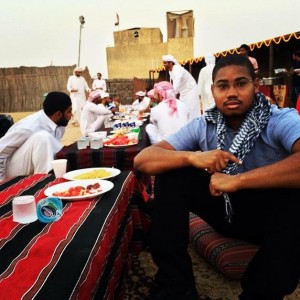
True Black history has been obfuscated and replaced with nefarious Eurocentric myths. Africa is portrayed as a place without history: primitive, inferior and impoverished. The noble descendants of Africa are by extension portrayed as incompetent and inconsequential actors in world history. To counter these Eurocentric tall-tells that masquerade as objective history, Carter G. Woodson first proposed Black History Week, which later expanded to a month.
Muslims, who have been duty-bound to submit to Quranic revelations of getting to “know each other,” cannot truly fulfill this duty unless we counter this epistemic racism that inhibits accurate knowledge about Africa and its descendants. To do this, we must look at our own tradition to learn about the contributions that Africans made to Islam from the beginning of our faith’s history to the present.
It was an African woman, Umm Ayman, who first told Aminah, “You shall give birth to a blessed child who will bring goodness,” when the Prophet was still in the womb of his mother. It was Bilal who proclaimed the oneness of God, refusing to acknowledge the false deities of his slave master even in the midst of torture.
It was Sumayya who became the first martyr of Islam for refusing to denounce her belief of One God to her persecutors. Refusing to succumb to oppression, it would be the brave Black generals Zayd and his son Usama who made invaluable contributions to ensure that the Muslim community was able to survive and eventually prosper, allowing the call to prayer, first stated by Bilal, to be heard globally.
This call to prayer would spread to Mali, where Black Muslim Mansa Musa would emerge as the wealthiest man in world history. Later, this call to prayer would be heard by Askia Muhammad, who led Songhai to become the largest empire in West Africa’s history. Crafting such a scholarly environment, Leo Africanus visited Timbuktu, saying more profits were made from the book trade than any other line of commerce.
In Timbuktu, subjects such as mathematics, science of hadith, astronomy, jurisprudence and rhetoric was taught and studied. Ahmad of Timbuktu wrote more than 70 books and was an expert in Arabic grammar. This legacy of Black Muslim scholarship would continue through the centuries and be taken to new heights by the great Uthman Dan Fodio.
Fodio founded the Sokoto Caliphate and was a staunch advocate of women’s education. His daughter, Nana Asmau, emerged as an Islamic scholar who memorized the entire Quran and wrote a biography on the life of the Prophet, which was read throughout Sokoto. There were also other phenomenal Black Muslim scholars in Sokoto: Muhammad Bello, Sultan Muhammed Bello and Sultan Abu Bakr Atiku.
This Black History month, learn the names of enslaved Islamic scholars, including Bilal Lictuan, Shaykh Dandaa, Shaikh Sanim, Malam Bubakar Ahuma and Manuel Calafate, who were victims of the slave trade and forcibly taken to Brazil. There, they would spark the Male Revolt, which historian João José Reis referred to as “the most effective urban slave rebellion ever to occur on the American continent.”
Court documents revealed that African slaves utilized Arabic documents to organize the slave revolts, completely shocking European settlers. Since most whites in Brazil were illiterate, Reis indicates, “It was hard to accept that African slaves possessed such sophisticated means of communication.” Though their rebellion would eventually be subdued with the leaders being given the death sentence, their defiance to oppression and courageous quest for justice should be remembered.
African genius would also manifest through Ayuba Diallo, an African Muslim slave who wrote four copies of the Quran from memory. His intellect as a slave won him his freedom; he would be inducted into an intellectual fraternity called the Spalding Gentlemen’s Society, which included the likes of Isaac Newton.
This Black History month, learn about Bilali Muhammad: Though a slave on a plantation, he produced a book on Maliki Jurisprudence, which was later discovered to contain verbatim quotes of the Maliki school of Islamic law produced by Al-Qauirawani in 900 A.D, demonstrating he committed portions of the books to memory. Take the opportunity to learn how Islam inspired African resistance with hijrah leading to the creation of marronage societies.
Take the opportunity to learn how French soldiers even discovered Arabic documents among Haitian rebellions and discover the Islamic roots of the Haitian freedom fighter Makandal.
Also learn about Omar Ibn Said whose slave narrative states that he was out on a quest to seek knowledge. After traveling back home from his studies, an army came to his village and kidnapped him, forcing him into slavery.
In his slave narrative, Said states he can no longer write Arabic according to true grammar. Through the years of slave bondage, efforts were taken to erase Islam from the slave population, eventually reaching a point where it was no more. Then learn about the resurgence of Islam among the descendants of African slaves through movements such as the Nation of Islam. Learn about the economic accomplishments of the Honorable Elijah Muhammad. Under his leadership, this movement changed the life of a young Malcolm Little, reaching him while in prison where he intensively studied history.
Malcolm X was motivated to not only change his life but fellow prison inmates, telling them that “some slaves brought from Africa spoke Arabic, and were Islamic in their religion.” To Malcolm X, history was transformative and utilized to motivate change in the present. Part of this change came through the school system of the Nation of Islam.
Describing these schools, Malcolm X states, “In Detroit and Chicago, school-age Muslim children attended our two Universities of Islam.” Malcolm X emphasized those students at these schools, “learned of the black man’s glorious history.” This Black History month, learn about the first teacher in what would become the largest black-operated independent school system in America: Sister Clara Muhammad.
Malcolm X further states, “I had always had a high opinion of Wallace Muhammad’s opinion.” This Black History month, learn about the son of Clara Muhammad, Imam Warrith Deen Muhammad, who brought his followers toward a deep understanding and study of the Sunnah of Prophet Muhammad (PBUH) and the Qu’ran.
Malcolm X also spoke of “Boston Temple’s outstanding young Minister Louis X.” It would be this brother, Minister Louis Farrakhan who would build rebuild Muhammad University of Islam, a pinnacle of my childhood, where I would learn to be proud to be Black, proud to be Muslim. Here I first learned that Islamic history is Black History and that history is transformative. We must learn from it to influence the present.
—–
Editorial note: An earlier version of this article appeared on ALTMuslim)
Previous Post
February 15, 2017
Richard Dawkin’s Islamophobia: A Black Muslim Response
Next Post
February 22, 2017 Do Not Speak To Me About Malcolm X.
Browse Our Archives
Select a Category Cultural Stories Hip-Hop Halaqas History Philosophy Self-Improvement Social Justice Uncategorized
Select a Month May 2018 February 2018 January 2018 December 2017 October 2017 September 2017 August 2017 July 2017 June 2017 May 2017 April 2017 March 2017 February 2017 January 2017 December 2016 November 2016 October 2016 September 2016 August 2016 July 2016 June 2016 May 2016 April 2016
Follow Us!
TAKE THE
Religious Wisdom Quiz
Which Psalm did Moses write?
Select your answer to see how you score.
Psalm 119 Psalm 72 Psalm 90 Psalm 23
Related posts from Truth to Power

Dawah in 21st Century Black America: A Message...
France’s System White Supremacy & The Qu’ran of...
When Muslims Join Forces with an Anti-Black Hate...

Hoda Katebi exposes the real enemy: White Supremacy
TRENDING AT PATHEOS Muslim

25 Years Later: How Much Has Changed for...
As we approach the 25th anniversary of September 11th, I’ve found myself...

Podcast: Third Spaces & The Rise of Yemeni...
In the latest episode of The Artistic Foodies Podcast, hosts Abbas...

HalalFest Picks: Best 60 Halal Spots for Super...
Back in 2016, I came up with a list of 29...

Unity Is America’s Strength — Division Is Its...
by Hidayatullah Ahsan When Valentina Gomez, a Republican candidate for Congress in...

Zohran Mamdani and New York’s Fight Against Islamophobia
This past June, against all odds, Zohran Mamdani won the Democratic primary...

What the Fourth of July Means to a...
As we mark another Fourth of July, millions of Americans will celebrate...
view all Muslim blogs
Ad-Free & Subscriber Log-In Subscription Support
- About Us
- 2026 Calendar
- Videos
- Podcasts
- Library of World Religions
- Faith In Media Tracker
- Advertise With Us
- Write for Us
- Privacy Policy
- Terms of Service
- Do Not Sell My Data
- Contact Us
- Radiant Digital
- Manage Newsletter Subscriptions
- Unsubscribe From Notifications
- Sitemap
Copyright 2008-2026, Patheos. All rights reserved.
Subscription Support Ad-Free & Subscriber Log-In
Follow Patheos