
BuddhistCatholicContemplativeEvangelicalGeneral ChristianHinduJewishLatter-day SaintMuslimNew VisionsProgressive Christian
Beliefs
- Buddhist
- Catholic
- Contemplative
- Evangelical
- General Christian
- Hindu
- Jewish
- Latter-day Saint
- More Voices
- Muslim
- New Visions
- Pagan
- Progressive Christian
Topics
- Religion News
- Food and Religion
- Sports and Religion
- Religious Art
- Religious Music and Entertainment
- Religious Events
- History and Religion
- Style and Religion
- Politics and Religion
- Women in Religion
- Recreation Outdoors and Religion
- Business Finance and Religion
- Careers Workplace and Religion
- Education and Religion
- Family Parenting and Religion
- Health Fitness and Religion
- Home and Religion
- Relationships and Religion
- Technology and Religion
- Travel and Religion
Columnists
- Buddhist Columnists
- Business Finance and Religion Columnists
- Careers Workplace and Religion Columnists
- Catholic Columnists
- Contemplative Columnists
- Education and Religion Columnists
- Evangelists Columnists
- Family Parenting and Religion Columnists
- General Christian Columnists
- Health Fitness and Religion Columnists
- Hindu Columnists
- History and Religion Columnists
- Home and Religion Columnists
- Jewish Columnists
- More Voices Columnists
- Latter Day Columnists
- Muslim Columnists
- New Visions Columnists
- Nonreligious Columnists
- Pagan Columnists
- Politics and Religion Columnists
- Progressive Columnists
- Recreation Outdoors and Religion Columnists
- Relationships and Religion Columnists
- Religion News Columnists
- Religious Art Columnists
- Religious Events Columnists
- Religious Music and Entertainment Columnists
- Sports and Religion Columnists
- Style and Religion Columnists
- Technology and Religion Columnists
- Travel and Religion Columnists
- Women in Religion Columnists
Resource Library
- 2026 Calendar
- Library of World Religions
- The 100 Most Holy Places on Earth
- Patheos Answers
- Podcasts
- Videos
- Faith Leaders Database
- Anglican Episcopalian
- Bahai
- Baptist
- Buddhism
- Christianity
- Confucianism
- Eastern Orthodoxy
- Hinduism
- Holiness and Pentecostal
- ISKCON
- Islam
- Judaism
- Lutheran
- Methodist
- The Church of Jesus Christ of Latter-day Saints
- New Age
- Paganism
- Presbytarian and Reformed
- Protestantism
- Religion Behind the Scenes
- Roman Catholic
- Scientology
- Shia Islam
- Sikhism
- Sufism
- Sunni Islam
- Taoism
- Zen
- See all religions
Research Tools
 Ad-Free & Subscriber Log-In Subscription Support
Ad-Free & Subscriber Log-In Subscription Support
Follow Patheos 

- Trending:
- Forgiveness
- |
- Marriage
- |
- Consciousness
- |
- Death Penalty
- |
- Election
- |
- Halloween
 Truth to Power
- Home
- Muslim
- The history of Black Muslim women, who needed no saving.
The history of Black Muslim women, who needed no saving.
Last updated on: August 3, 2016 at 6:25 pm by Hakeem Muhammad
The history of Black Muslim women, who needed no saving. 2016-08-03T18:25:28-05:00 Hakeem Muhammad
Patheos Explore the world's faith through different perspectives on religion and spirituality! Patheos has the views of the prevalent religions and spiritualities of the world.
In The Oppression of Muslim Women by White Supremacy, we learned how when it comes to Islam, white supremacy commodifies and discards narratives of women’s oppression based upon its own strategic interest. For example, the narratives of black Muslim women such as Safiya Bukhari and Tynetta Muhammad, who utilized Islam as a source of empowerment against the structural racism that they were subjected to in America, garner no where near the sympathies or attention by mainstream society as that of Ayaan Hirsi Ali. In fact, white supremacy has maintained as concealed a dark secret at the foundations of America.

Wikimedia Commons
Having been kidnapped from West Africa and taken to the Americas at the tender age of seven, Phillis Wheatley became world renowned for being the first published African-American poet. As the forebear of African-American literature, her literary works were read worldwide even by heads of states such as George Washington and eminent philosophers such as Voltaire.
In the Emergence of African-American Literacy Traditions: Family and Community, Phyllis M. Belt-Beyan notes a rarely mentioned fact about Phillis Wheatley: “About two weeks after she was brought to work for the Wheatley household, Wheatley peters was writing Arabic symbols on chalk slate and on walls” Though it was illegal for slaves to learn to read and write, Wheatley’s constant writing was observed by her owners and motivated them to educate her more.
A true prodigy, Shields writes that Wheatley “learned to read and write in English and Latin within the first year or so of her coming to the American colonies.” Remarkably, at the young age of thirteen, Phillis Wheatley published her first work. While Wheatley gained worldwide fame for her poetry, there is a lesser known fact about Phillis Wheatley, one that shakes western modernity to its core.
From her geographic origins emanating from Gambia, to her ability to write Arabic as a young kid, to her most likely ethnic background being Fulani, Professor Will Harris indicates that this could very well mean the “progenitor of African-American literature probably was Muslim.” The story of Phillis Wheatley presents a major critique of the “white male savior complex” by which western governments feign concern for Muslim women. While positing itself as the savior of Muslim women, at the foundation of the United States, we have a Black Muslim woman subjected to immense violence in the Middle Passages and forcibly converted to Christianity. This completely dismantles the American exceptionalist narrative that boasts of “the freedom of religion”—a right that was never extended to slaves.
While contemporary Islamophobic discourse often promotes that idea of Muslims imposing “Sharia Law” upon others leading to widespread barbarity and oppression of women, Wheatley’s life is that of a black muslim woman whom had “Eurocentric Law” violently imposed upon her. The story of Philis Wheatley disrupts this narrative.
Additionally, the life of Wheatley exposes the islamophobic narrative that has sought to create a caricature of Islam as a religion that inherently oppresses women, denying them equitable access to education.
 As Will Harris notes “the slave child’s rapid progress in learning to read, write, and speak English was likely the result of nominal instruction in language acquisition she already obtained in an Islamic school system before being kidnapped into slavery.” In other words, Islamic centers established in West Africa played a pivotal and integral role in enabling Phillis Wheatley to eventually become the dynamic poet, author, and pioneer of African-American literature that she became. The early Islamic education of Wheatley enabled her greater social mobility and a plethora of educational opportunities that would have been denied to other slaves in America.
In a thorough comparative analysis of her poetry and Al-Fatihah in the Qu’ran, Will Harris in Philis Wheatley: The Muslim Connection, writes that,”“Wheatley mimics the language of this Qur’anic verse in her hymn.” However, it is also true that in other poetry, Wheatley extols the virtues of Christianity:“Twas mercy brought me from my Pagan land, Taught my benighted soul to understand.” Here Whatley lauds Christianity for taking her from her captivity in Africa and bringing her to Americas. Yet, Harris even suggests that based upon a plethora of Islamic allusions within Wheatley’s work that she could have in fact remained Muslim while outwardly expressing Christianity,– a practice adopted as a survival technique by several slaves.
However, it is also a possibility that Wheatley did in fact truly become Christian. Unlike other African Muslim slaves such as Omar Ibn Said and Abdul-Rahman Ibrahim ibn Sori who were kidnapped and taken to the Americas as adults after completing extensive Islamic education, Philis Wheatley was brought to the Americas at age seven. With her Islamic education interrupted at such a young age, she could have in fact been more susceptible than other adult Muslim slaves to the widespread Christian missionary efforts that characterized the slave system.
Whatever the case may be,Wheatley’s life exposes a blatant hypocrisy and the need to study the oppression of Muslim women under white supremacy. Though kidnapped and forced to live life as a slave in the United States, her early Islamic education enabled her with the tools to rise above the odds in a white supremacist society order to become a dynamic poet and author. As American exceptionalist discourse promotes itself as “the savior of Muslim women”, we should remember the life of Philis Wheatley, a black woman whose early Islamic education was completely disrupted as a result of the transatlantic slave trade.
Previous Post

July 30, 2016
Why, In Spite of Trump, Hip-Hop Still Loves Islam
Next Post
August 5, 2016 4 Awesome Books to Outwit Islamophobes
Browse Our Archives
Select a Category Cultural Stories Hip-Hop Halaqas History Philosophy Self-Improvement Social Justice Uncategorized
Select a Month May 2018 February 2018 January 2018 December 2017 October 2017 September 2017 August 2017 July 2017 June 2017 May 2017 April 2017 March 2017 February 2017 January 2017 December 2016 November 2016 October 2016 September 2016 August 2016 July 2016 June 2016 May 2016 April 2016
Follow Us!
TAKE THE
Religious Wisdom Quiz
Which parable features a Pharisee and a tax collector praying?
Select your answer to see how you score.
The Pharisee and the Tax Collector The Wise Virgins The Lost Sheep The Sower
Related posts from Truth to Power

Dawah in 21st Century Black America: A Message...
France’s System White Supremacy & The Qu’ran of...
When Muslims Join Forces with an Anti-Black Hate...
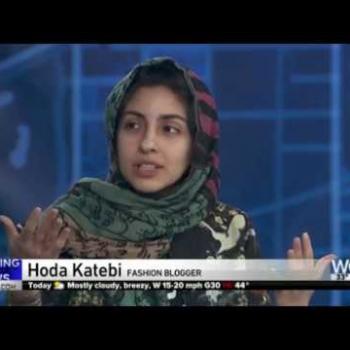
Hoda Katebi exposes the real enemy: White Supremacy
TRENDING AT PATHEOS Muslim

25 Years Later: How Much Has Changed for...
As we approach the 25th anniversary of September 11th, I’ve found myself...

Podcast: Third Spaces & The Rise of Yemeni...
In the latest episode of The Artistic Foodies Podcast, hosts Abbas...

HalalFest Picks: Best 60 Halal Spots for Super...
Back in 2016, I came up with a list of 29...

Unity Is America’s Strength — Division Is Its...
by Hidayatullah Ahsan When Valentina Gomez, a Republican candidate for Congress in...

Zohran Mamdani and New York’s Fight Against Islamophobia
This past June, against all odds, Zohran Mamdani won the Democratic primary...

What the Fourth of July Means to a...
As we mark another Fourth of July, millions of Americans will celebrate...
view all Muslim blogs
Ad-Free & Subscriber Log-In Subscription Support
- About Us
- 2026 Calendar
- Videos
- Podcasts
- Library of World Religions
- Faith In Media Tracker
- Advertise With Us
- Write for Us
- Privacy Policy
- Terms of Service
- Do Not Sell My Data
- Contact Us
- Radiant Digital
- Manage Newsletter Subscriptions
- Unsubscribe From Notifications
- Sitemap
Copyright 2008-2026, Patheos. All rights reserved.
Subscription Support Ad-Free & Subscriber Log-In
Follow Patheos