
BuddhistCatholicContemplativeEvangelicalGeneral ChristianHinduJewishLatter-day SaintMuslimNew VisionsProgressive Christian
Beliefs
- Buddhist
- Catholic
- Contemplative
- Evangelical
- General Christian
- Hindu
- Jewish
- Latter-day Saint
- More Voices
- Muslim
- New Visions
- Pagan
- Progressive Christian
Topics
- Religion News
- Food and Religion
- Sports and Religion
- Religious Art
- Religious Music and Entertainment
- Religious Events
- History and Religion
- Style and Religion
- Politics and Religion
- Women in Religion
- Recreation Outdoors and Religion
- Business Finance and Religion
- Careers Workplace and Religion
- Education and Religion
- Family Parenting and Religion
- Health Fitness and Religion
- Home and Religion
- Relationships and Religion
- Technology and Religion
- Travel and Religion
Columnists
- Buddhist Columnists
- Business Finance and Religion Columnists
- Careers Workplace and Religion Columnists
- Catholic Columnists
- Contemplative Columnists
- Education and Religion Columnists
- Evangelists Columnists
- Family Parenting and Religion Columnists
- General Christian Columnists
- Health Fitness and Religion Columnists
- Hindu Columnists
- History and Religion Columnists
- Home and Religion Columnists
- Jewish Columnists
- More Voices Columnists
- Latter Day Columnists
- Muslim Columnists
- New Visions Columnists
- Nonreligious Columnists
- Pagan Columnists
- Politics and Religion Columnists
- Progressive Columnists
- Recreation Outdoors and Religion Columnists
- Relationships and Religion Columnists
- Religion News Columnists
- Religious Art Columnists
- Religious Events Columnists
- Religious Music and Entertainment Columnists
- Sports and Religion Columnists
- Style and Religion Columnists
- Technology and Religion Columnists
- Travel and Religion Columnists
- Women in Religion Columnists
Resource Library
- 2026 Calendar
- Library of World Religions
- The 100 Most Holy Places on Earth
- Patheos Answers
- Podcasts
- Videos
- Faith Leaders Database
- Anglican Episcopalian
- Bahai
- Baptist
- Buddhism
- Christianity
- Confucianism
- Eastern Orthodoxy
- Hinduism
- Holiness and Pentecostal
- ISKCON
- Islam
- Judaism
- Lutheran
- Methodist
- The Church of Jesus Christ of Latter-day Saints
- New Age
- Paganism
- Presbytarian and Reformed
- Protestantism
- Religion Behind the Scenes
- Roman Catholic
- Scientology
- Shia Islam
- Sikhism
- Sufism
- Sunni Islam
- Taoism
- Zen
- See all religions
Research Tools
 Ad-Free & Subscriber Log-In Subscription Support
Ad-Free & Subscriber Log-In Subscription Support
Follow Patheos 

- Trending:
- Forgiveness
- |
- Marriage
- |
- Consciousness
- |
- Death Penalty
- |
- Election
- |
- Halloween
 Truth to Power
- Home
- Muslim
- Hijrah and slave Marronage (Islamophobia and Anti-Blackness pt 3)
Hijrah and slave Marronage (Islamophobia and Anti-Blackness pt 3)
Last updated on: May 22, 2016 at 8:55 am by Hakeem Muhammad
Hijrah and slave Marronage (Islamophobia and Anti-Blackness pt 3) 2016-05-22T08:55:00-05:00 Hakeem Muhammad
Patheos Explore the world's faith through different perspectives on religion and spirituality! Patheos has the views of the prevalent religions and spiritualities of the world.
Part One: Islamophobia and Anti-Blackness: The Historical Connection pt. 1
Part Two: Licutan’s Affirmation of Bilal & the idols of Anti-Blackness. (pt 2)
Hijrah and Marronage
For 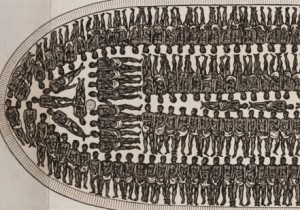 Black Muslims who had been captured and kidnapped to the western hemisphere, they would be separated from the classical tasfir texts of Ibn Kathir, the hadith collections of Imam Bukhari, and, most significantly, the textual transcriptions of the Qur’an. Yet, the Islamic scholarly tradition is heavily predicated upon an oral tradition that places a heavy emphasis on memorization, and West Africa was no exception to this. Black Muslims who endured the Middle Passage would still have the mental fortitude to reproduce Islamic texts even under the most horrifying of social conditions to the dismay and shock of white slave owners.
Jamaican Maroons
A letter from a white magistrate visiting a sugar plantation in Jamaica, reads, “One of them showed me a Koran written, from memory by himself but written, he assured me, before he became a Christian. I had my doubts on this point.” Even under the bondage of slavery, enslaved Africans reproduced the text of the Qur’an. However, in order to survive in a world hostile to their faith, many Muslims would openly profess Christianity while believing in Islam in their hearts.
The Qur’an, which many African Muslim slaves had memorized, is replete with verses urging Muslims to flee from persecution, pointing to the spacious nature of God’s earth. One such ayat in An-Nisa 4:97 reads, “….Was, then, God’s earth not spacious enough for you to forsake the domain of evil?” Hijrah, or ‘flight from persecution,’ is an Islamic practice that began when the Prophet Muhammad’s (PBUH) early followers forsake the domain of evil in Mecca and established their own Muslim polity, beginning in Ethiopia and then Medina. Prophetic precedences would guide the ways in which African Muslims would fight slavery.

“whoever migrates in the Cause of Allah will find on earth numerous places of refuge and plentifulness (in provisions). And whosoever leaves his home as an emigrant unto Allah and His Messenger, afterwards death overtakes him (on the way), then certainly his reward became due on Allah. And Allah is Oft-Forgiving, continuously Merciful.” AYAT an-Nisa` 4:100
Describing the impact that such ayats in the Qur’an had on slaves, historian Dr. Afroz Sulanta writes that “hijra from the plantations led many of them to form their own community, known as Maroon communities.”
One such Jammacian Muhammad Kaba would even wrote a book titled “The Book of Prayer” instructing the community of believers in Jamaica on the importance of maintaining their daily prayers.
Another Arabic document found circulating among Jamaican Muslims,”exhorted all followers of Mohamet tobe true and faithful, if they wished to go to heaven.”
Hijrah empowered African Muslims to escape the brutalities of the slave system and to resist the efforts of white plantation owners to eradicate their faith. The maroon communities enabled African Muslims and Africans of other indigenous faiths to forge their own societies free from the hegemony of white plantation owners. Despite the horrifying situation that Africans Muslims experienced, they still sought to remain faithful to the Prophet Muhammad and exhibited high levels of faith in their freedom struggles.
Muslims among Haitian Rebels
An ayat in the Qu’ran in 16:110 that would have been deeply relevant to Muslim Maroons states,”“for those who became fugitives after they had been persecuted, and then fought and were steadfast – lo! thy Lord afterward is (for them) indeed Forgiving, Merciful..”
In Haiti, fugitive slaves formulated independent communities in the mountainous regions of Haiti and subsequently began organizing attacks against white plantation owners, which prompted French military intervention.
Maroon leader Francois Makandal is described in the Encyclopedia of Slave Resistance and Rebellion as “an erudite Muslim who wrote Arabic very well.” Living in the mountains, Makandal organized slaves to carry out a series of attacks on French Crops before he was captured and burned at the stack.
A French colonel recounted that, “During the wars I was obliged to do against the blacks, we often found written papers in the bags or macoutes of the few Negroes we killed…Nobody understood those writings. It was Arabic.”
The Islamic centers of learning in West Africa which taught Arabic allowed slaves to communicate in a language indecipherable to whites in order to carry out acts of sabotage and resistance.
The Persecution of African Muslims
An even deeper historical antagonism that impacted enslaved Muslim in the Americas is furthered highlighted by Sigmund Koelle, a Germany missionary in Sub-Saharan Africa in the 19th century. In his polemic against Islam, Koelle writes,”“Mohammedanised Africa became the stepping-stone for invading Christian Europe from the west.” In is from ‘Mohammedanised Africa,’ that a 700 year old Muslim state would exist in Europe, one that would only fall with the Reconquista in 1492.
As such, the African Muslim has a relationship with Spain which predates modernity. Even prior to the slave trade, “Mohammadanised Africa’ came to represent a villainous force in the mind of many Europeans who began to spread their Islamophobia into the Americas. The Spanish passed laws seeking to minimize the importation of African Muslims into the Americas. The Wolof, an African Muslim ethnic group, was ordered to be deported out of Chile. The Spanish were concerned about attempts of Africans to spread Islam to Indians, but also, according to African historian Jeffrey A. Fortin. “black Muslim resistance to slavery.”
In the end though, did this resistance fail? In the next article, we will examine how despite the complete eradication of Islam among Black descendants of slaves in the ‘new world,’ it was still able to remerge and impact the black freedom struggle in the post-slavery era.
————
Previous Post

May 19, 2016
Stop bickering and instead continue the work of Malcolm X.
Next Post

May 26, 2016 Bill Maher's Islamophobia: A Black Muslim Response
Browse Our Archives
Select a Category Cultural Stories Hip-Hop Halaqas History Philosophy Self-Improvement Social Justice Uncategorized
Select a Month May 2018 February 2018 January 2018 December 2017 October 2017 September 2017 August 2017 July 2017 June 2017 May 2017 April 2017 March 2017 February 2017 January 2017 December 2016 November 2016 October 2016 September 2016 August 2016 July 2016 June 2016 May 2016 April 2016
Follow Us!
TAKE THE
Religious Wisdom Quiz
Who said, "Who am I, that I should go to Pharaoh?"
Select your answer to see how you score.
Moses Joshua Elijah Aaron
Related posts from Truth to Power

Dawah in 21st Century Black America: A Message...
France’s System White Supremacy & The Qu’ran of...

When Muslims Join Forces with an Anti-Black Hate...
Imam Makandal and the end of White Power...
TRENDING AT PATHEOS Muslim

25 Years Later: How Much Has Changed for...
As we approach the 25th anniversary of September 11th, I’ve found myself...

Podcast: Third Spaces & The Rise of Yemeni...
In the latest episode of The Artistic Foodies Podcast, hosts Abbas...

HalalFest Picks: Best 60 Halal Spots for Super...
Back in 2016, I came up with a list of 29...

Unity Is America’s Strength — Division Is Its...
by Hidayatullah Ahsan When Valentina Gomez, a Republican candidate for Congress in...

Zohran Mamdani and New York’s Fight Against Islamophobia
This past June, against all odds, Zohran Mamdani won the Democratic primary...

What the Fourth of July Means to a...
As we mark another Fourth of July, millions of Americans will celebrate...
view all Muslim blogs
Ad-Free & Subscriber Log-In Subscription Support
- About Us
- 2026 Calendar
- Videos
- Podcasts
- Library of World Religions
- Faith In Media Tracker
- Advertise With Us
- Write for Us
- Privacy Policy
- Terms of Service
- Do Not Sell My Data
- Contact Us
- Radiant Digital
- Manage Newsletter Subscriptions
- Unsubscribe From Notifications
- Sitemap
Copyright 2008-2026, Patheos. All rights reserved.
Subscription Support Ad-Free & Subscriber Log-In
Follow Patheos