
BuddhistCatholicContemplativeEvangelicalGeneral ChristianHinduJewishLatter-day SaintMuslimNew VisionsProgressive Christian
Beliefs
- Buddhist
- Catholic
- Contemplative
- Evangelical
- General Christian
- Hindu
- Jewish
- Latter-day Saint
- More Voices
- Muslim
- New Visions
- Pagan
- Progressive Christian
Topics
- Religion News
- Food and Religion
- Sports and Religion
- Religious Art
- Religious Music and Entertainment
- Religious Events
- History and Religion
- Style and Religion
- Politics and Religion
- Women in Religion
- Recreation Outdoors and Religion
- Business Finance and Religion
- Careers Workplace and Religion
- Education and Religion
- Family Parenting and Religion
- Health Fitness and Religion
- Home and Religion
- Relationships and Religion
- Technology and Religion
- Travel and Religion
Columnists
- Buddhist Columnists
- Business Finance and Religion Columnists
- Careers Workplace and Religion Columnists
- Catholic Columnists
- Contemplative Columnists
- Education and Religion Columnists
- Evangelists Columnists
- Family Parenting and Religion Columnists
- General Christian Columnists
- Health Fitness and Religion Columnists
- Hindu Columnists
- History and Religion Columnists
- Home and Religion Columnists
- Jewish Columnists
- More Voices Columnists
- Latter Day Columnists
- Muslim Columnists
- New Visions Columnists
- Nonreligious Columnists
- Pagan Columnists
- Politics and Religion Columnists
- Progressive Columnists
- Recreation Outdoors and Religion Columnists
- Relationships and Religion Columnists
- Religion News Columnists
- Religious Art Columnists
- Religious Events Columnists
- Religious Music and Entertainment Columnists
- Sports and Religion Columnists
- Style and Religion Columnists
- Technology and Religion Columnists
- Travel and Religion Columnists
- Women in Religion Columnists
Resource Library
- 2026 Calendar
- Library of World Religions
- The 100 Most Holy Places on Earth
- Patheos Answers
- Podcasts
- Videos
- Faith Leaders Database
- Anglican Episcopalian
- Bahai
- Baptist
- Buddhism
- Christianity
- Confucianism
- Eastern Orthodoxy
- Hinduism
- Holiness and Pentecostal
- ISKCON
- Islam
- Judaism
- Lutheran
- Methodist
- The Church of Jesus Christ of Latter-day Saints
- New Age
- Paganism
- Presbytarian and Reformed
- Protestantism
- Religion Behind the Scenes
- Roman Catholic
- Scientology
- Shia Islam
- Sikhism
- Sufism
- Sunni Islam
- Taoism
- Zen
- See all religions
Research Tools
 Ad-Free & Subscriber Log-In Subscription Support
Ad-Free & Subscriber Log-In Subscription Support
Follow Patheos 

- Trending:
- Forgiveness
- |
- Marriage
- |
- Consciousness
- |
- Death Penalty
- |
- Election
- |
- Halloween

- Home
- Progressive Christian
- Politics and Religion
- Why Nonprofits Must Step Up in a Changing America
Why Nonprofits Must Step Up in a Changing America
Last updated on: March 4, 2025 at 10:00 am by Rev. Rob Schenck
Why Nonprofits Must Step Up in a Changing America 2025-03-04T10:00:19-05:00 Rev. Rob Schenck
Patheos Explore the world's faith through different perspectives on religion and spirituality! Patheos has the views of the prevalent religions and spiritualities of the world.
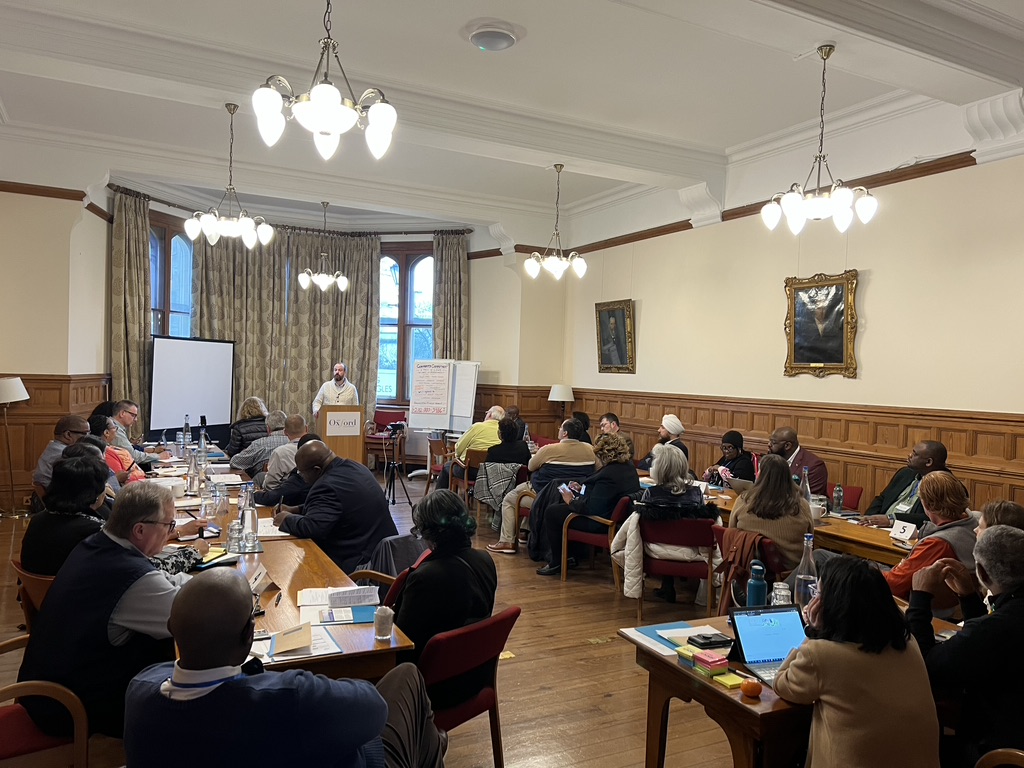
American religious non-profit leaders meet at Oxford University.
America’s Coming Oligarchic Criminal Kleptocracy Necessitates a Turn Away From Government-Only Solutions
The Wake-Up Call
The American political landscape is undergoing a transformation that will soon result in a federal government that is far less supportive and potentially more antagonistic toward its citizens. Based on what incoming administration officials have said, specific segments of the executive branch might do more harm to certain population sectors and whole people groups, even beyond US borders.
This shifting dynamic emphasizes why voters who don’t align with the emerging political ideology must seek alternative, non-governmental channels for organizing, safeguarding, and advancing the common good. Most consequentially, those abandoned and marginalized by an increasingly profit-focused Republican majority will need to depend on private benevolent institutions for their well-being.
It’s time for people of conscience to turn their focus from government entities to non-governmental organizations. Doing so will not only benefit the most vulnerable among us immediately but could also subvert the malicious intentions of the oligarchic autocracy.
The Importance of Nonprofits
I deeply value nonprofit organizations, charitable foundations, associations, guilds, societies, and religious institutions. In essence, wherever people unite freely and voluntarily to pursue a cause greater than themselves, I see democracy at its finest.
The recent passing of our 39th president, Jimmy Carter, highlighted the importance of nonprofit organizations through his exemplary post-presidential humanitarian work—constructing homes for those in need, safeguarding the integrity of elections worldwide, and nearly eradicating Guinea worm disease. His achievements through The Carter Center in Atlanta, Georgia, demonstrate how vital non-governmental agencies are in ameliorating human suffering.
My Life in the Nonprofit Sphere
The civil rights movement of the 1960s profoundly shaped my early years. When governmental bodies were either indifferent or openly opposed to African American rights, it was the collective effort of churches, educational institutions, and organizations like the Student Nonviolent Coordinating Committee that created and sustained meaningful change. The importance of non-government actors became evident through my parents’ admiration for Martin Luther King, Jr. I can also remember my father’s stories of his teenage fundraising efforts for the NAACP in the 1940s. These stories were a constant presence in my childhood. By twelve, I was well-versed in organizations like MLK’s Southern Christian Leadership Conference, the ACLU, and, through the Jewish side of my family, B’nai B’rith and the Anti-Defamation League. I understood these as citizen-led initiatives working independently of government to create a fairer society.
My father was also devoted to his Lions Club, an international service organization supporting visually impaired individuals and children with disabilities. As their local chapter president for multiple terms, Dad exemplified how individuals can band together to help those political actors might ignore, vilify, or even injure. Every July, my siblings and I participated in the club’s “Annual Picnic for the Blind and Handicapped,” where the importance of volunteers in nonprofit organizations became evident through our hands-on service – piloting wheelchairs, coordinating games, and distributing refreshments. Though we initially resisted this interruption to our summer fun, the experience invariably left us with a profound sense of fulfillment.
During my teenage years, I developed a belief that the private sector was more effective than government agencies in meeting community needs, given their closer connection to the populations they served. While my views have evolved with time, both sectors must work robustly together to effectively address the scale of societal needs. Nonprofits’ relative independence from political fluctuations enables them to pursue their missions consistently, regardless of the prevailing political climate, a real asset.
The Urgency of Supporting Nonprofits
As a new administration prepares to take office in Washington, there are growing concerns that the disparity between government support for vulnerable populations and society’s need for equitable policies and practices will expand dramatically. The traditional balance between large-scale government assistance and more targeted, passionate private aid may need to be inverted.
The incoming leadership and their congressional supporters advocate for substantial reductions in social programs, believing current government assistance levels are excessive. These cuts threaten to create significant gaps in both domestic and international social safety nets. Beyond the immediate increase in human suffering, these changes pose potential national security risks.
Humanitarian crises often create environments where extremist elements can flourish, potentially destabilizing societies and governments. Such destabilization can escalate into various forms of conflict, from cold wars to active hostilities, each bringing its own devastating consequences. The nonprofit sector is a crucial buffer, capable of mitigating these adverse developments through sustained community engagement.
Defining Nonprofits, Charities, and NGOs
Before delving into my vision for this new philanthropic paradigm, it’s essential to establish clear definitions for “nonprofit,” “charity,” and “non-governmental organization.” While some aspects of these terms may seem self-evident, there are nuanced distinctions that warrant examination:
- Nonprofit organizations operate on a unique model where any surplus funds get channeled back into their mission rather than distributed to shareholders. Unlike traditional businesses, nonprofits don’t have owners or shareholders but are stewarded by elected or appointed officers who serve in trust.
- This fundamental difference sets them apart from profit-driven enterprises. As a subset, charities concentrate on philanthropic objectives and receive specific tax advantages extending to their donors. NGOs encompass a broader spectrum, addressing various social issues, and may generate profits, though they do not inure to the financial benefit of any one individual or group.
- In the American context, most tax-exempt organizations that offer tax deductibility to donors face restrictions on political engagement. While this doesn’t completely bar political activity, it must remain secondary to their primary mission. Organizations focused primarily on political work can maintain tax-exempt status, though contributions to them aren’t tax-deductible.
Further Distinctions Between Nonprofits, For-profit Businesses, and Governmental Entities
The fundamental difference between nonprofits and government bodies lies in their governance structure. Unlike government agencies, nonprofits typically operate under volunteer boards of directors or trustees, underscoring the importance of volunteers in nonprofit organizations. These boards guide the organization’s direction while governed by constitutions, bylaws, or similar frameworks established by their members.
Members are responsible for the entity and its resources, though the benefits extend to the entire community rather than select individuals. For incorporated nonprofits, dissolution requires transferring assets to another nonprofit entity.
Regarding financial sustainability, nonprofits blend various funding sources, including donations, grants, and earned income, to support their missions. This revenue structure requires a careful balance between idealistic goals and practical considerations, with every resource dedicated to creating positive change. While bound by applicable laws, nonprofits maintain significant autonomy in establishing internal procedures, resolving conflicts, and defining relationships with constituents. This independence enables them to remain focused on their core mission while adapting to changing community needs.
Nonprofits must adhere to regulatory requirements, including filing reports with the IRS, state agencies, and local authorities. Credible allegations of misconduct can result in sanctions or closure. However, when operating ethically, nonprofits generally maintain their autonomy, protected by constitutional rights, particularly First Amendment provisions. Religious nonprofits usually enjoy enhanced protection against external interference.
How Nonprofits Meet Needs and Fill Voids
Nonprofits especially shine within the humanitarian aid sector. Groups like Doctors Without Borders (MSF), World Central Kitchen, the Red Cross, and the International Rescue Committee often venture into conflicts and disasters ahead of military or government interventions. Habitat for Humanity’s response to Indonesia’s devastating 2018 earthquake and tsunami demonstrates this impact. The catastrophe claimed over 2,000 lives, injured countless others, and displaced entire communities. Habitat’s comprehensive, community-centered approach included several crucial components:
- Emergency shelters: They provided immediate temporary housing to more than 5,000 families.
- Water and Sanitation: Clean water systems were established, benefiting over 10,000 individuals.
- Permanent Housing: Their primary focus involved rapidly constructing disaster-resistant homes.
Within the first year, Habitat achieved significant milestones:
- 1,500 disaster-resistant houses were constructed
- 7,000 families received comprehensive support, from housing to livelihood assistance
- 20 communities experienced holistic restoration, encompassing physical, social, and economic recovery
This Indonesian case study represents just one nonprofit’s impact. The United Nations Office for the Coordination of Humanitarian Affairs, functioning as a quasi-nonprofit NGO itself, coordinates thousands of global charitable organizations that extend beyond essential infrastructure development, addressing various community needs, from distributing personal hygiene products to deploying trauma counselors.
The NGO Long Game
Global NGOs demonstrate the importance of nonprofit organizations through their long-term strategic initiatives addressing humanity’s most pressing challenges. At the Skoll Foundation‘s 2017 World Forum at Oxford University’s Said Business School, over 2000 social innovators gathered to share successful strategies for tackling issues from rural healthcare in Africa to sustainable housing solutions in India and youth agricultural employment in Nigeria. Founded in 1999 by eBay’s founding president, Jeff Skoll, the Foundation catalyzes transformative social change through strategic investments, networking, and championing social entrepreneurs who develop innovative solutions to global challenges.
Room to Read illustrates another remarkable example of sustained impact, particularly in regions previously plagued by illiteracy. Their literacy program has achieved an impressive 82% increase in reading fluency and comprehension. The organization’s reach extends to 23 million children across 20 countries in Asia and Africa, demonstrating again the importance of volunteers who help implement these programs.
Similarly, news commentator Lawrence O’Donnell‘s K.I.N.D (Kids in Need of Desks) Fund showcases how focused initiatives can create substantial change. Through viewer support on MSNBC, the fund has raised over $17 million, providing desks to more than 500,000 students and scholarships to over 3,000 young women in Malawi and other sub-Saharan nations.
The Big Picture
On the domestic front, organizations like the National Center for Nonprofit Enterprise, the National Council of Nonprofits, the Society for Nonprofits, and Compass Pro Bono provide crucial support services to nonprofit boards, staff, and volunteers. Compass Pro Bono’s mission specifically focuses on creating sustainable connections between local nonprofits and business professionals to foster thriving, equitable communities.
Supporting these organizations through donations and volunteering creates a multiplier effect, as their services benefit numerous nonprofits simultaneously.
The principles of Diversity, Equity, and Inclusion (DEI) face increasing challenges under the new executive administration and its congressional supporters, who sophomorically label these efforts as the “woke agenda.” The latter three consultative organizations mentioned above actively work to strengthen these values, both through their direct programming and indirect support to beneficiary organizations.
Healthcare Access
Healthcare provides compelling examples of the importance of nonprofits. St. Jude’s Hospital for Children is a beacon of innovation in pediatric cancer treatment. Through dedicated research, they’ve achieved remarkable success in treating acute lymphoblastic leukemia, raising survival rates from a stark 4% to an impressive 94%. Their commitment extends beyond treatment to pioneering research that has transformed approaches to malignant diseases, making treatments gentler and more effective. Their unwavering promise that no family ever receives a bill for treatment, travel, housing, or food – regardless of their place of origin – exemplifies their ethic. Similarly, Philadelphia’s Shriners Children’s Hospital operates as an independent, charitable research and teaching institution, ensuring quality care regardless of patients’ ability to pay.
These organizations represent just a fraction of the over 2 million nonprofits in the United States. The National Philanthropic Trust reports that NGOs receive approximately $500 billion annually, with individuals contributing $340 billion of that sum. The sector continues to grow, with state corporation regulations facilitating the relatively easy establishment of new nonprofits across jurisdictions. As you read this article, hundreds of new organizations addressing various worthy causes will be born.
The following organizations exemplify the diverse range of needs, causes, and populations served by nonprofits:
Social Justice and Equality
- The Trevor Project – This national organization provides crucial suicide prevention and crisis intervention services for LGBTQ+ youth, offering essential support during vulnerable periods of self-discovery.
- SAGE – Focusing on the other end of the age spectrum, this organization champions LGBTQ+ elders through comprehensive advocacy and housing initiatives, ensuring dignity and support for those who faced historical discrimination.
- The Coalition for the Homeless—As the nation’s oldest advocacy and direct service organization for homeless individuals and families, it fights for fundamental rights, including affordable housing, adequate food, and living wages.
Breaking the Cycle of Poverty for Low-Income Individuals and Households
- National Immigration Law Center (NILC)—According to its mission statement, the National Immigration Law Center (NILC) is a pioneering advocacy organization that champions the rights and opportunities of low-income immigrants and their families.
- National Low Income Housing Coalition (NLIHC): This coalition champions the fundamental human right to housing, striving to ensure America’s lowest-income residents have access to safe, affordable, and dignified homes.
- Feeding America: As the nation’s largest hunger relief organization, Feeding America coordinates a vast network of food banks. Its dual approach addresses immediate hunger needs while advocating for systemic changes to eliminate food insecurity.
Reclaiming Heritage and Rights for Indigenous Americans
- Native American Rights Fund (NARF): Through strategic legal advocacy, NARF is a powerful defender of tribal sovereignty and Native rights, working to reverse centuries of systemic injustice. Their comprehensive efforts range from protecting sacred lands to ensuring equal voting access for Native communities.
- American Indian College Fund: This organization recognizes education as a catalyst for change. It creates opportunities for Native students through comprehensive scholarship programs and support services. Its work exemplifies how education can preserve cultural heritage and build sustainable futures.
- Wings of America: This organization holistically strengthens Native communities by nurturing mind, body, and spirit while honoring ancestral traditions. Their programs encompass running training, youth mentorship, educational advancement, and cultural identity reinforcement.
Strengthening Vulnerable Women of Color
- Black and Missing Foundation: Addressing a critical gap in media coverage and law enforcement attention, this Foundation advocates for missing persons of color, particularly women and girls. They provide essential resources to families while educating minority communities about personal safety.
- Women of Color Foundation: Operating as a 501c3 tax-exempt organization, Women of Color creates powerful networking opportunities while delivering comprehensive personal and professional development programs for Women of Color.
- Ujima (The National Center on Violence Against Women in the Black Community): Established to combat domestic, sexual, and community violence in the Black community, this organization takes a proactive approach to creating lasting change.
Justice for Sexual Assault Victims
- RAINN (Rape, Abuse & Incest National Network): The nation’s largest anti-sexual violence organization, RAINN, provides invaluable support to survivors through their 24/7 National Sexual Assault Hotline while advocating for stronger policies to prevent sexual violence and support survivors.
- National Sexual Violence Resource Center (NSVRC): A division of Respect Together, this organization pursues an unwavering commitment to ending sexual violence and supporting survivors nationwide. Their comprehensive programs transform societal understanding and responses to sexual harassment, abuse, and assault, creating lasting change.
- Stop It Now! takes a proactive approach to preventing child sexual abuse. They empower adults, families, and communities with crucial resources and support systems to protect children before harm occurs, creating a safer environment for future generations.
Forgotten People
- National Organization for Rare Disorders (NORD) is a vital advocate for those affected by rare diseases, highlighting the importance of volunteers in nonprofit organizations. Their patient advocacy initiatives, research support programs, and educational outreach bring essential attention and resources to often-overlooked conditions.
- Christopher and Dana Reeve Foundation. Established by the renowned late actor Christopher Reeve and his wife Dana following his spinal cord injury, this Foundation serves as a comprehensive national resource for those affected by paralysis. Through its National Paralysis Resource Center, it provides crucial support for independent living and quality of life enhancement, emphasizing the daily challenges and triumphs of the paralysis community.
- The Arc – Champions the universal human rights of individuals with intellectual and developmental disabilities, actively promoting their complete inclusion and participation in society.
Preserving, Defending, and Advancing a Free and Democratic Society
- Common Cause works tirelessly to fortify American democracy against contemporary challenges. Their initiatives span all government levels, focusing on protecting voting rights, regulating campaign finance, ensuring public official accountability, and strengthening democratic institutions.
- The Center for Election Innovation and Research dedicates its efforts to rebuilding trust in America’s electoral system, promoting inclusive participation while ensuring robust election security and integrity measures.
- The National League of Cities (NLC) unites leaders from cities, towns, and villages in their mission to enhance the quality of life for current and future constituents through strengthened local governance structures.
In Summary
Nonprofit organizations are potent catalysts for positive change, demonstrating that every action contributes to broader movements for justice and equality. These organizations challenge society to expand perspectives, acknowledge others’ struggles, and take meaningful action. Whether through board service, financial support, volunteer work, social media advocacy, professional engagement, or establishing new organizations with like-minded individuals, everyone can contribute to these vital missions for social change.
Nonprofit organizations are pillars of civil society, fostering community connections, facilitating accurate information dissemination, and mobilizing citizens to support vulnerable populations. These organizations demonstrate their importance through their ability to influence elected officials, shape public policy, and ensure governmental accountability. The importance of leadership in nonprofit organizations is evident as their leaders unite diverse communities and exemplify ethical, compassionate, and moral guidance. Many of these leaders later transition into public service roles.
The United States itself operates as an extensive nonprofit entity. This fact underscores why nonprofit sector experience is invaluable for future government personnel across all departments. Government operations align more closely with nonprofit principles than business practices. Furthermore, nonprofits are crucial in organizing resistance against unresponsive governance, public corruption, and state-sponsored misconduct.
Regardless of their specific focus, these organizations contribute to global betterment, enhance human welfare, and reinforce freedom, democracy, and social justice. They maintain collaborative efforts for the common good while standing firm against propaganda, indignity, violence, hatred, and malevolence.
This moment presents an opportunity to evaluate our engagement with nonprofit organizations. Their need for support will only increase over the next 48 months. For those not currently involved with non-governmental benevolence organizations, affinity groups, or community initiatives, consider investing your time, skills, and resources in these worthy causes. For those connected to non-profit work, consider doing even more in the days, weeks, months, and years ahead. Your contribution can make a significant difference in strengthening these vital institutions. Do it for your own sake, the sake of others, and the world’s sake.
Time is of the essence.
General Christian
non-governmental organizations

About Rev. Rob Schenck
Rev. Rob Schenck is a dissenting voice and a loving but fierce critic of American evangelicalism. He has spent nearly 50 years as a leading figure among U.S. evangelicals. An ordained evangelical minister, Rob was trained in evangelical institutions, has led national evangelical organizations, and is widely published in evangelical journals. He is the subject of Abigail Disney's Emmy Award-winning film The Armor of Light and is featured in Rob Reiner's feature-length documentary God & Country. Rob chronicles his spiritual journey in a memoir, Costly Grace: An Evangelical Minister's Rediscovery of Faith, Hope and Love (HarperCollins). You can read more about the author here.
Previous Post

October 23, 2024
Is Kamala Harris an Antichrist?
Next Post

March 7, 2025 Is Christianity a Religion of Hate? Returning to Jesus' Love
Recent Comments
"Thank you"
As An Evangelical Leader, I’ll Vote ..."
"I would like to give you a standing ovation, Bravo!"
As An Evangelical Leader, I’ll Vote ..."
"Your remark about Billy Graham as a lifelong Democrat is a bit disingenuous. He publicly ..."
As An Evangelical Leader, I’ll Vote ..."
"Typical Trump whose morality and ethics no other institution would accept."
Trump’s Use of Human Shields: A ..."
Browse Our Archives
Select a Category Portraits Uncategorized
Select a Month October 2026 August 2026 July 2026 June 2026 May 2026 March 2026 April 2025 March 2025 January 2025 October 2024 July 2024 June 2024 March 2024 February 2024 January 2024 December 2023 November 2023 October 2023 September 2023 August 2023 July 2023
Follow Us!
TAKE THE
Religious Wisdom Quiz
What Christian group refers to their main worship service as "Mass"?
Select your answer to see how you score.
Baptists Methodists Presbyterians Catholics
Related posts from Truth Revealed

As An Evangelical Leader, I'll Vote Democratic this...

Trump’s Use of Human Shields: A Moral Crisis

On Modern-Day Idolatry—And How to Fix It

How To Become an Effective Kitchen Table Activist
TRENDING AT PATHEOS Progressive Christian

What Being a Modern-Day Apostle Means to Me
In my last column, I discussed the ins and outs of modern-day...

Did Ancient China Once Worship the God of...
Across human history, a common thread weaves through the origins of the...

Love Your Neighbor – Including Earth-Kin: Lev. 19,...
God’s command to love your neighbor means acting in an ethical and...

Lead a Church Study of “Jesus and Lao...
Guest writer Jack Thomas (The Irreverent Reverend) reflects on leading his church...

Pastoral Wisdom for Responding to Sermon Pushback
Getting sermon pushback on your social justice sermon? Learn practical, Proverbs-based strategies...

Principles for Understanding the Apostolic Ministry Today
Whenever people discover that my formal ministry title is "apostle," as in...
view all Progressive Christian blogs
What Are Your Thoughts?leave a comment
Ad-Free & Subscriber Log-In Subscription Support
- About Us
- 2026 Calendar
- Videos
- Podcasts
- Library of World Religions
- Faith In Media Tracker
- Advertise With Us
- Write for Us
- Privacy Policy
- Terms of Service
- Do Not Sell My Data
- Contact Us
- Radiant Digital
- Manage Newsletter Subscriptions
- Unsubscribe From Notifications
- Sitemap
Copyright 2008-2026, Patheos. All rights reserved.
Subscription Support Ad-Free & Subscriber Log-In
Follow Patheos