
BuddhistCatholicContemplativeEvangelicalGeneral ChristianHinduJewishLatter-day SaintMuslimNew VisionsProgressive Christian
Beliefs
- Buddhist
- Catholic
- Contemplative
- Evangelical
- General Christian
- Hindu
- Jewish
- Latter-day Saint
- More Voices
- Muslim
- New Visions
- Pagan
- Progressive Christian
Topics
- Religion News
- Food and Religion
- Sports and Religion
- Religious Art
- Religious Music and Entertainment
- Religious Events
- History and Religion
- Style and Religion
- Politics and Religion
- Women in Religion
- Recreation Outdoors and Religion
- Business Finance and Religion
- Careers Workplace and Religion
- Education and Religion
- Family Parenting and Religion
- Health Fitness and Religion
- Home and Religion
- Relationships and Religion
- Technology and Religion
- Travel and Religion
Columnists
- Buddhist Columnists
- Business Finance and Religion Columnists
- Careers Workplace and Religion Columnists
- Catholic Columnists
- Contemplative Columnists
- Education and Religion Columnists
- Evangelists Columnists
- Family Parenting and Religion Columnists
- General Christian Columnists
- Health Fitness and Religion Columnists
- Hindu Columnists
- History and Religion Columnists
- Home and Religion Columnists
- Jewish Columnists
- More Voices Columnists
- Latter Day Columnists
- Muslim Columnists
- New Visions Columnists
- Nonreligious Columnists
- Pagan Columnists
- Politics and Religion Columnists
- Progressive Columnists
- Recreation Outdoors and Religion Columnists
- Relationships and Religion Columnists
- Religion News Columnists
- Religious Art Columnists
- Religious Events Columnists
- Religious Music and Entertainment Columnists
- Sports and Religion Columnists
- Style and Religion Columnists
- Technology and Religion Columnists
- Travel and Religion Columnists
- Women in Religion Columnists
Resource Library
- 2026 Calendar
- Library of World Religions
- The 100 Most Holy Places on Earth
- Patheos Answers
- Podcasts
- Videos
- Faith Leaders Database
- Anglican Episcopalian
- Bahai
- Baptist
- Buddhism
- Christianity
- Confucianism
- Eastern Orthodoxy
- Hinduism
- Holiness and Pentecostal
- ISKCON
- Islam
- Judaism
- Lutheran
- Methodist
- The Church of Jesus Christ of Latter-day Saints
- New Age
- Paganism
- Presbytarian and Reformed
- Protestantism
- Religion Behind the Scenes
- Roman Catholic
- Scientology
- Shia Islam
- Sikhism
- Sufism
- Sunni Islam
- Taoism
- Zen
- See all religions
Research Tools
 Ad-Free & Subscriber Log-In Subscription Support
Ad-Free & Subscriber Log-In Subscription Support
Follow Patheos 

- Trending:
- Forgiveness
- |
- Marriage
- |
- Consciousness
- |
- Death Penalty
- |
- Election
- |
- Halloween
 Troubler of Israel
- Home
- Evangelical
- Yes, Fellow Protestants, Mary is the Mother of God (It’s Good Christology)
Yes, Fellow Protestants, Mary is the Mother of God (It’s Good Christology)
Last updated on: December 18, 2017 at 3:24 pm by G. Shane Morris
Yes, Fellow Protestants, Mary is the Mother of God (It’s Good Christology) 2017-12-18T15:24:55-04:00 G. Shane Morris
Patheos Explore the world's faith through different perspectives on religion and spirituality! Patheos has the views of the prevalent religions and spiritualities of the world.
Theotokos–Greek for “birth-giver of God,” or more simply, “Mother of God.” It’s a term that strikes many if not most evangelical ears as “just too Catholic,” but the theology and history behind it are central to what makes us Christians, and what makes Advent and Christmas worth celebrating.
I understand the hesitation evangelicals have about using this title. At face value, it seems to imply that Mary might be the mother of God the Father and the Holy Spirit, or that she somehow brought God into being. Neither of these reflect what the term originally meant, and basically no Christian has ever believed such nonsense. True, Jesus is the only Person to ever pre-exist His mother. But then again, He was also the first Baby to pre-exist the universe. There is much mystery in the Incarnation and the Trinity. None of it changes what a mother is, any more than it changes the fact that God was, in fact, a Baby.
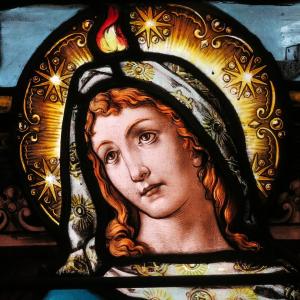 Evangelicals may also hear in the term “mother of God” the lapping of the river Tiber. They know that, for Roman Catholics, this title is associated with a lot more than just good Christology. It conjures doctrines like the immaculate conception, the perpetual virginity, the assumption, and the special intercessory and mediatorial role Mary plays in Roman theology. But the term wasn’t coined in light of any of these. We Protestants shouldn’t let subsequent abuses prevent us from using a word that, far from elevating Mary above her Son, originally exalted the mystery of God becoming flesh–the mystery at the heart of not only the Advent and Christmas seasons, but our faith, itself.
Here’s the quick version of the story behind “Theotokos”: The mid fifth century saw a showdown between two presbyters (who also held the patriarchates of their respective cities), Cyril of Alexandria and Nestorius of Constantinople. These clergymen represented two sides in a debate over the relationship between Christ’s human nature and divine nature.
Both sides claimed to adhere to the Nicene Creed, the product of the first ecumenical council, which condemned the Arian heresy and codified the doctrine of the Trinity as all Christians today confess it. Nestorius agreed in theory that Jesus was truly God the Son, Second Person of the Trinity, and truly man, but he emphasized the distinctiveness of the two natures so much that he created, in effect, two persons: Jesus the man, and Jesus, the Son of God. The word he used for this apparent (but not actual) union of divinity and humanity was “prosopon,” a term for actors’ masks in Greek theater. In other words, Jesus of Nazareth, the person the first Christians saw, heard, followed, and touched on earth, wasn’t necessarily the same person as God the Son. The things that were said about Christ couldn’t necessarily be said about the Son.
Cyril of Alexandria became the chief opponent of Nestorius and exponent of the orthodox view. What’s surprising is that he did so using a single title not for Jesus, but for His mother, the virgin Mary. That title was “thetokos“–mother of God. Though Cyril didn’t come up with the title (it was already centuries old by that time), he used it brilliantly to smoke out Nestorius’ heretical views about Jesus.
Nestorius, you see, couldn’t use the term “mother of God,” because he didn’t think the “God” in Jesus was sufficiently united to the “man” to use them as a subject with the same predicates. Christ may have hungered, but in Nestorius’ view, God the Son did not. Christ may have slept, but God the Son did not. Christ may have died, but God the Son did not. Christ may have had a mother, but God the Son did not. So Nestorius invented an alternative title for Mary that allowed for his view: *“Christotokos”–*mother of Christ.
Cyril and the Alexandrians were having none of it. And once Byzantine emperor Theodosius II called the Council of Ephesus to settle the matter, Nestorius was quickly stripped of his office and his views condemned as heresy. Cyril’s view–that the natures of Christ were united perfectly but remained distinct in one Person, Who could rightly be said to hunger, sleep, suffer, die, and have a mother, all while remaining fully God–went on to inform the Council of Chalcedon in 451.
Why is all of this so important? It’s simple. If Jesus of Nazareth was not the same Person as God the Son, incarnate in a truly human body with a truly human soul, then His death on the cross was worth no more than the death of an ordinary (albeit righteous) man. He could not atone for the sins of anyone, because this man, as closely associated with God the Son as he may have been, was not the party chiefly offended by sin. He had no business forgiving it (only God can forgive sins – Mark 2:7), nor was his death of sufficient value as a sacrifice to expiate the sins of more than one person, let alone the whole world. Only the death of God could accomplish such a miracle.
Even more importantly, the resurrection of a Nestorian Christ would mean little for us. This one Person who was born of a virgin in Bethlehem, lived the life of a pious Jew, worked miracles for three years, died a criminal’s death at the age of thirty-three, and left His tomb empty had to be totally and irrevocably both divine and human.
Why? Because in Jesus, God became a man to do what man could not. It was not enough for the Creator to uphold His side of the covenant which Adam broke. He had to come and uphold Adam’s side, as well. He took what He is as God and bound it to what we are as creatures, guaranteeing that we could no more fall into the cosmic dust heap than He could. He put His own skin in the game. He paid what we owe as one of us, and then rose with our nature in tow, the “firstborn from the dead” (Colossians 1:18), guaranteeing our transformation in the same manner. He stepped inside the corpse of fallen humanity and brought it back to life. And He could do all of this because He took on everything it means to be human while losing none of what it means to be God.
In the language of the East, the ultimate end of salvation is theosis–the bringing of man into a closer likeness and union with God in Christ. The restoration of all things actually means God and creation will be brought back together–that Heaven and earth will be reconciled. In Christ, this reconciliation happens in a single Person.
The debate over Nestorianism is no mere academic exercise in hair-splitting. The Gospel means nothing if Nestorius was right. If Jesus was not fully, totally, and unambiguously God, His unity with humanity and creation would be useless.
It should be clear by now that the term “theotokos” is not really about Mary, at all. It’s about her Son. It is a profound statement about the wonder and power of the Incarnation. To call Mary the mother of God is just another way of calling Jesus God–one that scares heretics out of hiding by attributing to the God-man the most human of characteristics–having a mom.
Image: Nheyob, Wikimedia Commons

Previous Post

December 7, 2017
The Burning Fertility Clinic: Abortion's New 'Gotcha' Argument
Next Post

December 19, 2017 R. C. Sproul: The Man Who Taught Me to Fear God
Browse Our Archives
Select a Category Abortion Animals Apologetics Archaeology Atheism Bible Books Church Creationism Culture of Death Debate Devotion Economics Ethics Free Will Gender Issues History Holidays Intelligent Design Islam Liberalism Life Advice Media Movies Music Nature Parenting Philosophy Politics Prayer Race Relationships Science Sex Stories Technology Terrorism The Point Theology Uncategorized Youth
Select a Month July 2021 June 2021 April 2021 March 2021 November 2020 September 2020 May 2020 April 2020 February 2020 January 2020 November 2019 October 2019 August 2019 July 2019 June 2019 May 2019 April 2019 February 2019 January 2019 December 2018 November 2018 October 2018 September 2018 August 2018 July 2018 June 2018 May 2018 April 2018 March 2018 February 2018 January 2018 December 2017 November 2017 October 2017 September 2017 August 2017 July 2017 June 2017 May 2017 April 2017 March 2017 February 2017 January 2017 December 2016 November 2016 October 2016 September 2016 August 2016 July 2016 June 2016
Follow Us!
TAKE THE
Religious Wisdom Quiz
I'm a number that marks the beast, feared by many throughout history. Triple digits, all the same. What number am I?
Select your answer to see how you score.
666 777 999 333
Related posts from Troubler of Israel


Why Music Opens Hearts and Minds


Why Was the Forbidden Fruit Forbidden?
TRENDING AT PATHEOS Evangelical

How the author of the world's best hymn...
I've been working with John Newton for a while now. This makes...

Long before this Lectio Divina, Psalm 130 - the song - started...

What About the Trees? Another Living Parable
After I finished writing the last article about falling leaves as a...

Why Classical Education Is a Conversation, Not a...
Come and Read: Joy in Classical Education When I was a little...

Falling Leaves: A Living Parable on Letting Go
I’ve spent the vast majority of my life in the southeast corner...

Cornell University has received a great deal of negative publicity and intense...
view all Evangelical blogs
Ad-Free & Subscriber Log-In Subscription Support
- About Us
- 2026 Calendar
- Videos
- Podcasts
- Library of World Religions
- Faith In Media Tracker
- Advertise With Us
- Write for Us
- Privacy Policy
- Terms of Service
- Do Not Sell My Data
- Contact Us
- Radiant Digital
- Manage Newsletter Subscriptions
- Unsubscribe From Notifications
- Sitemap
Copyright 2008-2026, Patheos. All rights reserved.
Subscription Support Ad-Free & Subscriber Log-In
Follow Patheos