
BuddhistCatholicContemplativeEvangelicalGeneral ChristianHinduJewishLatter-day SaintMuslimNew VisionsProgressive Christian
Beliefs
- Buddhist
- Catholic
- Contemplative
- Evangelical
- General Christian
- Hindu
- Jewish
- Latter-day Saint
- More Voices
- Muslim
- New Visions
- Pagan
- Progressive Christian
Topics
- Religion News
- Food and Religion
- Sports and Religion
- Religious Art
- Religious Music and Entertainment
- Religious Events
- History and Religion
- Style and Religion
- Politics and Religion
- Women in Religion
- Recreation Outdoors and Religion
- Business Finance and Religion
- Careers Workplace and Religion
- Education and Religion
- Family Parenting and Religion
- Health Fitness and Religion
- Home and Religion
- Relationships and Religion
- Technology and Religion
- Travel and Religion
Columnists
- Buddhist Columnists
- Business Finance and Religion Columnists
- Careers Workplace and Religion Columnists
- Catholic Columnists
- Contemplative Columnists
- Education and Religion Columnists
- Evangelists Columnists
- Family Parenting and Religion Columnists
- General Christian Columnists
- Health Fitness and Religion Columnists
- Hindu Columnists
- History and Religion Columnists
- Home and Religion Columnists
- Jewish Columnists
- More Voices Columnists
- Latter Day Columnists
- Muslim Columnists
- New Visions Columnists
- Nonreligious Columnists
- Pagan Columnists
- Politics and Religion Columnists
- Progressive Columnists
- Recreation Outdoors and Religion Columnists
- Relationships and Religion Columnists
- Religion News Columnists
- Religious Art Columnists
- Religious Events Columnists
- Religious Music and Entertainment Columnists
- Sports and Religion Columnists
- Style and Religion Columnists
- Technology and Religion Columnists
- Travel and Religion Columnists
- Women in Religion Columnists
Resource Library
- 2026 Calendar
- Library of World Religions
- The 100 Most Holy Places on Earth
- Patheos Answers
- Podcasts
- Videos
- Faith Leaders Database
- Anglican Episcopalian
- Bahai
- Baptist
- Buddhism
- Christianity
- Confucianism
- Eastern Orthodoxy
- Hinduism
- Holiness and Pentecostal
- ISKCON
- Islam
- Judaism
- Lutheran
- Methodist
- The Church of Jesus Christ of Latter-day Saints
- New Age
- Paganism
- Presbytarian and Reformed
- Protestantism
- Religion Behind the Scenes
- Roman Catholic
- Scientology
- Shia Islam
- Sikhism
- Sufism
- Sunni Islam
- Taoism
- Zen
- See all religions
Research Tools
 Ad-Free & Subscriber Log-In Subscription Support
Follow Patheos 

- Trending:
- Advent
- |
- Forgiveness
- |
- Thanksgiving
- |
- Election
- |
- Seasonal Holidays
- |
- Marriage
 Troubler of Israel
- Home
- Evangelical
- On Holidays and Calvinist Curmudgeons
On Holidays and Calvinist Curmudgeons
Last updated on: April 13, 2017 at 11:24 am by G. Shane Morris
On Holidays and Calvinist Curmudgeons 2017-04-13T11:24:00-04:00 G. Shane Morris
Patheos Explore the world's faith through different perspectives on religion and spirituality! Patheos has the views of the prevalent religions and spiritualities of the world.
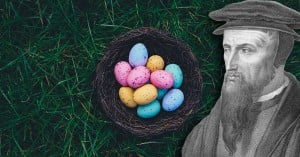 Reformed Christianity can seem sharply divided and at times schizophrenic on the issue of holidays and the church calendar. Many argue that strict application of the Regulative Principle of Worship outlined in our confessions of faith prohibits the observance of Advent, Christmas, Lent, Good Friday, Easter, etc. There is a great deal of piety-policing within more theologically-committed circles where it is a mark of the elite to only celebrate the Christian Sabbath (Sunday), and nothing else. And not without reason.
In the Directory for Publick Worship of God, adopted by Parliament as part of the Westminster Standards, the imposition of holidays is condemned:
“Festival days, vulgarly called Holy-days, having no warrant in the word of God, are not to be continued.”
But the confessions are far from unanimous on the matter. The Second Helvetic Confession, for example, has it:
“Moreover, if in Christian liberty the churches religiously celebrate the memory of the Lord’s nativity, circumcision, passion, resurrection, and of his ascension into heaven, and the sending of the Holy Spirit upon his disciples, we approve of it highly…we confess that the remembrance of saints, at a suitable time and place, is to be profitably commended to the people in sermons, and the holy examples of the saints set forth to be imitated by all.”
As so often is the case, the rift here is as wide as the English Channel, and Continental Reformed seemed to take the more “moderate” position, likely out of hopes of appealing to Lutherans. The Puritans and Presbyterians were extreme, a fact that’s obvious to anyone who compares them with their Continental counterparts. It’s a concern for me and most American Presbyterians, because our churches claim to subscribe to the Westminster Confession, not the various documents from the Low Countries or Switzerland. Yet many of us today observe at least part of the Christian liturgical calendar.
My own conclusion on the matter is that the Reformed confessions can be brought into substantial harmony by recognizing what was really primarily at issue: obligatory observance. The idea that Christians can be obligated to keep a day whose observance is nowhere commanded in Scripture does violate the Regulative Principle by laying down a human command where God is silent. As a matter of fact, it lays down a command contrary to one established by God, to tolerate Christian freedom on holy-days:
“One person considers one day more sacred than another; another considers every day alike. Each of them should be fully convinced in their own mind. Whoever regards one day as special does so to the Lord. Whoever eats meat does so to the Lord, for they give thanks to God; and whoever abstains does so to the Lord and gives thanks to God.” (Romans 14:1-7)
Obligatory observance of holidays may seem a strange thing to quarrel over to us today, but many Puritan ministers, as I understand it, had no problem with wearing gowns, but would die rather than accept their imposition. It’s the same way with holidays.
And that’s why freely observing these days in godly ways, that is, reading the relevant Scriptures, singing relevant psalms, hymns, and spiritual songs, and focusing our thanks to God during family meals and gatherings around these particular events in the life of Jesus, seems perfectly acceptable to me. And this stance has at least some explicit precedent in the Reformed confessions.
All that to say, a blessed Maundy Thursday and Good Friday.

Next Post

April 21, 2017 There Will Be Child Murderers in Heaven
Browse Our Archives
Select a Category Abortion Animals Apologetics Archaeology Atheism Bible Books Church Creationism Culture of Death Debate Devotion Economics Ethics Free Will Gender Issues History Holidays Intelligent Design Islam Liberalism Life Advice Media Movies Music Nature Parenting Philosophy Politics Prayer Race Relationships Science Sex Stories Technology Terrorism The Point Theology Uncategorized Youth
Select a Month July 2021 June 2021 April 2021 March 2021 November 2020 September 2020 May 2020 April 2020 February 2020 January 2020 November 2019 October 2019 August 2019 July 2019 June 2019 May 2019 April 2019 February 2019 January 2019 December 2018 November 2018 October 2018 September 2018 August 2018 July 2018 June 2018 May 2018 April 2018 March 2018 February 2018 January 2018 December 2017 November 2017 October 2017 September 2017 August 2017 July 2017 June 2017 May 2017 April 2017 March 2017 February 2017 January 2017 December 2016 November 2016 October 2016 September 2016 August 2016 July 2016 June 2016
Follow Us!
TAKE THE
Religious Wisdom Quiz
How long did David reign as king?
Select your answer to see how you score.
33 years 40 years 25 years 50 years
Related posts from Troubler of Israel


Dunning-Kruger, Cultural Amnesia, and Tyrannosaurus rex

Why Music Opens Hearts and Minds

Why Was the Forbidden Fruit Forbidden?
TRENDING AT PATHEOS Evangelical

When you hear the word riches, what comes to mind? For most...

Don’t Miss the Parents: A Creative Christmas Meditation
As we enter the Advent Season, I see many people trying to...

Making Stones Into Bread: Choosing the “Right” Work
I was on my online arts ministry Zoom meeting with the International...

Ukraine’s exhausted Christians face fifth winter of war
By Julian Lukins The full-scale war in Ukraine is taking “a serious...

Russell Brand's Conviction is not anti-Christian Persecution
How do we shed the reputation that the Church is OK with...

Have you ever caught yourself saying, “I’ll do it tomorrow,” or “Now...
view all Evangelical blogs
Ad-Free & Subscriber Log-In Subscription Support
- About Us
- 2026 Calendar
- Videos
- Podcasts
- Library of World Religions
- Faith In Media Tracker
- Advertise With Us
- Write for Us
- Privacy Policy
- Terms of Service
- Do Not Sell My Data
- Contact Us
- Radiant Digital
- Manage Newsletter Subscriptions
- Unsubscribe From Notifications
- Sitemap
Copyright 2008-2026, Patheos, part of the Radiant Digital network of media brands. All rights reserved.
Subscription Support Ad-Free & Subscriber Log-In
Follow Patheos