
BuddhistCatholicContemplativeEvangelicalGeneral ChristianHinduJewishLatter-day SaintMuslimNew VisionsProgressive Christian
Beliefs
- Buddhist
- Catholic
- Contemplative
- Evangelical
- General Christian
- Hindu
- Jewish
- Latter-day Saint
- More Voices
- Muslim
- New Visions
- Pagan
- Progressive Christian
Topics
- Religion News
- Food and Religion
- Sports and Religion
- Religious Art
- Religious Music and Entertainment
- Religious Events
- History and Religion
- Style and Religion
- Politics and Religion
- Women in Religion
- Recreation Outdoors and Religion
- Business Finance and Religion
- Careers Workplace and Religion
- Education and Religion
- Family Parenting and Religion
- Health Fitness and Religion
- Home and Religion
- Relationships and Religion
- Technology and Religion
- Travel and Religion
Columnists
- Buddhist Columnists
- Business Finance and Religion Columnists
- Careers Workplace and Religion Columnists
- Catholic Columnists
- Contemplative Columnists
- Education and Religion Columnists
- Evangelists Columnists
- Family Parenting and Religion Columnists
- General Christian Columnists
- Health Fitness and Religion Columnists
- Hindu Columnists
- History and Religion Columnists
- Home and Religion Columnists
- Jewish Columnists
- More Voices Columnists
- Latter Day Columnists
- Muslim Columnists
- New Visions Columnists
- Nonreligious Columnists
- Pagan Columnists
- Politics and Religion Columnists
- Progressive Columnists
- Recreation Outdoors and Religion Columnists
- Relationships and Religion Columnists
- Religion News Columnists
- Religious Art Columnists
- Religious Events Columnists
- Religious Music and Entertainment Columnists
- Sports and Religion Columnists
- Style and Religion Columnists
- Technology and Religion Columnists
- Travel and Religion Columnists
- Women in Religion Columnists
Resource Library
- 2026 Calendar
- Library of World Religions
- The 100 Most Holy Places on Earth
- Patheos Answers
- Podcasts
- Videos
- Faith Leaders Database
- Anglican Episcopalian
- Bahai
- Baptist
- Buddhism
- Christianity
- Confucianism
- Eastern Orthodoxy
- Hinduism
- Holiness and Pentecostal
- ISKCON
- Islam
- Judaism
- Lutheran
- Methodist
- The Church of Jesus Christ of Latter-day Saints
- New Age
- Paganism
- Presbytarian and Reformed
- Protestantism
- Religion Behind the Scenes
- Roman Catholic
- Scientology
- Shia Islam
- Sikhism
- Sufism
- Sunni Islam
- Taoism
- Zen
- See all religions
Research Tools
 Ad-Free & Subscriber Log-In Subscription Support
Ad-Free & Subscriber Log-In Subscription Support
Follow Patheos 

- Trending:
- Forgiveness
- |
- Marriage
- |
- Consciousness
- |
- Death Penalty
- |
- Election
- |
- Halloween
 Troubler of Israel
- Home
- Evangelical
- Jesus Has a Physical Body Forever (And So Will We)
Jesus Has a Physical Body Forever (And So Will We)
Last updated on: January 5, 2017 at 2:42 pm by G. Shane Morris
Jesus Has a Physical Body Forever (And So Will We) 2017-01-05T14:42:03-04:00 G. Shane Morris
Patheos Explore the world's faith through different perspectives on religion and spirituality! Patheos has the views of the prevalent religions and spiritualities of the world.
“’Now, Bree,’” he said, ‘you poor, proud, frightened Horse, draw near. Nearer still, my son. Do not dare not to dare. Touch me. Smell me. Here are my paws, here is my tail, these are my whiskers. I am a true Beast’” -Aslan, “The Horse and His Boy”
There’s a common misconception in the Christian rank and file that Jesus’ resurrected body was something other than a real, physical body with flesh and bones, and that our resurrected bodies will likewise be something other than or somehow less solid than our bodies are now. Paul’s statement that our bodies will be raised “spiritual” is often cited as proof, as is the fact that Jesus passed through walls after He was raised.
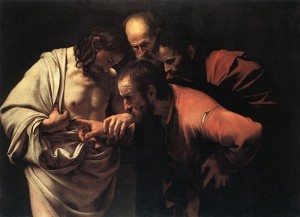 There are several rebuttals. The first is what N. T. Wright discusses is in his book “Surprised by Hope.” Namely, that Christians have always and everywhere believed in a real resurrection of our real bodies until extremely recently. The “blessed hope” of the Church is enshrined in all of the early creeds: “We believe in the resurrection of the dead, and the life everlasting. Amen.” If this is a misreading of the New Testament, then Christians for almost all of history have had the central fact of biblical eschatology—that we will come bodily back to life on the Last Day—wrong. Christians’ enduring hope has always been what Paul said the creation itself groans for: “the redemption of our bodies.” (Romans 8:23) This is what it means to swallow up death in victory. A “spiritual resurrection” of any kind isn’t resurrection. It’s a euphemistic redescription of death.
Second, the term “spiritual body” in 1 Corinthians 15:44 does not, in Paul’s original use, mean what the phrase seems to imply in English. Wright points out that to the original audience, a “spiritual body” understood as an “immaterial body” would be a contradiction in terms. There is no such thing. You might as well talk about solid mist or dry water. What Paul is doing, in context, is contrasting a body of flesh (which is the most common New Testament metonym for fallen humanity) with the body of the Spirit—that is, a body empowered and animated by the Holy Spirit. The Jews and Greeks had words for immaterial beings. If Paul had meant for us to expect a non-physical resurrection, he could have spoken of “ghosts,” or “spirits.” He did not. For a man of his background, “resurrection” meant only one thing: To get up out of the grave, body and all, and walk again. Jesus left behind an empty grave devoid of flesh and bones. He took them with Him. And so will we. (1 John 3:2) A physical understanding of our resurrection bodies is crucial to the passage, as Paul calls Christ Himself “a life-giving spirit” in the very next verse. Does this mean the resurrected Christ is a mere spirit? If so, what of the central fact of Christian history? What of the empty tomb? Where did the body go? It got up and walked out, scars and all.
Finally, people will sometimes cite the gospel accounts of Jesus entering through locked doors and walking through walls to visit the Disciples as proof that His body was not quite as solid as it appeared. This is a huge non-sequitur, if you consider it for just a moment. This is God we’re talking about. He had spent His entire ministry in a quite ordinary human body, performing miracles that defied the laws of physics (walking on water, disappearing through crowds, being transfigured and shining like the sun, etc.). No one but the Docetic Gnostics ever suggested that this calls into question the corporeal reality of Jesus’ pre-resurrection body. Why should His miracles after the resurrection prompt us to do so?
Christ’s resurrection body is real and physical and as the Firstborn from the Dead (Colossians 1:18), He guarantees that our resurrection bodies will be, as well. We will sit up and walk out of our graves, leaving nothing behind. The exact properties of this glorified flesh and bone are mysterious, as we would expect of something designed never to die. But it will be real, physical flesh and bone. We will not be ghosts, as the Disciples thought Christ was (until they touched Him). We will be true beasts.
Image: Wikimedia Commons – Le Caravage, L’incrédulité de Saint Thomas


Next Post
January 11, 2017 Head Scratcher: Could Jesus Have Sinned?
Browse Our Archives
Select a Category Abortion Animals Apologetics Archaeology Atheism Bible Books Church Creationism Culture of Death Debate Devotion Economics Ethics Free Will Gender Issues History Holidays Intelligent Design Islam Liberalism Life Advice Media Movies Music Nature Parenting Philosophy Politics Prayer Race Relationships Science Sex Stories Technology Terrorism The Point Theology Uncategorized Youth
Select a Month July 2021 June 2021 April 2021 March 2021 November 2020 September 2020 May 2020 April 2020 February 2020 January 2020 November 2019 October 2019 August 2019 July 2019 June 2019 May 2019 April 2019 February 2019 January 2019 December 2018 November 2018 October 2018 September 2018 August 2018 July 2018 June 2018 May 2018 April 2018 March 2018 February 2018 January 2018 December 2017 November 2017 October 2017 September 2017 August 2017 July 2017 June 2017 May 2017 April 2017 March 2017 February 2017 January 2017 December 2016 November 2016 October 2016 September 2016 August 2016 July 2016 June 2016
Follow Us!
TAKE THE
Religious Wisdom Quiz
What does "meek" mean in the Beatitudes?
Select your answer to see how you score.
Very rich Angry and harsh Gentle and humble Funny
Related posts from Troubler of Israel


Dunning-Kruger, Cultural Amnesia, and Tyrannosaurus rex

Why Music Opens Hearts and Minds

TRENDING AT PATHEOS Evangelical

The REST of Your Life: A Creative Wrestles...
This week I had a conversation with a good friend from church....

How the author of the world's best hymn...
I've been working with John Newton for a while now. This makes...

Long before this Lectio Divina, Psalm 130 - the song - started...

What About the Trees? Another Living Parable
After I finished writing the last article about falling leaves as a...

Why Classical Education Is a Conversation, Not a...
Come and Read: Joy in Classical Education When I was a little...

Cornell University has received a great deal of negative publicity and intense...
view all Evangelical blogs
Ad-Free & Subscriber Log-In Subscription Support
- About Us
- 2026 Calendar
- Videos
- Podcasts
- Library of World Religions
- Faith In Media Tracker
- Advertise With Us
- Write for Us
- Privacy Policy
- Terms of Service
- Do Not Sell My Data
- Contact Us
- Radiant Digital
- Manage Newsletter Subscriptions
- Unsubscribe From Notifications
- Sitemap
Copyright 2008-2026, Patheos. All rights reserved.
Subscription Support Ad-Free & Subscriber Log-In
Follow Patheos