
BuddhistCatholicContemplativeEvangelicalGeneral ChristianHinduJewishLatter-day SaintMuslimNew VisionsProgressive Christian
Beliefs
- Buddhist
- Catholic
- Contemplative
- Evangelical
- General Christian
- Hindu
- Jewish
- Latter-day Saint
- More Voices
- Muslim
- New Visions
- Pagan
- Progressive Christian
Topics
- Religion News
- Food and Religion
- Sports and Religion
- Religious Art
- Religious Music and Entertainment
- Religious Events
- History and Religion
- Style and Religion
- Politics and Religion
- Women in Religion
- Recreation Outdoors and Religion
- Business Finance and Religion
- Careers Workplace and Religion
- Education and Religion
- Family Parenting and Religion
- Health Fitness and Religion
- Home and Religion
- Relationships and Religion
- Technology and Religion
- Travel and Religion
Columnists
- Buddhist Columnists
- Business Finance and Religion Columnists
- Careers Workplace and Religion Columnists
- Catholic Columnists
- Contemplative Columnists
- Education and Religion Columnists
- Evangelists Columnists
- Family Parenting and Religion Columnists
- General Christian Columnists
- Health Fitness and Religion Columnists
- Hindu Columnists
- History and Religion Columnists
- Home and Religion Columnists
- Jewish Columnists
- More Voices Columnists
- Latter Day Columnists
- Muslim Columnists
- New Visions Columnists
- Nonreligious Columnists
- Pagan Columnists
- Politics and Religion Columnists
- Progressive Columnists
- Recreation Outdoors and Religion Columnists
- Relationships and Religion Columnists
- Religion News Columnists
- Religious Art Columnists
- Religious Events Columnists
- Religious Music and Entertainment Columnists
- Sports and Religion Columnists
- Style and Religion Columnists
- Technology and Religion Columnists
- Travel and Religion Columnists
- Women in Religion Columnists
Resource Library
- 2026 Calendar
- Library of World Religions
- The 100 Most Holy Places on Earth
- Patheos Answers
- Podcasts
- Videos
- Faith Leaders Database
- Anglican Episcopalian
- Bahai
- Baptist
- Buddhism
- Christianity
- Confucianism
- Eastern Orthodoxy
- Hinduism
- Holiness and Pentecostal
- ISKCON
- Islam
- Judaism
- Lutheran
- Methodist
- The Church of Jesus Christ of Latter-day Saints
- New Age
- Paganism
- Presbytarian and Reformed
- Protestantism
- Religion Behind the Scenes
- Roman Catholic
- Scientology
- Shia Islam
- Sikhism
- Sufism
- Sunni Islam
- Taoism
- Zen
- See all religions
Research Tools
 Ad-Free & Subscriber Log-In Subscription Support
Ad-Free & Subscriber Log-In Subscription Support
Follow Patheos 

- Trending:
- Forgiveness
- |
- Marriage
- |
- Consciousness
- |
- Death Penalty
- |
- Election
- |
- Halloween
 Translating Worlds
- Home
- Pagan
- Bad Examples in Pagan organizing
Bad Examples in Pagan organizing
Last updated on: September 10, 2018 at 11:27 pm by Samuel Wagar
Bad Examples in Pagan organizing 2018-09-10T23:27:39-07:00 Samuel Wagar
Patheos Explore the world's faith through different perspectives on religion and spirituality! Patheos has the views of the prevalent religions and spiritualities of the world.
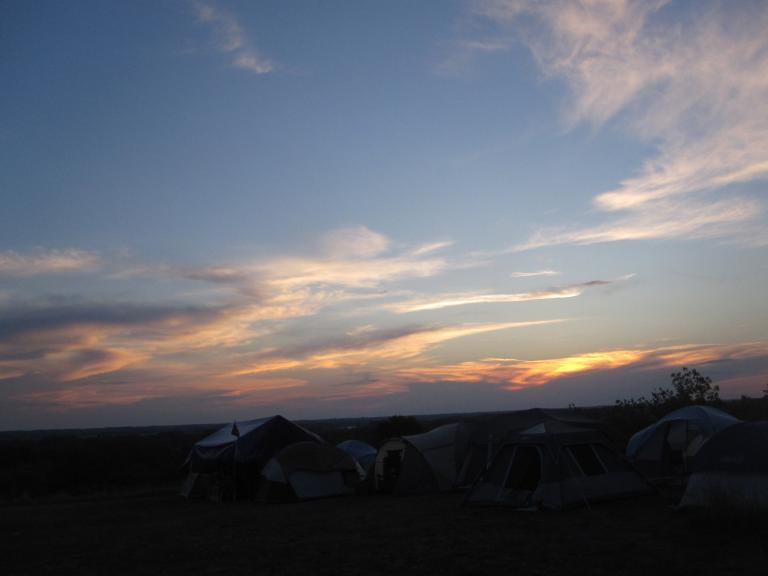
(c) 2018 Sam Wagar
I won’t name anyone here, but it is simply true that we often learn more from failures than successes. Inevitably, over my thirty-six years as a Pagan I have been involved in and around and aware of many Pagan and Wiccan organizations and also aware of other religious bodies, successful and not so successful. Lessons drawn from the successes have shaped my temple organization. Negative experiences from various Pagan and other organizations also went into the mix and enabled me to avoid a few errors of theology and organization.
The very numerous short-lived covens centred on a charismatic individual, generally formed by teenagers with no formal training and no mentor or apprenticeship in group work, drawing from this or that popular author are examples of enthusiasm and the do it yourself anti-hierarchic mindset. They persist for periods of time, general four to six months, and are helpful in getting people started but no more than that. Once in a while they continue longer but remain a small group of friends – recruitment is by affinity and there is no interest in growing in size or influence.
There are groups, some legally incorporated, that are centred on the one all-knowing High Priest/ess, grown up versions of the same fallacy. If the founder does know something these client cults can do pretty well for some years, but they grow to a certain point, about the size where the charismatic influence of the main figure wanes, generally a maximum of 50 to 100, and constantly lose members after that. They don’t start daughter groups although people trained in these kinds of traditions and groups may go off and start up client cults of their own using similar ideas, much like the proliferation of New Age groups descended from Scientology more-or-less directly. These groups centred on charismatic all-knowing leaders are full of exploitation ranging from financial manipulation to sexual exploitation, because who can call a guru to account?

(c) 2018 Sam Wagar
A less institutional version of the client cult has travelling evangelists who fly into a city to undertake workshops or special ritual performances or the like, for a decent fee, and then head out again. They leave, in their wake, no solid foundation to build self-organizing community, no local expertise, and no local organization beyond the agents of the client cult whose job is to book the next appointment with the outside star of the show.
There are groups that focus on the minutia of esoteric knowledge that consider themselves to be Mystery schools. People learn twenty different types of invocation, but all from the comfort of their living rooms on the computer. All are welcomed for a fee. But there is no practice and no community activities and no real people meeting one another face to face, although they often ‘Initiate’ people, long-distance.
Religious organizations tend to attract the walking wounded – people who come because of damage in their lives, physical or psychological problems, life crises and the variety of ills and troubles of life. This is natural, and most people get better after nurture and loving support and move along with their lives. There is a fraction of the people who come to us, however, that are so damaged and either unaware of their destructive tendencies or content with their path in life that they can cause a great deal of damage to other people and to the organization and its mission and will not get their lives in order.
These people are a key issue for leaders and temples – an excellent handbook on dealing with them is Haugk’s Antagonists in the Church. What characterizes them is an exaggerated version of issues in the Pagan community in general – a feeling of entitlement, very low self-esteem, a mixture of hero worship directed toward anyone in authority coupled with a intense cynical desire to see anyone that is better than them fail and fall, obsessive detail orientation and general obsessiveness. Antagonists are constantly working to undercut leaders and groups that are not centred on them, while being incapable of organizing anything by themselves.

(c) 2018 Sam Wagar
When a group has no specific task or mission, the people in it turn their energies to controlling others in the group. When a group is involved in a task, people learn to get along with others as they are and to subsume dislikes for the sake of the larger goals. There are limits placed on the compulsion to remould every person into our image of what they should be.
Formal structures based on transparent and fair rules agreed to by everyone, which apply fairly and equally to every person are the best way to protect the organization from gossip, whisper campaigns, faction fights and the deadly wearing of constant niggling attacks and questioning of all decisions. If nepotism is impossible or transparent, rumour loses force. If discipline is clear and quick and fair, accusations of favouritism are meaningless. In other words, professional functioning and organization that is for everyone’s benefit and remaining centred on the mission rather than the benefit of any one person or leader is the best guarantor of the mission and the group.
The best guarantees of the long-term health of the movement and the success of our service to the Gods are things we should be pursuing for their own sake anyhow: honesty, democratic self-government of groups, formally delegated authority to leaders, transparent functioning and free exchange of information. Honest acknowledgement of errors, correcting oneself, where possible repairing damage done – these precepts are simply good management as well as good ethics.

(c) 2018 Sam Wagar
If there are no public Wiccan temples active in an area people who have an itch for spiritual community service will look elsewhere. Many turn to other spiritual organizations to give them the kind of structured effective activity that they have not been able to find in the Pagan/Wiccan communities. New Age groups that view Wicca, Goddess-spirituality, and Paganism as only options among many others find our communities a recruiting ground for new members. There is no need for such organizations, nor the Ceremonialist and Western Mysteries groups on the other side, to infiltrate. The desire for meaningful spiritual development and activity generated for people by discovering an anti-Patriarchal spiritual movement is sufficient to make them eager to join other organizations when the movement itself provides insufficient outlets for their new ideas and energies.
We must be willing to bring differences of opinion out into the open in coherent theological arguments, to acknowledge that Wicca has theological absolutes to prevent our movement from being absorbed into the New Age and lose its distinct character and particular service to the Gods. It might be easier to rationalise exclusion of the members of opposing factions, by such unethical means as accusations of sexism, authoritarianism and power-hunger, and through heterophobia, means that have been used in the “anti-hierarchic” groups. But open democratic discussion is better for our spiritual and personal development. It is those groups that are in greatest need of theological rigour and true democracy that are often least capable of creating it. The more unstructured a group is, the more it adheres to the fuzzy theology and the ideology of anti-hierarchy the more vulnerable it is to being taken over by a group of New Agers, or to raids from other factions in the Pagan and Wiccan community.

About Samuel Wagar
I've been doing this Witch thing for a long time (since 1982) but I'm still having fun. Now that I'm an old fart, my focus has switched from doing a lot of things to mentoring, teaching, and writing. I'm a chaplain at University of Alberta, in charge of the Congregationalist Wiccan Assembly of Alberta's clergy training program, a doctoral candidate in theology, and the dean of the baby Edmonton Wiccan Seminary. You can read more about the author here.
Previous Post

September 5, 2018
Parent Rite of Passage
Next Post

September 13, 2018 Just the Start of School Again
Browse Our Archives
Select a Category Uncategorized
Select a Month September 2018 August 2018 July 2018 June 2018 May 2018 April 2018
Follow Us!
TAKE THE
Religious Wisdom Quiz
What was Nehemiah's royal position?
Select your answer to see how you score.
Cupbearer Priest Governor Soldier
Related posts from Translating Worlds




Temple Publicity and Public Information Tips
TRENDING AT PATHEOS Pagan

I was recently chatting with someone on Instagram. She asked me what...

While there are many people who share their results, the end of...

On July 23, I saw Christopher Nolan's The Odyssey which is Homer’s...

As I write this two big events have just finished up. One...

Restoring the Watershed of Divine Love
Perhaps cooperation is not something we manufacture through legislation, ideology, or moral...

Many UUs don’t pray because of bad experiences in a previous religion,...
view all Pagan blogs
Ad-Free & Subscriber Log-In Subscription Support
- About Us
- 2026 Calendar
- Videos
- Podcasts
- Library of World Religions
- Faith In Media Tracker
- Advertise With Us
- Write for Us
- Privacy Policy
- Terms of Service
- Do Not Sell My Data
- Contact Us
- Radiant Digital
- Manage Newsletter Subscriptions
- Unsubscribe From Notifications
- Sitemap
Copyright 2008-2026, Patheos. All rights reserved.
Subscription Support Ad-Free & Subscriber Log-In
Follow Patheos