
BuddhistCatholicContemplativeEvangelicalGeneral ChristianHinduJewishLatter-day SaintMuslimNew VisionsProgressive Christian
Beliefs
- Buddhist
- Catholic
- Contemplative
- Evangelical
- General Christian
- Hindu
- Jewish
- Latter-day Saint
- More Voices
- Muslim
- New Visions
- Pagan
- Progressive Christian
Topics
- Religion News
- Food and Religion
- Sports and Religion
- Religious Art
- Religious Music and Entertainment
- Religious Events
- History and Religion
- Style and Religion
- Politics and Religion
- Women in Religion
- Recreation Outdoors and Religion
- Business Finance and Religion
- Careers Workplace and Religion
- Education and Religion
- Family Parenting and Religion
- Health Fitness and Religion
- Home and Religion
- Relationships and Religion
- Technology and Religion
- Travel and Religion
Columnists
- Buddhist Columnists
- Business Finance and Religion Columnists
- Careers Workplace and Religion Columnists
- Catholic Columnists
- Contemplative Columnists
- Education and Religion Columnists
- Evangelists Columnists
- Family Parenting and Religion Columnists
- General Christian Columnists
- Health Fitness and Religion Columnists
- Hindu Columnists
- History and Religion Columnists
- Home and Religion Columnists
- Jewish Columnists
- More Voices Columnists
- Latter Day Columnists
- Muslim Columnists
- New Visions Columnists
- Nonreligious Columnists
- Pagan Columnists
- Politics and Religion Columnists
- Progressive Columnists
- Recreation Outdoors and Religion Columnists
- Relationships and Religion Columnists
- Religion News Columnists
- Religious Art Columnists
- Religious Events Columnists
- Religious Music and Entertainment Columnists
- Sports and Religion Columnists
- Style and Religion Columnists
- Technology and Religion Columnists
- Travel and Religion Columnists
- Women in Religion Columnists
Resource Library
- 2026 Calendar
- Library of World Religions
- The 100 Most Holy Places on Earth
- Patheos Answers
- Podcasts
- Videos
- Faith Leaders Database
- Anglican Episcopalian
- Bahai
- Baptist
- Buddhism
- Christianity
- Confucianism
- Eastern Orthodoxy
- Hinduism
- Holiness and Pentecostal
- ISKCON
- Islam
- Judaism
- Lutheran
- Methodist
- The Church of Jesus Christ of Latter-day Saints
- New Age
- Paganism
- Presbytarian and Reformed
- Protestantism
- Religion Behind the Scenes
- Roman Catholic
- Scientology
- Shia Islam
- Sikhism
- Sufism
- Sunni Islam
- Taoism
- Zen
- See all religions
Research Tools
 Ad-Free & Subscriber Log-In Subscription Support
Ad-Free & Subscriber Log-In Subscription Support
Follow Patheos 

- Trending:
- Forgiveness
- |
- Marriage
- |
- Consciousness
- |
- Death Penalty
- |
- Election
- |
- Halloween
 Translating Worlds
- Home
- Pagan
- Ritual and Transformation
Ritual and Transformation
Last updated on: June 19, 2018 at 3:12 am by Samuel Wagar
Ritual and Transformation 2018-06-19T03:12:58-07:00 Samuel Wagar
Patheos Explore the world's faith through different perspectives on religion and spirituality! Patheos has the views of the prevalent religions and spiritualities of the world.
Communitas has an existential quality; it involves the whole person in relation to other whole persons… Communitas has also an aspect of potentiality… relations between total beings are generative of symbols and metaphors and comparisons… Communitas breaks in through the interstices of structure, in Liminality; at the edges of structure, in marginality; and from beneath structure, in inferiority. It is almost everywhere held to be sacred or ‘holy’ possibly because it transgresses or dissolves the norms that govern structured and institutional relationships and is accompanied by experiences of unprecedented potency. – Victor Turner
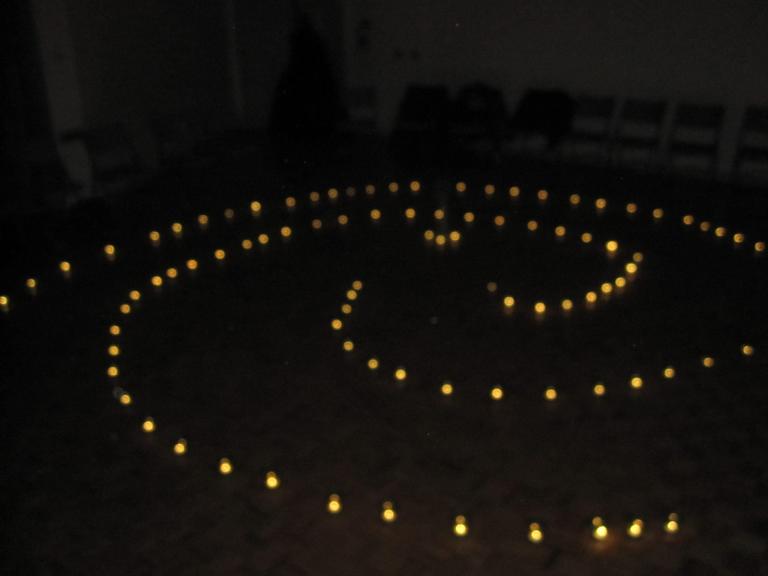
(c) 2018 Sam Wagar
In ritual we take an ordinary time and place, and place it outside of time and space, and then we bring it back again. Ritual action can cause changes in the participants and in the world they live in through switching between frames of reference that both fit together well, and that don’t fit under the usual rules of our lives. Ritual that works dances between the symbolic and infinite and the mundane, expressing conflicting qualities of our experience. This play of incongruity transforms the ordinary from one reality to another while at the same time retaining the original state of ordinariness. Ritual is sacramental actions that tell us something about ordinary matter and substance as they transform it. The profane and sacred are part of one another – the capacity to be made dirty meaning sacred, of being made pure marking the profane, so that these opposites are in fact inseparable requirements of one another. The sacred does not exist without the profane or the profane without the sacred. It is the making sacred (sacramental) quality of ritual that makes it worth doing.

(c) 2018 Sam Wagar
This is true of ritual that has nothing to do with spirituality or the sacred as well. We take an ordinary time and make it extraordinary in order that something extraordinary can happen there – a boy become a man, a hero be properly honoured, even an athlete can be presented with a medal. The Olympic ceremonies when medals are awarded mark transformations of a sort, as do graduation ceremonies.
These ceremonies are performed in public – the rituals are for the community to honour the individual and her or his accomplishment or fulfillment of a role. The individuals take on archetypal qualities – the person becomes the Hero, the athlete the Champion. They take on these archetypal qualities and are transformed.
Ritual also is a means of repairing rifts in society or in the cosmic order, a way of cleansing oneself or the group after some kind of deeply polluting act. In some cultures, prior to and after going off to war, men were ritually cleaned. This was done not only to prepare them and strengthen them but in recognition that the taking of a life is a highly polluting and contaminating thing, dangerous to the person and to the social order. In the same vein, women went for periods of time after child birth or while menstruating, to live in special houses because the power that they had at these times was deemed dangerous to the social order and to the men they might be in contact with.
After Foucault, one could see the rituals of segregation of criminals and the insane through the court systems as another kind of ritual against pollution, protecting society and providing a special environment in which the criminal was to rehabilitate himself through labour or reflection and the insane person was to have the opportunity to heal. The literal therapeutic or rehabilitative function of these institutions is less important (and highly dubious) than their symbolic value as heterotopian institutional, ritual, settings. The emotional loading around the periodic irrational spasms of “tough on crime” rhetoric indicates that this ritual function still is highly important – this is the religious response of a desire for social purgation and cleansing of pollution, not a rational response to a real world problem!
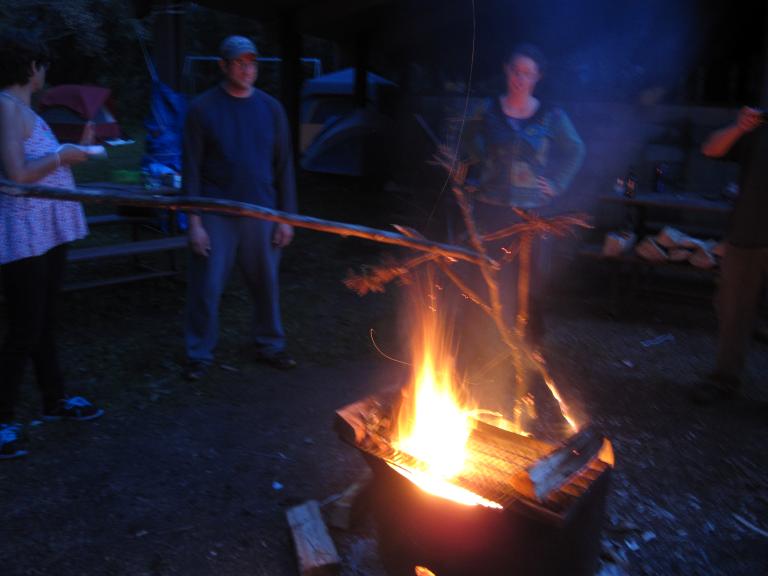
(c) 2018 Sam Wagar
So, by incarceration, the individual is to be transformed, the society cleansed, the polluting element of crime removed. By the public ritual shaming of yet another politician or celebrity caught with her or his pants down we reaffirm the sexual purity of society and through their ritual pilgrimage to stay in a “sexual addiction” treatment facility they do penance and emerge purified of the evil. It is the moral “evil” and the pollution of the moral character of the individual and of society that are dealt with through these modern and secular rituals. It is an impulse that in previous centuries would have resulted in penance or pilgrimages of a more directly religious kind. The idea of taboo is key here – the act as a violation of the natural order that contaminates and pollutes the universe and requires a communal cleansing. Ritual must have two parts – positive efforts to weave the nourishing powers and acts of the Goddess into our daily lives and into our culture at large but also the purification and sense of renewal.
Ritual has a tendency to spread out as well – Foucault uses the example of confession which proliferated into the many ways that people speak about themselves, especially their sexual selves. However, it retained its sense of sin and of penance even as it became medicalized, retained some element of shame even as privacy is reduced to a huge degree. And this ritual and its focus on the problematic body in relationship with other bodies, created the social idea of sexuality, and the myriad of different variations on sexuality.
Next week “Ritual of Life Passages”

About Samuel Wagar
I've been doing this Witch thing for a long time (since 1982) but I'm still having fun. Now that I'm an old fart, my focus has switched from doing a lot of things to mentoring, teaching, and writing. I'm a chaplain at University of Alberta, in charge of the Congregationalist Wiccan Assembly of Alberta's clergy training program, and the dean of the baby Edmonton Wiccan Seminary. You can read more about the author here.
Previous Post

June 13, 2018
Mission and Pride
Next Post
June 20, 2018 "What's done in the dark will be brought to the light"
Browse Our Archives
Select a Category Uncategorized
Select a Month September 2018 August 2018 July 2018 June 2018 May 2018 April 2018
Follow Us!
TAKE THE
Religious Wisdom Quiz
What does 2 John emphasize believers should walk in?
Select your answer to see how you score.
Love and truth Fear and wisdom Knowledge and power Faith and law
Related posts from Translating Worlds



Temple Publicity and Public Information Tips
TRENDING AT PATHEOS Pagan

I was recently chatting with someone on Instagram. She asked me what...

While there are many people who share their results, the end of...

On July 23, I saw Christopher Nolan's The Odyssey which is Homer’s...

As I write this two big events have just finished up. One...

Restoring the Watershed of Divine Love
Perhaps cooperation is not something we manufacture through legislation, ideology, or moral...

Many UUs don’t pray because of bad experiences in a previous religion,...
view all Pagan blogs
Ad-Free & Subscriber Log-In Subscription Support
- About Us
- 2026 Calendar
- Videos
- Podcasts
- Library of World Religions
- Faith In Media Tracker
- Advertise With Us
- Write for Us
- Privacy Policy
- Terms of Service
- Do Not Sell My Data
- Contact Us
- Radiant Digital
- Manage Newsletter Subscriptions
- Unsubscribe From Notifications
- Sitemap
Copyright 2008-2026, Patheos. All rights reserved.
Subscription Support Ad-Free & Subscriber Log-In
Follow Patheos