
BuddhistCatholicContemplativeEvangelicalGeneral ChristianHinduJewishLatter-day SaintMuslimNew VisionsProgressive Christian
Beliefs
- Buddhist
- Catholic
- Contemplative
- Evangelical
- General Christian
- Hindu
- Jewish
- Latter-day Saint
- More Voices
- Muslim
- New Visions
- Pagan
- Progressive Christian
Topics
- Religion News
- Food and Religion
- Sports and Religion
- Religious Art
- Religious Music and Entertainment
- Religious Events
- History and Religion
- Style and Religion
- Politics and Religion
- Women in Religion
- Recreation Outdoors and Religion
- Business Finance and Religion
- Careers Workplace and Religion
- Education and Religion
- Family Parenting and Religion
- Health Fitness and Religion
- Home and Religion
- Relationships and Religion
- Technology and Religion
- Travel and Religion
Columnists
- Buddhist Columnists
- Business Finance and Religion Columnists
- Careers Workplace and Religion Columnists
- Catholic Columnists
- Contemplative Columnists
- Education and Religion Columnists
- Evangelists Columnists
- Family Parenting and Religion Columnists
- General Christian Columnists
- Health Fitness and Religion Columnists
- Hindu Columnists
- History and Religion Columnists
- Home and Religion Columnists
- Jewish Columnists
- More Voices Columnists
- Latter Day Columnists
- Muslim Columnists
- New Visions Columnists
- Nonreligious Columnists
- Pagan Columnists
- Politics and Religion Columnists
- Progressive Columnists
- Recreation Outdoors and Religion Columnists
- Relationships and Religion Columnists
- Religion News Columnists
- Religious Art Columnists
- Religious Events Columnists
- Religious Music and Entertainment Columnists
- Sports and Religion Columnists
- Style and Religion Columnists
- Technology and Religion Columnists
- Travel and Religion Columnists
- Women in Religion Columnists
Resource Library
- 2026 Calendar
- Library of World Religions
- The 100 Most Holy Places on Earth
- Patheos Answers
- Podcasts
- Videos
- Faith Leaders Database
- Anglican Episcopalian
- Bahai
- Baptist
- Buddhism
- Christianity
- Confucianism
- Eastern Orthodoxy
- Hinduism
- Holiness and Pentecostal
- ISKCON
- Islam
- Judaism
- Lutheran
- Methodist
- The Church of Jesus Christ of Latter-day Saints
- New Age
- Paganism
- Presbytarian and Reformed
- Protestantism
- Religion Behind the Scenes
- Roman Catholic
- Scientology
- Shia Islam
- Sikhism
- Sufism
- Sunni Islam
- Taoism
- Zen
- See all religions
Research Tools
 Ad-Free & Subscriber Log-In Subscription Support
Ad-Free & Subscriber Log-In Subscription Support
Follow Patheos 

- Trending:
- Forgiveness
- |
- Marriage
- |
- Consciousness
- |
- Death Penalty
- |
- Election
- |
- Halloween
 Translating Worlds
- Home
- Pagan
- Building a Body of Lore
Building a Body of Lore
Last updated on: May 1, 2018 at 3:20 pm by Samuel Wagar
Building a Body of Lore 2018-05-01T15:20:39-07:00 Samuel Wagar
Patheos Explore the world's faith through different perspectives on religion and spirituality! Patheos has the views of the prevalent religions and spiritualities of the world.
What Is Lore
Lore, briefly, is the body of common knowledge shared by a group of people. It is “the things everybody knows”, “the things everybody needs to know”, “the way we do things” – specialized in-group knowledge, styles, technical expertise, and language that may or may not have any practical, direct, utility but serves as a general framework of ideas and practices inside a particular group. Doxa, the ‘common-sense’ that ‘everybody knows’ is created in society as a folk process
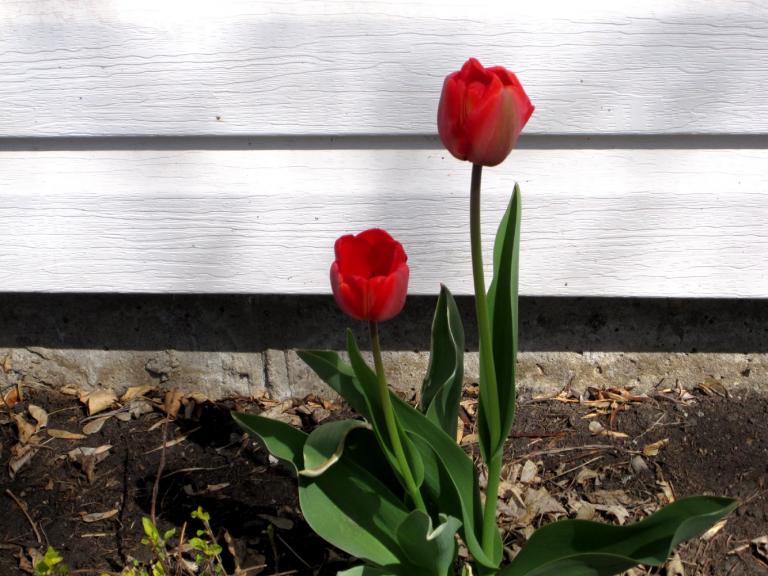
(c) 2018 Sam Wagar Spring is springing!
There was a time, not that long ago, when a common set of reference points anchored our whole culture. There was a common store of stories, myths, and songs as well as ideas about religion that were close to universally known. They were principally Christian stories and ideas, supplemented with Shakespeare – these were the common lore and property of our culture. Because of this common lore people of a range of backgrounds and differences could nonetheless easily and quickly communicate complex associations and ideas to each other, with this shorthand of common symbols. It was a kind of cultural community property, a shared cultural capital.
The Wicca-based religious movement also has an accumulated body of lore, including stories, history, rituals, songs, dances, myths and theology. Some are things we borrowed or appropriated from other places – from other religions or cultures, from research into the origins of our beliefs and mythology, and even from popular fiction – but many of these things we have made up or the Gods have given us. It is through this body of lore that we can make meaningful experiences and pass along insights about the Gods and our relationships to Them, and develop these insights together. We can rebuild this lost cultural, spiritual capital.
Because of the belief that older ways and ideas are somehow more ‘authentic’ we don’t prize our own creativity or acknowledge our folklore processes enough. But many traditions claiming to be ancient were really created recently and the claims of great antiquity are frequently part of the process of the creation of authenticity. In this conversation I am going to say that what is authentic is what works without stealing intellectual or cultural property or lying about origins. My rituals frequently are examples of bricolage but I always cite my sources and develop the ideas I borrow to suit my purposes and our beliefs.
(c) 2018 Sam Wagar
This religious movement really has several bodies of lore, which initially were inspired by the same things but which have grown separately, one or more for each of the main approaches to our common religion. Group of believers and practitioners accumulate common songs and stories which have value and meaning and are useful to them, but which are less useful to people that do not share their fundamental beliefs and assumptions and reference points.
As ordinary Pagans undertake research into the mythology and stories of the Gods they are involved with, by reading some of the classic literature to understand how our ancestors interacted with these Gods, and through performance of ritual and reflection on it, a body of theology and references develops. By retelling the stories, writing and singing songs, and through the casual everyday relationships believers will develop with our Gods, and principally through our use of these ideas, chants, references and so on, a body of lore comes into existence. Nothing too mysterious or complicated involved and not something that only the Grand Poobah or Exalted Lore-Mistress of your group can do or talk about.
These bodies of lore tend to be self-reinforcing and internally consistent – that is, parts of it refer to other parts of it, although they are not monolithic and closed – authors in the same stream of things tend to quote each other, rituals refer to particular calendar dates, particular myths and stories are referred to much more often than others and so on. And so gradually different bodies of lore become more and more distinct and it becomes obvious that the groups using them are different.
(c) 2018 Sam Wagar
These bodies of lore also include those lists of “what it is important to know” ranging from herbalism to details of mythology and ritual (whether or not these things will ever be used – often esoteric details or specialized knowledge are only used as markers of membership in a group, and not for any practical purpose). Each overlapping body of lore is tied to practice, however – to religious and ritual practice. And it is the ritual-linked lore that I am concerned with here. High Church Inner Court and Low Church Outer Court ( reflecting my Anglican origins here – Anglicans distinguish High and Low Church (Protestant and Anglo-Catholic branches, which I’ll analogize with Inner and Outer Court) work with the same general bodies of lore as do Orthodox, Conservative, Reform and Reconstructionist ( this Jewish distinction between Orthodox etc seems more useful – to see a spectrum of belief and practice within our movement rather than an either / or binary) differing in the latter cases by how much they are willing to add in and expand past the clear boundaries of Wiccan ritual and beliefs. I am Conservative in that spectrum, generally developing a ritual and practice similar to Gardnerian Wicca, but comfortable with experiment and mix and match within that overall approach.
We also need to distinguish between OrthoDOXY and OrthoPRAXY – between “correct” beliefs and practice – again, I am more interested here in practice than beliefs.
Next week “How to Choose What to Include?”
Previous Post

April 27, 2018
Introducing Sam Wagar
Next Post
May 2, 2018 How to be a Wiccan Chaplain
Browse Our Archives
Select a Category Uncategorized
Select a Month September 2018 August 2018 July 2018 June 2018 May 2018 April 2018
Follow Us!
TAKE THE
Religious Wisdom Quiz
What does God question Job about, showing His wisdom in creation?
Select your answer to see how you score.
Battles Kingdoms Animals and nature Religious rituals
Related posts from Translating Worlds



Temple Publicity and Public Information Tips
TRENDING AT PATHEOS Pagan

I was recently chatting with someone on Instagram. She asked me what...

While there are many people who share their results, the end of...

On July 23, I saw Christopher Nolan's The Odyssey which is Homer’s...

As I write this two big events have just finished up. One...

Restoring the Watershed of Divine Love
Perhaps cooperation is not something we manufacture through legislation, ideology, or moral...

Many UUs don’t pray because of bad experiences in a previous religion,...
view all Pagan blogs
Ad-Free & Subscriber Log-In Subscription Support
- About Us
- 2026 Calendar
- Videos
- Podcasts
- Library of World Religions
- Faith In Media Tracker
- Advertise With Us
- Write for Us
- Privacy Policy
- Terms of Service
- Do Not Sell My Data
- Contact Us
- Radiant Digital
- Manage Newsletter Subscriptions
- Unsubscribe From Notifications
- Sitemap
Copyright 2008-2026, Patheos. All rights reserved.
Subscription Support Ad-Free & Subscriber Log-In
Follow Patheos