
BuddhistCatholicContemplativeEvangelicalGeneral ChristianHinduJewishLatter-day SaintMuslimNew VisionsProgressive Christian
Beliefs
- Buddhist
- Catholic
- Contemplative
- Evangelical
- General Christian
- Hindu
- Jewish
- Latter-day Saint
- More Voices
- Muslim
- New Visions
- Pagan
- Progressive Christian
Topics
- Religion News
- Food and Religion
- Sports and Religion
- Religious Art
- Religious Music and Entertainment
- Religious Events
- History and Religion
- Style and Religion
- Politics and Religion
- Women in Religion
- Recreation Outdoors and Religion
- Business Finance and Religion
- Careers Workplace and Religion
- Education and Religion
- Family Parenting and Religion
- Health Fitness and Religion
- Home and Religion
- Relationships and Religion
- Technology and Religion
- Travel and Religion
Columnists
- Buddhist Columnists
- Business Finance and Religion Columnists
- Careers Workplace and Religion Columnists
- Catholic Columnists
- Contemplative Columnists
- Education and Religion Columnists
- Evangelists Columnists
- Family Parenting and Religion Columnists
- General Christian Columnists
- Health Fitness and Religion Columnists
- Hindu Columnists
- History and Religion Columnists
- Home and Religion Columnists
- Jewish Columnists
- More Voices Columnists
- Latter Day Columnists
- Muslim Columnists
- New Visions Columnists
- Nonreligious Columnists
- Pagan Columnists
- Politics and Religion Columnists
- Progressive Columnists
- Recreation Outdoors and Religion Columnists
- Relationships and Religion Columnists
- Religion News Columnists
- Religious Art Columnists
- Religious Events Columnists
- Religious Music and Entertainment Columnists
- Sports and Religion Columnists
- Style and Religion Columnists
- Technology and Religion Columnists
- Travel and Religion Columnists
- Women in Religion Columnists
Resource Library
- 2026 Calendar
- Library of World Religions
- The 100 Most Holy Places on Earth
- Patheos Answers
- Podcasts
- Videos
- Faith Leaders Database
- Anglican Episcopalian
- Bahai
- Baptist
- Buddhism
- Christianity
- Confucianism
- Eastern Orthodoxy
- Hinduism
- Holiness and Pentecostal
- ISKCON
- Islam
- Judaism
- Lutheran
- Methodist
- The Church of Jesus Christ of Latter-day Saints
- New Age
- Paganism
- Presbytarian and Reformed
- Protestantism
- Religion Behind the Scenes
- Roman Catholic
- Scientology
- Shia Islam
- Sikhism
- Sufism
- Sunni Islam
- Taoism
- Zen
- See all religions
Research Tools
 Ad-Free & Subscriber Log-In Subscription Support
Ad-Free & Subscriber Log-In Subscription Support
Follow Patheos 

- Trending:
- Forgiveness
- |
- Marriage
- |
- Consciousness
- |
- Death Penalty
- |
- Election
- |
- Halloween
 Translating Worlds
- Home
- Pagan
- Creating One’s Own Body of Lore
Creating One’s Own Body of Lore
Last updated on: May 14, 2018 at 9:17 pm by Samuel Wagar
Creating One’s Own Body of Lore 2018-05-14T21:17:39-07:00 Samuel Wagar
Patheos Explore the world's faith through different perspectives on religion and spirituality! Patheos has the views of the prevalent religions and spiritualities of the world.
Creating One’s Own?
In Wicca-based Paganism there is a strong feeling that one should create one’s own tradition. I would have to say that this “freedom” to create one’s own is substantially an illusion and is one of the ideological assumptions of the Reclaiming influenced stream of things (or more so than any other).
Individuals demand the authority to define themselves in all areas of life but we also desire community, family and meaning as members of social groups, and desire the pleasure of communion with others that are like us. This can go to the extreme of tribalism, sometimes, but each of us will acknowledge some need for common belief and experience. This need for community means we must define ourselves WITH others rather than continuing to pretend or trying to have total personal control over what beliefs and, more importantly practices, constitute Wiccan essentials. This doesn’t mean imposing our definitions on anyone else, but it does mean thinking about what are reasonable boundaries to draw around our body of lore. These things are common projects and common property, deriving meaning and power not only from the individuals’ experiences but from the group that defines them and through which they were jointly created. These are social products, not idiosyncratic acts of heroic individual artistic creativity and not the special secret property of the all-knowing Lore Master.
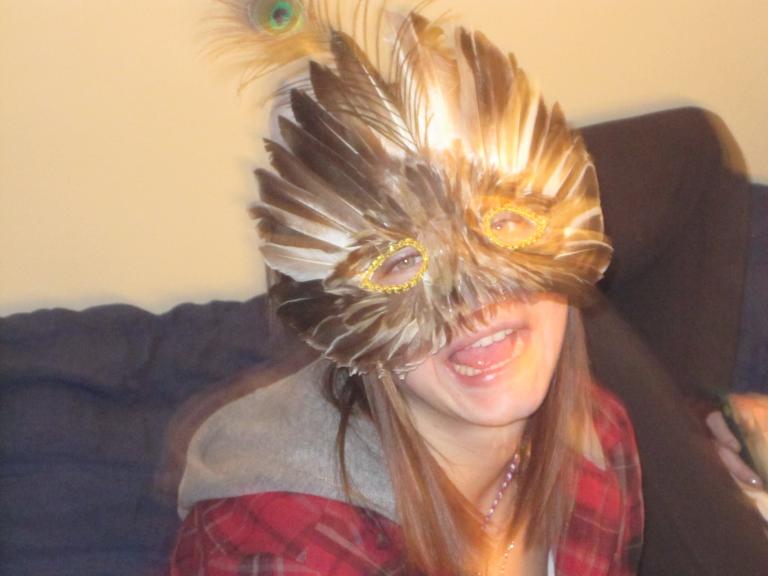
(c) 2018 Sam Wagar
We can, in other words, jointly decide what are the things that are certainly Wiccan ideas and practices, likely to be included, not so likely, and not included, so that we can go deeper and not just sprawl out wider. But without some way of accumulating and passing on a body of lore, nothing consistent can continue. So we will need to think about and act on this need and to consciously undertake the reclamation and revival of folk tradition (rather than decrying our lack of authentic tradition or inventing deep roots that are historically questionable, why not acknowledge and own our creative folk expressions?) As a corollary need, we have to effectively pass along the lore, teach people it and make it ‘second nature,’ particularly the non-intuitively-obvious ideas and techniques. And, I’m afraid, we have to accept that different factions draw the boundaries in different places and that we are not all practicing the same religion, even though we give it the same name.
I’ve previously dealt with the problem of passing along the lore in my book The Uses of Ecstasy. Let me recommend Harvey Whitehouse’s books and his cognitive theory of ritual as well. I briefly deal with it again later on in this discussion.
To the annoyance of the ‘Big Tent’ minded people those definitions that absolutely everyone can agree on fall very short of what anyone would base their personal or group practice on: the texts, the rituals and other lore, the techniques of magic, trance and the rest of it, who the authorities are that they cite in support of their version of Wiccan practice and so on. Each body of lore has different key reference points, with some overlap, and some quite sharp conflicts about legitimacy and inclusion (as for example around Ron Hutton versus Philip Heselton’s views of the antiquity of the Gardnerian traditions, or the various conflicting myths of Wicca’s origins).
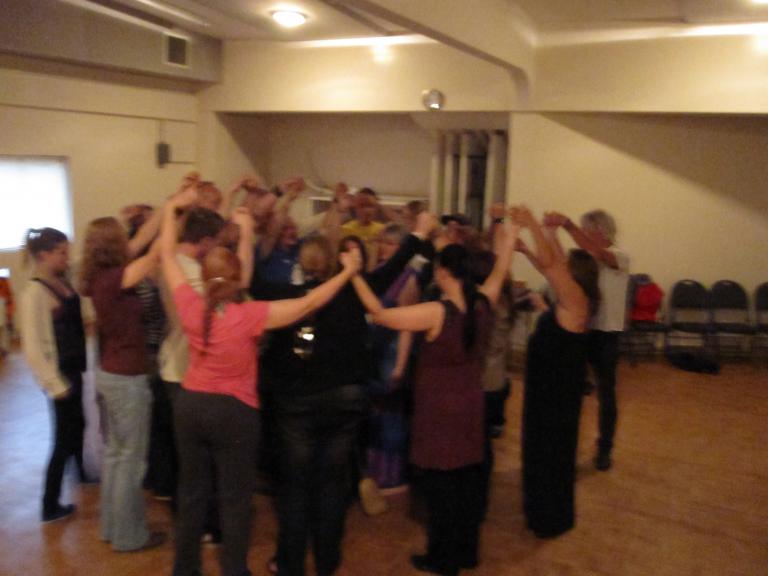
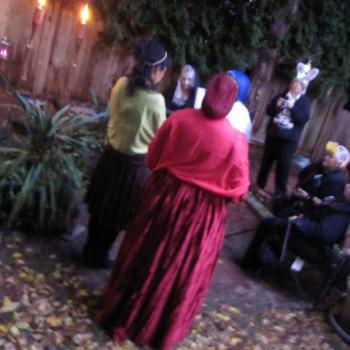
(c) 2018 Sam Wagar Blessing an ordination in our temple 2014.
I think of our religious movement as a ‘community of communities’ rather than a collection of individuals. Those who feel that Wicca is a purely individualistic path are right to be suspicious of such as me, because that’s not what I’m about. On the other hand, as I have no authority to compel anyone to accept my distinctions (nor do I want that authority) and I do not accept that authority over me from anyone else, we must all engage in respectful dialogue around these questions and agree to differ about details or cease to try to have a common religious project.
However, as a general case and away from the specifics of our teacher or our fraction of the community’s body of lore, I believe that we all have a general sense of what is undoubtedly Wiccan, what may be Wiccan, what’s probably not Wiccan and what’s not Wiccan (although it may be perfectly valid for those who like that sort of thing). If we accept that Wicca has a set of beliefs and practices which are typically Wiccan (although some will be found elsewhere), the questions are – what are they? And which beliefs and practices that are not Wiccan are acceptable in Wiccan practice, and why? And what reasonable set of criteria can be used to make these distinctions? If, for the purposes of making it possible to build a Wiccan religious community, we accept the value of making these distinctions, this is really where we must begin.
I don’t believe that any belief or practice is undeniably utterly essentially Wiccan for everyone – the basic ritual pattern of the quartered circle probably comes closest, and the Charge of the Goddess. There are some that have very strong arguments in favor and others where the arguments are much weaker. The “an ye harm none” as well as a lot of other ethics are later additions to the canon, for example, not found in the original books of shadows. The “Three-fold law” originally read more-or-less “as you are harmed, return three times but remember that you are obliged to repay good three times” and was part of an Initiation ritual for 2nd degree, not a general purpose moral injunction.
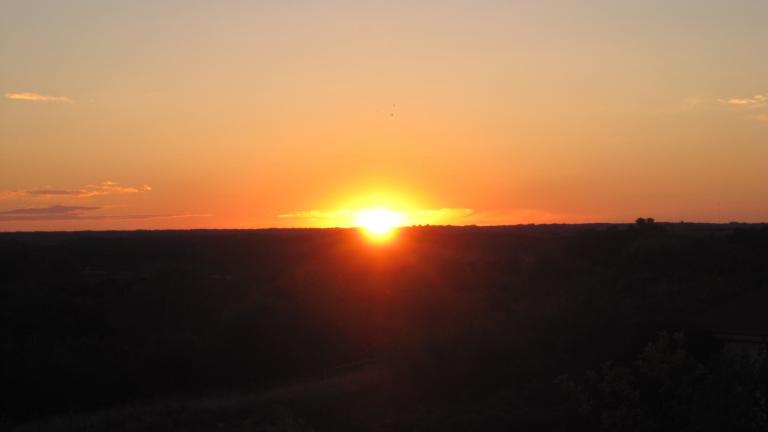
(c) 2018 Sam Wagar Solstice sunset in Saskatchewan.
And in many cases, it’s really a matter of taste and function – we could make better decisions about what we wanted to do together and how to get where we were going, just by thinking about where we wanted to go. By distilling the theological messages to essentials, adopting a cell-like structure, abandoning unnecessary ecclesiastic and theological sophistication and clinging to the central message and experience of the religion, we facilitate rapid reproduction and networking. It is not complicated and does not take a great deal of study to master the foundation ideas of a given branch of Wicca. By the adoption of a movement orientation and encouraging free flow of information and discussion, theological and ritual innovation can be encouraged without being the exclusive property of one group or ‘teacher’ or contained in one set of scriptures.
Next week “Some Practical Issues and Suggestions ”
Previous Post
May 9, 2018
Some books
Next Post

May 16, 2018 Coming to Belong Here
Browse Our Archives
Select a Category Uncategorized
Select a Month September 2018 August 2018 July 2018 June 2018 May 2018 April 2018
Follow Us!
TAKE THE
Religious Wisdom Quiz
Who wrote the majority of the Psalms?
Select your answer to see how you score.
Asaph Solomon David Moses
Related posts from Translating Worlds



Temple Publicity and Public Information Tips
TRENDING AT PATHEOS Pagan

I was recently chatting with someone on Instagram. She asked me what...

While there are many people who share their results, the end of...

On July 23, I saw Christopher Nolan's The Odyssey which is Homer’s...

As I write this two big events have just finished up. One...

Restoring the Watershed of Divine Love
Perhaps cooperation is not something we manufacture through legislation, ideology, or moral...

Many UUs don’t pray because of bad experiences in a previous religion,...
view all Pagan blogs
Ad-Free & Subscriber Log-In Subscription Support
- About Us
- 2026 Calendar
- Videos
- Podcasts
- Library of World Religions
- Faith In Media Tracker
- Advertise With Us
- Write for Us
- Privacy Policy
- Terms of Service
- Do Not Sell My Data
- Contact Us
- Radiant Digital
- Manage Newsletter Subscriptions
- Unsubscribe From Notifications
- Sitemap
Copyright 2008-2026, Patheos. All rights reserved.
Subscription Support Ad-Free & Subscriber Log-In
Follow Patheos