
BuddhistCatholicContemplativeEvangelicalGeneral ChristianHinduJewishLatter-day SaintMuslimNew VisionsProgressive Christian
Beliefs
- Buddhist
- Catholic
- Contemplative
- Evangelical
- General Christian
- Hindu
- Jewish
- Latter-day Saint
- More Voices
- Muslim
- New Visions
- Pagan
- Progressive Christian
Topics
- Religion News
- Food and Religion
- Sports and Religion
- Religious Art
- Religious Music and Entertainment
- Religious Events
- History and Religion
- Style and Religion
- Politics and Religion
- Women in Religion
- Recreation Outdoors and Religion
- Business Finance and Religion
- Careers Workplace and Religion
- Education and Religion
- Family Parenting and Religion
- Health Fitness and Religion
- Home and Religion
- Relationships and Religion
- Technology and Religion
- Travel and Religion
Columnists
- Buddhist Columnists
- Business Finance and Religion Columnists
- Careers Workplace and Religion Columnists
- Catholic Columnists
- Contemplative Columnists
- Education and Religion Columnists
- Evangelists Columnists
- Family Parenting and Religion Columnists
- General Christian Columnists
- Health Fitness and Religion Columnists
- Hindu Columnists
- History and Religion Columnists
- Home and Religion Columnists
- Jewish Columnists
- More Voices Columnists
- Latter Day Columnists
- Muslim Columnists
- New Visions Columnists
- Nonreligious Columnists
- Pagan Columnists
- Politics and Religion Columnists
- Progressive Columnists
- Recreation Outdoors and Religion Columnists
- Relationships and Religion Columnists
- Religion News Columnists
- Religious Art Columnists
- Religious Events Columnists
- Religious Music and Entertainment Columnists
- Sports and Religion Columnists
- Style and Religion Columnists
- Technology and Religion Columnists
- Travel and Religion Columnists
- Women in Religion Columnists
Resource Library
- 2026 Calendar
- Library of World Religions
- The 100 Most Holy Places on Earth
- Patheos Answers
- Podcasts
- Videos
- Faith Leaders Database
- Anglican Episcopalian
- Bahai
- Baptist
- Buddhism
- Christianity
- Confucianism
- Eastern Orthodoxy
- Hinduism
- Holiness and Pentecostal
- ISKCON
- Islam
- Judaism
- Lutheran
- Methodist
- The Church of Jesus Christ of Latter-day Saints
- New Age
- Paganism
- Presbytarian and Reformed
- Protestantism
- Religion Behind the Scenes
- Roman Catholic
- Scientology
- Shia Islam
- Sikhism
- Sufism
- Sunni Islam
- Taoism
- Zen
- See all religions
Research Tools
 Ad-Free & Subscriber Log-In Subscription Support
Ad-Free & Subscriber Log-In Subscription Support
Follow Patheos 

- Trending:
- Forgiveness
- |
- Marriage
- |
- Consciousness
- |
- Death Penalty
- |
- Election
- |
- Halloween
 Translating Worlds
- Home
- Pagan
- An Experience of Ministry
An Experience of Ministry
Last updated on: May 30, 2018 at 8:57 pm by Samuel Wagar
An Experience of Ministry 2018-05-30T20:57:54-07:00 Samuel Wagar
Patheos Explore the world's faith through different perspectives on religion and spirituality! Patheos has the views of the prevalent religions and spiritualities of the world.

Sam at a wedding invoking the God, 2014.
The annual Memorial Service that the Alumni Association of U. of Alberta puts on to remember alumni and students that died in the past year was Sunday. I was so honoured to be part of this alongside my United Church, Reform, Lutheran, and Anglican colleagues. The service is multi-faith with readings from a number of different traditions, including Wicca, music by the University Mixed Chorus (who were in very good voice, and have, unusually for choirs, some very nice baritone voices this year). I don’t get to wear my full Priest drag often and today there was me and my Lutheran and Anglican friends all robed up. I left the athame at home.
I’m musing today about the clergy/laity difference and how we might, those of us who are going forward building public temples and training and recognizing clergy, avoid some of the issues that our Christian colleagues have run into. My participation as a religious specialist in the Alumni Memorial service assisted about two hundred people to mourn together and celebrate the lives of their Honoured Dead. The experience was qualitatively different for them because the ritual leaders all knew what we were doing, were all committed and connected, trained and experienced clergy people.
The difference in roles (and it’s usually called a ‘split’ as though it were an antagonistic difference or something harmful, which I do not believe that it is) provided a deeper experience because so much of the work in providing it was done for the congregation. The choir sang beautifully, and they could experience that beauty. Comforting words from many religious traditions were delivered thoughtfully by people who had spent time with the ideas and understood the connections that they spoke of in a more complex way. And the ritual was structured with a rhythm and performed with focused intent.
We could say that any role differences are damaging, that it is better to have a poorly composed, badly performed, and weakly understood ritual of mourning performed by people with no special skills or training. Somehow, that would be more authentic and better all around. I disagree with this approach. On the other hand, I am suspicious of religious groups whose clergy are indispensable prophets and fountains of all knowledge and connection, even if they are competent ritualists. Even the best leaders will become old and die, and if they have not trained their successors, the temples will die with them.
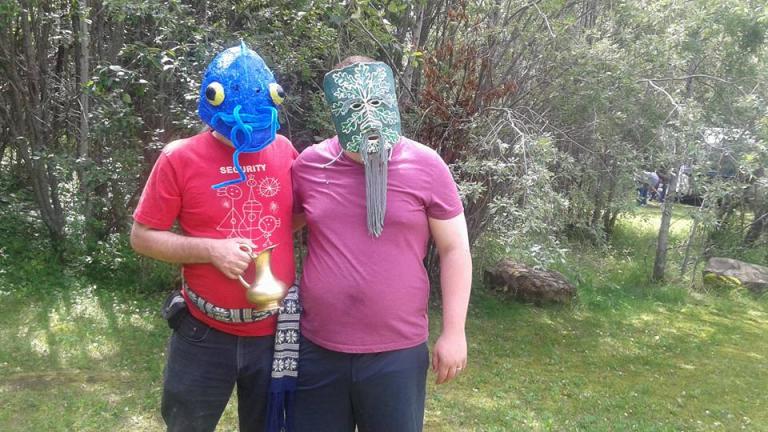
Ritual Masks at 2016 CWAA Members Retreat
As well, there are several important roles that religious leaders must have to make a successful temple and community, not just effective ritual leadership. The best that we can do is be strongly congregationalist, focus on teams of clergy with the different sets of skills that are needed, and build mentorship into everything we do.
And I am for sure committed to coven work (and I am really pleased to have recently pulled together a new coven). Because that deeper mystical path contains so much juice that just can’t be present in public temple work. I do think that it is vitally important that clergy have covens to energize and inspire them, separate from the public temple work.
Ministry is a spiritually grounded and caring engagement with other people, which is available to every person. This kind of spiritual engagement is much stronger and easier to continue if a person is a member of a religious group that supports their values and ministry in both material and non-material ways – ‘spiritual but not religious’ is typically a crock.
For what clergy people do we have some other issues. Clergy people are authorized to be clergy to and within a specific group (in my case the Sacred Oak Wiccan Temple). And we have special authority and status within that group, not in general.
In The Forgotten Ways, Alan Hirsch outlines five necessary leadership functions and styles for religious bodies to be effective. Each of these styles needs to be present, although organizations will shift in emphasis over time. Ideally, each style will have one member of a leadership team with the set of skills and a calling to fill that function. I’m going to draw from his discussion here.
His underlying theme throughout the book, which I agree with, is that religious bodies need to be outward looking, aiming to take their spiritual insights out into the world to improve it. All forms of leadership need to begin with the mission of the church, and to constantly refer to that mission. This mission is not the mission of an individual, even where there is a strong prophetic leader, but is the mission of, and calling to, the whole group. The five forms that Hirsch deals with are aspects of the clergy role, principally, although the lay leadership needs to cultivate these capacities in themselves as well.
Missional leadership, essentially the steward of the mission and foundation beliefs and practices of the church, deals with strategic issues. Visionary leadership is essentially the mystic concerned with discerning the will of the gods and ensuring obedience to them, ‘speaking truth to power’, speaking out of this vision, dealing with advocacy, social justice issues and prayer. Outreach leadership, essentially recruiters. With a strong commitment to outreach and expansion of the temple, and on making the vision real in the lives of people and in the larger community. Care leadership, essentially leading, nurturing, protecting and caring for the members of the church and others, leads worship, visits people in distress, encourages small groups for support and study. Teaching leadership clarifies the understanding of the religion, with a focus on discernment, guidance, and deepening understanding.
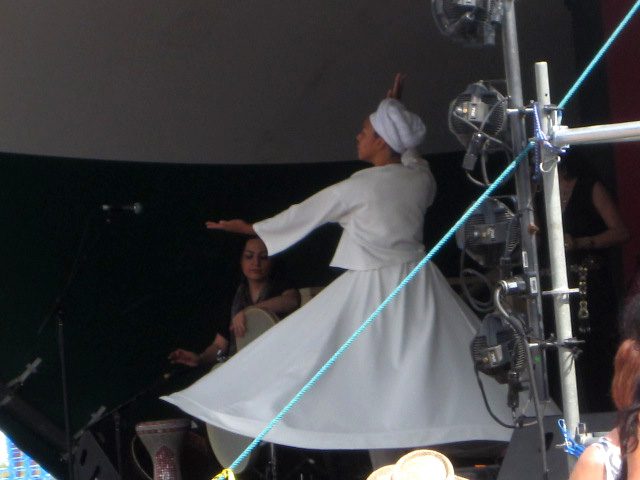
(c) 2018 Samuel Wagar Sufi dance at Edmonton Folk Festival 2014
These forms of leadership do leave out nuts and bolts issues – paying the rent, organizing events, keeping track of the membership and the finances and those essential institutional maintenance functions. These functions are areas that should be the concern of the lay members of a church, rather than clergy – a separation of the prayers and the money seems to benefit both sides.
And, a point that needs to be made – even though leadership is vitally important, and I am convinced that special responsibilities and roles for clergy people are essential for the health and growth of temple groups, the old Protestant Christian idea of the “Priesthood of all believers” contains some real value. Engaged members in temples will have friends in the congregation and will provide support to them in many ways. They will know what their personal spiritual gifts are, and they will find ways to exercise the gifts in the life of the congregation. These members will likely be involved in small groups around particular spiritual concerns, they will regularly contribute financially and with volunteer hours, they will understand and agree with church goals. They will attend regularly, and they will be likely to bring friends and members of their families out to get involved as well. And they need to be genuinely appreciated and supported as they grow spiritually and in service.
(related recent post – http://www.patheos.com/blogs/translatingworlds/2018/05/how-to-be-a-chaplain/)

About Samuel Wagar
I've been doing this Witch thing for a long time (since 1982) but I'm still having fun. Now that I'm an old fart, my focus has switched from doing a lot of things to mentoring, teaching, and writing. I'm a chaplain at University of Alberta, in charge of the Congregationalist Wiccan Assembly of Alberta's clergy training program, and the dean of the baby Edmonton Wiccan Seminary. You can read more about the author here.
Previous Post

May 28, 2018
Notes on Ritual Theory for the Wiccan Priest/ess
Next Post

June 4, 2018 Ritual is a Way of Making Meaning
Browse Our Archives
Select a Category Uncategorized
Select a Month September 2018 August 2018 July 2018 June 2018 May 2018 April 2018
Follow Us!
TAKE THE
Religious Wisdom Quiz
Which chapter of Isaiah is sometimes called the "miniature Bible"?
Select your answer to see how you score.
Isaiah 12 Isaiah 53 Isaiah 66 Isaiah 40
Related posts from Translating Worlds




Temple Publicity and Public Information Tips
TRENDING AT PATHEOS Pagan

I was recently chatting with someone on Instagram. She asked me what...

While there are many people who share their results, the end of...

On July 23, I saw Christopher Nolan's The Odyssey which is Homer’s...

As I write this two big events have just finished up. One...

Restoring the Watershed of Divine Love
Perhaps cooperation is not something we manufacture through legislation, ideology, or moral...

Many UUs don’t pray because of bad experiences in a previous religion,...
view all Pagan blogs
Ad-Free & Subscriber Log-In Subscription Support
- About Us
- 2026 Calendar
- Videos
- Podcasts
- Library of World Religions
- Faith In Media Tracker
- Advertise With Us
- Write for Us
- Privacy Policy
- Terms of Service
- Do Not Sell My Data
- Contact Us
- Radiant Digital
- Manage Newsletter Subscriptions
- Unsubscribe From Notifications
- Sitemap
Copyright 2008-2026, Patheos. All rights reserved.
Subscription Support Ad-Free & Subscriber Log-In
Follow Patheos