
BuddhistCatholicContemplativeEvangelicalGeneral ChristianHinduJewishLatter-day SaintMuslimNew VisionsProgressive Christian
Beliefs
- Buddhist
- Catholic
- Contemplative
- Evangelical
- General Christian
- Hindu
- Jewish
- Latter-day Saint
- More Voices
- Muslim
- New Visions
- Pagan
- Progressive Christian
Topics
- Religion News
- Food and Religion
- Sports and Religion
- Religious Art
- Religious Music and Entertainment
- Religious Events
- History and Religion
- Style and Religion
- Politics and Religion
- Women in Religion
- Recreation Outdoors and Religion
- Business Finance and Religion
- Careers Workplace and Religion
- Education and Religion
- Family Parenting and Religion
- Health Fitness and Religion
- Home and Religion
- Relationships and Religion
- Technology and Religion
- Travel and Religion
Columnists
- Buddhist Columnists
- Business Finance and Religion Columnists
- Careers Workplace and Religion Columnists
- Catholic Columnists
- Contemplative Columnists
- Education and Religion Columnists
- Evangelists Columnists
- Family Parenting and Religion Columnists
- General Christian Columnists
- Health Fitness and Religion Columnists
- Hindu Columnists
- History and Religion Columnists
- Home and Religion Columnists
- Jewish Columnists
- More Voices Columnists
- Latter Day Columnists
- Muslim Columnists
- New Visions Columnists
- Nonreligious Columnists
- Pagan Columnists
- Politics and Religion Columnists
- Progressive Columnists
- Recreation Outdoors and Religion Columnists
- Relationships and Religion Columnists
- Religion News Columnists
- Religious Art Columnists
- Religious Events Columnists
- Religious Music and Entertainment Columnists
- Sports and Religion Columnists
- Style and Religion Columnists
- Technology and Religion Columnists
- Travel and Religion Columnists
- Women in Religion Columnists
Resource Library
- 2026 Calendar
- Library of World Religions
- The 100 Most Holy Places on Earth
- Patheos Answers
- Podcasts
- Videos
- Faith Leaders Database
- Anglican Episcopalian
- Bahai
- Baptist
- Buddhism
- Christianity
- Confucianism
- Eastern Orthodoxy
- Hinduism
- Holiness and Pentecostal
- ISKCON
- Islam
- Judaism
- Lutheran
- Methodist
- The Church of Jesus Christ of Latter-day Saints
- New Age
- Paganism
- Presbytarian and Reformed
- Protestantism
- Religion Behind the Scenes
- Roman Catholic
- Scientology
- Shia Islam
- Sikhism
- Sufism
- Sunni Islam
- Taoism
- Zen
- See all religions
Research Tools
 Ad-Free & Subscriber Log-In Subscription Support
Ad-Free & Subscriber Log-In Subscription Support
Follow Patheos 

- Trending:
- Forgiveness
- |
- Marriage
- |
- Consciousness
- |
- Death Penalty
- |
- Election
- |
- Halloween

- Home
- New Visions
- Relationships and Religion
- Fascism and the Collective Shadow
Fascism and the Collective Shadow
Last updated on: June 11, 2025 at 7:43 pm by Dr. Mike Simmons
Fascism and the Collective Shadow 2025-06-11T19:43:24-07:00 Dr. Mike Simmons
Patheos Explore the world's faith through different perspectives on religion and spirituality! Patheos has the views of the prevalent religions and spiritualities of the world.

Photo by Koshu Kunii on Unsplash
Shadow Work Is Not Just Personal—It’s Collective
As a Shadow Work Coach, I often remind clients that the “shadow” isn’t only a personal construct—it’s communal. Carl Jung called this the collective shadow: the unconscious, denied aspects of our culture a group projects onto groups, identities, or movements. These shadows shape our politics, our religion, and our relationships—often without our awareness–and are manifesting in our collective struggle against fascism.
When we don’t reckon with how we’ve personally ingested our collective shadow, we become vulnerable to ideologies that offer simplistic answers to complex problems. This is exactly what we’re seeing in real time in Los Angeles, and broadly in today’s social and political climate: a resurgence of fascism fueled by collective repression and denial.
The One-Sided God: Christianity and the Roots of Suppression
In my previous article, I explored how Western Christianity has played a central role in shaping this collective shadow—particularly through its overemphasis on “light.” I quote David Steindl-Rast wrote:
“In its enthusiasm for the divine light, Christian theology has not always done justice to the divine darkness.”
This theological imbalance—exalting purity, perfection, and transcendence—leaves no room for the messier, wounded, more ambiguous parts of the human soul. That which doesn’t align with the ideal of perpetual and enthusiastic light, is cast out of peripheral vision. But darkness doesn’t disappear; it festers in the unconscious. And eventually, we project onto others.
Historically, Christianity’s collective shadow has been cast onto Black and Brown bodies, queer and trans people, overwhelmingly poor people, women, mystics, heretics—anyone who reflected back a repressed aspect or energy in which the collective refused to integrate. That shadow continues to operate in the collective American psyche, often dressed in political language.
Fascism: The Political Face of the Repressed Shadow
Fascism thrives wherever shadow is denied. It offers identity through opposition: you belong because you are not them. Fascism seduces with certainty, purity, and control. It idolizes sameness and demonizes difference. Underneath this is a deep fear—not just of the “other,” but of the unacknowledged parts of the self.
This is why shadow work is not a luxury—it’s a form of resistance. A society unwilling to integrate its complexity will seek to eliminate it. That’s what fascism does: it tries to externalize and eradicate the inner conflict we refuse to face.
But there’s another way.
Shadow Work as a Liberatory Practice
Shadow work guides us toward wholeness, not moral or political perfection. It looks like integration, and diversity. Liberatory shadow work is holding complexity without collapse. Wholeness is not purity. It is inclusion.
When we confront and face our shadows, we then have the agency to cease projecting them. We begin to reclaiming parts of ourselves we believed were unworthy—our bodies, our feelings, our contradictions. And in doing so, we disarm the systems that rely on our self-rejection.
If you’re a marginalized person and part of a scapegoated community, you carry a sacred piece of the collective shadow. There’s nothing more you need to do except live you’re life authentically and trust something much larger and more powerful than the United States Government is holding you. Your life is a protest, and living it is an act non-violent resistance.
And if you are someone who benefits from systems of dominance—because of your race, gender, sexuality, class, or ability—your invitation is also toward authenticity. Not performative allyship or perfection, but deep, embodied inner work. It means reclaiming the parts of you that learned to shrink your humanity in exchange for belonging or dominance. It means releasing the false self power systems reward, and stepping into a fuller, riskier, more honest life. Not from guilt—but from love. From a soulful place where your liberation is connected to everyone else’s.
Reimagining the Divine
Part of this journey involves reimagining the divine itself. If your image of God has been shaped by purity, punishment, or perfectionism, your soul may be starving for a fuller, truer encounter with the sacred. Not a sanitized deity of eternal light, but a divine presence willing to accompany you into the shadow.
Ask yourself:
- Is my God-image one-sided?
- Does it leave room for grief, rage, desire, and paradox?
- Does it honor my full humanity—or only the parts deemed “good”?
This is the spiritual work of our time: to create and embody an image of the divine spacious enough for our whole self.
Moving Forward: From Shadow to Wholeness
We are living in a moment where authoritarianism and spiritual bypass are rising in tandem. But we are also in a moment where more and more people are waking up to the cost of disconnection.
Shadow work helps us reclaim our personal and collective identity. It invites us into wholeness: the kind of wholeness that can hold contradiction, difference, and mystery without trying to resolve or erase it.
Previous Post

June 9, 2025
A Split God-image: The Cost of Dividing for Connection
Next Post

June 23, 2025 Your Shadow is Queer: Pride Offers Courageous Alignment
Browse Our Archives
Select a Category Christianity psychology Shadow Work Social Justice Spirituality Uncategorized
Select a Month July 2025 June 2025 May 2025 January 2025 September 2024 August 2024 June 2024 February 2024 January 2024 December 2023 July 2023 May 2023 February 2023 January 2023 December 2022
TAKE THE
Religious Wisdom Quiz
What did Jesus teach about judging others?
Select your answer to see how you score.
Use harsh words Judge quickly Do not judge lest you be judged Ignore everyone
Related posts from Transgressive Spirituality

Get Your Inner Gold Back From Jesus

Your Shadow is Queer: Pride Offers Courageous Alignment
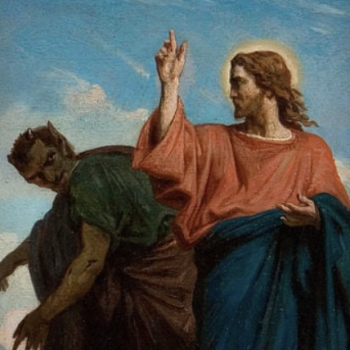
A Split God-image: The Cost of Dividing for...

Beyond Self-Help: The Power of Shadow Work
TRENDING AT PATHEOS New Visions

Did Prayer Cure His Cancer? Or Was It...
At 4 AM one morning, Joshua W. Brown’s wife awoke to a...

8 Ways a Near-Death Experience Rewires the Soul
Does Consciousness Survive Physical Death? After 50 Years of Research, Dr. Raymond...

Holy Longing: What Our Restlessness Is Telling Us
“One can find so many pains when the rain is falling.” -John...

What this is NOT about. This blog is definitely not about...

Who said the Israelites were God’s chosen? That’s right, they did. Who...

The Spirit World Is the Real World: God...
A Monk’s Wisdom on Body and Spirit I sit with Brother Martin...
view all New Visions blogs
Ad-Free & Subscriber Log-In Subscription Support
- About Us
- 2026 Calendar
- Videos
- Podcasts
- Library of World Religions
- Faith In Media Tracker
- Advertise With Us
- Write for Us
- Privacy Policy
- Terms of Service
- Do Not Sell My Data
- Contact Us
- Radiant Digital
- Manage Newsletter Subscriptions
- Unsubscribe From Notifications
- Sitemap
Copyright 2008-2026, Patheos. All rights reserved.
Subscription Support Ad-Free & Subscriber Log-In
Follow Patheos