
BuddhistCatholicContemplativeEvangelicalGeneral ChristianHinduJewishLatter-day SaintMuslimNew VisionsProgressive Christian
Beliefs
- Buddhist
- Catholic
- Contemplative
- Evangelical
- General Christian
- Hindu
- Jewish
- Latter-day Saint
- More Voices
- Muslim
- New Visions
- Pagan
- Progressive Christian
Topics
- Religion News
- Food and Religion
- Sports and Religion
- Religious Art
- Religious Music and Entertainment
- Religious Events
- History and Religion
- Style and Religion
- Politics and Religion
- Women in Religion
- Recreation Outdoors and Religion
- Business Finance and Religion
- Careers Workplace and Religion
- Education and Religion
- Family Parenting and Religion
- Health Fitness and Religion
- Home and Religion
- Relationships and Religion
- Technology and Religion
- Travel and Religion
Columnists
- Buddhist Columnists
- Business Finance and Religion Columnists
- Careers Workplace and Religion Columnists
- Catholic Columnists
- Contemplative Columnists
- Education and Religion Columnists
- Evangelists Columnists
- Family Parenting and Religion Columnists
- General Christian Columnists
- Health Fitness and Religion Columnists
- Hindu Columnists
- History and Religion Columnists
- Home and Religion Columnists
- Jewish Columnists
- More Voices Columnists
- Latter Day Columnists
- Muslim Columnists
- New Visions Columnists
- Nonreligious Columnists
- Pagan Columnists
- Politics and Religion Columnists
- Progressive Columnists
- Recreation Outdoors and Religion Columnists
- Relationships and Religion Columnists
- Religion News Columnists
- Religious Art Columnists
- Religious Events Columnists
- Religious Music and Entertainment Columnists
- Sports and Religion Columnists
- Style and Religion Columnists
- Technology and Religion Columnists
- Travel and Religion Columnists
- Women in Religion Columnists
Resource Library
- 2026 Calendar
- Library of World Religions
- The 100 Most Holy Places on Earth
- Patheos Answers
- Podcasts
- Videos
- Faith Leaders Database
- Anglican Episcopalian
- Bahai
- Baptist
- Buddhism
- Christianity
- Confucianism
- Eastern Orthodoxy
- Hinduism
- Holiness and Pentecostal
- ISKCON
- Islam
- Judaism
- Lutheran
- Methodist
- The Church of Jesus Christ of Latter-day Saints
- New Age
- Paganism
- Presbytarian and Reformed
- Protestantism
- Religion Behind the Scenes
- Roman Catholic
- Scientology
- Shia Islam
- Sikhism
- Sufism
- Sunni Islam
- Taoism
- Zen
- See all religions
Research Tools
 Ad-Free & Subscriber Log-In Subscription Support
Ad-Free & Subscriber Log-In Subscription Support
Follow Patheos 

- Trending:
- Forgiveness
- |
- Marriage
- |
- Consciousness
- |
- Death Penalty
- |
- Election
- |
- Halloween

- Home
- New Visions
- Relationships and Religion
- Living Our Unlived Life
Living Our Unlived Life
Last updated on: June 3, 2024 at 5:59 pm by Dr. Mike Simmons
Living Our Unlived Life 2024-06-03T17:59:28-07:00 Dr. Mike Simmons
Patheos Explore the world's faith through different perspectives on religion and spirituality! Patheos has the views of the prevalent religions and spiritualities of the world.
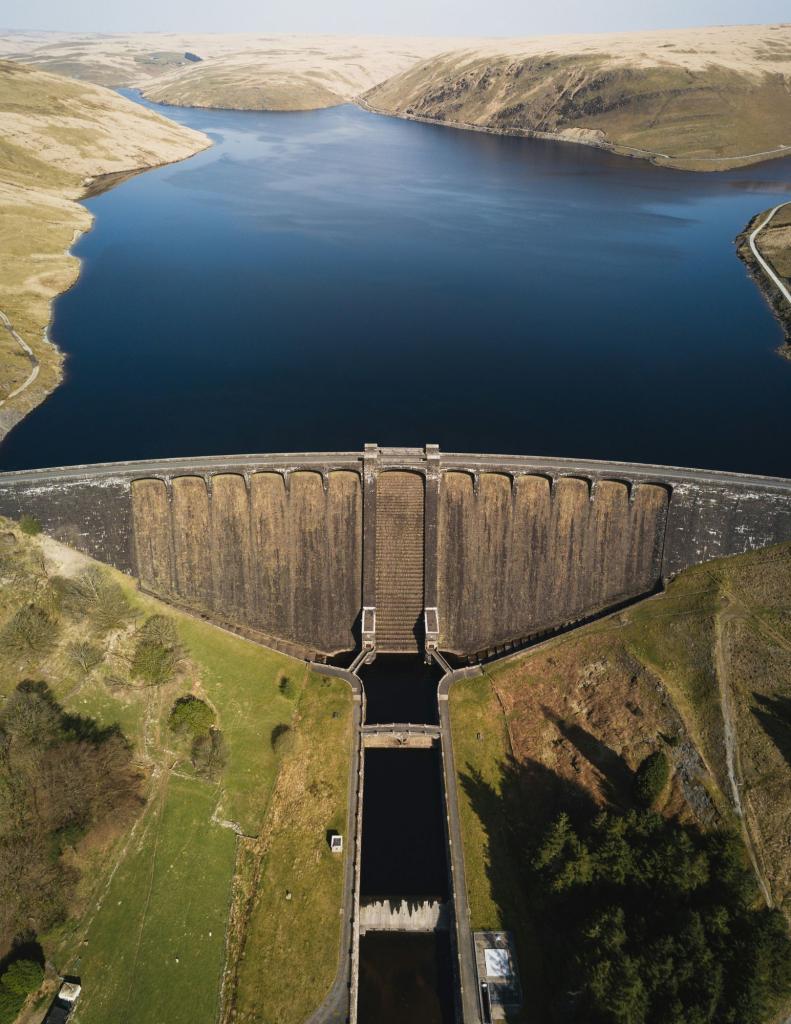
Photo by Marcus Woodbridge
Living Our Unlived Life
“Living our unlived life is the most important task in our mature years, to be achieved long before a tragedy shakes us to the bone or we reach our deathbed. To live our unlived life is to become fulfilled, to bring purpose and meaning to our existence.” – Living Your Unlived Life by Robert A. Johnson, Jerry Ruhl
What life have you not lived? Perhaps it’s a relationship, a career or simply getting to make your own decisions? What did you withhold, avoid, or bypass on your journey toward first-half-of-life-acceptance? Of course, there are many things we can’t “live” in the limited 70-80 years (or 3,500-4000 weeks) of average life-expectancy. But what about the life you could have lived, but for one reason or another, just didn’t?
The Unlived Life is Untapped Energy
The unlived life is less like a bucketlist of things left undone, and more like a reservoir of untapped raw energy (Read more in my a article, How To Address Emotional Energy Leaks. Perhaps traveling the world, for example, was never an option due to personal responsibilities, finances, etc.. But what’s your relationship with adventure, risk, or various perspectives counter to your own? When the unlived life starts to surface, we initially experience it as an “electrical surge” or a “power outage”–either an undefined anxiety and urgency, or a chronic low-grade depression and loss of vitality. Either way, our unlived life doesn’t waltz elegantly into consciousness. It disrupts our current life in service of something much larger.
Ego and the Unlived Life
“We spend our life until we’re twenty deciding what parts of ourself to put into the bag, and we spend the rest of our lives trying to get them out again.” – The Long Bag We Drag Behind Us, by Robert Bly
Our unlived life forms as our ego develops (ego is Latin for “I” and can be understood simply as who we know ourselves to be.). This is absolutely necessary! We need a solid ego to meet the personal and social demands of the “first half of life.” The life we don’t live in our ego-formation journey doesn’t disappear, but falls into the “long bag” for a time.
Depending on the gap between our social environment and our truest self, our unlived life can feel hidden deep in the bag, and feel more risky to engage or even consider. In the first half of life we can usually adequately hide our socially undesirable qualities, desires, and instincts. But in the second half of life, these primal and essential parts of our humanity begin pressing through the cracks.
Sexuality and Collective Shadow
For example, if your culture valued sexual purity, then your ego likely became devoted to upholding this value through the repression of sexual instincts. If your sexual ethic aligns with your culture’s, then you stand to receive affirmation and a host of other fringe benefits. This is because ego is primarily concerned with getting your most basic needs met, and the fastest way to do this is discover what parents, teachers, coaches, peers etc. value and adhere to it. If the collective consciousness around you represses sexuality, you’ll likely repress it too in order to meet more urgent needs such as food, shelter, safety, and general acceptance.
Sometimes, an individual can become the representative of the collective shadow. The person labeled as a whore, promiscuous, or seductive (almost always women and queer people), becomes the scapegoat for the collective sexual shadow. By becoming the collective shadow, such an individual does not get certain basic needs met. Eventually, the weight of the unlived collective life may crush her. She may spend many years trying to become herself for the first time, or even be crushed under the weight of what’s known as projective identification.
The Middle Passage (Mid-life Crisis)
“In the second half of life we are called to live everything that we truly are, to achieve greater wholeness.” – Living Your Unlived Life
By the time we are adults with solid jobs, careers, mortgages, dependents, partners, etc. the gap reaches an apex, and the symptoms radiating from our unlived life become too much to handle. Panic attacks, deep depression, gripping anxiety, existential fear, spontaneous dissolution of previously held beliefs, and escalated relational discord are common experiences here. We commonly referred to this point as the mid-life crisis.
The mid-life is less like a crossroads and more like a cave; it’s not an arrival point, but a dreadful landscape through which we must pass. It is both a tomb to bury the old, and a womb to gestate the new. It holds everything we need, but looks like everything we fear. This is because our ego formed around certain identities and beliefs, which the unlived life contradicts. Our ego sees the unlived life as threatening, even repulsive to its decidedly one-sided mission of success and social acceptance.
Our Unlived Life is Searching for Us
“[At Mid-life] we often set about rearranging things on the outside […], but what is really called for is a change of consciousness.” – Living Your Unlived Life
Eventually, we arrive at the threshold of the middle passage. We don’t have to go searching for our unlived life; our unlived life is looking for us, and it will find us. Our work is two-fold:
- First, examine what no longer brings you life. Be bold in naming those things. When we’ve found life in a particular spirituality, relationship, career, or experience, it can be hard to acknowledge that it’s no longer life-giving. We may try many times over years to resuscitate that “thing,” from an ego-centered place. But the Spring of unlived life only emerges as we allow the lived life to properly Winter. Read The Hidden Invitation of Burnout by James A. Pearson for more on this!
- Second, we must to stay open and receptive to inner-animation. When something is animated, it goes from being a thing, to a being. Animation brings life and expression into something that was previously lifeless. This is the basis of Jung’s anima/animus paradigm. Anima is Latin for soul. Jung held these inner masculine and feminine energies lead us toward wholeness by animating certain unconscious, or seemingly lifeless qualities. What brings you life? What do you enjoy? As Joseph Campbell write, “Follow your bliss. If you do follow your bliss, you put yourself on a kind of track that has been there all the while waiting for you, and the life you ought to be living is the one you are living.”
Concluding Poem
I’ll finish with a poem by James A. Person and his book of poetry, The Wilderness That Bears Your Name:
In the end, isn’t this all
That’s required of you?
To drink in what you love,
To concentrate it
In the crucible of your body,
And, finally, to bloom.
Want to Engage Further?
1:1 Shadow Work: Want to take a look at your unlived life, and the places you feel stuck? Dr. Simmons offers 1 on 1 shadow work facilitation for this work. The cost is $75/1 hour session. You can email him directly at [email protected] for more information.
Previous Post
February 8, 2024
Recovering From Divine Codependency
Next Post

June 7, 2024 Dream Work & the Unlived Life
Browse Our Archives
Select a Category Christianity psychology Shadow Work Social Justice Spirituality Uncategorized
Select a Month July 2025 June 2025 May 2025 January 2025 September 2024 August 2024 June 2024 February 2024 January 2024 December 2023 July 2023 May 2023 February 2023 January 2023 December 2022
TAKE THE
Religious Wisdom Quiz
True or False: Ezekiel was commanded to lie on his left side for 390 days and his right side for 40 days.
Select your answer to see how you score.
FALSE TRUE
Related posts from Transgressive Spirituality

Get Your Inner Gold Back From Jesus
Your Shadow is Queer: Pride Offers Courageous Alignment
Fascism and the Collective Shadow
A Split God-image: The Cost of Dividing for...
TRENDING AT PATHEOS New Visions

Did Prayer Cure His Cancer? Or Was It...
At 4 AM one morning, Joshua W. Brown’s wife awoke to a...

8 Ways a Near-Death Experience Rewires the Soul
Does Consciousness Survive Physical Death? After 50 Years of Research, Dr. Raymond...

Holy Longing: What Our Restlessness Is Telling Us
“One can find so many pains when the rain is falling.” -John...

What this is NOT about. This blog is definitely not about...

Who said the Israelites were God’s chosen? That’s right, they did. Who...

The Spirit World Is the Real World: God...
A Monk’s Wisdom on Body and Spirit I sit with Brother Martin...
view all New Visions blogs
Ad-Free & Subscriber Log-In Subscription Support
- About Us
- 2026 Calendar
- Videos
- Podcasts
- Library of World Religions
- Faith In Media Tracker
- Advertise With Us
- Write for Us
- Privacy Policy
- Terms of Service
- Do Not Sell My Data
- Contact Us
- Radiant Digital
- Manage Newsletter Subscriptions
- Unsubscribe From Notifications
- Sitemap
Copyright 2008-2026, Patheos. All rights reserved.
Subscription Support Ad-Free & Subscriber Log-In
Follow Patheos