
BuddhistCatholicContemplativeEvangelicalGeneral ChristianHinduJewishLatter-day SaintMuslimNew VisionsProgressive Christian
Beliefs
- Buddhist
- Catholic
- Contemplative
- Evangelical
- General Christian
- Hindu
- Jewish
- Latter-day Saint
- More Voices
- Muslim
- New Visions
- Pagan
- Progressive Christian
Topics
- Religion News
- Food and Religion
- Sports and Religion
- Religious Art
- Religious Music and Entertainment
- Religious Events
- History and Religion
- Style and Religion
- Politics and Religion
- Women in Religion
- Recreation Outdoors and Religion
- Business Finance and Religion
- Careers Workplace and Religion
- Education and Religion
- Family Parenting and Religion
- Health Fitness and Religion
- Home and Religion
- Relationships and Religion
- Technology and Religion
- Travel and Religion
Columnists
- Buddhist Columnists
- Business Finance and Religion Columnists
- Careers Workplace and Religion Columnists
- Catholic Columnists
- Contemplative Columnists
- Education and Religion Columnists
- Evangelists Columnists
- Family Parenting and Religion Columnists
- General Christian Columnists
- Health Fitness and Religion Columnists
- Hindu Columnists
- History and Religion Columnists
- Home and Religion Columnists
- Jewish Columnists
- More Voices Columnists
- Latter Day Columnists
- Muslim Columnists
- New Visions Columnists
- Nonreligious Columnists
- Pagan Columnists
- Politics and Religion Columnists
- Progressive Columnists
- Recreation Outdoors and Religion Columnists
- Relationships and Religion Columnists
- Religion News Columnists
- Religious Art Columnists
- Religious Events Columnists
- Religious Music and Entertainment Columnists
- Sports and Religion Columnists
- Style and Religion Columnists
- Technology and Religion Columnists
- Travel and Religion Columnists
- Women in Religion Columnists
Resource Library
- 2026 Calendar
- Library of World Religions
- The 100 Most Holy Places on Earth
- Patheos Answers
- Podcasts
- Videos
- Faith Leaders Database
- Anglican Episcopalian
- Bahai
- Baptist
- Buddhism
- Christianity
- Confucianism
- Eastern Orthodoxy
- Hinduism
- Holiness and Pentecostal
- ISKCON
- Islam
- Judaism
- Lutheran
- Methodist
- The Church of Jesus Christ of Latter-day Saints
- New Age
- Paganism
- Presbytarian and Reformed
- Protestantism
- Religion Behind the Scenes
- Roman Catholic
- Scientology
- Shia Islam
- Sikhism
- Sufism
- Sunni Islam
- Taoism
- Zen
- See all religions
Research Tools
 Ad-Free & Subscriber Log-In Subscription Support
Ad-Free & Subscriber Log-In Subscription Support
Follow Patheos 

- Trending:
- Forgiveness
- |
- Marriage
- |
- Consciousness
- |
- Death Penalty
- |
- Election
- |
- Halloween

- Home
- New Visions
- Relationships and Religion
- Dream Work & the Unlived Life
Dream Work & the Unlived Life
Last updated on: June 11, 2024 at 8:31 am by Dr. Mike Simmons
Dream Work & the Unlived Life 2024-06-11T08:31:50-07:00 Dr. Mike Simmons
Patheos Explore the world's faith through different perspectives on religion and spirituality! Patheos has the views of the prevalent religions and spiritualities of the world.
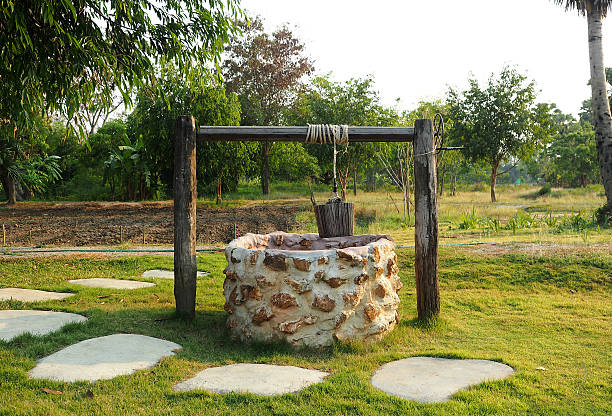
Photo by Getty Images/iStockphoto
In my previous article, Living the Unlived Life, I explored the process of navigating the middle passage on our way to engaging our unlived life. In this article I reimagine the New Testament story of the Prodigal Son as though it were a dream of a person going through the middle passage. I examine the various characters and symbols to see what wisdom they provide for engaging the unlived life. Dreams offer symbols, which are like windows through which we can explore our hidden depths. Dreams are like buckets that ascend from the inner well with living water, and dreamwork allows us to stoop down, and drink deeply.
Identifying Key Dream Characters
The dream begins: “There was a man who had two sons.”
This dream is from the perspective of a father (The father is the dream-ego (the point of view from which the dream takes place). The dreamer is an older, more established individual. To some degree we assume with two adult sons that he’s at or near the midlife point. The two sons represent two essential parts of the dreamer. 1) The younger son could be the dreamer’s “unlived life” or shadow. 2) The older son, who we’ll get to later, represents the established attitudes and status of the dreamer’s ego.
The Inferior Function
The dreamer’s younger son says*, “Father, give me my share of the estate.”*
The younger son is an image of what Carl Jung called the inferior function. Check out This Jungian Life’s podcast episode THE INFERIOR FUNCTION: OPENING TO THE INTERIOR. They write, “The inferior function pushes in through the cracks in ego’s efforts at supremacy and opens us to what is unknown and unlived. For Jung, however, this seeming weak spot in the personality was also “the treasure hard to attain,” for it is also the source of our aliveness, freedom, and fun.”
The younger son can be seen as a part of the dreamer’s psyche (soul) calling out for life, freedom, and fun–those qualities and experience yet to be integrated into conscious life. In many bible stories and fairytales, the younger son offers wisdom and brings healing and wholeness. However, he also tends to confound expectations and conventional wisdom. The younger son often brings healing to the family, nation, etc. through a trailsome and transgressive journey (Ex. Story of Joseph, Jacob, David, Jesus, and the Water of Life myth).
Accessing the Inner Reservoir
The “estate” is symbolic of energy, vitality, groundedness, and investment. It is the untapped inner reservoir yet to be accessed. In the 1st century patriarchy, the eldest son would receive the full inheritance from the Father. The younger son is asking for something that frankly isn’t his to receive, at least from the collective consciousness point of view. The unlived life (the unconscious life) is demanding something that goes against the collective norms. The dreamer, due to his cultural context, is likely experiencing an inner conflict between his soul’s desire and societal expectations. If ever there was an image of what the middle passage feels like, this is it!
Consciously Identifying the Split
“So he divided his property between [the two sons].”
This signifies a major psychic split in the dreamer. The dream symbols are revealing some inner “division;” a sort of inner split or fracture that is costing the man dearly. Symbolically, to “divide his property” is to become conscious of his inner split. Before, the two sons were indistinguishable. The unlived life was eclipsed by the tasks and concerns of conscious life. But dividing his property is an act of recognizing the split. This is an essential step. Before we can engage our unlived life, we must first encounter it as distinct from the life we’re living.
We Must Regress to Grow
“The younger son set off for a distant country and there squandered his wealth in wild living.”
This is a beautiful image of shadow, or the unlived life. The dreamer describes shadow as “squandering,” “distant” and “wild.” The unlived life usually appears this way to the conscious personality. We may ask ourselves, “What do I see as wasteful, distant, or wild? There we may discover what Antonio Machado poetically refers to as, “[…] our other half, who walks along beside us, and tends to be who we are not.” So, who are you not? For this dreamer, the answer lies in the qualities, attributes, and behaviors of his younger son.
Jung believed regression was a necessary first step toward wholeness, and the unlived life. If we bypass certain developmental stages in the first half of life, we begin retrieving them in the middle passage. The dreamer, in his waking life, has access to everything except his more primal and instinctual shadow. This dream is introducing the dreamer to vital experiences and energies locked away in his unconscious–desire, longing, hunger, sensuality, etc.
The middle passage is not a paved road. We don’t easily or elegantly descend into such depths without it costing us our self-image of “who we tend to be.” The middle passage guides us into confrontation with the life we vowed to never live, and the “other half” we’ve tried desperately to evade.
“After [the younger son] had spent everything, there was a severe famine in that whole country, and he began to be in need.”
When our unlived life begins to emerge, it typically manifests in a sort of inner “famine.” Life as we know it, no longer feeds us, or provides the nourishment it once did. This can be a terrible, all enveloping feeling, but it is the catalyst for that life to return home from the hero’s journey. From our ego’s perspective, our shadowed life can’t stay distant any longer, yet there is no real clarity for what’s next. We tend to feel immense ambiguity and anxiety and/or depression at this point. We know we can’t go back to what was, but we haven’t yet found our way forward.
Attempts to Compromise with Shadow
“So [the younger son] went and hired himself out to a citizen of that country, who sent him to his fields to feed pigs. He longed to fill his stomach with the pods that the pigs were eating, but no one gave him anything.”
In this acute phase, we may attempt to bargain with the middle passage. We might fantasize about living our unlived life with little impact to our current status and ego-image. The dreamer may be attempting to satiate the inner famine with “food” that doesn’t cost too much. Ego is trying to compromise or bargain with shadow in an attempt to bring a resolution that won’t diminish the dreamer’s ego-identity. But this never works for long. The middle passage eventually leads us where we refuse to go in order to discover the depths of who we are.
“When he came to his senses, he said, ‘How many of my father’s hired servants have food to spare, and here I am starving to death!
Here is the shift in the dreamer’s consciousness. To “come to one’s senses” is an embodied experience. It is to embrace the inferior function of sensuality and introduce it to the primary function–likely thinking in the dreamer’s case. The unlived life is no longer esoteric, thought-centered, or hidden, but is now deeply felt in the body. Once this shift happens, a threshold is crossed. What the dreamer held at a distance, now comes close. It is no longer manageable or even desirable to deny the unlived life. At a deep level the dream-ego knows that the split-off part is necessary for authentic wholeness. The conscious personality shifts its energy investment from denial and avoidance to acceptance and resolve.
Integrating the Unlived Life
“I will set out and go back to my father and say to him: Father, I have sinned against heaven and against you. I am no longer worthy to be called your son; make me like one of your hired servants.’ So he got up and went to his father.“
Here, the dream-ego (the point of view from which the dream takes place) shifts from the father to the younger son. This is because the dreamer is integrating the old attitude with the new. Jung held that when we hold the tension of opposites, we encounter Transcendent Function where profound transformation and integration is possible.
“But while he was still a long way off, his father saw him and was filled with compassion for him; he ran to his son, threw his arms around him and kissed him.”
Kissing is a highly potent dream symbol. Jungian analyst, Dragomir Kojić writes, “[…] dream figures often embody parts of our psyche. A dream about kissing someone […] can symbolize acknowledging and integrating a hidden part of yourself, be it untapped passion, creativity, or aspects of your personality you suppress out of fear or judgment.” The compassion, running toward, the embrace, and the kiss are duplicate symbols of integration.
“The son said to him, ‘Father, I have sinned against heaven and against you. I am no longer worthy to be called your son.’
Confession has many connotations within a religious context. But confession is an act of acknowledging and clarifying what is real. Within the dream, the unlived life is “confessing” its identity, from the ego’s perspective–sinful, unworthy, against. This dreamer’s confession is not about accepting un-due guilt, but explicitly stating the shadowed stories and narratives that drive conscious life, and repress the unlived life.
“But the father said to his servants, ‘Quick! Bring the best robe and put it on him. Put a ring on his finger and sandals on his feet. Bring the fattened calf and kill it. Let’s have a feast and celebrate. For this son of mine was dead and is alive again; he was lost and is found.’ So they began to celebrate.
Edward Edinger in his book Ego and Archetype, writes about the necessity of ego inflation when integrating the shadow. The dreamer has begun accepting his shadow. This is a very energizing and invigorating experience and can intoxicate or inflate the ego beyond its true proportions. Given time and guidance, an inflated ego will gradually return to a proportionate size. It’s not helpful to manually deflate or prevent ego-inflation. The best we can do is consciously and communally allow the inflated state to live and move us forward. Eventually, the inflated state will return to proper proportions. Let yourself celebrate. Honor this unlived life which you’re now living! You can read more on this topic in my article How Religion Protects & Deprives Us.
The Ongoing Work
“Meanwhile, the older son was in the field. When he came near the house, he heard music and dancing. So he called one of the servants and asked him what was going on. ‘Your brother has come,’ he replied, ‘and your father has killed the fattened calf because he has him back safe and sound.’
“The older brother became angry and refused to go in. So his father went out and pleaded with him. But he answered his father, ‘Look! All these years I’ve been [serving] you and never disobeyed your orders. Yet you never gave me even a young goat so I could celebrate with my friends. But when this son of yours who has squandered your property with prostitutes comes home, you kill the fattened calf for him!’
“‘My son,’ the father said, ‘you are always with me, and everything I have is yours. But we had to celebrate and be glad, because this brother of yours was dead and is alive again; he was lost and is found.’”
The middle passage reroutes our life-trajectory from a particular one-sided destination to a larger journey into wholeness. But living our unlived life is to bring it into a relationship with our lived life. There is a temptation to move the “lamp” from one side of the room to the other, and cast a shadow in the opposite direction. However, this dream reveals a transcendent approach of helping our split-off parts engage and learn from one another. If we were to “dream the dream forward,” we may imagine the two sons finding deep abundance in their diversity of experience, and allowing each other to live more abundantly and authentically.
General Christian
Previous Post

June 3, 2024
Living Our Unlived Life
Next Post
August 30, 2024 Shadow Projection: Finding Our Hidden Life in Others
Browse Our Archives
Select a Category Christianity psychology Shadow Work Social Justice Spirituality Uncategorized
Select a Month July 2025 June 2025 May 2025 January 2025 September 2024 August 2024 June 2024 February 2024 January 2024 December 2023 July 2023 May 2023 February 2023 January 2023 December 2022
TAKE THE
Religious Wisdom Quiz
Who was the Roman governor at the trial of Jesus?
Select your answer to see how you score.
Caesar Herod Alexander Pilate
Related posts from Transgressive Spirituality

Get Your Inner Gold Back From Jesus

Your Shadow is Queer: Pride Offers Courageous Alignment
Fascism and the Collective Shadow
A Split God-image: The Cost of Dividing for...
TRENDING AT PATHEOS New Visions

Did Prayer Cure His Cancer? Or Was It...
At 4 AM one morning, Joshua W. Brown’s wife awoke to a...

8 Ways a Near-Death Experience Rewires the Soul
Does Consciousness Survive Physical Death? After 50 Years of Research, Dr. Raymond...

Holy Longing: What Our Restlessness Is Telling Us
“One can find so many pains when the rain is falling.” -John...

What this is NOT about. This blog is definitely not about...

Who said the Israelites were God’s chosen? That’s right, they did. Who...

The Spirit World Is the Real World: God...
A Monk’s Wisdom on Body and Spirit I sit with Brother Martin...
view all New Visions blogs
Ad-Free & Subscriber Log-In Subscription Support
- About Us
- 2026 Calendar
- Videos
- Podcasts
- Library of World Religions
- Faith In Media Tracker
- Advertise With Us
- Write for Us
- Privacy Policy
- Terms of Service
- Do Not Sell My Data
- Contact Us
- Radiant Digital
- Manage Newsletter Subscriptions
- Unsubscribe From Notifications
- Sitemap
Copyright 2008-2026, Patheos. All rights reserved.
Subscription Support Ad-Free & Subscriber Log-In
Follow Patheos