
BuddhistCatholicContemplativeEvangelicalGeneral ChristianHinduJewishLatter-day SaintMuslimNew VisionsProgressive Christian
Beliefs
- Buddhist
- Catholic
- Contemplative
- Evangelical
- General Christian
- Hindu
- Jewish
- Latter-day Saint
- More Voices
- Muslim
- New Visions
- Pagan
- Progressive Christian
Topics
- Religion News
- Food and Religion
- Sports and Religion
- Religious Art
- Religious Music and Entertainment
- Religious Events
- History and Religion
- Style and Religion
- Politics and Religion
- Women in Religion
- Recreation Outdoors and Religion
- Business Finance and Religion
- Careers Workplace and Religion
- Education and Religion
- Family Parenting and Religion
- Health Fitness and Religion
- Home and Religion
- Relationships and Religion
- Technology and Religion
- Travel and Religion
Columnists
- Buddhist Columnists
- Business Finance and Religion Columnists
- Careers Workplace and Religion Columnists
- Catholic Columnists
- Contemplative Columnists
- Education and Religion Columnists
- Evangelists Columnists
- Family Parenting and Religion Columnists
- General Christian Columnists
- Health Fitness and Religion Columnists
- Hindu Columnists
- History and Religion Columnists
- Home and Religion Columnists
- Jewish Columnists
- More Voices Columnists
- Latter Day Columnists
- Muslim Columnists
- New Visions Columnists
- Nonreligious Columnists
- Pagan Columnists
- Politics and Religion Columnists
- Progressive Columnists
- Recreation Outdoors and Religion Columnists
- Relationships and Religion Columnists
- Religion News Columnists
- Religious Art Columnists
- Religious Events Columnists
- Religious Music and Entertainment Columnists
- Sports and Religion Columnists
- Style and Religion Columnists
- Technology and Religion Columnists
- Travel and Religion Columnists
- Women in Religion Columnists
Resource Library
- 2026 Calendar
- Library of World Religions
- The 100 Most Holy Places on Earth
- Patheos Answers
- Podcasts
- Videos
- Faith Leaders Database
- Anglican Episcopalian
- Bahai
- Baptist
- Buddhism
- Christianity
- Confucianism
- Eastern Orthodoxy
- Hinduism
- Holiness and Pentecostal
- ISKCON
- Islam
- Judaism
- Lutheran
- Methodist
- The Church of Jesus Christ of Latter-day Saints
- New Age
- Paganism
- Presbytarian and Reformed
- Protestantism
- Religion Behind the Scenes
- Roman Catholic
- Scientology
- Shia Islam
- Sikhism
- Sufism
- Sunni Islam
- Taoism
- Zen
- See all religions
Research Tools
 Ad-Free & Subscriber Log-In Subscription Support
Ad-Free & Subscriber Log-In Subscription Support
Follow Patheos 

- Trending:
- Forgiveness
- |
- Marriage
- |
- Consciousness
- |
- Death Penalty
- |
- Election
- |
- Halloween

- Home
- New Visions
- Relationships and Religion
- Why You’ve Outgrown Church
Why You’ve Outgrown Church
Last updated on: January 19, 2023 at 12:57 pm by Dr. Mike Simmons
Why You’ve Outgrown Church 2023-01-19T12:57:04-08:00 Dr. Mike Simmons
Patheos Explore the world's faith through different perspectives on religion and spirituality! Patheos has the views of the prevalent religions and spiritualities of the world.

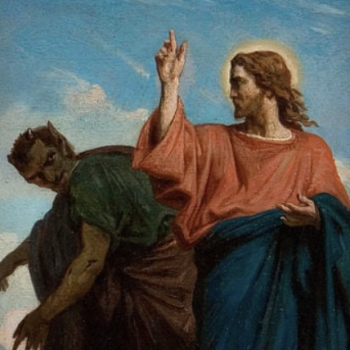
Photo by Lennard Bolijn, https://www.stiwot.nl/
Life brings us to thresholds where all we’ve known no longer supports the personal transformation our soul demands. These thresholds come about through death – the death of a partner, child or close friend. A sudden dramatic transition like loss of employment, divorce, or some blow to status or communal perception can brings us crashing into this transition and liminal spaces. Such thresholds are accompanied by life-script changes where the previous narrative is no longer hospitable to our lived experience. Here, our soul requires water from a deep well, and often our churches, and the common Christian narrative have nothing to offer.
We Need Myth
Moments like these are why we need myth. Myths are the stories, images, religious texts, and spiritual experiences that serve as guides through the various thresholds in life. Of course, “myth” has become synonymous with “untruth.” However, mythologist, Joseph Campbell, poetically offers that “myths are a series of lies meant to reveal the truth.” Myths use metaphors, parables, and symbols, to reflect back our inward, often unconscious and unacknowledged, experience. Campbell believed myths serve four primary functions for our lives:
Four Functions of Myth
- Myths awaken us to ourselves and to the Divine/transcendent. They chart us within the universe and answer the question “who?”. “Who is the divine?” “Who am I?” And, what is my basic substance?
- Myths help us interpret our world. Myths are the meaning makers behind all human experiences, and answer the question “what?” “What is the meaning of life?”. When we know “who” we are (first function), then we can know the “what” of life (second function).
- Myths validate and support the moral order stated in laws (religious and civic), folkways, taboos, mores, “sins” and any collective knowledge that may be labeled “common sense”. Myths answer the question “how?” – specifically, “How should we live?”
- Myths carry us through the various stages and crises of life by getting us in touch with the Source of regenerative power. The fourth function addresses the question, “How can I live again?”
The Common Christian Myth
Mythic functions 1-3 build a strong and thriving identity, while function #4 dismantles and deconstructs that identity in service of something greater, more whole, and inclusive. Each function is essential for our life to stabilize, flourish, and reproduce, but I’ve found Campbell’s fourth function to be missing, or at least greatly undervalued, in Modern Christianity, churches, Christian communities.
If you’re reading this, likely you either no longer identify with organized religion, still identify with it, but don’t participate, or participate but question if you should continue. The common Christian myth, of which I’m familiar, tells us who God is, and who we are (function 1). It offers an initial way to interpret and make meaning of our world (function 2), and, perhaps its most well known contribution is its morality and binary sense of good and evil/right and wrong (function 3). Developmentally, functions 1-3 are essential and necessary, however; the common Christian myth fails to move us through the various stages and crisis of life (Function 4).
Initiation into the Spirit of the Depths
“Initiations by the [Spirit of the Depths] introduce and induce people into a new kind of consciousness that answers questions related to a sense of identity and consequently lead to meaningful action […] [they] tell of why one was born and of a destiny for one’s unique life.” – Murray Stein, Minding the Self
Likely, your early religious communities provided a) an awakening to yourself/to God, they provided b) meaning for your life and the world, and they provided c) structure, order, and kept you safe (Certainly not in many cases). We needed these things, but eventually our lives demanded more from us. This is why you had to leave, or eventually why you won’t be able to stay. Like a plant in need of repotting, your soul needs depth, nourishment, and oxygen to sustain the unfolding abundance of life.
Myths don’t die, they simply expand, often in unrecognizable ways. If you left the church, no longer identify as a Christian, read your Bible, pray, etc., it’s likely because those activities and practices could no longer hold the complexities of your experience. When our myth expands it can actually feel as though it evaporates. Truly, the evaporation is more like a metabolizing process (what Jung called the Transcendent Function) where we integrate the contents of our previous myth and lay down the containers which held it. We no longer need to awaken to the Divine, because the Divine is awake within. Meaning is no longer provided to us, because meaning organically springs up from within us. External moral codes are relativized, because we are more concerned with wholeness rather than purity.
Application: Reflect on Your Personal Myth
- What was your earliest/most awakening spiritual experience? When did you first encounter the divine?
- What sort of meaning arose from this experience? How did you begin interpreting the world?
- What structure, “insider/outsider” divisions, and moral ordering solidified? In short, what actions, behaviors, groups were “good” and which were “bad”?
- Finally, when did all this fall apart? When did your identity, your meaning, your moral order come into question?
- In what ways has a renewed/expanded myth emerge, if at all?
Previous Post

January 4, 2023
How to Address Emotional Energy Leaks
Next Post

February 19, 2023 The Archetype of Revival: The Need and Danger of Spiritual Inflation
Recent Comments
Browse Our Archives
Select a Category Christianity psychology Shadow Work Social Justice Spirituality Uncategorized
Select a Month July 2025 June 2025 May 2025 January 2025 September 2024 August 2024 June 2024 February 2024 January 2024 December 2023 July 2023 May 2023 February 2023 January 2023 December 2022
TAKE THE
Religious Wisdom Quiz
What is the last book in the Old Testament?
Select your answer to see how you score.
Genesis Jonah Malachi Daniel
Related posts from Transgressive Spirituality

Get Your Inner Gold Back From Jesus

Your Shadow is Queer: Pride Offers Courageous Alignment

Fascism and the Collective Shadow
A Split God-image: The Cost of Dividing for...
TRENDING AT PATHEOS New Visions

Did Prayer Cure His Cancer? Or Was It...
At 4 AM one morning, Joshua W. Brown’s wife awoke to a...

8 Ways a Near-Death Experience Rewires the Soul
Does Consciousness Survive Physical Death? After 50 Years of Research, Dr. Raymond...

Holy Longing: What Our Restlessness Is Telling Us
“One can find so many pains when the rain is falling.” -John...

What this is NOT about. This blog is definitely not about...

Who said the Israelites were God’s chosen? That’s right, they did. Who...

The Spirit World Is the Real World: God...
A Monk’s Wisdom on Body and Spirit I sit with Brother Martin...
view all New Visions blogs
Ad-Free & Subscriber Log-In Subscription Support
- About Us
- 2026 Calendar
- Videos
- Podcasts
- Library of World Religions
- Faith In Media Tracker
- Advertise With Us
- Write for Us
- Privacy Policy
- Terms of Service
- Do Not Sell My Data
- Contact Us
- Radiant Digital
- Manage Newsletter Subscriptions
- Unsubscribe From Notifications
- Sitemap
Copyright 2008-2026, Patheos. All rights reserved.
Subscription Support Ad-Free & Subscriber Log-In
Follow Patheos