
BuddhistCatholicContemplativeEvangelicalGeneral ChristianHinduJewishLatter-day SaintMuslimNew VisionsProgressive Christian
Beliefs
- Buddhist
- Catholic
- Contemplative
- Evangelical
- General Christian
- Hindu
- Jewish
- Latter-day Saint
- More Voices
- Muslim
- New Visions
- Pagan
- Progressive Christian
Topics
- Religion News
- Food and Religion
- Sports and Religion
- Religious Art
- Religious Music and Entertainment
- Religious Events
- History and Religion
- Style and Religion
- Politics and Religion
- Women in Religion
- Recreation Outdoors and Religion
- Business Finance and Religion
- Careers Workplace and Religion
- Education and Religion
- Family Parenting and Religion
- Health Fitness and Religion
- Home and Religion
- Relationships and Religion
- Technology and Religion
- Travel and Religion
Columnists
- Buddhist Columnists
- Business Finance and Religion Columnists
- Careers Workplace and Religion Columnists
- Catholic Columnists
- Contemplative Columnists
- Education and Religion Columnists
- Evangelists Columnists
- Family Parenting and Religion Columnists
- General Christian Columnists
- Health Fitness and Religion Columnists
- Hindu Columnists
- History and Religion Columnists
- Home and Religion Columnists
- Jewish Columnists
- More Voices Columnists
- Latter Day Columnists
- Muslim Columnists
- New Visions Columnists
- Nonreligious Columnists
- Pagan Columnists
- Politics and Religion Columnists
- Progressive Columnists
- Recreation Outdoors and Religion Columnists
- Relationships and Religion Columnists
- Religion News Columnists
- Religious Art Columnists
- Religious Events Columnists
- Religious Music and Entertainment Columnists
- Sports and Religion Columnists
- Style and Religion Columnists
- Technology and Religion Columnists
- Travel and Religion Columnists
- Women in Religion Columnists
Resource Library
- 2026 Calendar
- Library of World Religions
- The 100 Most Holy Places on Earth
- Patheos Answers
- Podcasts
- Videos
- Faith Leaders Database
- Anglican Episcopalian
- Bahai
- Baptist
- Buddhism
- Christianity
- Confucianism
- Eastern Orthodoxy
- Hinduism
- Holiness and Pentecostal
- ISKCON
- Islam
- Judaism
- Lutheran
- Methodist
- The Church of Jesus Christ of Latter-day Saints
- New Age
- Paganism
- Presbytarian and Reformed
- Protestantism
- Religion Behind the Scenes
- Roman Catholic
- Scientology
- Shia Islam
- Sikhism
- Sufism
- Sunni Islam
- Taoism
- Zen
- See all religions
Research Tools
 Ad-Free & Subscriber Log-In Subscription Support
Ad-Free & Subscriber Log-In Subscription Support
Follow Patheos 

- Trending:
- Forgiveness
- |
- Marriage
- |
- Consciousness
- |
- Death Penalty
- |
- Election
- |
- Halloween
 Transcendentalish
- Home
- Evangelical
- “Only the suffering God can help”: a Meditation on the Cross
“Only the suffering God can help”: a Meditation on the Cross
Last updated on: April 11, 2020 at 11:09 am by Mark Craymor
“Only the suffering God can help”: a Meditation on the Cross 2020-04-11T11:09:33+00:00 Mark Craymor
Patheos Explore the world's faith through different perspectives on religion and spirituality! Patheos has the views of the prevalent religions and spiritualities of the world.

This is the transcript of a message I gave during our Good Friday Compline service on April 10, 2020.
Today is Good Friday, the day when Christians around the world remember the crucifixion of Jesus. During this Compline service, I want to offer a meditation on the cross of Christ.
Christians believe that 2000 years ago, on a cross, in the middle of a trash heap outside of Jerusalem, a man called Jesus of Nazareth suffered and died. The crucifixion of Jesus is at the very center of the Christian faith. And the death of Jesus of Nazareth is a historical fact. What the cross means, of course, is disputed. The cross has always been polarizing: we need only think of the two criminals crucified next to Jesus. In them, we see two very different responses.
The Cross is divisive. For some people, the cross is magnetic: it attracts them, it draws them in to the love of God: they see the judgment of Christ as means of their salvation. For others, however, it is repulsive. They view the cross either a meaningless death, or an example of divine child abuse, not something beautiful. And so they reject the cross and add their ridicule to the chorus of mockers. As we consider the cross, it is important to remember the cross has always been polarizing. It invites both worship and ridicule.
We see this in the “art” at the top of this post. This is known as the Alexamenos Graffito and it is the earliest known artistic depiction of Christ on the cross [left: color photo; right: B&W photo with more contrast]. You’ll notice that it is not a beautiful mosaic or fresco painting on the walls of a church but it is graffiti from the 2ndcentury carved into plaster wall in Rome. It was not created for worship. It was created to mock Christians. We see a man worshipping a person on a cross who has the head of a donkey. The inscription in very rough Greek says this: “Alexamenos worships God.” A man named Alexamenos worships Christ, who has the head of an ass. The message is clear: to worship a crucified God is viewed as ridiculous. This was true for our brother Alexamenos, in many ways it is true for Christians today and it was certainly true for Paul and the church of the first century.
The Apostle Paul talks about the cross and its divisiveness in 1 Corinthians 1:18-25:
18 For the word of the cross is folly to those who are perishing, but to us who are being saved it is the power of God. 19 For it is written,
“I will destroy the wisdom of the wise,
and the discernment of the discerning I will thwart.”20 Where is the one who is wise? Where is the scribe? Where is the debater of this age? Has not God made foolish the wisdom of the world? 21 For since, in the wisdom of God, the world did not know God through wisdom, it pleased God through the folly of what we preach to save those who believe. 22 For Jews demand signs and Greeks seek wisdom,23 but we preach Christ crucified, a stumbling block to Jews and folly to Gentiles, 24 but to those who are called, both Jews and Greeks, Christ the power of God and the wisdom of God. 25 For the foolishness of God is wiser than men, and the weakness of God is stronger than men.
For Paul, we see very clearly that the cross is central to the message of salvation. We also see how polarizing it is. The cross either means absolutely everything, or absolutely nothing. The cross splits the world in two: the message of the cross is folly to those who are perishing but it is power to those who are being saved.
I want to make just a couple observations about this passage. First I want us look at what this teaches us about the cross and why people reject it. In 1:22, we see that the cross is “a stumbling block to the Jews and folly to the Gentiles.” The word for “stumbling block” in Greek is where we get our word scandal. The word “folly” is where we get our word moron. So, Paul is saying, many people think that To believe in a crucified messiah is scandalous or moronic or maybe both. Let’slook at each of these a bit more detail.
First, let’s look at why the Jews saw the cross as a stumbling block, why it was scandalous.For the Jews, there was something about Christ prevents him from being qualified to be the Messiah, their King, and the and savior of the world. In saner times, we understand this – certain things disqualify leaders. The Jews wanted a sign of power. They wanted a military leader to overthrow Rome. What they got, instead, was a weak man hung on a tree. The treehere is significant. Deuteronomy 21:23 says this: “anyone who is hung on a tree is under God’s curse.” This is why it was so hard for Jews to believe in Jesus. To die on a cross is to be cursed. A cursed man not qualified to be messiah. It’s true – on the cross, Jesus was under God’s curse. Innocent man cursed on behalf of sinners.
Second, we’ll look at why the Gentiles thought the cross was folly or moronic. Paul says that the Jews wanted a sign of power, and the Gentiles wanted wisdom!Instead, what they get in Jesus is a weak and pitiful criminal. As a punishment in the 1stcentury, the cross was reserved for refuse of society. It was a mode of execution for people who deserve a nameless grave, not a crown. Jesus died in weakness, crushed as a criminal of the state. Gentiles understand such a man cannot be a king. To believe in Christ crucified is madness to the Gentiles: this was the craziest thing they’ve ever heard.
According to Paul, people crave salvation through power or wisdom. But God provides salvation through weakness and folly: a crucified messiah. In other words*,* the gift of God in Jesus Christ is not at all what we want or expect but, Paul says, he is exactly the gift we need.
Now, this only makes sense if we grasp the logic of the cross. The only way to conquer our most powerful enemies – sin and death – is through weakness. God demonstrates his power through weakness – here that means the death of Jesus. Sin and death are conquered through a sinless human subjecting himself to death in the place of sinners. This is the scandalous and crazy exchange: an innocent man pays the penalty for the guilty.
When you stop to think about it, both the Jews and Gentiles are sort of right. This great exchange seems like a scandal, it seems crazy… and it seems that way because it actually is. This is what Christians call grace.
For those with the eyes to see, the weakness and folly of God become the power and wisdom of God.
I want to try to pull all of this together by sharing something that Dietrich Bonhoeffer wrote in prison. Bonhoeffer was German pastor killed by Nazis, 75 years ago this past Maundy Thursday. In a letter to his friend, Bonhoeffer talks about importance of weakness of God. He writes this in Letters and Papers from Prison:
God consents to be pushed out of the world and onto the cross; God is weak and powerless in the world and in precisely this way, and only so, is at our side and helps us. Matt 8:17 makes it quite clear that Christ helps us not by virtue of his omnipotence but rather by virtue of his weakness and suffering! This is the crucial distinction between Christianity and all religions. Human religiosity directs people in need to the power of God in the world…the Bible directs people toward the powerlessness and suffering of God; only the suffering God can help.
I think Bonhoeffer is right: the God that the Bible points us to is the God of the cross. “Only the suffering God can help.” Only the God who is weak, who hung on a tree suffering the curse of judgment… only the crucified Messiah, the one who suffers the wrath of God is powerful enough to save those who actually deserve it.
[Image on left is open domain photo of the Alexamenos Graffito. Image on the right accompanies G. Sacco’s entry “Il graffito blasfemo del paedogogium nella Domus Augustana del Palatino,” in Le iscriziono dei cristiani in Vaticano, edited by Ivan Di Stefano.]
Previous Post

March 23, 2020
Riding the Rona Roller Coaster, OR Do Not Despair
Next Post

May 26, 2020 The Disruptive Gift of Silence: a Lesson from the Pandemic
Browse Our Archives
Select a Category Art Current Events Film Music Poetry Review Science and Religion THE ANTLIZT Theology Uncategorized Video
Select a Month December 2021 November 2021 October 2021 September 2021 July 2021 January 2021 June 2020 May 2020 April 2020 March 2020 February 2020 November 2019 October 2019 July 2019 November 2018 August 2018 May 2018 April 2018 March 2018 February 2018 January 2018 December 2017 August 2017 December 2016 October 2016 September 2016 April 2016 September 2015 August 2015 April 2015 February 2015 January 2015 December 2014 November 2014 October 2014 September 2014 August 2014 July 2014 June 2014 May 2014 April 2014 March 2014 February 2014 January 2014
Follow Us!
TAKE THE
Religious Wisdom Quiz
Jesus was baptized in the water of which river?
Select your answer to see how you score.
Euphrates Nile Gihon Jordan
Related posts from Transcendentalish


The Religious Pull of Politics OR Why you...

Visionings ^4: An Interview with an Iconographer
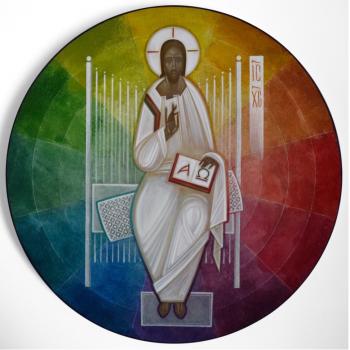
Visionings ^3: Praying Through Icons
TRENDING AT PATHEOS Evangelical

How the author of the world's best hymn...
I've been working with John Newton for a while now. This makes...

Long before this Lectio Divina, Psalm 130 - the song - started...

What About the Trees? Another Living Parable
After I finished writing the last article about falling leaves as a...

Why Classical Education Is a Conversation, Not a...
Come and Read: Joy in Classical Education When I was a little...

Falling Leaves: A Living Parable on Letting Go
I’ve spent the vast majority of my life in the southeast corner...

Cornell University has received a great deal of negative publicity and intense...
view all Evangelical blogs
Ad-Free & Subscriber Log-In Subscription Support
- About Us
- 2026 Calendar
- Videos
- Podcasts
- Library of World Religions
- Faith In Media Tracker
- Advertise With Us
- Write for Us
- Privacy Policy
- Terms of Service
- Do Not Sell My Data
- Contact Us
- Radiant Digital
- Manage Newsletter Subscriptions
- Unsubscribe From Notifications
- Sitemap
Copyright 2008-2026, Patheos. All rights reserved.
Subscription Support Ad-Free & Subscriber Log-In
Follow Patheos