
BuddhistCatholicContemplativeEvangelicalGeneral ChristianHinduJewishLatter-day SaintMuslimNew VisionsProgressive Christian
Beliefs
- Buddhist
- Catholic
- Contemplative
- Evangelical
- General Christian
- Hindu
- Jewish
- Latter-day Saint
- More Voices
- Muslim
- New Visions
- Pagan
- Progressive Christian
Topics
- Religion News
- Food and Religion
- Sports and Religion
- Religious Art
- Religious Music and Entertainment
- Religious Events
- History and Religion
- Style and Religion
- Politics and Religion
- Women in Religion
- Recreation Outdoors and Religion
- Business Finance and Religion
- Careers Workplace and Religion
- Education and Religion
- Family Parenting and Religion
- Health Fitness and Religion
- Home and Religion
- Relationships and Religion
- Technology and Religion
- Travel and Religion
Columnists
- Buddhist Columnists
- Business Finance and Religion Columnists
- Careers Workplace and Religion Columnists
- Catholic Columnists
- Contemplative Columnists
- Education and Religion Columnists
- Evangelists Columnists
- Family Parenting and Religion Columnists
- General Christian Columnists
- Health Fitness and Religion Columnists
- Hindu Columnists
- History and Religion Columnists
- Home and Religion Columnists
- Jewish Columnists
- More Voices Columnists
- Latter Day Columnists
- Muslim Columnists
- New Visions Columnists
- Nonreligious Columnists
- Pagan Columnists
- Politics and Religion Columnists
- Progressive Columnists
- Recreation Outdoors and Religion Columnists
- Relationships and Religion Columnists
- Religion News Columnists
- Religious Art Columnists
- Religious Events Columnists
- Religious Music and Entertainment Columnists
- Sports and Religion Columnists
- Style and Religion Columnists
- Technology and Religion Columnists
- Travel and Religion Columnists
- Women in Religion Columnists
Resource Library
- 2026 Calendar
- Library of World Religions
- The 100 Most Holy Places on Earth
- Patheos Answers
- Podcasts
- Videos
- Faith Leaders Database
- Anglican Episcopalian
- Bahai
- Baptist
- Buddhism
- Christianity
- Confucianism
- Eastern Orthodoxy
- Hinduism
- Holiness and Pentecostal
- ISKCON
- Islam
- Judaism
- Lutheran
- Methodist
- The Church of Jesus Christ of Latter-day Saints
- New Age
- Paganism
- Presbytarian and Reformed
- Protestantism
- Religion Behind the Scenes
- Roman Catholic
- Scientology
- Shia Islam
- Sikhism
- Sufism
- Sunni Islam
- Taoism
- Zen
- See all religions
Research Tools
 Ad-Free & Subscriber Log-In Subscription Support
Ad-Free & Subscriber Log-In Subscription Support
Follow Patheos 

- Trending:
- Forgiveness
- |
- Marriage
- |
- Consciousness
- |
- Death Penalty
- |
- Election
- |
- Halloween
 Transcendentalish
- Home
- Evangelical
- Written Prayers: Gifts from Howard Thurman & John Stott
Written Prayers: Gifts from Howard Thurman & John Stott
Last updated on: February 21, 2020 at 10:48 pm by Mark Craymor
Written Prayers: Gifts from Howard Thurman & John Stott 2020-02-21T22:48:37+00:00 Mark Craymor
Patheos Explore the world's faith through different perspectives on religion and spirituality! Patheos has the views of the prevalent religions and spiritualities of the world.
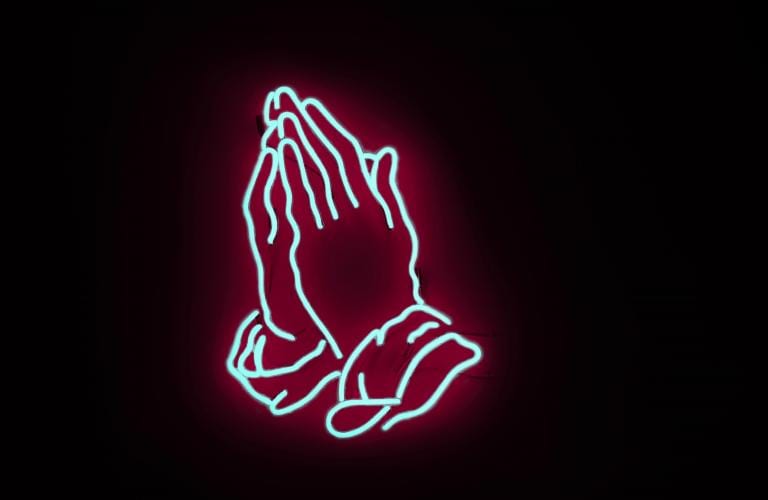
This may sound like an odd confession coming from an Anglican priest but, once upon a time, in the earliest days of my fledgling faith, I would have considered the praying of written prayers as suspect. At the very least, I would have thought this was inauthentic because it wasn’t a spontaneous. At the very worst, I might have considered it a vestige of dead religion. Of course, the praying of written prayers can be rote and disingenuous but that has everything to do with user error, not the prayer itself. While I celebrate my youthful zeal, I roll my eyes at my naiveté. This is a dangerous combination: passion and ignorance. In my fervor for heart-felt faith, I didn’t consider that a rejection of written prayers was a rejection of the very foundation of the Church’s life of prayer, namely the Psalter. Alas. (There’s probably a lesson in here about the minimum age for pastors.)
In any case, over the years, I have developed quite the taste for the prayers gifted to us by the rich heritage of the Church. Of course, this includes the Psalms. But outside of the canon, my great appreciate for this rich inheritance from the saints all started with discovering The Valley of Vision, a collection of Puritan prayers, during my seminar years. (If you don’t have this, you should get it immediately). This all culminated in my discovery of the Book of Common Prayer, the prayer book of my particular tradition. Here is a prayer in this book that has become very precious to me:
Most Merciful God,
we confess that we have sinned against you in thought word and deed,
by what we have done and what we have left undone.
We have not loved you with our whole heart,
we have not loved our neighbors as ourselves.
We are truly sorry and we humbly repent.
For these sake of your Son Jesus Christ
have mercy on us and forgive us
that we might delight in your will
and walk in your ways to the glory of your name. Amen.
Man, that is so good. As it turns out, this Prayer of Confession is probably the primary reason I began to explore Anglicanism. I hope it goes without saying that extemporaneous prayers are great too. But there is something particularly formative about praying the prayers that are our inheritance. They serve as faithful guides along previously trodden trails of saints who have gone before. They direct our hearts and minds and wills to God. They provide language to express the deepest dimensions of the human experience.
There are two prayers that I’ve found particularly helpful of late. The first was written by Howard Thurman (1899-1981), the great American theologian and civil rights leader. This comes from his Meditations of the Heart, a collection of prayers and meditations.
Open unto me – light for my darkness.
Open unto me – courage for my fear.
Open unto me – hope for my despair.
Open unto me – peace for my turmoil.
Open unto me – joy for my sorrow.
Open unto me – strength for my weakness.
Open unto me – wisdom for my confusion.
Open unto me – forgiveness for my sins.
Open unto me – tenderness for my toughness.
Open unto me – love for my hates.
Open unto me – Thy Self for my self.
Lord, Lord, open unto me!
The second prayer was written by John Stott (1921-2011), the great British priest and theologian. Apparently the first thing Stott would do every morning when he arose at 5am would be to say this prayer, which is included in his biography Basic Christian:
Good morning, heavenly Father, good morning Lord Jesus, good morning Holy Spirit.
Heavenly Father I worship you as the creator and sustainer of the universe. Lord Jesus, I worship you, Saviour and Lord of the world. Holy Spirit I worship you, sanctifier of the people of God. Glory to the Father, and to the Son, and to the Holy Spirit.
Heavenly Father, I pray that I may live this day in your presence and please you more and more. Lord Jesus, I pray that this day I may take up my cross and follow you. Holy Spirit, I pray that this day you will fill me with yourself and cause your fruit to ripen in my life: love, joy, peace, patience, kindness, goodness, faithfulness, gentleness and self-control. Holy, blessed and glorious Trinity, three persons in one God, have mercy upon me, Amen.
Previous Post

November 27, 2019
Preparing for Advent: Reflections on Tanner's "The Annunciation"
Next Post

March 16, 2020 Lent During a Pandemic
Browse Our Archives
Select a Category Art Current Events Film Music Poetry Review Science and Religion THE ANTLIZT Theology Uncategorized Video
Select a Month December 2021 November 2021 October 2021 September 2021 July 2021 January 2021 June 2020 May 2020 April 2020 March 2020 February 2020 November 2019 October 2019 July 2019 November 2018 August 2018 May 2018 April 2018 March 2018 February 2018 January 2018 December 2017 August 2017 December 2016 October 2016 September 2016 April 2016 September 2015 August 2015 April 2015 February 2015 January 2015 December 2014 November 2014 October 2014 September 2014 August 2014 July 2014 June 2014 May 2014 April 2014 March 2014 February 2014 January 2014
Follow Us!
TAKE THE
Religious Wisdom Quiz
What was the currency for the temple tax?
Select your answer to see how you score.
Shekel Talent Denarius Mina
Related posts from Transcendentalish

The Religious Pull of Politics OR Why you...
Visionings ^4: An Interview with an Iconographer
Visionings ^3: Praying Through Icons
TRENDING AT PATHEOS Evangelical

How the author of the world's best hymn...
I've been working with John Newton for a while now. This makes...

Long before this Lectio Divina, Psalm 130 - the song - started...

What About the Trees? Another Living Parable
After I finished writing the last article about falling leaves as a...

Why Classical Education Is a Conversation, Not a...
Come and Read: Joy in Classical Education When I was a little...

Falling Leaves: A Living Parable on Letting Go
I’ve spent the vast majority of my life in the southeast corner...

Cornell University has received a great deal of negative publicity and intense...
view all Evangelical blogs
Ad-Free & Subscriber Log-In Subscription Support
- About Us
- 2026 Calendar
- Videos
- Podcasts
- Library of World Religions
- Faith In Media Tracker
- Advertise With Us
- Write for Us
- Privacy Policy
- Terms of Service
- Do Not Sell My Data
- Contact Us
- Radiant Digital
- Manage Newsletter Subscriptions
- Unsubscribe From Notifications
- Sitemap
Copyright 2008-2026, Patheos. All rights reserved.
Subscription Support Ad-Free & Subscriber Log-In
Follow Patheos