
BuddhistCatholicContemplativeEvangelicalGeneral ChristianHinduJewishLatter-day SaintMuslimNew VisionsProgressive Christian
Beliefs
- Buddhist
- Catholic
- Contemplative
- Evangelical
- General Christian
- Hindu
- Jewish
- Latter-day Saint
- More Voices
- Muslim
- New Visions
- Pagan
- Progressive Christian
Topics
- Religion News
- Food and Religion
- Sports and Religion
- Religious Art
- Religious Music and Entertainment
- Religious Events
- History and Religion
- Style and Religion
- Politics and Religion
- Women in Religion
- Recreation Outdoors and Religion
- Business Finance and Religion
- Careers Workplace and Religion
- Education and Religion
- Family Parenting and Religion
- Health Fitness and Religion
- Home and Religion
- Relationships and Religion
- Technology and Religion
- Travel and Religion
Columnists
- Buddhist Columnists
- Business Finance and Religion Columnists
- Careers Workplace and Religion Columnists
- Catholic Columnists
- Contemplative Columnists
- Education and Religion Columnists
- Evangelists Columnists
- Family Parenting and Religion Columnists
- General Christian Columnists
- Health Fitness and Religion Columnists
- Hindu Columnists
- History and Religion Columnists
- Home and Religion Columnists
- Jewish Columnists
- More Voices Columnists
- Latter Day Columnists
- Muslim Columnists
- New Visions Columnists
- Nonreligious Columnists
- Pagan Columnists
- Politics and Religion Columnists
- Progressive Columnists
- Recreation Outdoors and Religion Columnists
- Relationships and Religion Columnists
- Religion News Columnists
- Religious Art Columnists
- Religious Events Columnists
- Religious Music and Entertainment Columnists
- Sports and Religion Columnists
- Style and Religion Columnists
- Technology and Religion Columnists
- Travel and Religion Columnists
- Women in Religion Columnists
Resource Library
- 2026 Calendar
- Library of World Religions
- The 100 Most Holy Places on Earth
- Patheos Answers
- Podcasts
- Videos
- Faith Leaders Database
- Anglican Episcopalian
- Bahai
- Baptist
- Buddhism
- Christianity
- Confucianism
- Eastern Orthodoxy
- Hinduism
- Holiness and Pentecostal
- ISKCON
- Islam
- Judaism
- Lutheran
- Methodist
- The Church of Jesus Christ of Latter-day Saints
- New Age
- Paganism
- Presbytarian and Reformed
- Protestantism
- Religion Behind the Scenes
- Roman Catholic
- Scientology
- Shia Islam
- Sikhism
- Sufism
- Sunni Islam
- Taoism
- Zen
- See all religions
Research Tools
 Ad-Free & Subscriber Log-In Subscription Support
Ad-Free & Subscriber Log-In Subscription Support
Follow Patheos 

- Trending:
- Forgiveness
- |
- Marriage
- |
- Consciousness
- |
- Death Penalty
- |
- Election
- |
- Halloween
 Transcendentalish
- Home
- Evangelical
- Good Friday Sermon: “I Thirst”
Good Friday Sermon: “I Thirst”
Last updated on: December 4, 2017 at 3:56 pm by Mark Craymor
Good Friday Sermon: “I Thirst” 2017-12-04T15:56:29+00:00 Mark Craymor
Patheos Explore the world's faith through different perspectives on religion and spirituality! Patheos has the views of the prevalent religions and spiritualities of the world.
 This is the manuscript of a sermon preached at Stone Hill Church in Princeton, NJ. After the sermon, I led the congregation in a time of prayerful reflection of the center panel of Matthias Grünewald’s Isenheim Altarpiece (a cropped version is above).
If I were brave (and perhaps wild) enough to be a part of that wandering band of men and women that constituted his initial followers, I never would have expected to see Jesus hanging on a cross. And yet… if I imagine myself at the scene of the crime, as an eyewitness to this most famous of executions on that hill outside of Jerusalem, the first three of Jesus’ last words seem to be exactly what I would expect from him:
First, a prayer of forgiveness on behalf of his executioners: “But I say Love your enemies and pray for those who persecute you”); and then a promise of forgiveness leading to Paradise for a criminal: “For I came not to call the righteous, but sinners”); and then providing for Mary, his widowed mother, whom he would no longer be able to care for (“honor your father and mother”).
In the first of his last three words, Jesus is still acting in character.
But as we follow the drama along the lines of the 7 last words of Jesus, things turn a corner with the fourth word, the word Mark just walked us through. After a few hours of brutal torture, Jesus was finally exposed and deserted…and judged. And so he cried out in a loud voice: “My God, My God, why have you forsaken me?”
The whole scene takes a dramatic and devastating turn with the fourth and then the fifth word, which we’ll now consider together.
This is what we read in the Gospel of John:
 “After this, Jesus, knowing that all was now finished, said (to fulfill the Scripture), “I thirst.” A jar full of sour wine stood there, so they put a sponge full of the sour wine on a hyssop branch and held it to his mouth.”
Jesus’ fifth word, “I thirst” is nothing but the corollary of his being forsaken. “My God, My God, why have you forsaken me?” is the clarion cry of failure. “I thirst” simply confirms that defeat.
With these two words, the mask is removed. Jesus’ true character is revealed… or so it would seem.
Now there is no universal agreement among scholars as to exactly what Old Testament text Jesus’ comment fulfills. Some think this is a reference to Psalm 69 but I will argue that Jesus is fulfilling the 22nd Psalm.
Psalm 22 begins with these words:
1 My God, my God, why have you forsaken me?
Why are you so far from saving me, from the words of my groaning?
2 O my God, I cry by day, but you do not answer,
and by night, but I find no rest.
And continues…
14 I am poured out like water,
and all my bones are out of joint;
my heart is like wax;
it is melted within my breast;
15 my strength is dried up like a potsherd,
and my tongue sticks to my jaws;
you lay me in the dust of death.
“My tongue sticks to my jaws” … “I thirst”
Jesus is the man of Psalm 22. His parched mouth confirms it.
There is no doubt that this thirst is a physical thirst… Jesus is exhausted and parched and how could you not be after all he’s been through? But it’s so much worse than that. His thirst is far deeper – it is a spiritual thirst… an existential thirst.
There is such tragic irony in Jesus’ confession of his own thirst, especially when reading the Gospel of John.
To the woman at the well in John 3 Jesus says: “but whoever drinks of the water that I will give him will never be thirsty again. The water that I will give him will become in him a spring of water welling up to eternal life.” (3:14)
And, later, to the crowds in John 6 he said: “whoever believes in me shall never thirst.” (6:35)
And again in John 7, we read this: “On the last day of the feast, the great day, Jesus stood up and cried out, “If anyone thirsts, let him come to me and drink. 38 Whoever believes in me, as the Scripture has said, ‘Out of his heart will flow rivers of living water.’” (7:37-38)
In this last passage, John is referring to the Feast of Tabernacles, the feast commemorating Israel’s wandering in the desert after the Exodus, a time and place where they knew what it meant to be thirsty. [1] Jesus is claiming in such a scandalous way and at such a provocative time that he could satisfy their thirst.
And yet, there he hangs on the cross saying “I thirst.”
Such tragic, such pitiful irony. The man who claimed to be the wellspring that would and could quench thirst eternally, is now a man who is himself asking for a drink. Jesus’ attempt, at whatever it was people thought he was attempting, had dried up… or so it appeared.
But to quote the simple wisdom of an ancient Roman poet, “things are not always what they seem; first appearances deceive many.” [2]
Indeed, the cross reorients our expectations and the resurrection beckons us to look beyond first appearances… Father Richard John Neuhaus says that it is precisely “In this killing that some call senseless [that] we are brought to our senses.”
The cross is not proof that Jesus is a failure, and a liar, and a soon-to-be-dead man. No, the cross is the means by which he becomes the Way, and the Truth, and the Life.
The cross is not proof that Jesus is not the King but is, in fact, the very means by which He becomes the King. Pilate was a prophet… Only he had no idea how right he was when he wrote, “This is Jesus, King of the Jews.”
The seven last words of Jesus, therefore, constitute King Jesus’ inaugural address on the day of his coronation.
How is this possible? It is possible only through his thirsting. By drinking the cup of God’s wrath to the dregs, Jesus is left forsaken and then judged. In a word – he is left thirsting. It is only through his thirsting, his identifying with our sinfulness, that he is able to overcome our thirst and provide for us living water…
He thirsts an insufferable thirst in order that we might not have to.
In 2 Corinthians, the Apostle Paul puts it this way: “For our sake [God] made him to be sin who knew no sin, so that in him we might become the righteousness of God.” (2Cor 5:21)
Commenting on this amazing idea, Neuhaus sums it up perfectly: “The language [from Paul] is radical: It was not simply that he bore the consequences of sin, but that he was made to be sin. The great reversal reverses all our preconceptions. God must become what we are in order that we might become what God is.” [4]
God thirsts, in order that we might never be thirsty again.
[1] Richard John Neuhaus, Death on a Friday Afternoon, 145.
[2] Phaedrus, Book IV, Fable 2, Ln 5
[3] Neuhaus, 2.
[4] Neuhaus, 30.
Previous Post

February 24, 2015
On Lectio Divina
Next Post
August 17, 2015 Christina Rossetti's "They Desire a Better Country"
Browse Our Archives
Select a Category Art Current Events Film Music Poetry Review Science and Religion THE ANTLIZT Theology Uncategorized Video
Select a Month December 2021 November 2021 October 2021 September 2021 July 2021 January 2021 June 2020 May 2020 April 2020 March 2020 February 2020 November 2019 October 2019 July 2019 November 2018 August 2018 May 2018 April 2018 March 2018 February 2018 January 2018 December 2017 August 2017 December 2016 October 2016 September 2016 April 2016 September 2015 August 2015 April 2015 February 2015 January 2015 December 2014 November 2014 October 2014 September 2014 August 2014 July 2014 June 2014 May 2014 April 2014 March 2014 February 2014 January 2014
Follow Us!
TAKE THE
Religious Wisdom Quiz
How many seals are on the scroll in Revelation?
Select your answer to see how you score.
Twelve Seven Four Ten
Related posts from Transcendentalish


The Religious Pull of Politics OR Why you...
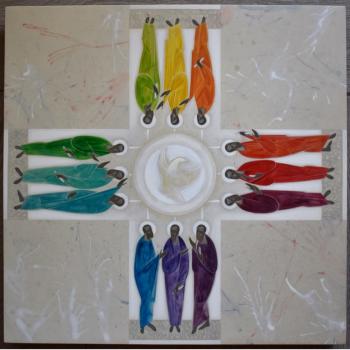
Visionings ^4: An Interview with an Iconographer
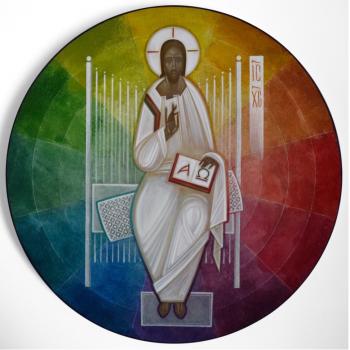
Visionings ^3: Praying Through Icons
TRENDING AT PATHEOS Evangelical

The REST of Your Life: A Creative Wrestles...
This week I had a conversation with a good friend from church....

How the author of the world's best hymn...
I've been working with John Newton for a while now. This makes...

Long before this Lectio Divina, Psalm 130 - the song - started...

What About the Trees? Another Living Parable
After I finished writing the last article about falling leaves as a...

Why Classical Education Is a Conversation, Not a...
Come and Read: Joy in Classical Education When I was a little...

Cornell University has received a great deal of negative publicity and intense...
view all Evangelical blogs
Ad-Free & Subscriber Log-In Subscription Support
- About Us
- 2026 Calendar
- Videos
- Podcasts
- Library of World Religions
- Faith In Media Tracker
- Advertise With Us
- Write for Us
- Privacy Policy
- Terms of Service
- Do Not Sell My Data
- Contact Us
- Radiant Digital
- Manage Newsletter Subscriptions
- Unsubscribe From Notifications
- Sitemap
Copyright 2008-2026, Patheos. All rights reserved.
Subscription Support Ad-Free & Subscriber Log-In
Follow Patheos