
BuddhistCatholicContemplativeEvangelicalGeneral ChristianHinduJewishLatter-day SaintMuslimNew VisionsProgressive Christian
Beliefs
- Buddhist
- Catholic
- Contemplative
- Evangelical
- General Christian
- Hindu
- Jewish
- Latter-day Saint
- More Voices
- Muslim
- New Visions
- Pagan
- Progressive Christian
Topics
- Religion News
- Food and Religion
- Sports and Religion
- Religious Art
- Religious Music and Entertainment
- Religious Events
- History and Religion
- Style and Religion
- Politics and Religion
- Women in Religion
- Recreation Outdoors and Religion
- Business Finance and Religion
- Careers Workplace and Religion
- Education and Religion
- Family Parenting and Religion
- Health Fitness and Religion
- Home and Religion
- Relationships and Religion
- Technology and Religion
- Travel and Religion
Columnists
- Buddhist Columnists
- Business Finance and Religion Columnists
- Careers Workplace and Religion Columnists
- Catholic Columnists
- Contemplative Columnists
- Education and Religion Columnists
- Evangelists Columnists
- Family Parenting and Religion Columnists
- General Christian Columnists
- Health Fitness and Religion Columnists
- Hindu Columnists
- History and Religion Columnists
- Home and Religion Columnists
- Jewish Columnists
- More Voices Columnists
- Latter Day Columnists
- Muslim Columnists
- New Visions Columnists
- Nonreligious Columnists
- Pagan Columnists
- Politics and Religion Columnists
- Progressive Columnists
- Recreation Outdoors and Religion Columnists
- Relationships and Religion Columnists
- Religion News Columnists
- Religious Art Columnists
- Religious Events Columnists
- Religious Music and Entertainment Columnists
- Sports and Religion Columnists
- Style and Religion Columnists
- Technology and Religion Columnists
- Travel and Religion Columnists
- Women in Religion Columnists
Resource Library
- 2026 Calendar
- Library of World Religions
- The 100 Most Holy Places on Earth
- Patheos Answers
- Podcasts
- Videos
- Faith Leaders Database
- Anglican Episcopalian
- Bahai
- Baptist
- Buddhism
- Christianity
- Confucianism
- Eastern Orthodoxy
- Hinduism
- Holiness and Pentecostal
- ISKCON
- Islam
- Judaism
- Lutheran
- Methodist
- The Church of Jesus Christ of Latter-day Saints
- New Age
- Paganism
- Presbytarian and Reformed
- Protestantism
- Religion Behind the Scenes
- Roman Catholic
- Scientology
- Shia Islam
- Sikhism
- Sufism
- Sunni Islam
- Taoism
- Zen
- See all religions
Research Tools
 Ad-Free & Subscriber Log-In Subscription Support
Ad-Free & Subscriber Log-In Subscription Support
Follow Patheos 

- Trending:
- Forgiveness
- |
- Marriage
- |
- Consciousness
- |
- Death Penalty
- |
- Election
- |
- Halloween
 Transcendentalish
- Home
- Evangelical
- Advent Hymns: A Hymn of Advent
Advent Hymns: A Hymn of Advent
Last updated on: December 4, 2017 at 3:56 pm by Mark Craymor
Advent Hymns: A Hymn of Advent 2017-12-04T15:56:31+00:00 Mark Craymor
Patheos Explore the world's faith through different perspectives on religion and spirituality! Patheos has the views of the prevalent religions and spiritualities of the world.
This is the second installment of a series on the great hymns of Advent. To learn more about Advent, read my previous post: On Advent: What It Is & Why You Need It. The first installment on the hymns of Advent can be read here: O Come, O Come Emmanuel.
“A Hymn of Advent” by Matt Scott from Poets and Saints (2013)
Israel long awaits the promised king
She will find, find in him her liberty
When he comes, he will set the captives free
Rejoice, rejoice Emmanuel shall come to theeHear the voice, hear it cry far and near
Repent, repent the kingdom of our Lord is here
Believe, believe O Israel and do not fear
Messiah-Christ, the Lord’s Anointed One is hereFor he will come, he will come and save us
He will come, he will come and save us
He will come, come and save us from our sinsLet the earth, let the earth receive her king
O promised one, let us find our hope in thee
He breaks the bonds and he sets the prisoners free
And when he comes, salvation to the world he bringsFor he will come, he will come and save us
He will come, he will come and save us
He will come, come and save us from our sins
HISTORY OF THE HYMN
After reflecting on a hymn that is nearly a millennium old, our focus this week is on a hymn written in the 21st century. “A Hymn of Advent” was written a couple years ago by Matt Scott, one of my very dear friends. The hymn was written and arranged in 2012 and debuted on Matt’s recent album called Poets and Saints (2013). Poets and Saints is a creative concept album that retells the narrative arc of the Scriptures (creation, fall, redemption, restoration) through repurposed hymns.
I could have just as easily selected another Advent hymn from this album, “Christ Is Coming,” with a focus on the second coming of Jesus. But, I chose this one because I wanted to showcase the beauty of Matt’s lyrics and melody with the hopes that some of you might give the rest of his album a listen. Though “A Hymn of Advent” is relatively new, it has an old soul…. much like its creator.
As for the history of the hymn, because I have access to its creator, it’s probably best to learn a little bit about it straight from the horse’s mouth. Here’s what Matt has to say about they hymn:
This hymn, “A Hymn of Advent,” is the only song on “Poets & Saints” which I wrote – start to finish- without any use of an ancient hymn lyric. For all of the other hymns, I either adjusted the lyrics and/or arranged new melodies. I was at my home in South Hamilton, MA one Saturday morning working on the album and tweaking another song when the lyrical idea and melody came to me. I wrote this song in less than thirty minutes. It was a gift, indeed, as I rarely write a song that quickly.
An interesting element about the recording process of Poets and Saints is the whole album was tracked (live) in just four days. Every song on the album is integrally linked to one another. The precious track on the album, “Lord I Am Vile, Conceived in Sin” that immediately precedes “A Hymn of Advent” was recorded a day earlier. We were able to create some additional musical elements at the beginning of this hymn that enabled the two tracks to run seamlessly together. It was our hope that we would continue that haunting, dark and longing expectation that the Israelites must have felt while awaiting the one who would come and save them from their sins.
REFLECTIONS ON THE HYMN
This hymn captures a few of the central themes of Advent including: captivity, longing, receiving, and salvation.
CAPTIVITY. The placement of this hymn in salvation-history is the Exodus of God’s people from Egyptian captivity. This Exodus motif can (and ought to) be mapped onto the subsequent chapters of the history of God’s people including exile under Assyrian, Babylonian, and Roman rule. This reality of exile and captivity extends even now to the Church as we remain outside of the Promised Land and creation itself remains in bondage to the corrupting power of sin and death.
LONGING. The response of an enslaved and oppressed people is a pining after liberation and freedom. Under Egyptian rule, Israel longed for God their promised King to come to their rescue. Their pinings took the form of prayer. This is what we read in the book of Exodus:
During those many days the king of Egypt died, and the people of Israel groaned because of their slavery and cried out for help. Their cry for rescue from slavery came up to God. And God heard their groaning, and God remembered his covenant with Abraham, with Isaac, and with Jacob. God saw the people of Israel—and God knew.
RECEIVING. In the shackles of bondage and oppression, the people of God are unable to accomplish their own redemption. They must be the recipients of the long-awaited King who comes. Advent is not, however, simply a time of passivity. Instead, it is a time of active-passivity. Advent is both a closed fist that bangs on the door and an open hand waiting to receive. As it is written: “And I tell you, ask, and it will be given to you; seek, and you will find; knock, and it will be opened to you. For everyone who asks receives, and the one who seeks finds, and to the one who knocks it will be opened.” (Luke 11:9-10)
We participate in God’s Advent and the expansion of His kingdom through prayer and faith working through love. But it is God Himself who establishes and ultimately consummates the Kingdom of Heaven – and for this we must patiently and actively wait to receive.
SALVATION. The goal of Advent is salvation. The refrain of “A Hymn of Advent” and of the season of Advent is the same: “For he will come, he will come and save us. He will come, he will come and save us. He will come, come and save us from our sins.”
Just as there is a threefold “coming” in Advent – he came, he comes, he will come – there is a threefold movement to salvation. Salvation, as with Advent, is finally accomplished in the fullness of time. There is a sense in which we have been saved (Eph 2:8-10), we are being saved (1Cor 15:1-2), and we will be saved (Romans 13:11).
Advent is the season when we pray and exercise faith with a sense of active-passivity even in the midst of our own suffering through exile and captivity. Though the long awaited King Jesus did come some 2,000 years ago, we are still awaiting the ultimate coming of our Savior in hope. As Paul writes:
For I consider that the sufferings of this present time are not worth comparing with the glory that is to be revealed to us. For the creation waits with eager longing for the revealing of the sons of God. For the creation was subjected to futility, not willingly, but because of him who subjected it, in hope that the creation itself will be set free from its bondage to corruption and obtain the freedom of the glory of the children of God. For we know that the whole creation has been groaning together in the pains of childbirth until now. And not only the creation, but we ourselves, who have the firstfruits of the Spirit, groan inwardly as we wait eagerly for adoption as sons, the redemption of our bodies. For in this hope we were saved. Now hope that is seen is not hope. For who hopes for what he sees? But if we hope for what we do not see, we wait for it with patience. (Romans 8:18-25)
If you dig “A Hymn of Advent,” you can purchase the entire album here: Poets and Saints by Matt Scott.
…and be sure to check back in next Sunday for yet another Advent hymn.
Previous Post

November 30, 2014
Advent Hymns: O Come, O Come Emmanuel
Next Post
December 15, 2014 Advent Hymns: Savior of the Nations, Come
Browse Our Archives
Select a Category Art Current Events Film Music Poetry Review Science and Religion THE ANTLIZT Theology Uncategorized Video
Select a Month December 2021 November 2021 October 2021 September 2021 July 2021 January 2021 June 2020 May 2020 April 2020 March 2020 February 2020 November 2019 October 2019 July 2019 November 2018 August 2018 May 2018 April 2018 March 2018 February 2018 January 2018 December 2017 August 2017 December 2016 October 2016 September 2016 April 2016 September 2015 August 2015 April 2015 February 2015 January 2015 December 2014 November 2014 October 2014 September 2014 August 2014 July 2014 June 2014 May 2014 April 2014 March 2014 February 2014 January 2014
Follow Us!
TAKE THE
Religious Wisdom Quiz
What year was the Temple in Jerusalem destroyed by the Romans?
Select your answer to see how you score.
70 AD 586 BC 33 AD 120 AD
Related posts from Transcendentalish
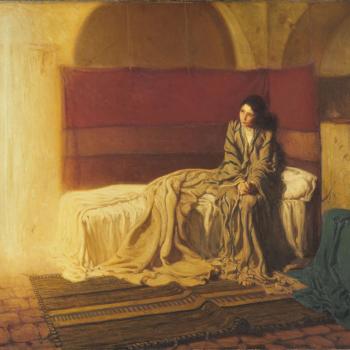
Preparing for Advent: Reflections on Tanner's "The Annunciation"

Advent Hymns: Come Thou Long Expected Jesus

Advent Hymns: Savior of the Nations, Come

Advent: What It Is & Why You Need...
TRENDING AT PATHEOS Evangelical

The REST of Your Life: A Creative Wrestles...
This week I had a conversation with a good friend from church....

How the author of the world's best hymn...
I've been working with John Newton for a while now. This makes...

Long before this Lectio Divina, Psalm 130 - the song - started...

What About the Trees? Another Living Parable
After I finished writing the last article about falling leaves as a...

Why Classical Education Is a Conversation, Not a...
Come and Read: Joy in Classical Education When I was a little...

Cornell University has received a great deal of negative publicity and intense...
view all Evangelical blogs
Ad-Free & Subscriber Log-In Subscription Support
- About Us
- 2026 Calendar
- Videos
- Podcasts
- Library of World Religions
- Faith In Media Tracker
- Advertise With Us
- Write for Us
- Privacy Policy
- Terms of Service
- Do Not Sell My Data
- Contact Us
- Radiant Digital
- Manage Newsletter Subscriptions
- Unsubscribe From Notifications
- Sitemap
Copyright 2008-2026, Patheos. All rights reserved.
Subscription Support Ad-Free & Subscriber Log-In
Follow Patheos