
BuddhistCatholicContemplativeEvangelicalGeneral ChristianHinduJewishLatter-day SaintMuslimNew VisionsProgressive Christian
Beliefs
- Buddhist
- Catholic
- Contemplative
- Evangelical
- General Christian
- Hindu
- Jewish
- Latter-day Saint
- More Voices
- Muslim
- New Visions
- Pagan
- Progressive Christian
Topics
- Religion News
- Food and Religion
- Sports and Religion
- Religious Art
- Religious Music and Entertainment
- Religious Events
- History and Religion
- Style and Religion
- Politics and Religion
- Women in Religion
- Recreation Outdoors and Religion
- Business Finance and Religion
- Careers Workplace and Religion
- Education and Religion
- Family Parenting and Religion
- Health Fitness and Religion
- Home and Religion
- Relationships and Religion
- Technology and Religion
- Travel and Religion
Columnists
- Buddhist Columnists
- Business Finance and Religion Columnists
- Careers Workplace and Religion Columnists
- Catholic Columnists
- Contemplative Columnists
- Education and Religion Columnists
- Evangelists Columnists
- Family Parenting and Religion Columnists
- General Christian Columnists
- Health Fitness and Religion Columnists
- Hindu Columnists
- History and Religion Columnists
- Home and Religion Columnists
- Jewish Columnists
- More Voices Columnists
- Latter Day Columnists
- Muslim Columnists
- New Visions Columnists
- Nonreligious Columnists
- Pagan Columnists
- Politics and Religion Columnists
- Progressive Columnists
- Recreation Outdoors and Religion Columnists
- Relationships and Religion Columnists
- Religion News Columnists
- Religious Art Columnists
- Religious Events Columnists
- Religious Music and Entertainment Columnists
- Sports and Religion Columnists
- Style and Religion Columnists
- Technology and Religion Columnists
- Travel and Religion Columnists
- Women in Religion Columnists
Resource Library
- 2026 Calendar
- Library of World Religions
- The 100 Most Holy Places on Earth
- Patheos Answers
- Podcasts
- Videos
- Faith Leaders Database
- Anglican Episcopalian
- Bahai
- Baptist
- Buddhism
- Christianity
- Confucianism
- Eastern Orthodoxy
- Hinduism
- Holiness and Pentecostal
- ISKCON
- Islam
- Judaism
- Lutheran
- Methodist
- The Church of Jesus Christ of Latter-day Saints
- New Age
- Paganism
- Presbytarian and Reformed
- Protestantism
- Religion Behind the Scenes
- Roman Catholic
- Scientology
- Shia Islam
- Sikhism
- Sufism
- Sunni Islam
- Taoism
- Zen
- See all religions
Research Tools
 Ad-Free & Subscriber Log-In Subscription Support
Ad-Free & Subscriber Log-In Subscription Support
Follow Patheos 

- Trending:
- Forgiveness
- |
- Marriage
- |
- Consciousness
- |
- Death Penalty
- |
- Election
- |
- Halloween
 Transcendentalish
- Home
- Evangelical
- Three Reasons Why We Need Lent
Three Reasons Why We Need Lent
Last updated on: February 8, 2018 at 4:56 pm by Mark Craymor
Three Reasons Why We Need Lent 2018-02-08T16:56:18+00:00 Mark Craymor
Patheos Explore the world's faith through different perspectives on religion and spirituality! Patheos has the views of the prevalent religions and spiritualities of the world.

Ash Wednesday is right around the corner. On this solemn day, the marks placed on our foreheads during the imposition of ashes mark the start of what is perhaps the most important season of the Christian calendar. Lent is the forty or so day drama that begins with Ash Wednesday and marches along for 40 days (not including Sundays). The Lenten journey perks up during Holy Week, swells in intensity during the Triduum (three day period of Good Friday, Holy Saturday, and Easter Sunday) and reaches its ultimate climax in the empty tomb on Easter or Resurrection Sunday.
The word “lent” stems from the Old English word for “long” and the German word for “spring.” During the six-ish weeks from Ash Wednesday to Easter, the days grow longer and we enter into spring. We begin in the darkness and dearth of a long winter and arrive in the light and renewed life of spring. This is indicative of the Lenten journey where we are to trace the steps of Jesus as he walks from life through death to life.
Here are three reasons why we need Lent every single year.
1. We are forgetful
First, we need Lent because we’re prone to forgetfulness. This must be part of the human condition – it is so easy to forget. It’s so easy to forget our desperate need for God. Lent serves us in that it is an annual reminder of who God is, who we are, and God’s redemptive activity driving all of human history. The Lenten journey shows us what it means to be God, what it means to be human, what it means to live, and what it means to die. These are a few rather important things we are prone to forget. Lent is a grace that helps us to remember.
2. We are fallen and fragile
Second, we need Lent because of our fallenness and fragility. It is no accident that the very thing the priest or pastor instructs us to remember is our humility. Our entrée into Lent is the grave reminder: “Remember you are dust and to dust you shall return.” The real indictment of this sobering reminder is not the fact that we are dust. According to the Scriptures, God formed man from the dust of the earth and this was part of the goodness of creation consummated with a benediction. It is good to be made from the dust. The tragedy of Ash Wednesday is the reminder that to dust we shall return. We are going to die. This sentence, perhaps better than any other, captures the fact that the world is not as it ought to be. That’s the brutal fact of our reality – the wages of sin is death.
The solution, so to speak, to our frail estate is found not in strength but in weakness. More to the point, the solution begins with humility. Elsewhere I have written on the relationship to humility and Lent:
In a word, our problem, our plight is death – the result of sin, inspired by pride. The ultimate cure for which is found in humility – in Christ’s humbling himself to take on flesh and then death on a cross and our humbling ourselves to receive his death on our behalf by faith. Christ’s condescension to our low estate is what enables our own exaltation in Christ – if only we have the humility to receive it.1
We need Lent because we need the Gospel. Lent is, in many ways, the practice of preparing ourselves to receive the Gospel in deeper ways. Lent prepares us for the welcoming “Yes” of the grace and mercy of God to us sinners, who justly deserve His “No” of judgment. But in order for God to graciously welcome us, he must first reject that in us that which is repulsive, namely sin. As Karl Barth writes in the Church Dogmatics: “God says ‘No’ in order to say ‘Yes.’”2 And this order is important: God’s “No” must precede God’s “Yes.” As Barth writes elsewhere:
There is no mistaking the fact that here man is made to hear a sharp and overwhelming divine No. But there is also no mistaking the fact that this No is enclosed within God’s creative, reconciling, and redeeming Yes to man…A condemnation is undoubtedly pronounced and executed at this juncture, but in this very condemnation reconciling grace is clearly displayed, as in the decisive execution of this condemnation on the Cross of Golgotha. Death appears here unmistakably as the final boundary of every human beginning and end, but man’s eternal life also unmistakably appears as the meaning and goal of his death.3
Lent plumbs the depths of our sin and in so doing manifests the heights of God’s great love. Jesus’ wasn’t joking when he said, “He who is forgiven little, loves little.”
3. We need to prepare for the future
Lastly, we need Lent because it prepares us for the future. Though Lent is characterized by humility, penance, and sobriety manifesting itself through service, self-sacrifice and fasting it is not meant to be a mopey time focused primarily on the past. Ash Wednesday does not ultimately characterize Lent. Christ’s empty tomb does. The “No” of Ash Wednesday is the necessary precursor to the effervescent “Yes” of the Resurrection. This is because Lent is fundamentally oriented toward the future. The process of humbling ourselves through fasting and penance serves to train us to receive Christ most fully and heightens our joy upon receiving him more and more. Lent is a season of ever deepening transformation from death unto life. The season of Lent is an appetizer that anticipates the wedding feast.
In the end, the celebration of Lent is for solidarity with Jesus. We identity with Jesus, we re-live the story of Jesus’ life, death, and resurrection. He took on our situation in order that, by virtue of being in Him, we might inherit his situation as God’s beloved children. What a wonderful thing that is.
Richard John Neuhaus puts it marvelously in his Death on a Friday Afternoon: Meditations on the Last Words of Jesus from the Cross:
The ancient Christian fathers spoke of the Christ event as the “recapitulation” of the entire human drama. In this one life, all lives are summed up; in the eternal present of this one life, the past is encompassed, the future is anticipated and the life of the Everyman and Everywoman is most truly lived. “I am the way, the truth, and the life,” he said. Not a way among other ways, not a truth among other truths, not a life among other lives, but the way of all ways, the truth of all truths and the life of all lives. Recapitulation. It means, quite simply and solemnly, that this is your life, this is my life and we have not come to our senses until we sense ourselves in the life, and death, of Christ. This is the axis mundi.3
In short, we need Lent because we need God. And, the only road to finding him follows the way of Jesus. We must follow the road to Jerusalem where we, like Jesus, find our life by losing it. Indeed, the gate is narrow and the way is hard that leads to life, and few are the ones who find it. Lent is our opportunity to get back on the way that leads to life.
1. Kevin Antlitz, “Humility,” Silencio: a resource of Leadership Transformations, Inc. February 2013.
2. Karl Barth, ed. Geoffrey William Bromiley, The Doctrine of Reconciliation (Church Dogmatics, Volume IV, 1), (Peabody: Hendrickson, 2010), pg. 347.
3. Karl Barth, Evangelical Theology: An Introduction, (Grand Rapids: Eerdmans, 1979), p. 93.
4. Richard John Neuhas, Death On A Friday Afternoon Meditations On The Last Words Of Jesus From The Cross


Browse Our Archives
Select a Category Art Current Events Film Music Poetry Review Science and Religion THE ANTLIZT Theology Uncategorized Video
Select a Month December 2021 November 2021 October 2021 September 2021 July 2021 January 2021 June 2020 May 2020 April 2020 March 2020 February 2020 November 2019 October 2019 July 2019 November 2018 August 2018 May 2018 April 2018 March 2018 February 2018 January 2018 December 2017 August 2017 December 2016 October 2016 September 2016 April 2016 September 2015 August 2015 April 2015 February 2015 January 2015 December 2014 November 2014 October 2014 September 2014 August 2014 July 2014 June 2014 May 2014 April 2014 March 2014 February 2014 January 2014
Follow Us!
TAKE THE
Religious Wisdom Quiz
Which chapter of Genesis recounts the genealogy from Adam to Noah?
Select your answer to see how you score.
Genesis 5 Genesis 2 Genesis 7 Genesis 10
Related posts from Transcendentalish

The Religious Pull of Politics OR Why you...

Visionings ^4: An Interview with an Iconographer
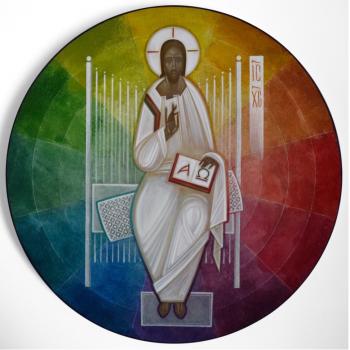
Visionings ^3: Praying Through Icons
TRENDING AT PATHEOS Evangelical

The REST of Your Life: A Creative Wrestles...
This week I had a conversation with a good friend from church....

How the author of the world's best hymn...
I've been working with John Newton for a while now. This makes...

Long before this Lectio Divina, Psalm 130 - the song - started...

What About the Trees? Another Living Parable
After I finished writing the last article about falling leaves as a...

Why Classical Education Is a Conversation, Not a...
Come and Read: Joy in Classical Education When I was a little...

Cornell University has received a great deal of negative publicity and intense...
view all Evangelical blogs
Ad-Free & Subscriber Log-In Subscription Support
- About Us
- 2026 Calendar
- Videos
- Podcasts
- Library of World Religions
- Faith In Media Tracker
- Advertise With Us
- Write for Us
- Privacy Policy
- Terms of Service
- Do Not Sell My Data
- Contact Us
- Radiant Digital
- Manage Newsletter Subscriptions
- Unsubscribe From Notifications
- Sitemap
Copyright 2008-2026, Patheos. All rights reserved.
Subscription Support Ad-Free & Subscriber Log-In
Follow Patheos