
BuddhistCatholicContemplativeEvangelicalGeneral ChristianHinduJewishLatter-day SaintMuslimNew VisionsProgressive Christian
Beliefs
- Buddhist
- Catholic
- Contemplative
- Evangelical
- General Christian
- Hindu
- Jewish
- Latter-day Saint
- More Voices
- Muslim
- New Visions
- Pagan
- Progressive Christian
Topics
- Religion News
- Food and Religion
- Sports and Religion
- Religious Art
- Religious Music and Entertainment
- Religious Events
- History and Religion
- Style and Religion
- Politics and Religion
- Women in Religion
- Recreation Outdoors and Religion
- Business Finance and Religion
- Careers Workplace and Religion
- Education and Religion
- Family Parenting and Religion
- Health Fitness and Religion
- Home and Religion
- Relationships and Religion
- Technology and Religion
- Travel and Religion
Columnists
- Buddhist Columnists
- Business Finance and Religion Columnists
- Careers Workplace and Religion Columnists
- Catholic Columnists
- Contemplative Columnists
- Education and Religion Columnists
- Evangelists Columnists
- Family Parenting and Religion Columnists
- General Christian Columnists
- Health Fitness and Religion Columnists
- Hindu Columnists
- History and Religion Columnists
- Home and Religion Columnists
- Jewish Columnists
- More Voices Columnists
- Latter Day Columnists
- Muslim Columnists
- New Visions Columnists
- Nonreligious Columnists
- Pagan Columnists
- Politics and Religion Columnists
- Progressive Columnists
- Recreation Outdoors and Religion Columnists
- Relationships and Religion Columnists
- Religion News Columnists
- Religious Art Columnists
- Religious Events Columnists
- Religious Music and Entertainment Columnists
- Sports and Religion Columnists
- Style and Religion Columnists
- Technology and Religion Columnists
- Travel and Religion Columnists
- Women in Religion Columnists
Resource Library
- 2026 Calendar
- Library of World Religions
- The 100 Most Holy Places on Earth
- Patheos Answers
- Podcasts
- Videos
- Faith Leaders Database
- Anglican Episcopalian
- Bahai
- Baptist
- Buddhism
- Christianity
- Confucianism
- Eastern Orthodoxy
- Hinduism
- Holiness and Pentecostal
- ISKCON
- Islam
- Judaism
- Lutheran
- Methodist
- The Church of Jesus Christ of Latter-day Saints
- New Age
- Paganism
- Presbytarian and Reformed
- Protestantism
- Religion Behind the Scenes
- Roman Catholic
- Scientology
- Shia Islam
- Sikhism
- Sufism
- Sunni Islam
- Taoism
- Zen
- See all religions
Research Tools
 Ad-Free & Subscriber Log-In Subscription Support
Ad-Free & Subscriber Log-In Subscription Support
Follow Patheos 

- Trending:
- Forgiveness
- |
- Marriage
- |
- Consciousness
- |
- Death Penalty
- |
- Election
- |
- Halloween
 Toward a New Creation
- Home
- Evangelical
- Politics and Religion
- The Unbiblical Innovation of Biblical Manhood and Womanhood
The Unbiblical Innovation of Biblical Manhood and Womanhood
Last updated on: August 30, 2022 at 11:10 am by Shan Norwood
The Unbiblical Innovation of Biblical Manhood and Womanhood 2022-08-30T11:10:04-04:00 Shan Norwood
Patheos Explore the world's faith through different perspectives on religion and spirituality! Patheos has the views of the prevalent religions and spiritualities of the world.
Fr Lawrence Lew, O.P./ flickr
Not Your Typical Boy
Growing up, I never felt compelled to play football, get into fights or watch sports. Many years ago, people told me boys are made of snips, snails and puppy dog tails. Girls were made of sugar, spice and everything nice. So instead of filling the traditional role of a boy, I played kickball with the neighborhood girls and learned how to bake. I also loved hanging out with older adults to learn about their history and experiences. My mom was my best friend. She helped form my curious mind and my love for learning. I dreaded physical education classes but looked forward to math and science classes. I was not your typical guy, as defined by my school-aged peers. As a boy, I was nice and loved to bake with sugar and spice. I had no idea what biblical manhood and womanhood were about to care.
Biblical Manhood and Womanhood as a Novelty
Modern evangelicalism values boundaries of perceived roles of men and women in the church and family. Biblical manhood and womanhood entered our vernacular in the late 1980s with the founding of the Council on Biblical Manhood and Womanhood (CBMW). The Danvers Statement summarizes the core beliefs of CBMW and its rationale as a reaction to a perceived threat to God’s purpose in creating feminine and masculine differences in the two genders. Thus, there is a generalized sense that the traditional roles of men and women are under attack, threatening to undermine the authority of Scripture.
In my latest post, I wrote about the egalitarian/ complementarian debate. Problems ensue when we unnecessarily force novel ideas into our interpretation of Scripture. My case of the androgynous Adam highlights the folly of importing ideas foreign to the text to support one’s side of the gender debate. We don’t need to speculate as Scripture and historical context adequately interprets Scripture.
Forcing Square Pegs Into Round Holes
For many centuries the church took its cues from the world to determine what constitutes the proper understanding of masculinity and femininity. In his defense of traditional family roles, George W Knight III makes exegetical leaps, cherry-picking biblical passages to illustrate that the responsibility of breadwinning falls primarily to the husband and the housekeeping role falls on the mother. Biologically and biblically, our differences determine the roles men and women are to assume.
In her review of The Unmaking of Biblical Womanhood, Eliza Griswold points out that in the first 1500 years of the church, the roles of women in the family and the church “were flexible and prone to shifting and evolving.” Only after the Industrial Revolution did women and jobs move to the factories. Women were encouraged to remain at home based on the scientific notions that “women’s limited minds” better suited them for domestic tasks. The move to elevate men to positions of power above women soon found its way into theological circles. Consequentially, many used Scripture to support the notion that God-ordained gender roles locked us all in predefined categories.
World history indicates that biological differences dictate male authoritarian rule over women. However, biology itself need not determine roles for men and women in society. For the past 60 years, modern society has erased or minimized biological gender to equalize the playing field between men and women and challenge traditional gender norms, as a recent Time Magazine article argues. God created gender differences, not that submission would be one-sided, creating power differences, but that men and women may submit to one another in love. Gender equality does not mean gender sameness. Paul argues that in Christ, there is no male and female regarding our position as children of God through faith. Paul does not erase the gender reality. Instead, he does away with class distinctions held between men and women in the Graeco-Roman world.
A Lesson in Discipleship
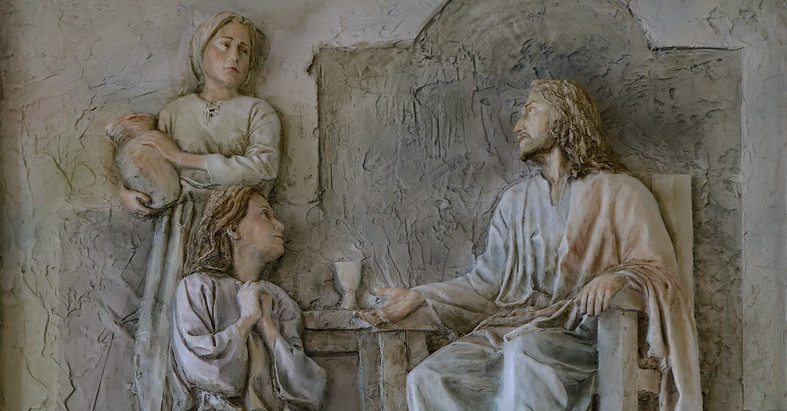
In the story of Mary and Martha, Jesus challenged the traditional view of women’s role in the New Testament by highlighting the posture of Mary as a disciple above that of Martha as a traditional homemaker. It’s common to view this story as a lesson on the importance of spending time with Jesus versus keeping busy. However, the story touches on some important cultural issues regarding the traditional roles of men and women in that society. In the story, Mary sat at Jesus’ feet, indicating she took a disciple’s posture. We see from her eagerness to listen and learn from Jesus that she is setting herself apart from other women who would listen to a rabbi teaching the Torah in the synagogue at a distance.
However, only disciples sat at Jesus’ feet. Jesus could have quickly told Mary to return and find her place, with Martha taking care of the host’s duties. Instead, one could argue that he acknowledges that Mary’s posture as a disciple is more valued than Martha’s household duties. As crucial as hospitality was in that culture, Jesus flipped the concept of traditional female societal roles. He did so by empowering Mary to take on the role of a disciple, which would have included preaching the Gospel. Mary would have shocked most of the Jewish men, having ditched her traditional role.
The novel Council on Biblical Manhood and Womanhood was formed as a reaction to perceived threats to Biblical authority. The council underscored the value of God’s creation of the two genders as complimentary. However, its purpose was also an overreach to prevent the inclusion of women in all areas of ministry. Jesus’ encounter with Mary and Martha indicates that traditional gender roles are fluid and not set in stone. Women should feel free from the restrictions placed on them by their male counterparts. Women have a choice in what roles they may fill in ministry. Martha did not sin in choosing the role of the harried housekeeper. However, as Jesus expressed to Martha, Mary chose the better part.
Politics and Religion
Home and Religion
History and Religion
Education and Religion
Council on Biblical Manhood and Womanhood
Previous Post

August 23, 2022
An Androgynous Adam? My Thoughts on a Fringe Speculation
Next Post

September 6, 2022 Blessing or Curse: Could We Be Wrong About Job's Wife?
Browse Our Archives
Select a Category Bible and Gender Bible Interpretation Christian Hope Christian Living Gratitude Politics Uncategorized
Select a Month December 2023 June 2023 September 2022 August 2022 July 2022
TAKE THE
Religious Wisdom Quiz
Who said, "What is impossible with man is possible with God"?
Select your answer to see how you score.
Moses Jesus Paul Peter
Related posts from Toward a New Creation

Do We Need Another Hustle Bustle Holiday Season?
Was Junia an Apostle? Paul, Junia and the...
Who’s Got the Power Now? A Perspective in...
Blessing or Curse: Could We Be Wrong About...
TRENDING AT PATHEOS Evangelical

The REST of Your Life: A Creative Wrestles...
This week I had a conversation with a good friend from church....

How the author of the world's best hymn...
I've been working with John Newton for a while now. This makes...

Long before this Lectio Divina, Psalm 130 - the song - started...

What About the Trees? Another Living Parable
After I finished writing the last article about falling leaves as a...

Why Classical Education Is a Conversation, Not a...
Come and Read: Joy in Classical Education When I was a little...

Cornell University has received a great deal of negative publicity and intense...
view all Evangelical blogs
Ad-Free & Subscriber Log-In Subscription Support
- About Us
- 2026 Calendar
- Videos
- Podcasts
- Library of World Religions
- Faith In Media Tracker
- Advertise With Us
- Write for Us
- Privacy Policy
- Terms of Service
- Do Not Sell My Data
- Contact Us
- Radiant Digital
- Manage Newsletter Subscriptions
- Unsubscribe From Notifications
- Sitemap
Copyright 2008-2026, Patheos. All rights reserved.
Subscription Support Ad-Free & Subscriber Log-In
Follow Patheos