
BuddhistCatholicContemplativeEvangelicalGeneral ChristianHinduJewishLatter-day SaintMuslimNew VisionsProgressive Christian
Beliefs
- Buddhist
- Catholic
- Contemplative
- Evangelical
- General Christian
- Hindu
- Jewish
- Latter-day Saint
- More Voices
- Muslim
- New Visions
- Pagan
- Progressive Christian
Topics
- Religion News
- Food and Religion
- Sports and Religion
- Religious Art
- Religious Music and Entertainment
- Religious Events
- History and Religion
- Style and Religion
- Politics and Religion
- Women in Religion
- Recreation Outdoors and Religion
- Business Finance and Religion
- Careers Workplace and Religion
- Education and Religion
- Family Parenting and Religion
- Health Fitness and Religion
- Home and Religion
- Relationships and Religion
- Technology and Religion
- Travel and Religion
Columnists
- Buddhist Columnists
- Business Finance and Religion Columnists
- Careers Workplace and Religion Columnists
- Catholic Columnists
- Contemplative Columnists
- Education and Religion Columnists
- Evangelists Columnists
- Family Parenting and Religion Columnists
- General Christian Columnists
- Health Fitness and Religion Columnists
- Hindu Columnists
- History and Religion Columnists
- Home and Religion Columnists
- Jewish Columnists
- More Voices Columnists
- Latter Day Columnists
- Muslim Columnists
- New Visions Columnists
- Nonreligious Columnists
- Pagan Columnists
- Politics and Religion Columnists
- Progressive Columnists
- Recreation Outdoors and Religion Columnists
- Relationships and Religion Columnists
- Religion News Columnists
- Religious Art Columnists
- Religious Events Columnists
- Religious Music and Entertainment Columnists
- Sports and Religion Columnists
- Style and Religion Columnists
- Technology and Religion Columnists
- Travel and Religion Columnists
- Women in Religion Columnists
Resource Library
- 2026 Calendar
- Library of World Religions
- The 100 Most Holy Places on Earth
- Patheos Answers
- Podcasts
- Videos
- Faith Leaders Database
- Anglican Episcopalian
- Bahai
- Baptist
- Buddhism
- Christianity
- Confucianism
- Eastern Orthodoxy
- Hinduism
- Holiness and Pentecostal
- ISKCON
- Islam
- Judaism
- Lutheran
- Methodist
- The Church of Jesus Christ of Latter-day Saints
- New Age
- Paganism
- Presbytarian and Reformed
- Protestantism
- Religion Behind the Scenes
- Roman Catholic
- Scientology
- Shia Islam
- Sikhism
- Sufism
- Sunni Islam
- Taoism
- Zen
- See all religions
Research Tools
 Ad-Free & Subscriber Log-In Subscription Support
Ad-Free & Subscriber Log-In Subscription Support
Follow Patheos 

- Trending:
- Forgiveness
- |
- Marriage
- |
- Consciousness
- |
- Death Penalty
- |
- Election
- |
- Halloween
 Theoblogy
- Home
- Progressive Christian
- What Progressive Christianity Needs Is More Apocalypse
What Progressive Christianity Needs Is More Apocalypse
Last updated on: March 13, 2015 at 4:43 pm by Tony Jones
What Progressive Christianity Needs Is More Apocalypse 2015-03-13T16:43:36-05:00 Tony Jones
Patheos Explore the world's faith through different perspectives on religion and spirituality! Patheos has the views of the prevalent religions and spiritualities of the world.
Four Horsemen of Apocalypse, by Viktor Vasnetsov. Painted in 1887.
I appreciate what Richard Beck did in his series of posts, calling on progressive Christians to recover the biblical language of spiritual warfare. But, as I noted yesterday, I think there are a couple of weaknesses with that line of reasoning. One is that, while spiritual warfare language is biblical, it does not emanate from Jesus.
So I’d like to offer an alternative, and highly related, corrective to Richard’s.
I think that progressive Christians need to reclaim the biblical language of the apocalyptic.
For one thing, apocalyptic language begins in the Hebrew Scripture. It’s rife in the prophets, especially the later prophets, and most notably in Daniel. (Spiritual warfare language is almost completely absent from the Hebrew Scripture; in fact, in Job, it seems that YHWH and Satan are card-playing buddies.)
Secondly, Jesus is an apocalyptic preacher. From the oldest and probably most reliable Gospel, Mark, comes the “Little Apocalypse.” Therein, Jesus says,
“When you hear of wars and rumours of wars, do not be alarmed; this must take place, but the end is still to come. For nation will rise against nation, and kingdom against kingdom; there will be earthquakes in various places; there will be famines. This is but the beginning of the birth pangs…
“But when you see the desolating sacrilege set up where it ought not to be (let the reader understand), then those in Judea must flee to the mountains; someone on the housetop must not go down or enter the house to take anything away; someone in the field must not turn back to get a coat. Woe to those who are pregnant and to those who are nursing infants in those days! Pray that it may not be in winter. For in those days there will be suffering, such as has not been from the beginning of the creation that God created until now, no, and never will be.”
There’s more as well — the entirety if Mark 13 is an apocalyptic sermon by Jesus. The other Gospels have plenty of apocalypticism as well.
The apocalyptic comes up elsewhere in the New Testament, and is obviously the whole point of the Book of Revelation. (Thus, the apocalyptic get many more column inches in the New Testament than does spiritual warfare.)
Thirdly, the apocalyptic was central to the self-identity of the early church. For example, the Didache (which was likely written in the 50s, contemporaneous with Paul’s letters, ends with this apocalyptic passage:
Watch over your life, that your lamps are never quenched, and that your loins are never unloosed. Be ready, for you do not know on what day your Lord is coming. Come together often, seeking the things that are good for your souls. A life of faith will not profit you if you are not made perfect at the end of time. For in the last days false prophets and corrupters will be plenty, and the sheep will be turned into wolves, and love will be turned into hate.
When lawlessness increases, they will hate and persecute and betray one another, and then the world-deceiver will appear claiming to be the Son of God, and he will do signs and wonders, and the earth will be delivered into his hands, and he will do iniquitous things that have not been seen since the beginning of the world. Then humankind will enter into the fire of trial, and many will be made to stumble and many will perish; but those who endure in their faith will be saved from under the curse itself. And then the signs of the truth will appear: the first sign, an opening of the heavens; the second sign, the sounding of the trumpet; and the third sign, the resurrection of the dead—not of every one, but as it is said: “Then the Lord my God will come, and all the holy ones with him.”
Finally, “Then the sign of the Son of Man will appear in heaven, and then all the tribes of the earth will mourn, and they will see the Son of Man coming on the clouds of heaven’ with power and great glory.”
Indeed, throughout the last two millennia, the church has seen itself as an apocalyptic community — both as a witness to the eschaton of God, and as evidence that the eschaton is just around the corner.
Here’s the thing about the apocalyptic texts in the Bible (as opposed to spiritual warfare), and why I think that the apocalyptic will appeal more to progressives: In the Bible and early Christian literature, the apocalypse is always the result of human behavior. Yes, God is involved. But God does not inaugurate the apocalypse: God appears on the scene because everything has gone to hell. God then sets things right, and God ushers in The End, wherein justice and mercy and equality reign.
So, as we look around and see the degradation of our planet, witness overpopulation, mourn our never-ending wars, and grieve that billions still live in poverty and hunger in spite of the fact that we’ve got plenty of food for everyone, the Bible has an answer. God will return in glory — God will be fully present in a way that God has not been since Jesus of Nazareth.
So, Richard and others, what do you think? Can progressive Christians embrace and preach the apocalyptic language of the Bible?
Previous Post

July 10, 2013
Does Progressive Christianity Need Warfare to Thrive?
Next Post
July 12, 2013 Here's the Controversial Audio
Browse Our Archives
Select a Category bible blogging books christianity in america church church history dissertation divorce Dog Training education emergent church essay family funny glbt jopa productions ministry minnesota movies music parenting philosophy politics Prayer publishing Questions That Haunt random same sex marriage speaking spirituality Teaching technology television theology Travels Uncategorized writing youth ministry
Select a Month January 2015 December 2014 November 2014 October 2014 September 2014 August 2014 July 2014 June 2014 May 2014 April 2014 March 2014 February 2014 January 2014 December 2013 November 2013 October 2013 September 2013 August 2013 July 2013 June 2013 May 2013 April 2013 March 2013 February 2013 January 2013 December 2012 November 2012 October 2012 September 2012 August 2012 July 2012 June 2012 May 2012 April 2012 March 2012 February 2012 January 2012 December 2011 November 2011 October 2011 September 2011 August 2011 July 2011 June 2011 May 2011 April 2011 March 2011 February 2011 January 2011 December 2010 November 2010 October 2010 September 2010 August 2010 July 2010 June 2010 May 2010 April 2010 March 2010 February 2010 January 2010 December 2009 November 2009 October 2009 September 2009 August 2009 July 2009 June 2009 May 2009 April 2009 March 2009 February 2009 January 2009 December 2008 November 2008 October 2008 September 2008 August 2008 July 2008 June 2008 May 2008 April 2008 March 2008 February 2008 January 2008 December 2007 November 2007 October 2007 September 2007 August 2007 July 2007 June 2007 May 2007 April 2007 March 2007 February 2007 January 2007 December 2006 November 2006 October 2006 September 2006 August 2006 June 2006 May 2006 March 2006 February 2006 January 2006 December 2005 November 2005 October 2005 September 2005 August 2005 June 2005 April 2005 March 2005 February 2005 January 2005 December 2004 November 2004 October 2004 August 2004 February 2004 January 2004
Follow Us!
TAKE THE
Religious Wisdom Quiz
Who doubted Jesus' resurrection until he saw His wounds?
Select your answer to see how you score.
James Philip Thomas Peter
Related posts from Theoblogy

New Date, Final Cover, Big News #DGKJ

No One's Heard of Paul Ricoeur
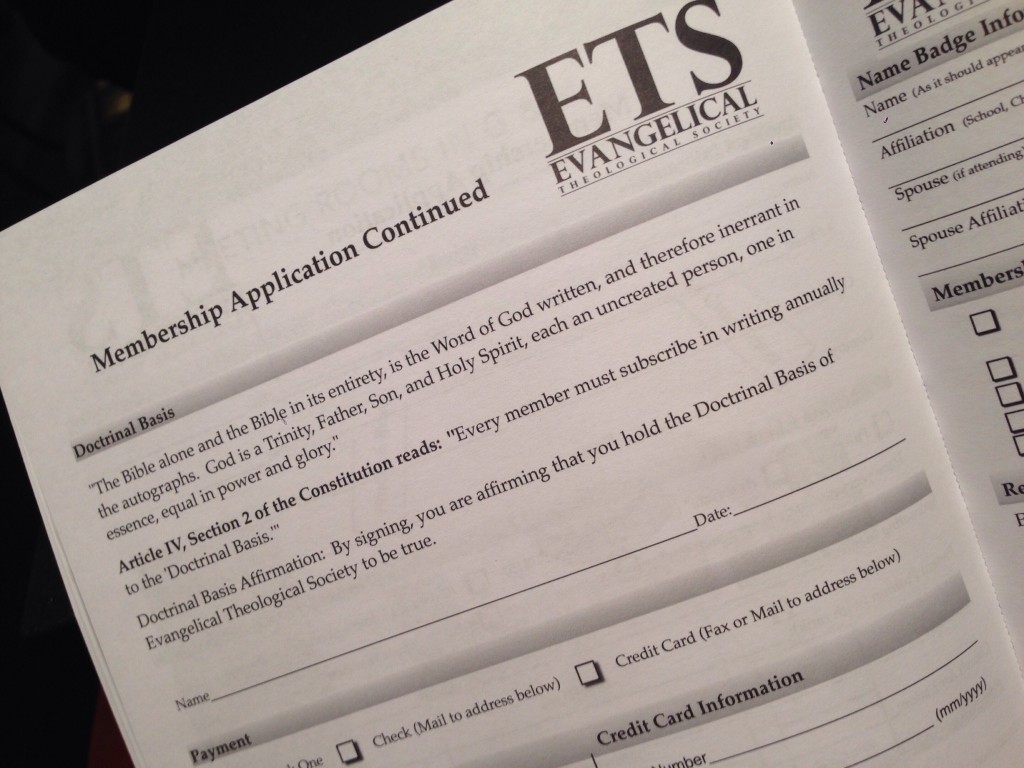
What Happened to Evangelical Theology? [#ETS2014 Liveblog]

TRENDING AT PATHEOS Progressive Christian

Why Christians Have a Sacred Duty to Vote:...
The Bible offers strong support for the sacred duty to vote. Here...

What Being a Modern-Day Apostle Means to Me
In my last column, I discussed the ins and outs of modern-day...

Did Ancient China Once Worship the God of...
Across human history, a common thread weaves through the origins of the...

Love Your Neighbor – Including Earth-Kin: Lev. 19,...
God’s command to love your neighbor means acting in an ethical and...

Lead a Church Study of “Jesus and Lao...
Guest writer Jack Thomas (The Irreverent Reverend) reflects on leading his church...

Principles for Understanding the Apostolic Ministry Today
Whenever people discover that my formal ministry title is "apostle," as in...
view all Progressive Christian blogs
Ad-Free & Subscriber Log-In Subscription Support
- About Us
- 2026 Calendar
- Videos
- Podcasts
- Library of World Religions
- Faith In Media Tracker
- Advertise With Us
- Write for Us
- Privacy Policy
- Terms of Service
- Do Not Sell My Data
- Contact Us
- Radiant Digital
- Manage Newsletter Subscriptions
- Unsubscribe From Notifications
- Sitemap
Copyright 2008-2026, Patheos. All rights reserved.
Subscription Support Ad-Free & Subscriber Log-In
Follow Patheos