
BuddhistCatholicContemplativeEvangelicalGeneral ChristianHinduJewishLatter-day SaintMuslimNew VisionsProgressive Christian
Beliefs
- Buddhist
- Catholic
- Contemplative
- Evangelical
- General Christian
- Hindu
- Jewish
- Latter-day Saint
- More Voices
- Muslim
- New Visions
- Pagan
- Progressive Christian
Topics
- Religion News
- Food and Religion
- Sports and Religion
- Religious Art
- Religious Music and Entertainment
- Religious Events
- History and Religion
- Style and Religion
- Politics and Religion
- Women in Religion
- Recreation Outdoors and Religion
- Business Finance and Religion
- Careers Workplace and Religion
- Education and Religion
- Family Parenting and Religion
- Health Fitness and Religion
- Home and Religion
- Relationships and Religion
- Technology and Religion
- Travel and Religion
Columnists
- Buddhist Columnists
- Business Finance and Religion Columnists
- Careers Workplace and Religion Columnists
- Catholic Columnists
- Contemplative Columnists
- Education and Religion Columnists
- Evangelists Columnists
- Family Parenting and Religion Columnists
- General Christian Columnists
- Health Fitness and Religion Columnists
- Hindu Columnists
- History and Religion Columnists
- Home and Religion Columnists
- Jewish Columnists
- More Voices Columnists
- Latter Day Columnists
- Muslim Columnists
- New Visions Columnists
- Nonreligious Columnists
- Pagan Columnists
- Politics and Religion Columnists
- Progressive Columnists
- Recreation Outdoors and Religion Columnists
- Relationships and Religion Columnists
- Religion News Columnists
- Religious Art Columnists
- Religious Events Columnists
- Religious Music and Entertainment Columnists
- Sports and Religion Columnists
- Style and Religion Columnists
- Technology and Religion Columnists
- Travel and Religion Columnists
- Women in Religion Columnists
Resource Library
- 2026 Calendar
- Library of World Religions
- The 100 Most Holy Places on Earth
- Patheos Answers
- Podcasts
- Videos
- Faith Leaders Database
- Anglican Episcopalian
- Bahai
- Baptist
- Buddhism
- Christianity
- Confucianism
- Eastern Orthodoxy
- Hinduism
- Holiness and Pentecostal
- ISKCON
- Islam
- Judaism
- Lutheran
- Methodist
- The Church of Jesus Christ of Latter-day Saints
- New Age
- Paganism
- Presbytarian and Reformed
- Protestantism
- Religion Behind the Scenes
- Roman Catholic
- Scientology
- Shia Islam
- Sikhism
- Sufism
- Sunni Islam
- Taoism
- Zen
- See all religions
Research Tools
 Ad-Free & Subscriber Log-In Subscription Support
Ad-Free & Subscriber Log-In Subscription Support
Follow Patheos 

- Trending:
- Forgiveness
- |
- Marriage
- |
- Consciousness
- |
- Death Penalty
- |
- Election
- |
- Halloween
 Theoblogy
- Home
- Progressive Christian
- Jesus Is the Ultimate Redemptor [Questions That Haunt]
Jesus Is the Ultimate Redemptor [Questions That Haunt]
Last updated on: March 13, 2015 at 4:44 pm by Tony Jones
Jesus Is the Ultimate Redemptor [Questions That Haunt] 2015-03-13T16:44:50-05:00 Tony Jones
Patheos Explore the world's faith through different perspectives on religion and spirituality! Patheos has the views of the prevalent religions and spiritualities of the world.
This week, Lance asked,
Have you posted or tackled much regarding all the parrallels of Jesus, Horus and Dionysus (or others if they exist)? This has come up twice recently for me and is never discussed here in Texas, or in my Pentecostal heritage 🙂 “Questions that Haunt” popped in my head. Not only would I be interested in the historical contexts but I am wondering if there’s anything that also talks about how these gods were worshipped and anything about the followers. I’m always curious to know WHY people believe what they do more than anything else.
In a follow-up comment, he expanded,
Somehow, this question grew into something more for me. I began to wonder, as one has already said, what are the impacts on our belief system, even if there are mythological influences on our Bible? What would that mean to our faith? This has me thinking, what is it that we’re called to “Believe”? Is belief simply determining if we agree there was a Historical Jesus? What did Jesus mean when he said “Believe in Me”? If I ask someone to believe in me, I’m not asking them to make some sort of mental decision to accept the narrative of my life. I’m asking something else entirely, and I wonder if Jesus was asking the same. Someone commented about how the teachings of Jesus have no parallel to any of the other gods. The messages of hope, love, mercy, forgiveness…, all much unlike other ancient (and I assume often barbaric) religions. Is this the problem with unbelief, in that we’ve all been conditioned to believe in the wrong thing? Are we to put our faith in a history lesson or as my nephew would complain, use faith to fill in the historical gaps and contradictions? Or is faith meant to be placed in the message?
The latter seems more appropriate to me. More life giving. More substantive. and has me looking at a number of Scriptures with another perspective in mind.
Thanks, Lance. Here’s my response:
A few years ago, I had a stock part of talks that I would give on “Christ and Church and Culture,” something I’ve been asked to speak on frequently. I put up an image of the cast of American Idol, and baldly stated: “Ryan Seacrest is the messiah figure on American Idol.”
I went on to explain my theory that Simon Cowell was clearly the Lucifer character, and Randy and Paula were demons under his command. But Ryan, dear Ryan, was something else entirely. When contestants emerged from their moments of temptation and trial, Ryan was waiting outside the door. If they held a victorious yellow ticket, he celebrated with them. If they emerged ticketless and fell to the floor sobbing, he would pick them up. I’m talking literally, not figuratively. Ryan would pick up those who had fallen and comfort them and their family members — even the contestants who had clearly made it to the judging room solely because they were hilarious freaks.
On the big stage in the final rounds, Ryan stood by the contestants with his arm around them as Lucifer shot them with slings and arrows of withering criticisms. At times, Ryan would (again, literally) step in between Lucifer and his victim, defending the contestant. At that point, Simon would often berate Ryan, mock his height, and even question his sexuality. Ryan Seacrest took on the role of mediator — the innocent victim vicariously receiving the punishment meant for another.
For centuries — maybe since humans have had the ability to communicate — literature and culture has been rife with messiah figures. Indeed, the genius of René Girard is that he recognized this trait in his study of literature, and he saw the trajectory changing as societies became less primitive.
But whether primitive or advanced, the desire for a messiah is universal to humankind. Every religion has one, and virtually every novel and film has one.
There are clearly parallels between Jesus and Dionysus. And between Jesus and Horus. And between Jesus and Ryan Seacrest. But if you dig a bit into the literature, you’ll see that everyone from Bart Ehrman to Bill Maher have really overblown the parallels. Just as you may think I have done with Jesus/Seacrest.
The details in any of these parallels don’t match. But the archetypes do, and that’s what I find most interesting.
The difference between Jesus and these others is that Jesus fulfills all of the characteristics of the archetype. In fact, Jesus is the archetype. In his death and resurrection, Jesus does everything that humans have always longed for a messiah to do.
So it does not surprise me that we see messianic parallels between Jesus and other religious figures, and neither does it challenge my faith. In fact, it only substantiates what we sing on Christmas: “The hopes and fears of all the years are met in thee tonight.”
When it comes to your latter comment/question, Lance, it seems that you’ve already come to the same conclusion as me: The message, and Jesus’ fulfillment of our hope and need of a messiah, is what’s most important.
Previous Post

March 25, 2013
Rob Bell Round-Up
Next Post

March 26, 2013 Questions That Haunt - The Book
Browse Our Archives
Select a Category bible blogging books christianity in america church church history dissertation divorce Dog Training education emergent church essay family funny glbt jopa productions ministry minnesota movies music parenting philosophy politics Prayer publishing Questions That Haunt random same sex marriage speaking spirituality Teaching technology television theology Travels Uncategorized writing youth ministry
Select a Month January 2015 December 2014 November 2014 October 2014 September 2014 August 2014 July 2014 June 2014 May 2014 April 2014 March 2014 February 2014 January 2014 December 2013 November 2013 October 2013 September 2013 August 2013 July 2013 June 2013 May 2013 April 2013 March 2013 February 2013 January 2013 December 2012 November 2012 October 2012 September 2012 August 2012 July 2012 June 2012 May 2012 April 2012 March 2012 February 2012 January 2012 December 2011 November 2011 October 2011 September 2011 August 2011 July 2011 June 2011 May 2011 April 2011 March 2011 February 2011 January 2011 December 2010 November 2010 October 2010 September 2010 August 2010 July 2010 June 2010 May 2010 April 2010 March 2010 February 2010 January 2010 December 2009 November 2009 October 2009 September 2009 August 2009 July 2009 June 2009 May 2009 April 2009 March 2009 February 2009 January 2009 December 2008 November 2008 October 2008 September 2008 August 2008 July 2008 June 2008 May 2008 April 2008 March 2008 February 2008 January 2008 December 2007 November 2007 October 2007 September 2007 August 2007 July 2007 June 2007 May 2007 April 2007 March 2007 February 2007 January 2007 December 2006 November 2006 October 2006 September 2006 August 2006 June 2006 May 2006 March 2006 February 2006 January 2006 December 2005 November 2005 October 2005 September 2005 August 2005 June 2005 April 2005 March 2005 February 2005 January 2005 December 2004 November 2004 October 2004 August 2004 February 2004 January 2004
Follow Us!
TAKE THE
Religious Wisdom Quiz
Which couple taught Apollos more accurately about Jesus in Ephesus?
Select your answer to see how you score.
Priscilla and Aquila Mary and Joseph Lydia and Titus Ananias and Sapphira
Related posts from Theoblogy

New Date, Final Cover, Big News #DGKJ


No One's Heard of Paul Ricoeur
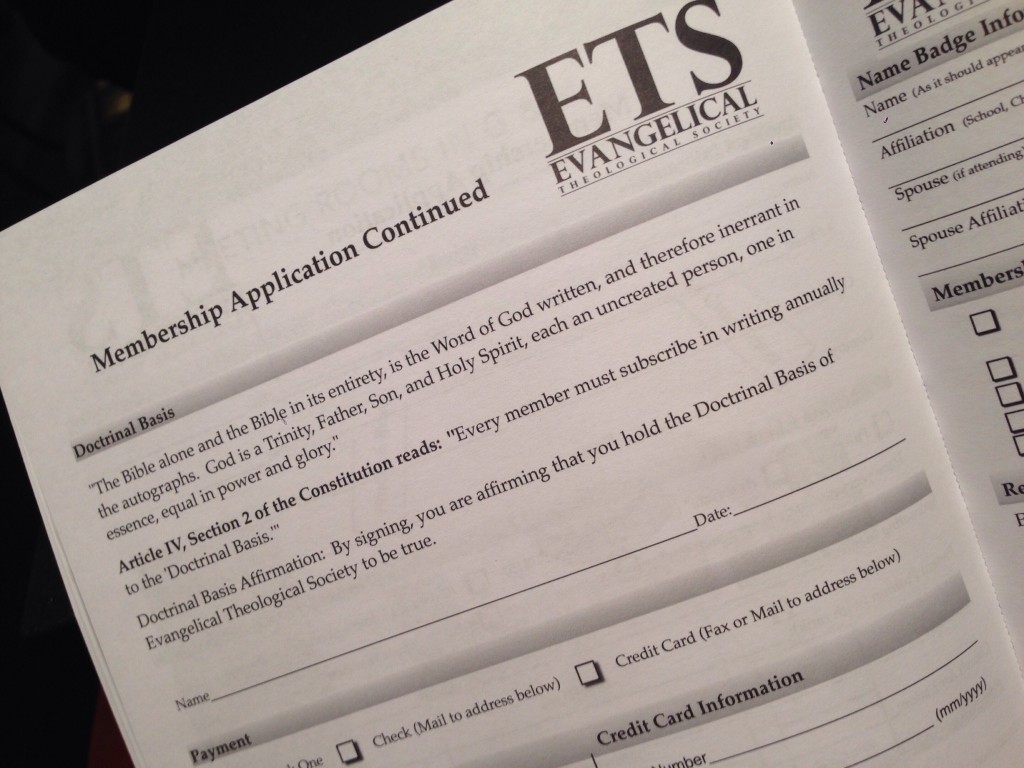
What Happened to Evangelical Theology? [#ETS2014 Liveblog]
TRENDING AT PATHEOS Progressive Christian

Why Christians Have a Sacred Duty to Vote:...
The Bible offers strong support for the sacred duty to vote. Here...

What Being a Modern-Day Apostle Means to Me
In my last column, I discussed the ins and outs of modern-day...

Did Ancient China Once Worship the God of...
Across human history, a common thread weaves through the origins of the...

Love Your Neighbor – Including Earth-Kin: Lev. 19,...
God’s command to love your neighbor means acting in an ethical and...

Lead a Church Study of “Jesus and Lao...
Guest writer Jack Thomas (The Irreverent Reverend) reflects on leading his church...

Principles for Understanding the Apostolic Ministry Today
Whenever people discover that my formal ministry title is "apostle," as in...
view all Progressive Christian blogs
Ad-Free & Subscriber Log-In Subscription Support
- About Us
- 2026 Calendar
- Videos
- Podcasts
- Library of World Religions
- Faith In Media Tracker
- Advertise With Us
- Write for Us
- Privacy Policy
- Terms of Service
- Do Not Sell My Data
- Contact Us
- Radiant Digital
- Manage Newsletter Subscriptions
- Unsubscribe From Notifications
- Sitemap
Copyright 2008-2026, Patheos. All rights reserved.
Subscription Support Ad-Free & Subscriber Log-In
Follow Patheos