
BuddhistCatholicContemplativeEvangelicalGeneral ChristianHinduJewishLatter-day SaintMuslimNew VisionsProgressive Christian
Beliefs
- Buddhist
- Catholic
- Contemplative
- Evangelical
- General Christian
- Hindu
- Jewish
- Latter-day Saint
- More Voices
- Muslim
- New Visions
- Pagan
- Progressive Christian
Topics
- Religion News
- Food and Religion
- Sports and Religion
- Religious Art
- Religious Music and Entertainment
- Religious Events
- History and Religion
- Style and Religion
- Politics and Religion
- Women in Religion
- Recreation Outdoors and Religion
- Business Finance and Religion
- Careers Workplace and Religion
- Education and Religion
- Family Parenting and Religion
- Health Fitness and Religion
- Home and Religion
- Relationships and Religion
- Technology and Religion
- Travel and Religion
Columnists
- Buddhist Columnists
- Business Finance and Religion Columnists
- Careers Workplace and Religion Columnists
- Catholic Columnists
- Contemplative Columnists
- Education and Religion Columnists
- Evangelists Columnists
- Family Parenting and Religion Columnists
- General Christian Columnists
- Health Fitness and Religion Columnists
- Hindu Columnists
- History and Religion Columnists
- Home and Religion Columnists
- Jewish Columnists
- More Voices Columnists
- Latter Day Columnists
- Muslim Columnists
- New Visions Columnists
- Nonreligious Columnists
- Pagan Columnists
- Politics and Religion Columnists
- Progressive Columnists
- Recreation Outdoors and Religion Columnists
- Relationships and Religion Columnists
- Religion News Columnists
- Religious Art Columnists
- Religious Events Columnists
- Religious Music and Entertainment Columnists
- Sports and Religion Columnists
- Style and Religion Columnists
- Technology and Religion Columnists
- Travel and Religion Columnists
- Women in Religion Columnists
Resource Library
- 2026 Calendar
- Library of World Religions
- The 100 Most Holy Places on Earth
- Patheos Answers
- Podcasts
- Videos
- Faith Leaders Database
- Anglican Episcopalian
- Bahai
- Baptist
- Buddhism
- Christianity
- Confucianism
- Eastern Orthodoxy
- Hinduism
- Holiness and Pentecostal
- ISKCON
- Islam
- Judaism
- Lutheran
- Methodist
- The Church of Jesus Christ of Latter-day Saints
- New Age
- Paganism
- Presbytarian and Reformed
- Protestantism
- Religion Behind the Scenes
- Roman Catholic
- Scientology
- Shia Islam
- Sikhism
- Sufism
- Sunni Islam
- Taoism
- Zen
- See all religions
Research Tools
 Ad-Free & Subscriber Log-In Subscription Support
Ad-Free & Subscriber Log-In Subscription Support
Follow Patheos 

- Trending:
- Forgiveness
- |
- Marriage
- |
- Consciousness
- |
- Death Penalty
- |
- Election
- |
- Halloween
 Theoblogy
- Home
- Progressive Christian
- Jesus Didn’t Rescue Himself from the Cross because He Couldn’t [Questions That Haunt]
Jesus Didn’t Rescue Himself from the Cross because He Couldn’t [Questions That Haunt]
Last updated on: March 13, 2015 at 4:45 pm by Tony Jones
Jesus Didn’t Rescue Himself from the Cross because He Couldn’t [Questions That Haunt] 2015-03-13T16:45:37-05:00 Tony Jones
Patheos Explore the world's faith through different perspectives on religion and spirituality! Patheos has the views of the prevalent religions and spiritualities of the world.
Awadhesh Kumar Singh supplied this week’s Question:
Why could Jesus not show the miracle of being saved from being crucified? Surely, he expected to be saved, as his last words show: “God, God, why have you forsaken me?”
As usual, the commentary was great — although I think that some of you formerly Christian commenters have pretty much run out the string on your lines of argument. Saying we don’t need a crucifixion or a resurrection may be satisfying to you, but it’s clearly unsatisfying to most of us.
Let me start my answer to Awadhesh’s question, with a story (if the story bores you, skip to my points at the end):
Polycarp was the Bishop of Smyrna in the mid-second century. At 86 years old, he was arrested and told by the Roman proconsul that he’d be released if he simply swore an oath to the emperor and cursed Christ. He refused and was taken to the arena to be killed, whereupon he heard a voice from heaven saying, “Be strong, Polycarp, and play the man!”
Again, the proconsul pressed him:
“Take the oath, and I shall release you. Curse Christ.”
Polycarp said: “Eighty-six years I have served him, and he never did me any wrong. How can I blaspheme my King who saved me?”
The Martyrdom of Polycarp continues the story,
Then these things happened with such dispatch, quicker than can be told—the crowds in so great a hurry to gather wood and faggots from the workshops and the baths, the Jews being especially zealous, as usual, to assist with this. When the fire was ready, and he had divested himself of all his clothes and unfastened his belt, he tried to take off his shoes, though he was not heretofore in the habit of doing this because [each of] the faithful always vied with one another as to which of them would be first to touch his body. For he had always been honored, even before his martyrdom, for his holy life. Straightway then, they set about him the material prepared for the pyre. And when they were about to nail him also, he said: “Leave me as I am. For he who grants me to endure the fire will enable me also to remain on the pyre unmoved, without the security you desire from the nails.”
Polycarp continued to preach the gospel, even as the wood and faggots were lit. Then this happened,
And when he had concluded the Amen and finished his prayer, the men attending to the fire lighted it. And when the flame flashed forth, we saw a miracle, we to whom it was given to see. And we are preserved in order to relate to the rest what happened. For the fire made the shape of a vaulted chamber, like a ship’s sail filled by the wind, and made a wall around the body of the martyr. And he was in the midst, not as burning flesh, but as bread baking or as gold and silver refined in a furnace. And we perceived such a sweet aroma as the breath of incense or some other precious spice.
At length, when the lawless men saw that his body could not be consumed by the fire, they commanded an executioner to go to him and stab him with a dagger. And when he did this a dove and a great quantity of blood came forth, so that the fire was quenched and the whole crowd marveled that there should be such a difference between the unbelievers and the elect. And certainly the most admirable Polycarp was one of these [elect], in whose times among us he showed himself an apostolic and prophetic teacher and bishop of the Catholic Church in Smyrna. Indeed, every utterance that came from his mouth was accomplished and will be accomplished.
Did you get that? When they burned him at the stake, he didn’t burn. Instead, he smelled of incense. So they sliced open his chest with a sword and a dove flew out.
In my industry, this is called hagiography, a very common form of religious literature. Had a host of angels descended from heaven and rescued Jesus from the Cross, his death would have fallen into this genre of literature, rather than into the Gospel genre. That’s my first point: It would have been totally expected for the story to end with Jesus being rescued from the Cross.
My second point is that some early Christians did, indeed, believe that Jesus was rescued from the Cross — or at least that his divinity was. The Docetists thought that Jesus’ human body was only an apparition — they were so scandalized by the thought that God would become a meat puppet that they recast the incarnation and the crucifixion as little more than a magic trick. Other early churchers thought that Jesus’ divinity was vacuumed from his body by the Father just moments before his body died, thus ensuring that God would not experience death. But, I ask, if God didn’t experience death, then what’s the point of the crucifixion?
My final point is a related, theological point: the crucifixion of Jesus of Nazareth, who was incarnate of God, shows God’s ultimate solidarity with all of humanity. This is a theme that I have reiterated many times on this blog. It’s the keystone of my entire theological system.
When I write in the headline that Jesus didn’t rescue himself from the Cross because he couldn’t, I mean this in two ways: 1) While Jesus of Nazareth was empowered by the Holy Spirit to perform miracles, this clearly didn’t extend to Superman like powers — Jesus didn’t fly or make time stand still; this isn’t how his miraculous abilities worked. And this would have subverted the reason for miracles: the miracles of Jesus were not magic tricks meant to exhibit his divinity but signs of the coming Kingdom of peace and healing.
And 2) Had he been rescued from the Cross, God would have lost the opportunity to experience death. And it’s God’s experience of death that is the key to our salvation.
Previous Post

February 7, 2013
Lady Gaga, the Youth Pastor
Next Post

February 9, 2013 At Least God’s Not Dead
Browse Our Archives
Select a Category bible blogging books christianity in america church church history dissertation divorce Dog Training education emergent church essay family funny glbt jopa productions ministry minnesota movies music parenting philosophy politics Prayer publishing Questions That Haunt random same sex marriage speaking spirituality Teaching technology television theology Travels Uncategorized writing youth ministry
Select a Month January 2015 December 2014 November 2014 October 2014 September 2014 August 2014 July 2014 June 2014 May 2014 April 2014 March 2014 February 2014 January 2014 December 2013 November 2013 October 2013 September 2013 August 2013 July 2013 June 2013 May 2013 April 2013 March 2013 February 2013 January 2013 December 2012 November 2012 October 2012 September 2012 August 2012 July 2012 June 2012 May 2012 April 2012 March 2012 February 2012 January 2012 December 2011 November 2011 October 2011 September 2011 August 2011 July 2011 June 2011 May 2011 April 2011 March 2011 February 2011 January 2011 December 2010 November 2010 October 2010 September 2010 August 2010 July 2010 June 2010 May 2010 April 2010 March 2010 February 2010 January 2010 December 2009 November 2009 October 2009 September 2009 August 2009 July 2009 June 2009 May 2009 April 2009 March 2009 February 2009 January 2009 December 2008 November 2008 October 2008 September 2008 August 2008 July 2008 June 2008 May 2008 April 2008 March 2008 February 2008 January 2008 December 2007 November 2007 October 2007 September 2007 August 2007 July 2007 June 2007 May 2007 April 2007 March 2007 February 2007 January 2007 December 2006 November 2006 October 2006 September 2006 August 2006 June 2006 May 2006 March 2006 February 2006 January 2006 December 2005 November 2005 October 2005 September 2005 August 2005 June 2005 April 2005 March 2005 February 2005 January 2005 December 2004 November 2004 October 2004 August 2004 February 2004 January 2004
Follow Us!
TAKE THE
Religious Wisdom Quiz
The queen of Ethiopia in the time of the early church was …
Select your answer to see how you score.
Bernice Esther Candace Hatshepsut
Related posts from Theoblogy
Moltmann's Masterpiece [Book Week]
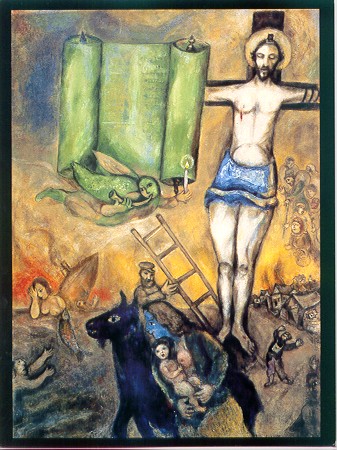
Jesus' Death, God's Culpability

Five Reasons You Probably Shouldn't Attend a Christian...

TRENDING AT PATHEOS Progressive Christian

Why Christians Have a Sacred Duty to Vote:...
The Bible offers strong support for the sacred duty to vote. Here...

What Being a Modern-Day Apostle Means to Me
In my last column, I discussed the ins and outs of modern-day...

Did Ancient China Once Worship the God of...
Across human history, a common thread weaves through the origins of the...

Love Your Neighbor – Including Earth-Kin: Lev. 19,...
God’s command to love your neighbor means acting in an ethical and...

Lead a Church Study of “Jesus and Lao...
Guest writer Jack Thomas (The Irreverent Reverend) reflects on leading his church...

Principles for Understanding the Apostolic Ministry Today
Whenever people discover that my formal ministry title is "apostle," as in...
view all Progressive Christian blogs
Ad-Free & Subscriber Log-In Subscription Support
- About Us
- 2026 Calendar
- Videos
- Podcasts
- Library of World Religions
- Faith In Media Tracker
- Advertise With Us
- Write for Us
- Privacy Policy
- Terms of Service
- Do Not Sell My Data
- Contact Us
- Radiant Digital
- Manage Newsletter Subscriptions
- Unsubscribe From Notifications
- Sitemap
Copyright 2008-2026, Patheos. All rights reserved.
Subscription Support Ad-Free & Subscriber Log-In
Follow Patheos