
BuddhistCatholicContemplativeEvangelicalGeneral ChristianHinduJewishLatter-day SaintMuslimNew VisionsProgressive Christian
Beliefs
- Buddhist
- Catholic
- Contemplative
- Evangelical
- General Christian
- Hindu
- Jewish
- Latter-day Saint
- More Voices
- Muslim
- New Visions
- Pagan
- Progressive Christian
Topics
- Religion News
- Food and Religion
- Sports and Religion
- Religious Art
- Religious Music and Entertainment
- Religious Events
- History and Religion
- Style and Religion
- Politics and Religion
- Women in Religion
- Recreation Outdoors and Religion
- Business Finance and Religion
- Careers Workplace and Religion
- Education and Religion
- Family Parenting and Religion
- Health Fitness and Religion
- Home and Religion
- Relationships and Religion
- Technology and Religion
- Travel and Religion
Columnists
- Buddhist Columnists
- Business Finance and Religion Columnists
- Careers Workplace and Religion Columnists
- Catholic Columnists
- Contemplative Columnists
- Education and Religion Columnists
- Evangelists Columnists
- Family Parenting and Religion Columnists
- General Christian Columnists
- Health Fitness and Religion Columnists
- Hindu Columnists
- History and Religion Columnists
- Home and Religion Columnists
- Jewish Columnists
- More Voices Columnists
- Latter Day Columnists
- Muslim Columnists
- New Visions Columnists
- Nonreligious Columnists
- Pagan Columnists
- Politics and Religion Columnists
- Progressive Columnists
- Recreation Outdoors and Religion Columnists
- Relationships and Religion Columnists
- Religion News Columnists
- Religious Art Columnists
- Religious Events Columnists
- Religious Music and Entertainment Columnists
- Sports and Religion Columnists
- Style and Religion Columnists
- Technology and Religion Columnists
- Travel and Religion Columnists
- Women in Religion Columnists
Resource Library
- 2026 Calendar
- Library of World Religions
- The 100 Most Holy Places on Earth
- Patheos Answers
- Podcasts
- Videos
- Faith Leaders Database
- Anglican Episcopalian
- Bahai
- Baptist
- Buddhism
- Christianity
- Confucianism
- Eastern Orthodoxy
- Hinduism
- Holiness and Pentecostal
- ISKCON
- Islam
- Judaism
- Lutheran
- Methodist
- The Church of Jesus Christ of Latter-day Saints
- New Age
- Paganism
- Presbytarian and Reformed
- Protestantism
- Religion Behind the Scenes
- Roman Catholic
- Scientology
- Shia Islam
- Sikhism
- Sufism
- Sunni Islam
- Taoism
- Zen
- See all religions
Research Tools
 Ad-Free & Subscriber Log-In Subscription Support
Follow Patheos 

- Trending:
- Advent
- |
- Forgiveness
- |
- Thanksgiving
- |
- Election
- |
- Seasonal Holidays
- |
- Marriage
 Theoblogy
- Home
- Progressive Christian
- God Allows Suffering Because Suffering Is Existence [Questions That Haunt]
God Allows Suffering Because Suffering Is Existence [Questions That Haunt]
Last updated on: March 13, 2015 at 4:48 pm by Tony Jones
God Allows Suffering Because Suffering Is Existence [Questions That Haunt] 2015-03-13T16:48:31-05:00 Tony Jones
Patheos Explore the world's faith through different perspectives on religion and spirituality! Patheos has the views of the prevalent religions and spiritualities of the world.
After a week off for the election, it’s time to address Shelly’s Questions That Haunt Christianity, which I posted last Tuesday.
Shelly asked,
Why would God create humans (and animals) knowing what a vast number of them would suffer in this life? Does eternity really make up for a life of war, fear, hunger, or _______ (insert issue here). The typical response to this question is, “People could have lived in perfection as God created it, but they chose sin.” But that doesn’t answer the question. God would have known that people would sin. So why start the whole mess at all, even with the promise of a messiah?
There are over 100 responses to the question from readers. Now here’s my shot:
The first thing to consider is the premise of Shelly’s question. Do a vast number of sentient creatures (humans and animals) suffer in this life? In my estimation, Shelly, you overstate the case here. Unlike many of my peers in the progressive Christian community, I separate the ontological fate of humans and other animals.
I’ve been quite honest here about my fondness for hunting, and activity that many readers find unsavory, disgusting, and even sinful. And yet, I persist.
Over the last two months, I have killed ten ducks and eleven pheasants. Several of these birds I merely wounded with a shotgun; my trusty Lab, Albert, then retrieved these still-living animals and dropped them at my feet. When that happens, I proceed to wring the bird’s neck—the creature expires in my hands.
I then field dress the bird, which is a smelly, bloody business, and ultimately serve the meat I’ve harvested to my family.
That’s the brutal reality of hunting.
If you eat meat of any sort, with the possible exception of roadkill, you are benefitting from someone else killing an animal prior to its natural death and preparing the meat for your consumption. (If you’d like to read my account from the inside of a chicken “kill plant” of Tyson Foods, see The New Christians.)
I would not undertake the activity of hunting, or of eating meat of any sort, if I thought that animals “suffer.” I do not think that they suffer. I don’t think a duck has a memory—it has only instinct—and memory is necessary for suffering. If you eat meat, you either agree with me, or you’re benefitting from an act that you believe to be evil.
Here’s another example: while pheasant hunting in South Dakota last month, Albert’s leg was cut down the muscle by barbed wire. He yelped when it happened, and then he proceeded to hunt without pause. While the cut surely “hurt” him (caused his nervous system some sense of pain), he did not “suffer” in the way that I did when I injured my back last week.
I am claiming that animals are not cognizant of their pain over time—they are not able to reflect on it, to suffer over it. Therefore, Shelly’s question of theodicy is applicable only to human beings, not to animals of other sorts.
I do agree with you, Shelly, that the common response that we suffer because we chose sin is unacceptable, because your question is about the nature of God, not about the nature of human beings. It is inconsistent with the biblical view of God to claim that God was surprised by the first sin of Adam and Eve, and of our subsequent sins. (I attempt to debunk the doctrine of Original Sin in my book, A Better Atonement.)
So, back to Shelly’s premise: A vast majority of human beings experience suffering. I think that’s true, although I would put a finer point on it: Despair is common to the human experience.
In light of this reality, why would God bother to “start this whole mess at all?” to use Shelly’s turn of phrase.
In my youth, I was taught that God created the cosmos and those of us who inhabit it because God was lonely. That answer is crap because it thoroughly anthropomorphizes God. Any traditional conception of God is as a wholly complete Being, wanting of nothing. If that’s the case—and it’s got to be, unless you want to demote God to a demiurge—then God didn’t need a creation to provide himself company.
Another response you’ll hear from my process theology friends is that the question assumes that God pre-existed the rest of creation, when in fact God did not. So it can be argued that there has always been creation, and that creation is part of God. There was no time at which God existed but nothing else did. If you take this position, you probably have to assume that the nature of the universe is cyclical, and that God is the eternal process of these cycles.
Another, related position is that God, in God’s very nature, is relational. Therefore, God’s nature demanded some creation with which God could be in relationship. And that creation needed to have at least enough freedom to be able to be in relationship back with God. If you take this position, you could say that God pre-existed creation, but that God was not fully realized as God until there were other free beings to whom God could relate.
But the bottom line for me is none of these. To be honest, I am not bothered by this question of why God would create us, knowing that we would sin and experience despair. That’s because despair seems like part of the very nature of existence, even for God.
The Bible contains several poignant passages in which Yahweh is said to grieve, to be angry, and to be disappointed. He despairs of his creation to the point that he wipes it almost all out with a Flood. At other times, he metes out similar, though less deadly, fates to those human beings of whom he despairs.
Similarly, Jesus experiences suffering — at the death of a friend, at the betrayal of a follower, and, ultimately, at the complete absence of God as he hangs on the cross. Even God experiences the despair that comes with the absence of God.
If God despairs, if God suffers, then despair and suffering seem to be at the core of what it means to exist. And if that’s the case, then I don’t think it’s a mistake of creation that we experience it.
Previous Post

November 9, 2012
Bishop Al Mohler Calls the Election "An Evangelical Disaster"
Next Post
November 9, 2012 Slacktivist Bait
Browse Our Archives
Select a Category bible blogging books christianity in america church church history dissertation divorce Dog Training education emergent church essay family funny glbt jopa productions ministry minnesota movies music parenting philosophy politics Prayer publishing Questions That Haunt random same sex marriage speaking spirituality Teaching technology television theology Travels Uncategorized writing youth ministry
Select a Month January 2015 December 2014 November 2014 October 2014 September 2014 August 2014 July 2014 June 2014 May 2014 April 2014 March 2014 February 2014 January 2014 December 2013 November 2013 October 2013 September 2013 August 2013 July 2013 June 2013 May 2013 April 2013 March 2013 February 2013 January 2013 December 2012 November 2012 October 2012 September 2012 August 2012 July 2012 June 2012 May 2012 April 2012 March 2012 February 2012 January 2012 December 2011 November 2011 October 2011 September 2011 August 2011 July 2011 June 2011 May 2011 April 2011 March 2011 February 2011 January 2011 December 2010 November 2010 October 2010 September 2010 August 2010 July 2010 June 2010 May 2010 April 2010 March 2010 February 2010 January 2010 December 2009 November 2009 October 2009 September 2009 August 2009 July 2009 June 2009 May 2009 April 2009 March 2009 February 2009 January 2009 December 2008 November 2008 October 2008 September 2008 August 2008 July 2008 June 2008 May 2008 April 2008 March 2008 February 2008 January 2008 December 2007 November 2007 October 2007 September 2007 August 2007 July 2007 June 2007 May 2007 April 2007 March 2007 February 2007 January 2007 December 2006 November 2006 October 2006 September 2006 August 2006 June 2006 May 2006 March 2006 February 2006 January 2006 December 2005 November 2005 October 2005 September 2005 August 2005 June 2005 April 2005 March 2005 February 2005 January 2005 December 2004 November 2004 October 2004 August 2004 February 2004 January 2004
Follow Us!
TAKE THE
Religious Wisdom Quiz
Which prophet predicted an outpouring of God's Spirit in the last days?
Select your answer to see how you score.
Ezekiel Joel Daniel Micah
Related posts from Theoblogy

New Date, Final Cover, Big News #DGKJ

No One's Heard of Paul Ricoeur
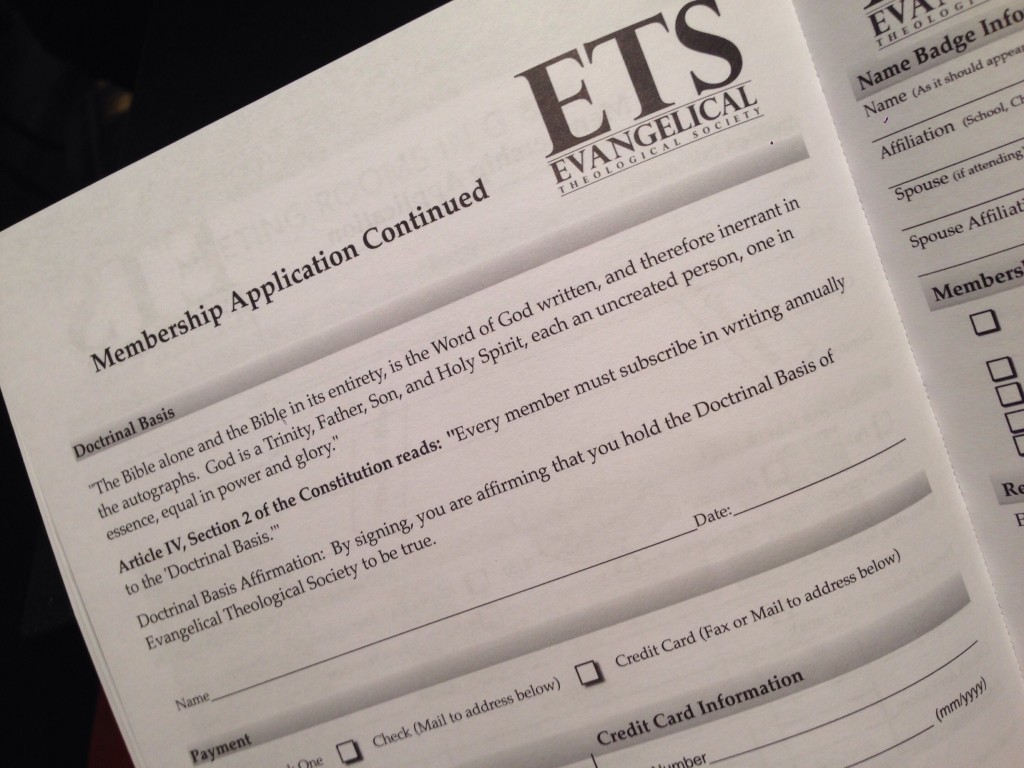
What Happened to Evangelical Theology? [#ETS2014 Liveblog]

TRENDING AT PATHEOS Progressive Christian

The Secret behind A Charlie Brown Thanksgiving
Where Franklin Sat at Charlie Brown's Thanksgiving Table Sparky was sticking to...

Bridging the Gap Between God and Man
From Far Off to the Ultimate Embrace “God is a Spirit: and...

Let Matthew 25 Guide You to a Greater...
With the crisp feel of fall in the air, our minds quickly...

Can a Chatbot Touch Your Soul?
Can a chatbot offer genuine spiritual counsel? One conversation brought me to...

Religion and Politics: How Should We Then Live?
Two cultural axioms get repeated in polite company. Don't mix religion and...

7 Things We Get Wrong About Giving Thanks
It's a time of year when many of us turn to the...
view all Progressive Christian blogs
Ad-Free & Subscriber Log-In Subscription Support
- About Us
- 2026 Calendar
- Videos
- Podcasts
- Library of World Religions
- Faith In Media Tracker
- Advertise With Us
- Write for Us
- Privacy Policy
- Terms of Service
- Do Not Sell My Data
- Contact Us
- Radiant Digital
- Manage Newsletter Subscriptions
- Unsubscribe From Notifications
- Sitemap
Copyright 2008-2026, Patheos, part of the Radiant Digital network of media brands. All rights reserved.
Subscription Support Ad-Free & Subscriber Log-In
Follow Patheos